
 Image credit: Pexels
A Jamdani is the lightest serious saree most women will ever own. Its motifs are not printed or embroidered on afterwards, the weaver inlays them by hand into a fine, almost sheer cotton or silk-cotton ground, so the pattern seems to float on air. That delicacy changes everything about its blouse. Where a heavy silk saree needs a blouse with structure and restraint, a Jamdani needs one with lightness and tact: a blouse that is too stiff, too shiny or too heavily embroidered will crush the drape and out-shout the weaving. The blouse designs for Jamdani sarees that work best all respect that character. This guide covers the color strategies, necklines, sleeves, fabrics and back designs that suit the weave, from a Pohela Boishakh morning to Durga Puja to a wedding evening. If you are new to the saree itself, start with our explainer on what a Jamdani saree is and how its motifs are woven.
- Why Jamdani Needs a Different Blouse Logic
- Color First: Matched, Contrast, and the Red-and-White Classic
- Necklines That Suit a Light Weave
- Sleeves: The Bengali Festive Favorites
- Blouse Fabrics That Won’t Overpower the Weave
- Back Designs in Keeping With the Weave
- Traditional vs. Modern Pairings at a Glance
- Styling by Bengali Occasion
- Frequently Asked Questions
- Conclusion
Why Jamdani Needs a Different Blouse Logic
Everything about Jamdani is fine and light: a muslin-like ground, discontinuous-weft motifs worked in with supplementary threads, and a drape that moves like cloth rather than armor. The weaving is honored on UNESCO’s Intangible Cultural Heritage list, and the artistry lives in those small floating motifs, paisleys, florals, geometric buttis. A blouse has two ways to fail such a saree. Visually, dense sequins, heavy zardozi or a big shiny brocade pattern will pull every eye away from the handwork you paid for. Physically, a stiff, padded, heavily structured blouse fights the soft drape at the waist and shoulder, where Jamdani wants to settle gently.
So the design brief is inverted compared with silk brocade: keep the blouse simpler than the saree’s motifs, lighter than the saree’s mood, and let color, not embellishment, do most of the styling work. The one allowed drama is a deliberate, single contrast: one strong blouse color against a quiet Jamdani ground. That is a Bengali festive tradition in itself, as the next section shows.
Color First: Matched, Contrast, and the Red-and-White Classic
With Jamdani, the blouse color decision matters more than any cut. There are three classic strategies:
- Matched and tone-on-tone. A blouse in the saree’s own ground color, or a shade deeper, is the most elegant and the most traditional for fine, motif-rich Jamdanis. Nothing interrupts the eye, and the woven motifs carry the entire outfit. This is the choice for heirloom pieces and formal occasions.
- Contrast drawn from the motifs. The most popular festive route: pick the accent color already inside the saree, the maroon of its paisleys, the green or mustard of its border, the gold of its buttis, and wear it as a solid blouse. The contrast looks bold but never random, because the color is literally woven into the saree.
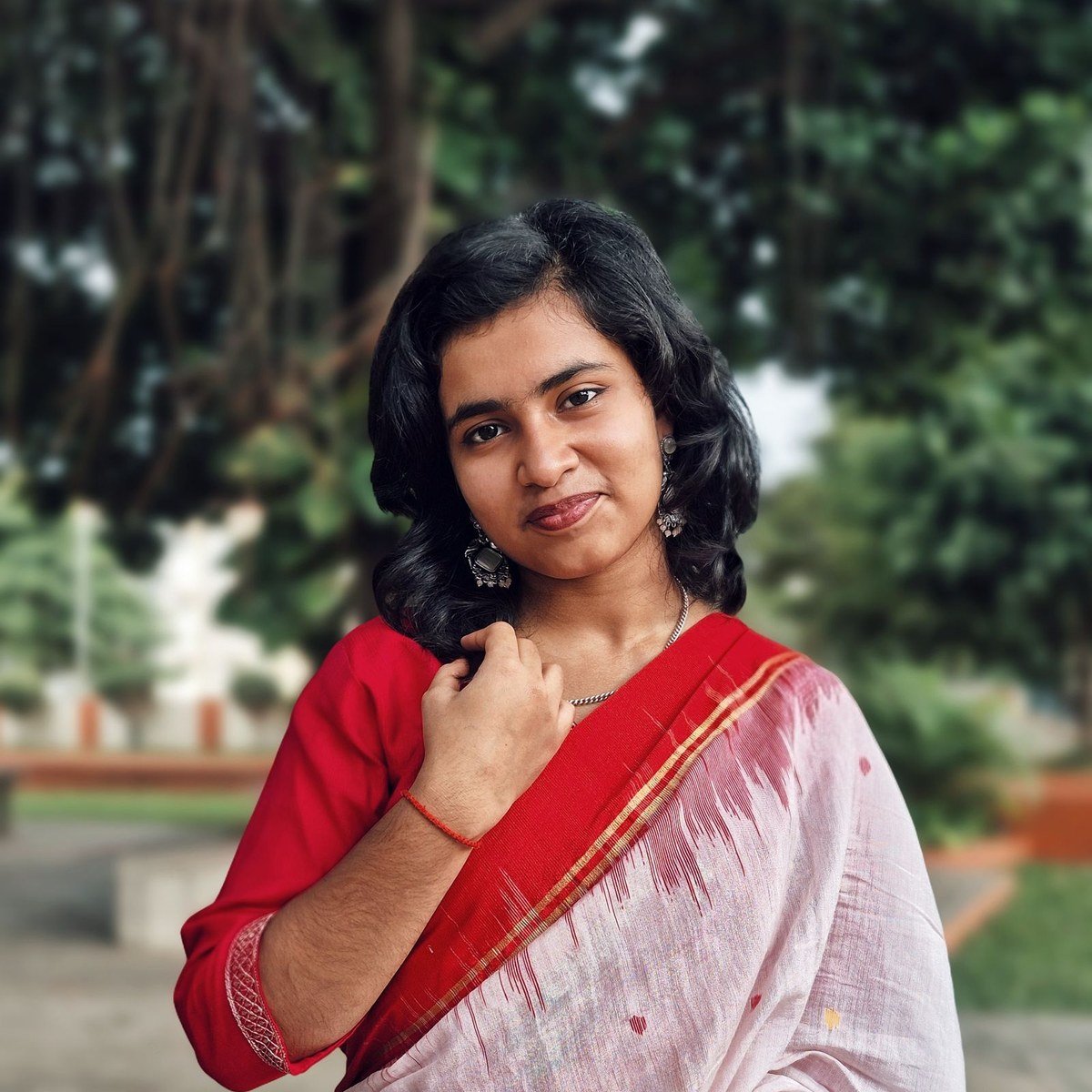
- The laal-paar classic. Bengal’s signature festive pairing: a white or off-white Jamdani with a red border worn with a solid red blouse. It is the defining look of Durga Puja mornings and Pohela Boishakh, completed with a red bindi and gold or shankha-pola bangles. If you own one white Jamdani, a well-fitted red cotton blouse is the single most useful blouse you can stitch for it.
For silk and half-silk Jamdanis at weddings, a fourth option appears: a metallic gold blouse, kept plain, which lifts the saree’s zari motifs without adding a competing color. Whatever the strategy, keep the blouse fabric matte or softly lustrous, a high-gloss satin blouse against a matte handloom ground is the one pairing that almost always looks wrong.
Necklines That Suit a Light Weave
Jamdani blouses favor clean, uncluttered necklines, because heavy neckline embroidery drags the eye down from the pallu’s motifs. The boat neck is the modern favorite: it echoes the saree’s horizontal border lines, looks graceful on all ages, and suits both cotton and silk Jamdani. The scoop and round neck are the traditional defaults, soft, familiar, and the right frame for a necklace at weddings. A square neckline adds a tailored crispness that pairs well with geometric Jamdani motifs.
Two heritage shapes deserve special mention. The high neck with front buttons, a closed neckline fastened with small fabric buttons, is a vintage Bengali blouse style that has returned to fashion, and it gives a Jamdani outfit a distinctive, literary elegance. The mandarin or band collar is the daytime and office choice, neat and structured without any embellishment. A modest sweetheart neckline works for evening silk Jamdanis. In all cases, if the neckline carries any detail at all, let it be piping in the border color or a row of small buttons, not a panel of embroidery.
Sleeves: The Bengali Festive Favorites
If one sleeve belongs to Jamdani, it is the puff sleeve. The gentle volume at the shoulder balances the saree’s flowing, unstructured drape, and the shape carries a nostalgic Bengali charm that has made it the signature Durga Puja pairing, in cotton for daytime rituals, sometimes with a lace or border trim at the edge. Keep the puff soft rather than theatrical; the saree is delicate, and the sleeve should be too. The elbow-length sleeve is the timeless alternative, formal enough for weddings and the natural partner to a high-neck or boat-neck blouse.
Cap and short sleeves are the practical summer choice, important for Pohela Boishakh in April heat and for US summer festivals. A sleeveless blouse gives a cotton Jamdani a fresh, contemporary air for daytime and casual festive wear. And for evening silk Jamdanis, sheer full sleeves in net or organza add occasion without weight, letting a bangle show through the fabric. The sleeve to avoid is the heavily embroidered statement sleeve: on a Jamdani outfit, it becomes the loudest element in the room, and that is the saree’s job.
Blouse Fabrics That Won’t Overpower the Weave
Fabric is where Jamdani pairings succeed or fail, because the blouse sits directly against that fine ground all day. Cotton and handloom cotton are the natural partners, same family, same matte surface, same breathability, and a cotton blouse in a motif color is the default festive choice. Mulmul and voile blouses keep summer outfits feather-light. For festivals and weddings, raw silk is the one richer fabric that behaves: its matte, slubbed texture adds occasion and a gentle contrast against cotton Jamdani without shine or pattern. A blouse made from Jamdani cloth itself, woven motifs on the blouse, worn tone-on-tone with a plainer saree or as the matched set, is the connoisseur’s option, handloom against handloom.
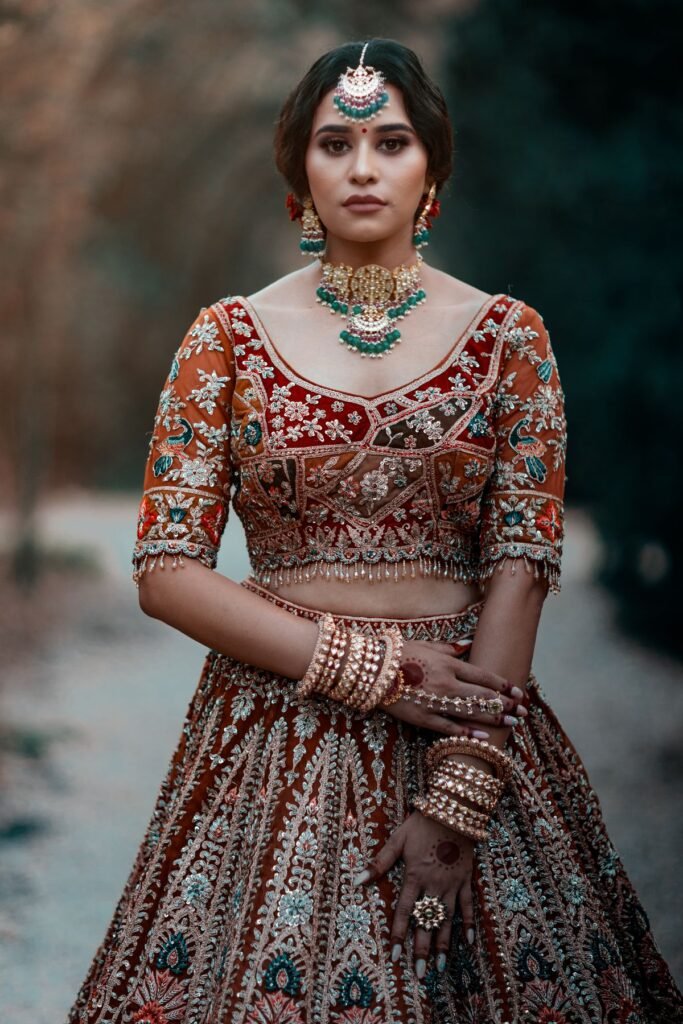
The fabrics to keep away from a cotton Jamdani are the heavy, glossy ones: dense brocade with large motifs, stiff velvet, and all-over sequin fabric. Each is heavier, shinier and busier than the saree, and each will win the argument the outfit is supposed to lose. (A silk Jamdani can hold its own against slightly richer blouse fabrics, the rule is about relative weight, not a ban.) For the broader current picture, corset bodices, statement sleeves and dramatic backs, see our overview of the latest saree blouse designs, and borrow from it selectively: one modern element at a time on a Jamdani.
Back Designs in Keeping With the Weave
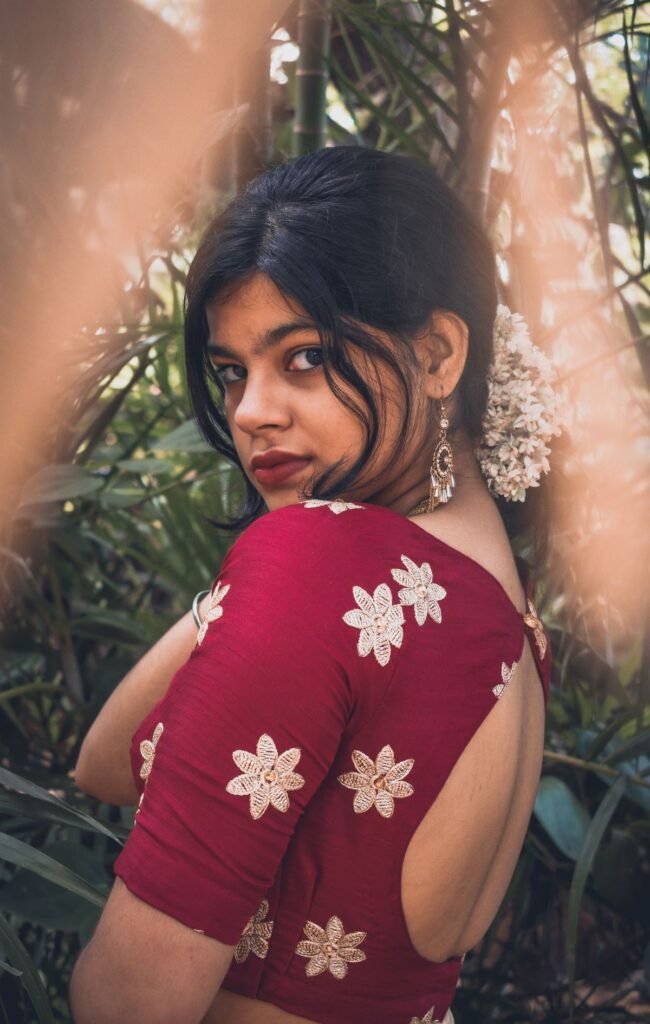
Jamdani blouse backs follow the same light-touch logic. The dori tie-up back, with its crisscross or single ties ending in small tassels, is the festive classic, the tassels can repeat the saree’s accent color for a quiet moment of coordination. A keyhole back adds a design note that still works in daylight. The potli-button back, a row of small fabric-covered buttons down a modest U, is the traditional tailored finish and pairs beautifully with high necks. A sheer back panel belongs to evening silk Jamdanis only. Deep, heavily cut backs are not forbidden, but on a saree this graceful they should be simple and clean, the woven pallu crossing the back is decoration enough.
Traditional vs. Modern Pairings at a Glance
| Look | Blouse | Best for |
|---|---|---|
| Traditional Bengali | Red or white cotton blouse, puff or elbow sleeves, round or boat neck | Durga Puja, Pohela Boishakh, rituals |
| Festive contrast | Solid raw-silk blouse in a motif color, boat or sweetheart neck | Festivals, family celebrations |
| Wedding guest | Silk blouse with light zari edging, sheer or elbow sleeves | Weddings and receptions |
| Modern fusion | Sleeveless, halter or clean high-neck blouse in one bold solid color | Receptions, parties, cultural events |
| Daytime and office | Collared or button-front cotton blouse in a muted tone | Work, daytime gatherings |
Styling by Bengali Occasion
Pohela Boishakh (Bengali New Year). The white-and-red classic at its purest: white Jamdani, red cotton blouse with puff or elbow sleeves, minimal jewelry. The outfit is meant to feel fresh and morning-bright, and the blouse should stay simple cotton.
Durga Puja. Daytime follows the same laal-paar formula, white or light Jamdani, red blouse, while the evenings, especially Ashtami, invite a richer register: a silk or half-silk Jamdani with a contrast raw-silk blouse in maroon, green or gold. In the US, community pujas run long days, so cotton blouses earn their keep on comfort alone.
Weddings. As a guest, a silk Jamdani with a silk blouse, light zari at the sleeve edge, a dori or keyhole back, is festive without imitating bridal Banarasi territory. Keep the blouse’s work lighter than the saree’s motifs, even here.
Frequently Asked Questions
Q: What color blouse goes best with a Jamdani saree?
Start inside the saree: a solid blouse in one of the motif or border colors, maroon, green, mustard or gold, is the most reliable festive choice, because the color already lives in the weave. A matched blouse in the ground color is the most elegant option for fine, motif-rich Jamdanis, and for a white Jamdani, the classic answer is red.
Q: Can I wear a silk blouse with a cotton Jamdani saree?
Yes, it is one of the best festive upgrades, provided the silk is the right kind. Choose raw silk or a matte silk in a solid color; its soft texture lifts the outfit without shining against the cotton. Avoid glossy satin-finish silks and heavy brocades, which overpower the Jamdani’s matte, airy ground.
Q: Which neckline suits a Jamdani saree blouse?
The boat neck is the most versatile choice, it suits cotton and silk Jamdani, all ages and both day and evening wear. Round and scoop necks are the traditional defaults, square necks pair well with geometric motifs, and a high neck with front buttons gives a distinctive heritage look. Keep neckline embellishment minimal so the pallu’s motifs stay in focus.
Q: Are puff sleeves good with Jamdani sarees?
They are the signature pairing. A soft puff sleeve balances the Jamdani’s flowing drape and carries the nostalgic Bengali festive character that suits Durga Puja and Pohela Boishakh especially well. Keep the volume gentle rather than dramatic, and choose cotton for daytime or a plain silk for evening.
Q: What blouse should I wear with a white and red Jamdani for Durga Puja?
The classic laal-paar pairing: a solid red blouse, traditionally cotton, with puff or elbow-length sleeves and a round or boat neck. It is the defining Puja look, the red blouse against the white saree and red border, finished with a red bindi and gold or traditional bangles. Save contrast experiments for other days of the festival.

Conclusion
Blouse designs for Jamdani sarees begin from a single fact: the saree is handwoven air, and the blouse must never be heavier than the art it frames. Let color do the styling, matched for elegance, a motif color for festivity, red against white for Bengal’s great occasions, choose clean necklines and gentle sleeves, and keep fabrics in the cotton and raw-silk family. Do that, and the floating motifs stay exactly where the weaver put them: at the center of the outfit.