
 Image credit: Pexels
A silk saree rarely needs help looking rich. Between the luminous weave, the woven zari border and the weight of the drape, a Banarasi, Kanjivaram or Rajshahi silk already carries the outfit. That is exactly why its blouse is a design decision rather than an afterthought: the wrong blouse fights the saree for attention, while the right one quietly frames it. The best blouse designs for silk sarees all follow one principle, the saree’s zari is the star, and the blouse is the supporting cast. This guide walks through the necklines, sleeves, backs, fabrics and embellishments that support silk best, with pairings for brides, wedding guests and festive wear, plus tailoring notes for long wedding days.
- The Golden Rule: Let the Zari Lead
- Blouse Rules by Silk Type
- Necklines That Flatter Silk
- Sleeve Designs: Where a Silk Blouse Earns Its Keep
- Back Designs: A Quiet Front, an Interesting Back
- Blouse Fabrics and Embellishment
- Matching or Contrast? Choosing the Blouse Color
- Pairings by Occasion: Bridal, Guest and Festive
- Tailoring Notes That Make the Design Work
- Frequently Asked Questions
- Conclusion
The Golden Rule: Let the Zari Lead
Silk sarees carry their decoration inside the weave itself. Gold and silver zari threads form the borders, buttis and brocade patterns as the cloth is woven, so the “embellishment” is already there before a single stitch of blouse tailoring begins. When a blouse then adds heavy embroidery, sequins, mirror work and a dramatic cut all at once, two patterns compete and both look cheaper. The working rule is a balance scale: the heavier and more worked the saree, the quieter the blouse; the plainer the saree, the more design the blouse is allowed to carry.
There is a second, practical half to the rule, structure. A silk saree has body and real weight, especially a Kanjivaram, and its pallu pulls on the blouse all evening. A flimsy, unstructured blouse twists and sags under that load, while a well-tailored, lined one holds the intended silhouette. If you are still identifying exactly what hangs in your closet, our guide to the different types of silk sarees explains how Banarasi, Kanjivaram, tussar and other silks differ in weight, finish and formality.

Blouse Rules by Silk Type
“Silk saree” covers weaves with very different personalities, and each one asks something different of its blouse:
| Silk saree | Blouse direction | What to avoid |
|---|---|---|
| Banarasi brocade | Plain or lightly worked blouse in saree silk or raw silk; classic boat neck or elbow sleeves | A heavily embroidered blouse that doubles the brocade’s pattern |
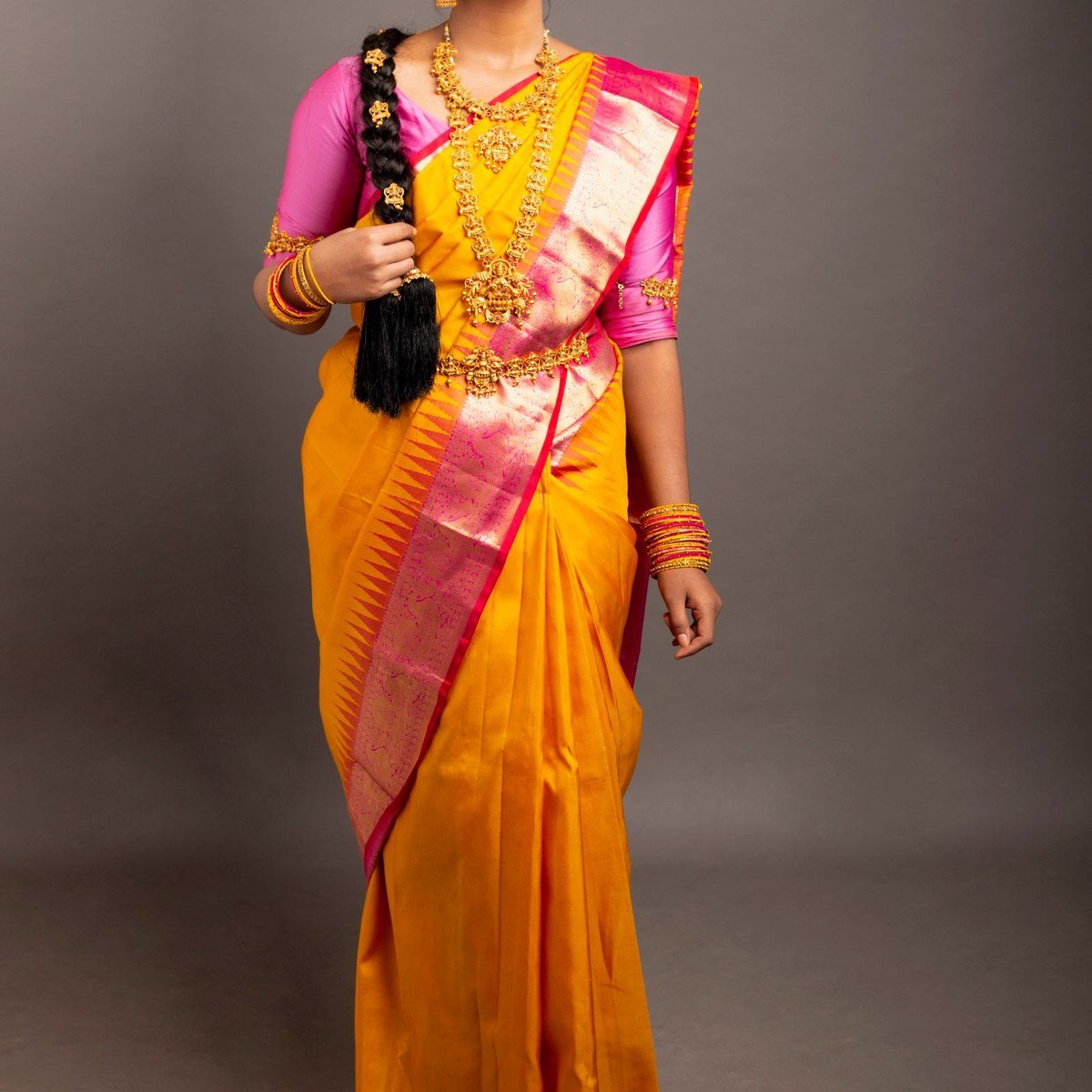
| Kanjivaram | Blouse in the border color with a zari sleeve edge; elbow-length sleeves | Busy prints that clash with bold temple-style borders |
| Rajshahi silk | Simple, elegant cuts; the saree is often lighter, so the blouse may carry slightly more design | Overly stiff, heavily padded bridal structure |
| Soft silks (tussar, raw silk drapes) | Brocade, textured or printed blouses can lead, because the saree is quiet | An exact fabric-and-color match that flattens the whole look |
A Banarasi sari is brocade from border to pallu, floral jaal work covers the body, so its blouse should be the calmest element in the outfit: a clean silk blouse, perhaps with a narrow zari edge at the sleeve. A Kanjivaram works differently: its drama is concentrated in the wide contrast border and pallu, so a blouse picked up from the border color, with the zari repeated at the sleeve hem, ties the look together without adding a new pattern. Rajshahi silk is typically finer and lighter than the great South Indian weaves, often printed or lightly woven, which gives its blouse more freedom, a shaped neckline or lightly worked back will not overwhelm it.
Necklines That Flatter Silk
The neckline frames the face and decides what jewelry the outfit can carry. These are the shapes that work hardest with silk:
- Boat neck. The most traditional partner for silk. Its wide, clean line echoes a zari border, suits heavy sarees, and needs no necklace, the neckline itself is the frame.
- Round and U necks. The timeless defaults. A modest round or U neck works with every silk, every age and every occasion, and leaves room for a statement necklace.
- High neck and collar necks. Band collars, mandarin collars and closed high necks give silk a regal, tailored finish, a favorite for weddings, temple ceremonies and formal festive wear. A small keyhole keeps the coverage from feeling severe.
- V-neck. Lengthens the neck and lightens a heavy saree visually. A structured V is the modern guest’s choice for receptions and evening events.
- Sweetheart neckline. Soft and romantic, most at home on bridal and reception blouses, especially in corset-style bodices.
- Square neckline. Clean geometry that sits well with the architectural borders of a Kanjivaram and frames a pendant neatly.
One caution applies to all of them: keep neckline embroidery lighter than the saree’s border work, a heavily worked neckline under a brocade pallu is where silk outfits tip into excess.
Sleeve Designs: Where a Silk Blouse Earns Its Keep
Sleeves are the visible signature of a silk blouse, because the pallu leaves them largely uncovered. The classic choice is the elbow-length sleeve finished with a zari border, traditionally cut so the saree’s own border or blouse-piece edging runs along the sleeve hem. It is formal, balanced and never dates, and it is the safest sleeve for bridal silk. Puff sleeves bring a vintage, heirloom charm that suits Banarasi and Kanjivaram sarees at family celebrations; keep the puff modest on a heavy saree so the shoulder does not widen the whole silhouette. Short and cap sleeves are the everyday festive standard, comfortable, easy to tailor and appropriate almost everywhere.
A sleeveless blouse lightens a silk saree beautifully for summer weddings and US daytime events, and works best with softer silks and cleaner necklines. Full sleeves, in matching silk, or sheer with a zari cuff, are the winter-wedding and formal-evening option, and they balance a deep back better than any other sleeve. Whatever the length, the sleeve should sit smooth at the shoulder: silk shows every pucker.
Back Designs: A Quiet Front, an Interesting Back
Silk blouses traditionally save their detail for the back, where the pallu’s movement reveals it in glimpses. The bridal classic is the deep U or V back closed with dori ties, finished with tassels or latkans that pick up the saree’s zari, dramatic, unmistakably festive, and adjustable, which helps the fit. A keyhole back offers the same idea in a more modest register: one shaped opening, often with a fabric button at the top, that reads as a design detail at daytime functions too. A sheer or illusion back panel fills a deep shape with net, giving the outline of a backless blouse with real support, the practical route for a long wedding day. And the buttoned pot-neck back, with its row of small fabric buttons, remains the tailored, traditional finish for high-neck blouses.
Balance the back against the drape you plan: if the pallu will cover it all evening, an elaborate back is wasted, spend the design budget on sleeves and neckline instead.
Blouse Fabrics and Embellishment
The most traditional blouse fabric is the saree’s own silk, from the blouse piece woven or sold with it, an exact match in fiber, sheen and color that no substitute fully reproduces. Raw silk is the great alternative: its matte, slightly slubbed surface calms a shiny brocade and adds texture without pattern. Brocade blouses reverse the usual rule and belong with plain silks, where their woven pattern becomes the outfit’s one worked element. Velvet is the winter and evening specialist, deep, light-absorbing, and best kept to simple cuts, since the fabric itself is the luxury.
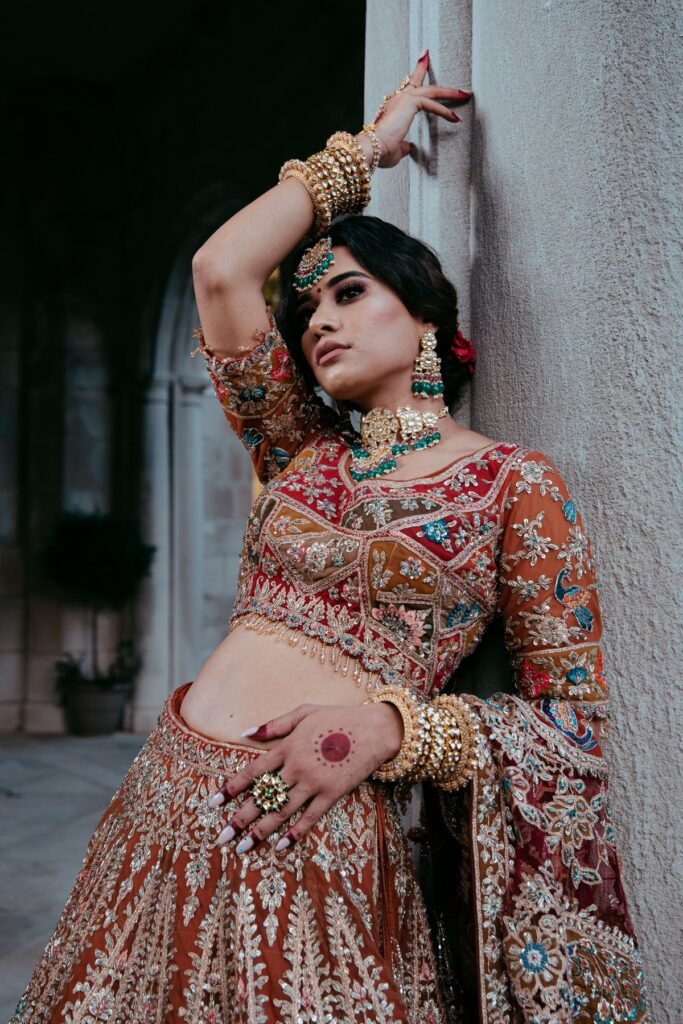
For embellishment, the traditional vocabulary is hand embroidery: aari chain-stitch work, and the heavier framed embroidery often called maggam work in South India, which includes zardozi metal-thread work, sequins and beadwork. These are bridal and festive techniques, and the discipline is simple: choose one embellishment family per blouse, concentrate it, on the sleeves, the back or the neckline, and let the saree’s woven zari remain the richest surface in the outfit.
Matching or Contrast? Choosing the Blouse Color
There are three sound strategies, and no wrong one, only mismatched occasions. Tone-on-tone matching, using the blouse piece, is the most traditional and the safest for heirloom sarees and formal rituals. Border matching, a blouse in the saree’s border or zari color, is the festive favorite: it pulls the whole drape together and photographs beautifully. Full contrast, a blouse in a different jewel tone, is the modern guest and reception look; it works best when the saree’s body is one strong color and the blouse repeats a shade from its border or motifs. A plain gold blouse remains the universal connector that crosses dozens of silk sarees. Our guide to the best silk saree colors for weddings goes deeper on which color families pair well across a wedding season.
Pairings by Occasion: Bridal, Guest and Festive
Bridal. Structure and handwork lead: an elbow-sleeve or high-neck blouse with aari or zardozi concentrated on the sleeves and back, a dori-tied deep back under the pallu, and tailoring with real lining and support. The blouse should be planned with the saree, not after it.
Wedding guest. You have the most freedom. A contrast or brocade blouse, a boat or V neckline, and moderate work let you look festive without echoing the bride’s level of embroidery. A well-kept gold or jewel-tone blouse earns its keep here across several sarees.
Festive and family functions. The classic matched silk blouse, puff or elbow sleeves, a keyhole or buttoned back, hits exactly the right note: traditional, comfortable and reusable. For US celebrations, plan the sleeve for the season: full or elbow sleeves for winter weddings, sleeveless or cap sleeves for summer ones.
Tailoring Notes That Make the Design Work
- Fit the shoulder and armhole first. Most blouse discomfort, and most visible flaws in silk, come from a tight armhole or slipping shoulder, not the neckline. Raise your arms and sit at the fitting.
- Ask for lining and seam allowance. A cotton-lined bodice is kinder through a long event, and extra margin inside the seams lets the blouse be adjusted later instead of retired.
- Plan support for deep backs. Built-in cups, a structured inner layer or a sheer back panel all beat last-minute fixes.
- Use the border deliberately. If your saree has a blouse piece with a woven edge, have it placed at the sleeve hem or back opening, it is the detail that makes a blouse look made for the saree.
- Match the closure to the design. Back hooks, front hooks and side zips each change how the blouse sits; decide before the back design is finalized.
Frequently Asked Questions
Q: Which blouse design looks best with a silk saree?
The boat neck blouse with elbow-length sleeves finished in a zari border is the most universally successful design for silk sarees: it frames heavy borders without competing with them and suits weddings, festivals and formal events. Adjust by saree, plainer silks can take brocade or embroidery, while rich brocades look best with a calm, classic blouse.
Q: Should the blouse match the saree or contrast with it?
Both are correct, for different effects. A matched blouse, made from the saree’s blouse piece, is the traditional, formal choice and lets the weave speak as one piece. A contrast blouse, ideally in a color drawn from the saree’s border or motifs, is the modern, festive choice and makes one blouse work across several sarees. Border-matching sits happily between the two.
Q: Which blouse is best for a Banarasi saree?
A plain or lightly worked blouse in silk or raw silk, because Banarasi brocade already covers the saree in woven pattern. Choose a classic cut, boat or round neck, elbow sleeves with a narrow zari edge, in the saree’s own color or its border color. Save heavy embroidery for plain sarees; on a Banarasi it only competes with the brocade.
Q: Can I wear a sleeveless or modern blouse with a traditional silk saree?
Yes, a sleeveless blouse, a V neck or even a corset-style bodice can modernize a silk saree gracefully, especially for receptions and evening events. Keep one element traditional to anchor the look: a zari-edged sleeve line, the saree’s own border color, or classic jewelry. Very formal rituals and temple ceremonies are the occasions to stay with covered, classic cuts.
Q: What fabric is best for a silk saree blouse?
The saree’s own silk, from its blouse piece, is the benchmark for a matched look. Raw silk is the best alternative for calming a shiny brocade, brocade fabric suits plain silks where the blouse should carry the pattern, and velvet is the winter-evening specialist. Whatever the fabric, a breathable lining makes any of them easier to wear for hours.
Conclusion
The best blouse designs for silk sarees are an exercise in good supporting acting. Let the zari lead, choose the neckline and sleeves that frame the weave you actually own, brocade Banarasi, bold-bordered Kanjivaram, fine Rajshahi or a quiet soft silk, and spend the embellishment budget in one place only. Match for tradition, contrast for freshness, and insist on tailoring with structure and lining. Do that, and the blouse stops being the saree’s accessory and becomes the reason the whole outfit looks finished.