
 Image credit: Pexels
Every saree wearer knows the moment: a beautiful saree in hand, a row of possible blouses, and no certainty about which one is right. The blouse, the fitted choli worn with a saree, is a small piece of clothing with an outsized effect. It can make a saree look seamless and expensive, or slightly unfinished, even when both pieces are lovely on their own. The good news is that learning how to match blouse with saree is not a matter of instinct. Stylists use the same three strategies again and again: match the body color, borrow a color from the border, or choose a deliberate contrast. This guide explains each one, then covers the fabric, print and occasion rules that finish the job.
- Step One: Read the Saree Before the Blouse
- Strategy 1: Match the Body Color (Tone-on-Tone)
- Strategy 2: Borrow From the Border or Pallu
- Strategy 3: Deliberate Contrast
- Tone-on-Tone vs. Contrast: Which Wins When?
- Match the Fabric, Not Just the Color
- Special Case: Printed Sarees
- Metallic and Neutral Blouses: The Universal Connectors
- Neckline and Occasion: The Final Checks
- Common Matching Mistakes
- Frequently Asked Questions
- Conclusion
Step One: Read the Saree Before the Blouse
The most common matching mistake is shopping for a blouse in isolation and then trying to force the saree to agree. Reverse the order. Lay the saree out and read four things:
- The body color, the dominant field of the saree, and the base for a matched look.
- The border and pallu colors, the secondary colors the weaver already chose to live next to the body. These are your safest blouse candidates.
- The motifs, small woven or printed accents often hide a third color worth borrowing.
- The fabric and its weight, a crisp silk and a fluid chiffon ask for different blouses even in the same color.
One practical test: judge any candidate blouse against the pallu, not the plain body. When you are dressed, the pallu is the part of the saree that sits closest to the blouse, so that is the pairing your eye, and everyone else’s, actually reads.
Strategy 1: Match the Body Color (Tone-on-Tone)
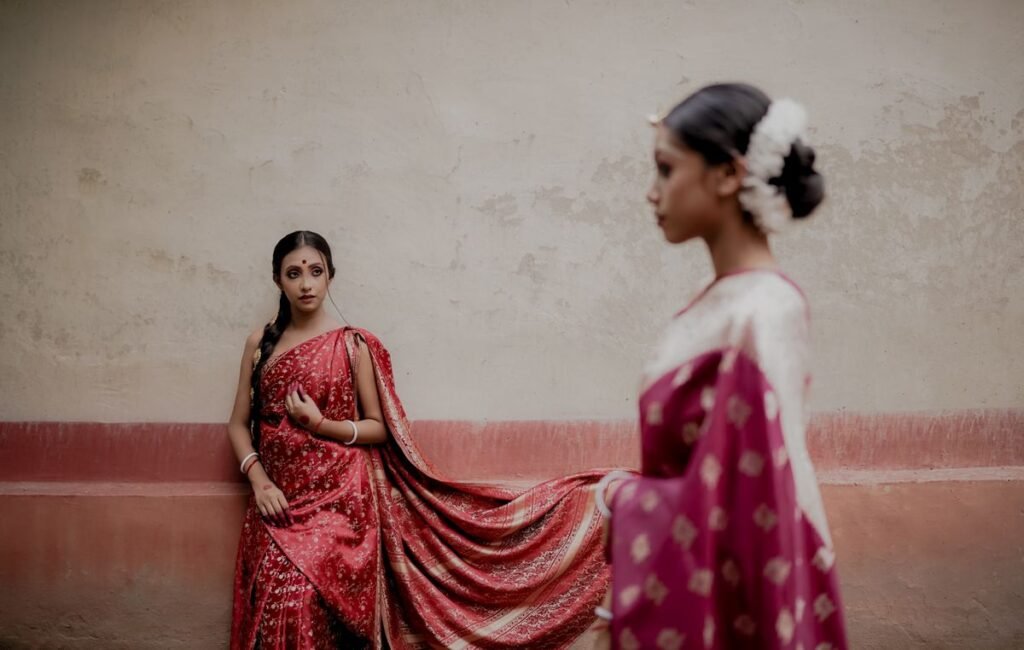
The matching strategy uses a blouse in the same color family as the saree body, either the exact shade or one a step deeper. Many sarees are sold with a running blouse piece woven in the same fabric for exactly this purpose.
When it works best: formal occasions, heavily woven or embroidered sarees where the saree should lead, and any time you want a long, unbroken line of color, which tends to look elegant and lengthening. A wine blouse with a maroon saree, or a deep forest blouse with a bottle-green one, reads quiet and expensive.
The catch: an almost-match is worse than no match. If the blouse is half a shade off the body, especially if it leans a different undertone, it looks like an error rather than a choice. Screen photos are unreliable judges of this, so compare fabrics in person, in daylight, whenever you can. If you cannot match confidently, go clearly deeper in the same family, or switch to Strategy 2.
Strategy 2: Borrow From the Border or Pallu
This is the stylist’s favorite, because it almost never fails. Find the secondary color in the saree’s border, pallu or motifs and make that your blouse. A cream saree with a peacock-blue border takes a peacock-blue blouse; a green saree with a pink border takes pink; an ivory Banarasi with gold zari takes antique gold.
Why it works: the color already lives inside the saree, so the outfit looks cohesive and planned without being matchy. It also revives older sarees beautifully, an inherited silk that feels dated with its original matching blouse looks current the moment you pair it with a clean blouse in its border color.
The catch: if the border color is very bright and the saree body is muted, a full blouse in that bright shade can dominate. In that case, use the border color in a matte fabric, or pick the deeper of the border’s tones rather than the brightest thread.
Strategy 3: Deliberate Contrast
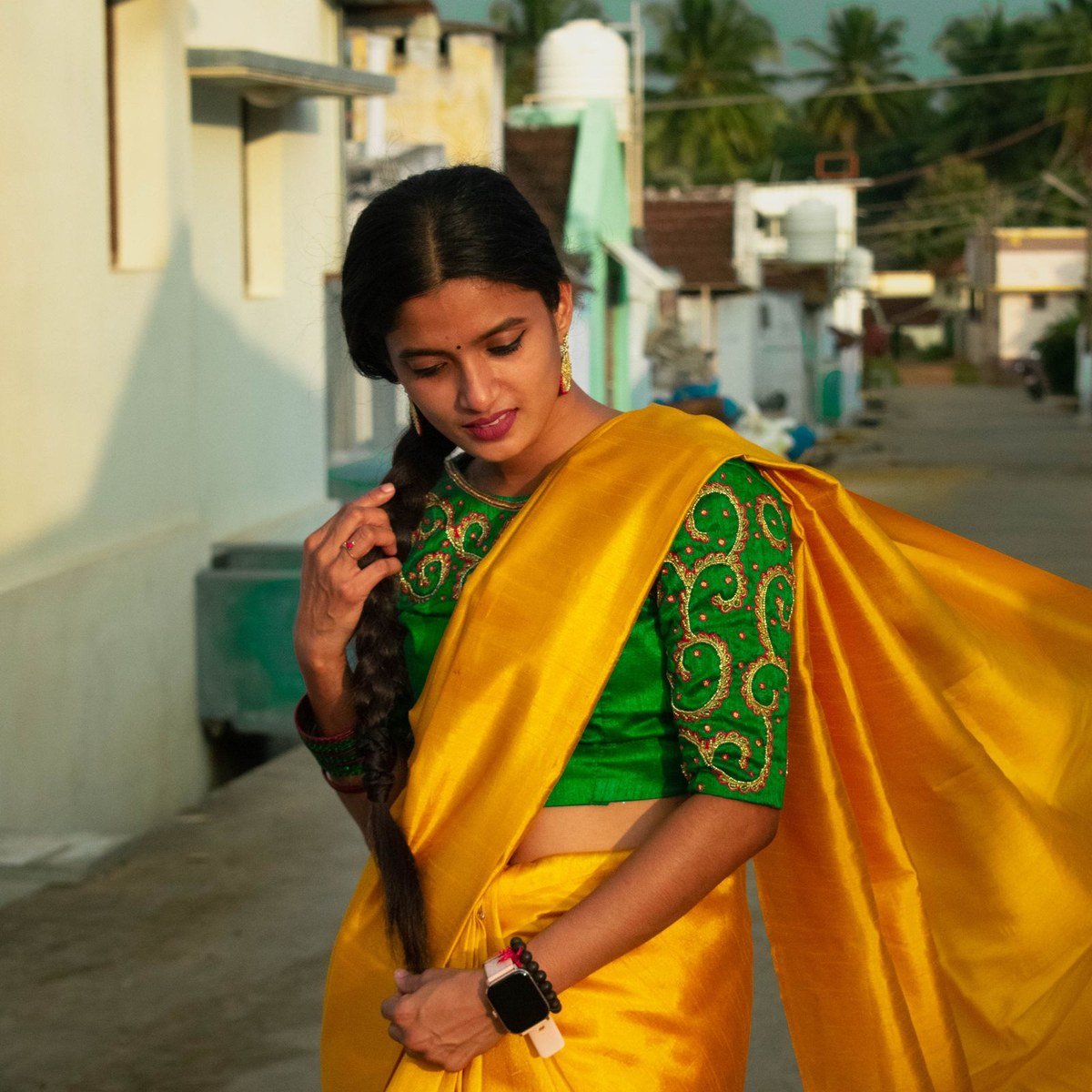
A contrast blouse uses a color that is not in the saree at all, chosen from the color wheel rather than from the cloth. Complementary pairs (opposites on the wheel) are the classics: red with green, mustard with deep blue or maroon, indigo with orange, rani pink with green. Analogous contrasts, a neighboring but distinct hue, like teal with navy, are the softer version.
When it works best: plain or lightly patterned sarees, festive and evening occasions, and when you want one saree to produce several different looks. A contrast blouse is also the fastest way to modernize a traditional weave: a deep-red silk with an inky navy blouse feels like today while respecting the textile.
The rules that keep contrast elegant: match the intensity of the two colors so neither shouts over the other; keep the blouse design clean and let the color do the work; and anchor the pairing with neutral jewelry rather than introducing a third strong color.
Tone-on-Tone vs. Contrast: Which Wins When?
| Situation | Better strategy | Why |
|---|---|---|
| Heavily woven or embroidered saree | Match the body, or borrow the border | The saree is already busy; the blouse should support, not compete |
| Plain saree in a single color | Deliberate contrast | The blouse supplies the interest the saree leaves open |
| Formal or traditional ceremony | Match or border color | Reads composed, respectful and classic |
| Party, sangeet or evening event | Contrast or metallic | Boldness suits the setting and photographs well |
| Heirloom saree that feels dated | Border color, cleanly cut | Updates the look without altering the saree |
| Building a small, hardworking wardrobe | Metallic or neutral (see below) | One blouse serves many sarees |
Match the Fabric, Not Just the Color
Color gets a blouse considered; fabric decides whether it actually looks right. The working rule is to match weight and sheen: the blouse should hold its shape about as well as the saree does, and shine about as much. Our overview of saree fabrics explained covers how the common fabrics behave; the pairings below are the practical summary.
| Saree fabric | Blouse fabrics that work | What to avoid |
|---|---|---|
| Silk (Banarasi, Kanjivaram, tussar) | Silk, raw silk, silk-cotton, brocade | Thin plain cotton, shiny synthetics that reflect light differently |
| Silk-cotton (Chanderi, Maheshwari) | Silk-cotton, light raw silk, good cotton | Very heavy brocade that outweighs the saree |
| Cotton and handloom (incl. Jamdani) | Cotton, khadi, silk-cotton | Stiff, glossy silk that looks heavier than the saree |
| Chiffon and georgette | Georgette, crepe, soft silk, sequinned for evening | Stiff brocade, which fights the drape’s fluidity |
| Linen | Linen, cotton, matte silk-cotton | High-shine fabrics that clash with linen’s texture |
| Organza and tissue | Silk, raw silk, lined sheer fabrics | Heavy cotton, which looks blunt beside them |
Balance matters in both directions: a heavy brocade blouse can throw a light chiffon saree off balance, and a flimsy blouse under a grand silk makes the whole outfit look unfinished.

Special Case: Printed Sarees
Prints confuse people because there are suddenly four or five colors in play. Simplify with two rules. First, the busier the saree, the plainer the blouse, a solid blouse with a printed saree, always. Second, choose the blouse color from inside the print: either the print’s background color for a calm look, or one of the smaller accent colors, not the largest motif color, for a livelier one. Pulling a minor color out of a print is the same border-borrowing strategy, just applied to pattern instead of a woven edge.
Metallic and Neutral Blouses: The Universal Connectors
Some blouses step outside the three strategies and simply go with nearly everything. Antique gold is the great connector: it warms reds, maroons and deep greens, and it echoes the zari in most festive sarees. Silver and pewter suit cool palettes, blues, greys, plums, cool maroons. Rose gold flatters blush, peach and soft pink drapes. Black, ivory and deep maroon work as near-neutrals across many sarees.
Two cautions keep metallics elegant. Match the metallic to the saree’s own metal thread, gold zari with a gold blouse, silver zari with silver, and watch the finish: a brushed or raw-silk metallic suits daytime, while a high-shine sequinned blouse belongs to the evening. If the saree already carries heavy zari, let the blouse be the calm element rather than adding a second loud one. Current saree blouse designs in metallic fabrics tend to keep necklines simple for exactly this reason.
Neckline and Occasion: The Final Checks
Once color and fabric are settled, two quick checks finish the match. Neckline: heavier silk sarees sit well with round, boat or U necklines; lighter chiffons and georgettes can carry deeper, square or sleeveless cuts. A blouse with a strong back design deserves a drape that shows it, so plan the pallu accordingly. Occasion: matched and border-color blouses read formal and traditional, which suits ceremonies, temple visits and family functions; contrast and metallic blouses read festive and modern, which suits receptions, sangeets and parties. For office and daytime events in the US, a matched or neutral blouse in a matte fabric keeps even a festive saree composed.
Common Matching Mistakes
- The near-match. A blouse half a shade off the saree body looks like a mistake. Match exactly, go clearly deeper, or contrast honestly.
- Judging against the body instead of the pallu. The pallu is what sits next to the blouse when worn; test the pairing there.
- Two loud elements. A heavily embroidered blouse over a heavily woven saree makes both look cheaper. Busy saree, plain blouse, and the reverse.
- Ignoring fabric weight. A perfect color in the wrong weight still looks wrong. Match sheen and structure, not just hue.
- A third strong color in the jewelry. After a contrast blouse, keep jewelry in the saree’s metallic or a neutral, or the eye has nowhere to rest.
- Trusting a screen for an exact match. Lighting and sheen shift colors on every display. For an exact match, compare real fabric in daylight.
Frequently Asked Questions
Q: Should a blouse always match the saree exactly?
No. An exact match is one good strategy, formal, seamless and classic, but borrowing the border color often looks more considered, and a deliberate contrast is the standard modern choice for plain sarees. The only real error is the accidental near-match, where the blouse is close to the body color but visibly not the same.
Q: How do I pick a contrast blouse color that works?
Start inside the saree: a color from the border, pallu or a minor motif is a contrast that is guaranteed to harmonize. If you want a color from outside the saree, use a classic complementary pair, red with green, mustard with maroon, indigo with orange, and match the two colors’ intensity so neither overpowers the other.
Q: What blouse goes with a printed saree?
A plain, solid blouse, always. Take the color from within the print: the background color for a calm, coordinated look, or one of the smaller accent colors for more energy. Avoid a printed or heavily embroidered blouse with a printed saree; the two patterns will compete and both will lose.
Q: Can one blouse work with several sarees?
Yes, and it is the smartest way to build a saree wardrobe. A well-fitted blouse in antique gold, black, ivory or deep maroon will serve many sarees, because metallics and near-neutrals connect across color families. Choose a versatile neckline and a mid-weight fabric, such as raw silk or silk-cotton, so the blouse balances both silk and lighter sarees.
Q: How much does blouse fabric matter compared with color?
More than most people expect. Color is what gets noticed first, but a blouse in the wrong weight or sheen, stiff brocade under flowing chiffon, or thin cotton under a grand silk, makes the outfit look unfinished no matter how good the color is. Match the fabric’s weight and shine to the saree, then fine-tune the color.

Conclusion
Matching a blouse to a saree comes down to a short, repeatable method. Read the saree first, body, border, pallu, fabric. Then choose your strategy: match the body for a seamless formal line, borrow the border color for a combination that almost never fails, or contrast deliberately for a modern, festive lift. Check the fabric’s weight and sheen, keep prints paired with plain blouses, and let the occasion have the final word. With those steps, how to match blouse with saree stops being guesswork, and a single saree can give you three different outfits, one for each strategy.