
 Image credit: Pexels
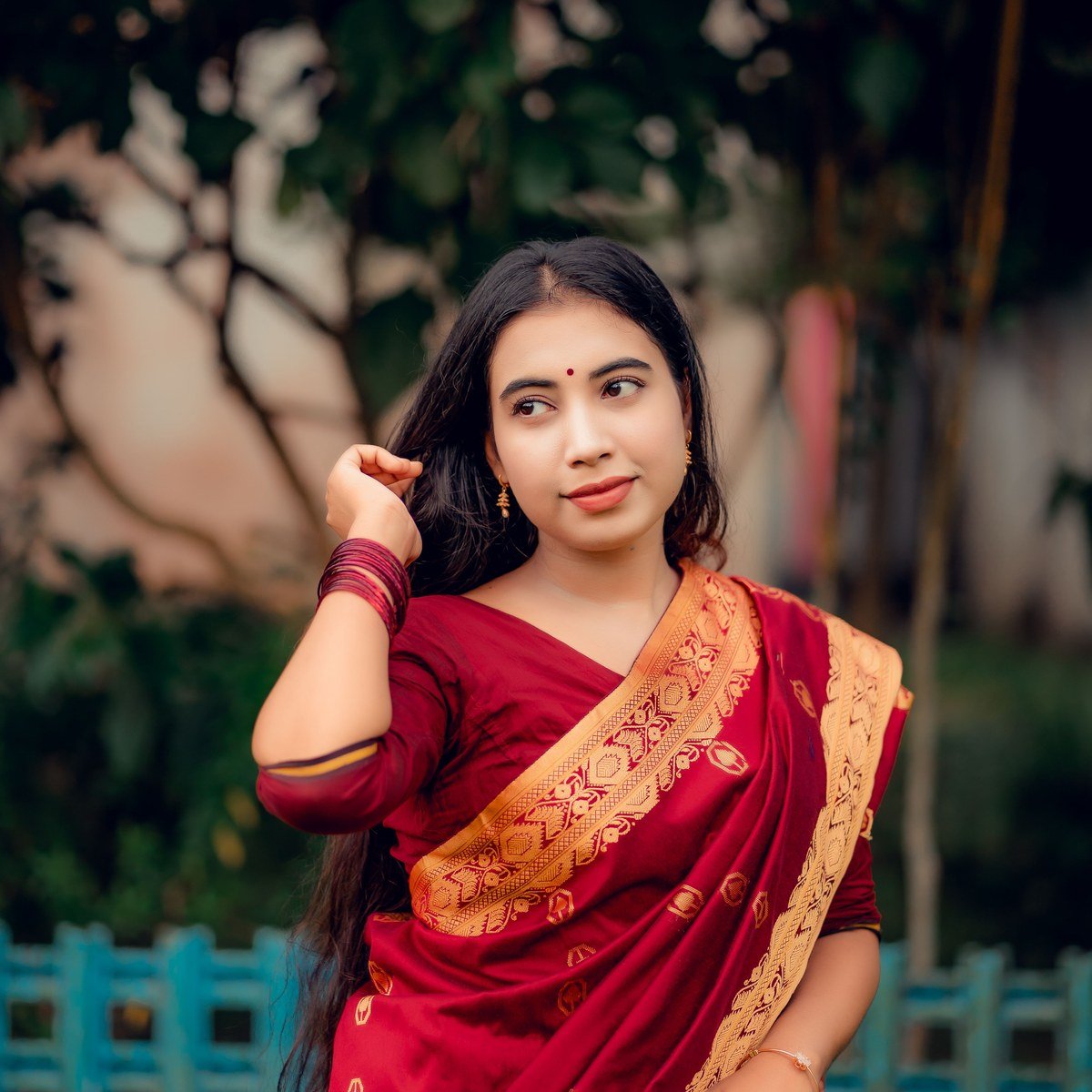
An engagement is the one celebration in the wedding season that belongs to the couple before the wedding itself takes over. It is more dressed up than a family dinner and deliberately less grand than the wedding day, and that in-between status is exactly what makes choosing a saree tricky. The best saree styles for engagement ceremonies hit a specific note: festive, polished and photograph-ready, but never so heavy that they upstage the wedding look still to come. This guide is written for the bride-to-be first, then for the mothers, sisters and close family around her, and finally for guests who want to look right without competing. It covers the fabrics, colors, drapes and blouse choices that work for a home ashirbad or roka, a temple blessing, and an evening ring ceremony, including the practical realities of celebrating in the USA.
- What Makes an Engagement Saree Different
- The Best Fabrics for an Engagement Saree
- Colors That Suit an Engagement
- Styles for the Bride-to-Be: Match the Saree to the Setting
- Drapes and Blouses That Photograph Well
- What Close Family Should Wear
- What Guests Should Wear
- Engagement Sarees in the USA: Practical Notes
- Frequently Asked Questions
- Conclusion
What Makes an Engagement Saree Different
Every event in the wedding calendar has its own dress code, and the engagement’s is the most misunderstood. A sangeet is about music and movement; the wedding ceremony is the full bridal register. The engagement sits between them: a formal promise, usually with blessings, a ring exchange and a great many photographs. The working rule is one step below bridal. The bride-to-be should be the most dressed-up person in the room, but in a lighter key than her wedding look, medium-weight fabrics rather than heirloom-heavy ones, one statement element rather than five, and jewelry that frames her face instead of covering her.
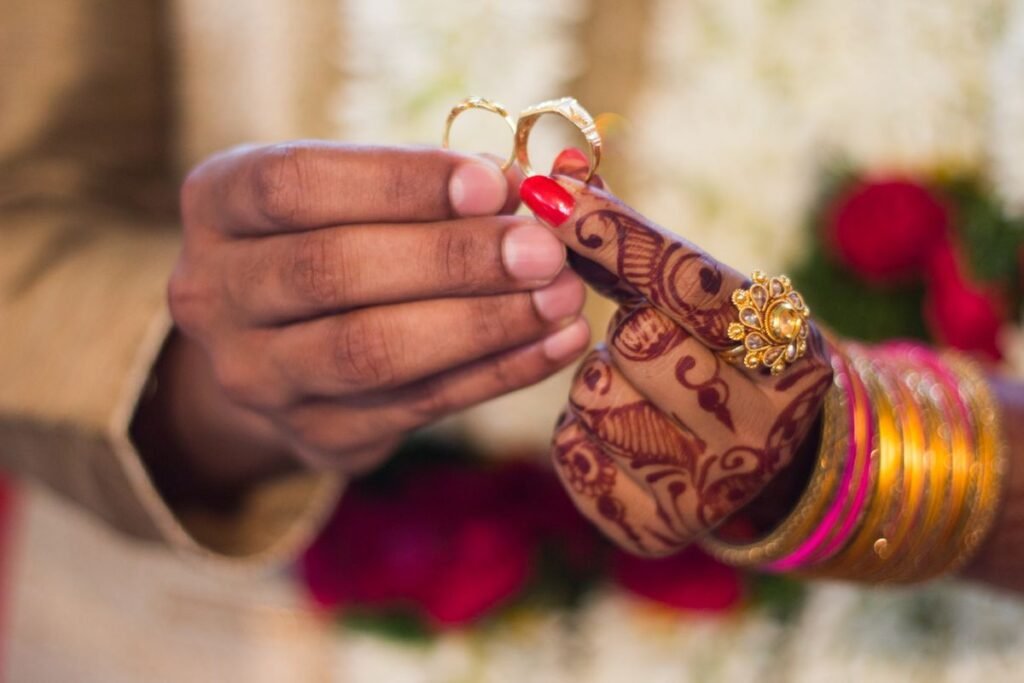
The ceremony’s format shapes the choice too. In Bengali families, the engagement is often the ashirbad, where elders bless the couple, and the bride-to-be may sit on the floor and receive guests for hours. A roka or ring ceremony in a hall is a standing, mingling event. Both end with the same close-up: two hands and a ring, photographed at inches’ distance. A saree for an engagement has to look finished at that range, neat pleats, a blouse that sits perfectly, a pallu that stays where it was put.

The Best Fabrics for an Engagement Saree
Soft silk and silk blends. The safest classic. A soft silk carries enough sheen to read as festive in photographs without the weight and stiffness of a full bridal weave, and it suits both a temple blessing and an evening ceremony. Blush, powder blue and soft gold are the shades that make soft silk feel engagement-specific rather than wedding-lite.
Jamdani. For a Bengali ashirbad especially, a Dhakai Jamdani is the traditional and most personal choice: handwoven motifs that seem to float on a fine, airy ground, formal without being heavy, and comfortable through a long afternoon of blessings. If you are new to the weave, our explainer on what a Jamdani saree is covers how it is made; the weaving tradition itself is inscribed on UNESCO’s Intangible Cultural Heritage list, one reason families reach for it at a milestone like this.
Georgette and chiffon. The fluid option. A georgette or chiffon saree with a worked border or scattered embroidery drapes close, moves well in a crowded room, and flatters in photographs. They are the easiest fabrics for an evening ring ceremony, and forgiving for brides-to-be who rarely wear sarees.
Organza. Crisp, sheer and structured, organza with floral prints or delicate embroidery is the modern daytime favorite. It photographs beautifully in natural light and feels fresh rather than ceremonial, ideal for a garden, restaurant or home engagement in spring and summer.
Tissue. Tissue sarees carry a soft metallic glow that wakes up under evening light without any heavy embellishment. A gold, rose-gold or pastel tissue is a one-piece answer to an evening ceremony: the fabric itself does the dressing up.
Banarasi and Kanjivaram, in their lighter registers. A traditional bride-to-be can absolutely wear the great silks, the trick is choosing their lighter forms. A Banarasi woven in georgette keeps the zari richness of the classic Banarasi sari at a fraction of the weight, and a soft-silk Kanjivaram in a pastel or a single jewel tone reads regal without going full wedding-day. Save the heaviest, widest-bordered heirloom pieces for the wedding itself.
Handloom cotton, linen and silk-cotton. For a daytime ceremony at home, breathable handlooms are the intelligent choice: mul cotton with light embroidery, linen with a zari border, or a polished silk-cotton. In warm weather and long rituals, comfort is not a compromise, it is what lets the bride-to-be enjoy her own event.
Colors That Suit an Engagement
Engagement color has its own palette, distinct from both everyday wear and the wedding day. Pink in its many shades is the classic engagement color, romantic, festive and flattering in photographs. Green carries associations of prosperity and new beginnings and is traditional for the bride-to-be in many families. Golds and champagnes give an evening ceremony a soft metallic glow, while pastels keep a daytime event fresh. Jewel tones belong to the evening.
| Color family | The mood | Best for |
|---|---|---|
| Rose pink and blush | Romantic, unmistakably engagement | Bride-to-be, day or evening |
| Greens, emerald, bottle, pistachio | Prosperity and new beginnings | Bride-to-be, traditional ceremonies |
| Gold and champagne | Soft metallic glow | Evening ring ceremonies |
| Pastels, lavender, powder blue, peach, mint | Fresh and modern | Daytime events, guests |
| Jewel tones, wine, maroon, royal blue, deep pink | Rich in evening light | Evening ceremonies, close family |
| Red | Auspicious, bridal-adjacent | The bride-to-be’s personal call, see the FAQ |
Silk changes how every one of these shades behaves, deepening some and brightening others; if you are choosing a silk saree, our guide to the best silk saree colors for weddings walks through which shades suit which roles across the celebration calendar, and the same logic applies at the engagement.
Styles for the Bride-to-Be: Match the Saree to the Setting
| Setting | Saree direction | Blouse and jewelry |
|---|---|---|
| At home, ashirbad or roka | Jamdani, handloom cotton, linen with zari, silk-cotton | Comfortable blouse with sleeves; classic gold jewelry; a drape that survives sitting and standing |
| Temple blessing | Soft silk, silk-cotton, light Kanjivaram | Modest, well-fitted blouse; traditional jewelry; secure classic drape |
| Banquet hall or hotel ring ceremony | Tissue, embroidered chiffon or georgette, soft silk, Banarasi georgette | Embroidered or designer blouse; statement earrings; heels and a clutch |
| Restaurant or garden party | Organza, printed chiffon, light georgette | Contemporary blouse; lighter jewelry; a drape that moves easily |
Two practical threads run through every setting. First, the bride-to-be is on her feet and in front of a camera for most of the event, so choose a saree she can wear for four or five hours without constant adjustment. Second, she will greet elders, accept blessings and pose for group photographs in quick succession; a pinned, settled drape frees her hands for all of it.
Drapes and Blouses That Photograph Well
The classic Nivi drape with a neatly pleated pallu is the engagement standard for good reason: it is universally flattering, reads formal in photographs, and suits every fabric on the list above. Whatever drape you choose, pin the pallu at the shoulder and pin the pleats, the ring exchange, the blessing rituals and the hugging line all pull at an unpinned saree.
The blouse deserves more thought than it usually gets, because the engagement photographs are full of arms and hands: the ring going on, hands folded for blessings, hands raised in group photos. Elbow-length sleeves and three-quarter sleeves photograph as elegant and finished at that range, and a boat neck or a modest sweetheart keeps the neckline graceful in close-ups. For an evening, party-style engagement, a sleeveless or embroidered blouse is entirely appropriate, the rule is only that the blouse carries one idea (a beautiful back, embroidery at the neckline, a statement sleeve) rather than all of them at once. Keep hand jewelry simple: the ring is the newest and most important piece of jewelry in the room, and heavy rings and stacked bangles on the same hand compete with it in the photographs the day is for.
What Close Family Should Wear
Mothers of the bride and groom hold the second-most-visible role: they perform rituals, stand in every family photograph, and are photographed beside the couple all day. A rich silk, Banarasi or Jamdani in a deep, dignified tone, maroon, deep green, royal blue, antique gold, is the classic choice, worn one clear step below the bride-to-be in embellishment. Because mothers are usually working hosts as well as honorees, a secure drape and sleeves they can move in matter more than drama.
Sisters and sisters-in-law can dress festively, georgette, organza, silk-cotton or a lighter silk, and coordinating the family’s color family without matching exactly makes group photographs look composed rather than costumed. The shared goal is simple: in the photographs, the bride-to-be should read as the brightest point.
What Guests Should Wear
Guests have the easiest brief: festive, polished, and clearly not bridal. A georgette, chiffon, organza or silk-cotton saree in a pastel or jewel tone is always right; light embroidery and a good border are enough. Guests should leave the heaviest silks, the widest zari borders and full bridal-level jewelry at home, not out of fear, but because the engagement’s whole visual hierarchy depends on the couple standing out. When the invitation suggests a venue, dress to it: a home ceremony asks for something softer than a hotel ballroom does.
Engagement Sarees in the USA: Practical Notes
American engagements come with their own logistics. Venues range from a family living room to a temple hall to a hotel ballroom, and many US celebrations are evening events reached straight from work, which makes an easy fabric and a pre-planned drape worth more than extra embellishment. Banquet lighting is warm and dim, and it flatters jewel tones and metallics; very pale pastels can wash out under flash photography, so test your saree with a phone camera in indoor light before the day. In winter, plan the layer as part of the outfit, a tailored jacket, a fine shawl in the saree’s own color family, or a blouse with sleeves, rather than hiding the whole look under a coat in every arrival photograph. Finally, give the blouse fitting its own deadline well before the event week: a blouse that fits perfectly is the single detail that makes every engagement saree, at every budget, look considered.
Frequently Asked Questions
Q: What is the best saree style for an engagement ceremony?
For most brides-to-be, a soft silk, a Dhakai Jamdani or an embroidered georgette in pink, green or gold, draped in the classic Nivi style with a pinned, pleated pallu, is the most reliable engagement look: festive and formal in photographs, yet clearly one step below the wedding day. Choose the fabric by setting, handloom and Jamdani for a home ceremony, tissue or chiffon for an evening ring ceremony.
Q: Which color saree is best for an engagement?
Pink, from blush to deep rose, is the classic engagement color, with green a close traditional second for its associations with prosperity and new beginnings. Gold and champagne suit evening ceremonies, pastels suit the daytime, and jewel tones such as wine and royal blue photograph richly at night. The right answer is the one that suits your skin, your venue’s light and the time of day.
Q: Can the bride-to-be wear red at her engagement?
Yes, red is auspicious, and many brides-to-be wear it beautifully. The only consideration is contrast with the wedding day: if your wedding saree will also be red, wearing a different color at the engagement gives the two events distinct looks in your photographs. Pink, maroon, gold or green offer the same festive warmth while keeping the wedding day’s red feeling new.
Q: What should the mother of the bride or groom wear to an engagement?
A rich silk, Banarasi or Jamdani in a deep tone such as maroon, bottle green or antique gold, styled one step below the bride-to-be in embellishment. Mothers perform rituals and appear in most family photographs, so a secure drape, comfortable sleeves and classic jewelry matter more than a dramatic design.
Q: What saree should a guest wear to an engagement in the USA?
A festive but lighter saree, georgette, chiffon, organza or silk-cotton in a pastel or jewel tone, with light embroidery or a good border. Match the formality to the venue (softer for a home ceremony, dressier for a ballroom), and leave heavy bridal-register silks and jewelry at home so the couple stays the focus.
Conclusion
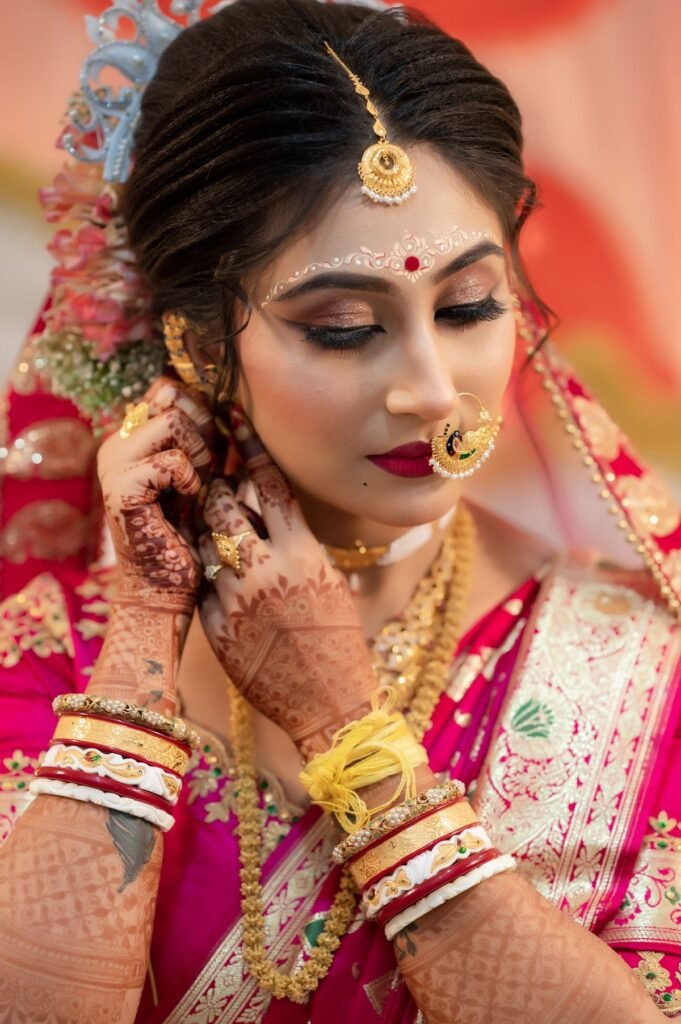
The engagement asks a saree to do something subtle: celebrate at full warmth while leaving the wedding day its thunder. Choose a fabric with presence but not weight, soft silk, Jamdani, tissue, embroidered chiffon, a color from the engagement palette of pinks, greens, golds and jewel tones, and a drape pinned to survive blessings, hugs and a hundred photographs. Dress close family one step below the bride-to-be, let guests stay festive and light, and plan for banquet light, winter coats and after-work timing. Do that, and the engagement saree becomes what it should be: the beautiful first chapter of the wedding story, not a rehearsal for it.