
 Image credit: Pexels
Silk is the fabric most closely associated with wedding sarees, and color is the decision that shapes everything else about the look. The best silk saree colors for weddings range from the classic bridal reds that have signaled celebration for centuries to the soft pastels now favored for daytime ceremonies. This guide walks through the color families that work, the contrast border combinations that make silk sarees so distinctive, and how to narrow the choice by skin tone, season, time of day and your role in the wedding, whether you are the bride or a guest.
- Why Color Works Differently on Silk
- Classic Bridal Reds and Maroons
- Gold, Champagne and Metallic Silks
- Royal and Jewel Tones
- Pastels for Daytime and Modern Weddings
- Contrast Border Combinations
- Choosing a Color for Your Skin Tone
- Colors by Season and Time of Day
- Bride vs. Guest: Color Etiquette
- Quick Reference: Silk Saree Colors at a Glance
- Frequently Asked Questions
- Conclusion
Why Color Works Differently on Silk
Silk does not hold color the way cotton or synthetics do. Its natural sheen reflects light, so a shade that looks flat on another fabric gains depth and a subtle glow on silk, red becomes richer, blue becomes deeper, and gold zari woven through the border or body catches the light as you move. The same dye can also read differently from one silk to another: a color on a smooth, lustrous silk looks brighter than the identical shade on a textured, matte-leaning silk. If you are comparing swatches or shopping online, it helps to understand how the main saree fabrics behave, and to view the saree in natural light before deciding, because indoor lighting and screens can shift jewel tones significantly.
Color also carries meaning at a South Asian wedding. Certain shades are tied to specific rituals and regions, and guests are expected to observe a few long-standing conventions. The sections below balance both sides: what looks good, and what is appropriate.
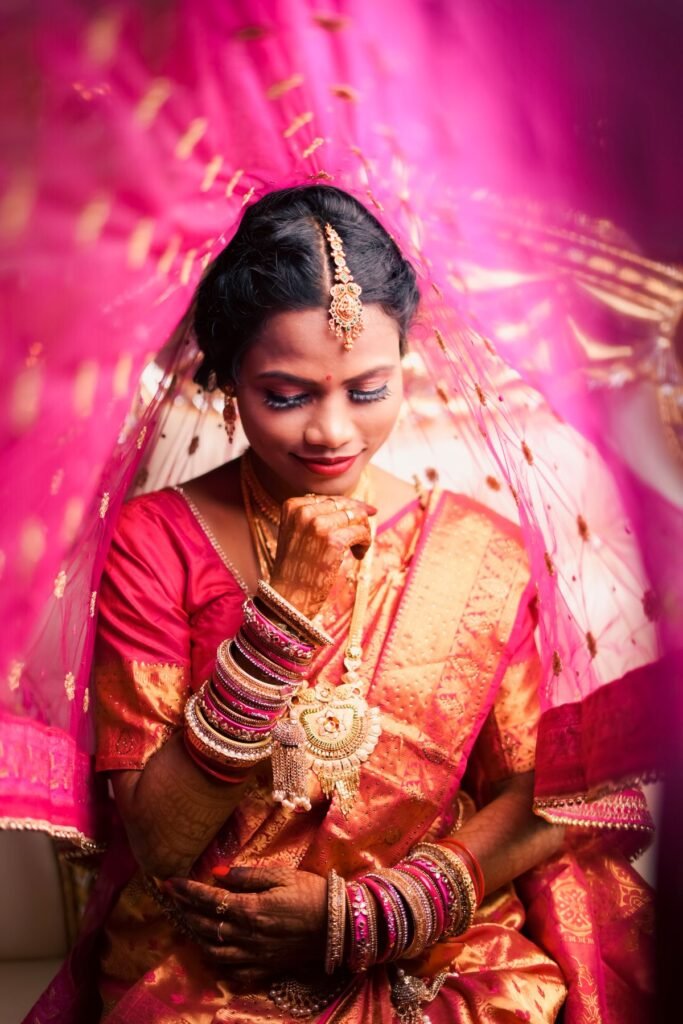
Classic Bridal Reds and Maroons
Red is the eternal bridal color. In Indian wedding tradition it symbolizes love, prosperity, strength and fertility, and it remains the most celebrated choice for the main ceremony. A deep red Kanjivaram from the South or a red Banarasi from the North instantly reads as bridal, especially with gold zari work.
Within the red family there is real range:
- Bright and sindoor reds, vivid, ceremonial and unmistakably bridal; best for the main ceremony and temple weddings.
- Crimson and ruby reds, slightly deeper, with a jewel-like quality that photographs beautifully.
- Maroon and burgundy, the most forgiving end of the family; rich without being loud, and a popular choice for receptions and for brides who find bright red overpowering.
- Wine and deep magenta-reds, a modern middle ground many brides now choose when they want tradition with a contemporary edge.
Red and maroon are traditional choices for the ceremony itself. If you are a guest, this is the one family to approach with care, see the etiquette section below.
Gold, Champagne and Metallic Silks
Gold is the second great wedding color, and on silk it needs no embellishment to look festive. An all-gold or gold-toned silk saree, including tissue silks woven with metallic thread, has a luminous, regal quality that suits evening ceremonies and receptions. Champagne, bronze and rose gold soften the effect for brides who want shine without the intensity of yellow gold, and silver-toned silks offer a cooler, more contemporary alternative that pairs well with pastel or jewel-toned blouses.
Metallics are also the safest supporting color. Because gold and silver zari appear in the borders and motifs of most wedding silks, a metallic blouse or border can unify almost any body color, which is why so many of the classic combinations below are built on a gold or silver accent.
Royal and Jewel Tones
Jewel tones are the show-stoppers of the wedding palette, and silk is the fabric that shows them at their best. The core family:
- Emerald and forest green, associated with life, nature and new beginnings; green holds special significance in Maharashtrian and Telugu wedding traditions and is a natural choice for mehndi events as well.
- Royal blue, sapphire and peacock blue, deep blues with gold zari are a classic Banarasi pairing; blue is less traditional for the bride in some regions, which makes it a favorite for receptions and for guests.
- Ruby, rani pink and magenta, saturated pinks sit between red and pastel: festive, flattering and strongly photogenic.
- Amethyst, plum and deep purple, regal and slightly unexpected; plum and berry tones are flattering across most skin tones and work especially well for evening functions.
- Deep teal, the bridge between blue and green, widely flattering and perennially strong for evening wear.
Jewel tones stay vivid in photographs and video, which is one reason they dominate wedding albums. They are also the most versatile family for guests, since they are festive without borrowing the bride’s red.
Pastels for Daytime and Modern Weddings
Soft pastels, blush pink, mint green, lilac, peach, powder blue and ivory, have become the signature palette of the modern daytime wedding. On silk, a pastel reads as quiet luxury: elegant, gentle and well suited to morning ceremonies, outdoor venues and summer celebrations. Brides who prefer a minimalist look increasingly choose pastels for the main event, and they are an easy, safe choice for daytime guests.
Two practical notes. First, very pale pastels can look washed out under strong lights or in flash photography unless the saree has zari or woven detail to catch the light, a pastel with a gold or silver border solves this. Second, one pastel-adjacent combination is deeply traditional rather than trendy: off-white and gold silk, worn extensively by South Indian brides, where the ivory body acts as a canvas for rich gold borders and motifs.
Contrast Border Combinations
Many wedding silks, Kanjivaram sarees above all, are two-color garments: a body in one shade set against a border and pallu in a contrasting one. The contrast is created in the weave itself, and the border’s motifs and zari are a large part of what makes the saree read as “wedding.” Understanding the classic saree designs and patterns used on borders helps you judge how bold a combination will look when draped. Combinations that recur across bridal collections:
| Body Color | Border / Accent | Character |
|---|---|---|
| Red | Gold | The timeless bridal pairing |
| Royal blue | Gold | Regal; striking in Banarasi silk |
| Mustard yellow | Maroon or gold | Auspicious; classic for ceremonies and haldi |
| Pink (rani or blush) | Gold | Rich yet soft; universally flattering |
| Off-white / ivory | Gold | Understated; a South Indian bridal staple |
| Peach | Gold | Romantic; ideal for daytime and summer weddings |
| Lavender | Silver | Cool, contemporary; good for receptions |
| Cobalt blue | Hot pink | Bold, high-contrast, festive |
| Dusty pink | Champagne gold | Soft glow; suits cocktail and reception looks |
| Olive green | Rose gold | Earthy and modern; quiet sophistication |
When in doubt, let the border do the work: a deep or neutral body with a rich zari border is easier to style and re-wear than an all-over bright saree.

Choosing a Color for Your Skin Tone
Silk’s sheen makes undertone matching more noticeable, not less. A useful starting framework:
- Warm undertones, lean toward red, orange, mustard, coral and gold-based shades; warm jewel tones such as emerald and teal also sit well.
- Cool undertones, blue-based colors flatter most: royal blue, emerald, pink, plum and silver accents.
- Fair or light skin, the widest range works. Pastels that wash out other complexions, powder blue, blush pink, mint, lavender, ivory, look beautiful, and deep reds, royal blue and emerald provide dramatic contrast.
- Medium or wheatish skin, warm colors are especially flattering: terracotta, mustard, coral, rust, teal and royal blue. Jewel tones are broadly reliable. Very pale yellows and washed-out peachy pinks can read dull against a warm complexion.
- Deep or dusky skin, bold, saturated color is the strongest ally: bright orange, cobalt blue, hot pink, royal purple, emerald and bold red all gain striking contrast. Very pale pastels are the shades most likely to fall flat.
Treat these as starting points, not rules, drape the fabric near your face in natural light and trust what you see over any chart.
Colors by Season and Time of Day
Daytime and outdoor weddings favor lighter, softer color: pastels, peach, coral, sage and ivory read fresh in natural light and are more comfortable in warm weather. Evening ceremonies and receptions are where jewel tones and metallics earn their keep, deep emerald, ruby, sapphire, plum and gold deepen under warm indoor lighting and in photographs.
Season matters too. Spring and summer weddings suit the lighter end of the palette, while autumn and winter weddings carry deep, rich shades, maroon, forest green, navy, plum, naturally. Individual functions have their own conventions as well: yellow and saffron for haldi, greens for mehndi, the strongest color reserved for the main ceremony, and more freedom at the reception, where ivory, champagne, emerald, plum and deep navy all work.
Bride vs. Guest: Color Etiquette
The bride’s color choices are governed by tradition and personal taste; guests have a simpler brief, look festive without competing. The widely observed guidelines:
- Avoid the bride’s red. Red is the bride’s color at most Hindu weddings; guests traditionally steer clear of bridal red (and of matching the bride’s exact shade in any color) so as not to upstage her.
- Avoid white at the ceremony. White signifies mourning in most Hindu traditions. Ivory and off-white with strong gold work are worn by brides in some regions, which is another reason guests should be cautious with pale neutrals.
- Avoid black at the ceremony. Black is considered inauspicious for the ritual itself, though it is increasingly accepted at receptions and sangeets, when in doubt, ask the family.
- Guests shine in jewel tones. Emerald, royal blue, purple, magenta, teal and gold silk are the dependable guest palette for the ceremony; pastels such as lilac, sage and dusty rose suit daytime events.
- Close family can go richer. Mothers of the bride and groom traditionally choose dignified, deeper tones, wine, gold, emerald, royal blue, that complement the bride without matching her.
Quick Reference: Silk Saree Colors at a Glance
| Occasion | Strong Choices | Notes |
|---|---|---|
| Bride, main ceremony | Red, maroon, crimson, gold | The traditional palette; jewel tones are the modern alternative |
| Bride, daytime/modern | Blush, peach, ivory & gold, champagne | Add zari detail so pale shades photograph well |
| Bride, reception | Emerald, plum, navy, wine, rose gold | More freedom; metallics work well |
| Guest, ceremony | Emerald, royal blue, magenta, teal, gold | Avoid bridal red, white and black |
| Guest, daytime | Pastels, sage, dusty rose, coral | Festive without competing with the bride |
| Guest, evening | Jewel tones, teal, plum, metallics | Deep shades suit indoor lighting |
Frequently Asked Questions
Q: What is the most popular silk saree color for a bride?
Red, in its many forms, bright red, crimson, maroon and burgundy. Red symbolizes love, prosperity and fertility in Indian wedding tradition, and a red silk saree with gold zari, whether a Banarasi or a Kanjivaram, remains the classic choice for the main ceremony. Modern brides also choose emerald, wine, gold and pastels, but red is still the color most associated with a bride.
Q: Can a wedding guest wear a red silk saree?
Traditionally, no. Red is reserved for the bride at most Hindu weddings, and a guest in bridal red risks upstaging her. Deep maroon or wine can also sit too close to the bridal palette at some weddings. Guests are better served by jewel tones, emerald, royal blue, magenta, teal, plum or gold, which look equally festive. If you are unsure, ask the bride or her family.
Q: Which silk saree colors work best for a daytime wedding?
Pastels and lighter shades: blush pink, peach, mint green, lilac, powder blue, sage and ivory. They read fresh in natural light and suit outdoor and summer venues. If you choose a very pale shade, look for zari borders or woven detail, which keep the saree from looking washed out in bright light and photographs.
Q: Which saree colors look best in wedding photographs?
Rich jewel tones, red, maroon, magenta, emerald and royal blue, stay vivid in both photos and video, and gold zari accents catch the light attractively. Very pale pastels are the risky end of the spectrum under strong lighting or flash, unless the saree has metallic threadwork to give it definition.
Q: Which colors should wedding guests avoid in a silk saree?
Three, at the ceremony itself: red, because it is the bride’s color; white, because it signifies mourning in most Hindu traditions; and black, because it is considered inauspicious for the ritual. Black is increasingly acceptable at receptions and sangeet parties, and regional customs vary, so a quick check with the hosts is always worthwhile.

Conclusion
The best silk saree colors for weddings start from a small set of proven families: reds and maroons for the classic bride, golds and metallics for shine, jewel tones for depth and photographs, and pastels for daytime ease. From there, the right choice is the one that fits your skin tone, the season and hour of the event, and your role in it. Silk rewards saturated color like no other fabric, pick the shade that suits the occasion, let the zari border do its work, and the saree will carry the celebration.