
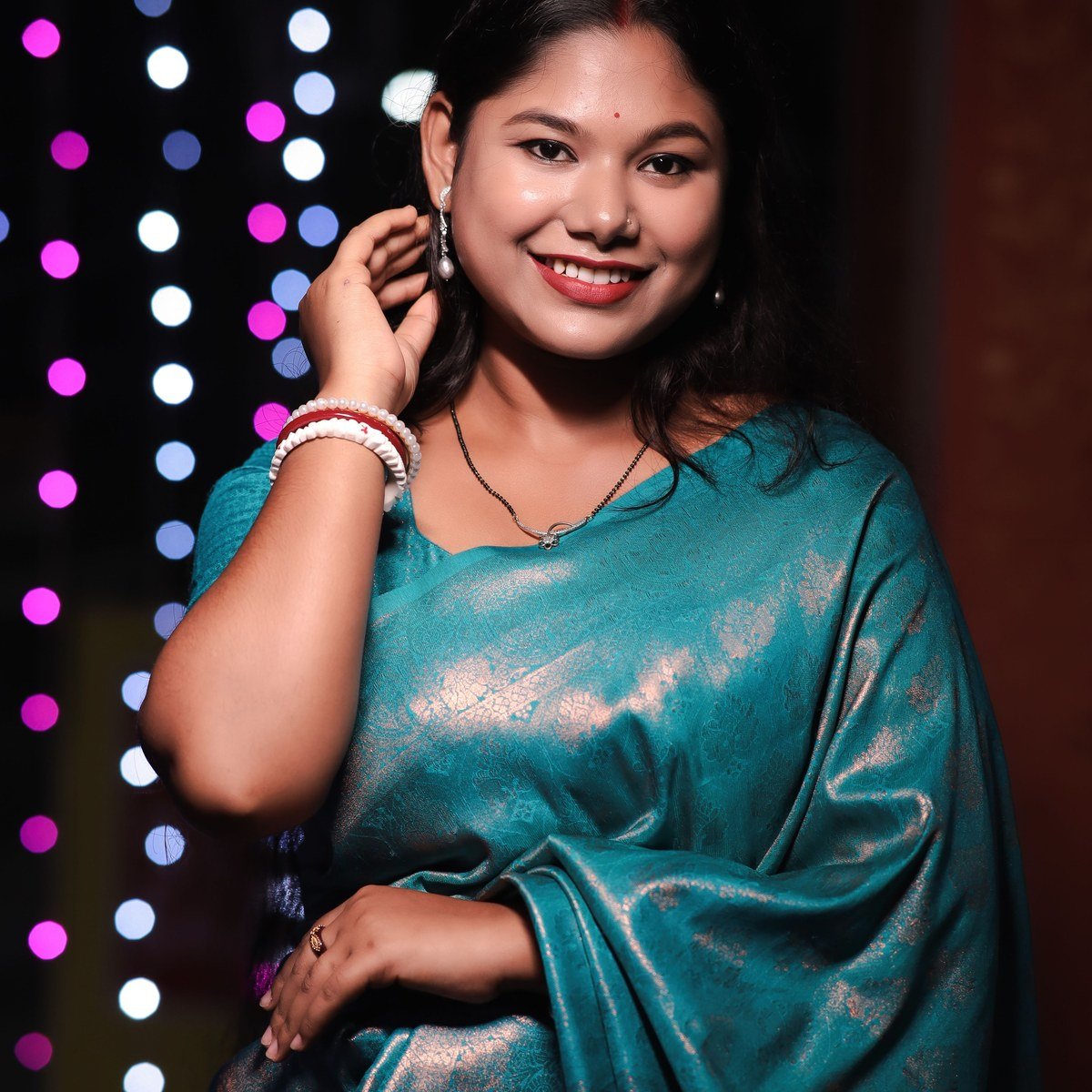
 Image credit: Pexels
A saree at a party does something no other outfit in the room can do: it moves. The drape catches light when you turn, the pallu shifts when you dance, and the whole look keeps changing across the evening. Getting that effect on purpose, rather than hoping your one formal saree behaves, is a learnable system. This guide on how to style a saree for a party walks through it in a stylist’s order: the party itself first, then fabric, blouse, drape, jewelry, and the finishing touches of hair, makeup, footwear and clutch. It covers cocktail evenings, birthdays, office parties and festive celebrations, including the most common American scenario of all, going to the party straight from somewhere else, with fifteen minutes to transform.
- Start With the Party, Not the Saree
- Fabrics That Read as “Party”
- The Blouse Does the Heavy Lifting
- Drapes That Stay Put and Photograph Well
- Jewelry: One Statement at a Time
- Hair, Makeup, Footwear and the Clutch
- Day to Evening: The Five-Minute Transformation
- Dance-Proofing and Comfort Checks
- Frequently Asked Questions
- Conclusion
Start With the Party, Not the Saree
“Party” covers at least four different dress codes, and the same saree styled the same way will be right for one and wrong for another. Read the event first: the venue, the hour, whether there is dancing, and who is hosting.
| Party type | Saree direction | Blouse and jewelry register |
|---|---|---|
| Cocktail evening | Black, wine or jewel tones; chiffon, satin-finish or sequin sarees | Sleeveless, halter or deep-back blouse; one bold piece, earrings or a choker, not both |
| Birthday or house party | Bright or printed georgette and chiffon; lighter, easier fabrics | Fun blouse, puff sleeves, a print, a contrast color; relaxed jewelry |
| Office party | Jewel-tone or softly metallic saree with a clean finish; nothing heavily embellished | Tailored blouse with real coverage; polished, minimal jewelry |
| Festive party (Diwali, Eid, holiday season) | Silk, tissue or embroidered sarees in festive colors with gold accents | Classic or embroidered blouse; traditional gold jewelry welcome |
| Wedding reception or evening celebration | The dressiest register: rich silk, sequin or shimmer sarees | Statement blouse; full jewelry, kept balanced against the saree’s own work |
When in doubt, dress to the host and the hour. An evening event in a hotel or banquet space supports shimmer and deeper color; a daytime or home party asks for brightness and ease instead. Overdressing slightly is almost always safer than underdressing, a saree forgives formality in a way a casual outfit at a formal party never does.

Fabrics That Read as “Party”
Party fabrics share two qualities: they move, and they catch light. Chiffon is the classic, sheer, fluid, falling close to the body, with the print or the drape carrying the mood. Georgette is its sturdier sibling, the most forgiving party fabric of all: it holds embroidery and sequins without becoming heavy, drapes easily and survives a long evening. Sequin and shimmer sarees are purpose-built for evening events, sparkling under every light source in the room, beautiful, and best kept for after dark. Satin and satin-silk blends give a sleek, camera-friendly gloss that suits cocktail dressing. Organza brings crisp structure and a fashion-forward silhouette for parties where you will mostly be standing, talking and being photographed. Tissue glows softly and suits festive parties especially.
Weight matters as much as shine. You will stand, sit, eat and possibly dance for hours, often in a warm room; a saree you forget you are wearing by the third hour is worth more than a spectacular one you are managing all night. Fine, light fabrics with little or no heavy surface work are the reliable party choice, and heavy bridal-register silks are better saved for ceremonies.
The Blouse Does the Heavy Lifting
If one element decides whether a saree looks party-ready, it is the blouse, the fitted choli worn with the saree. The governing rule is simple: one element leads, the other supports. A sequined, embroidered or boldly printed saree takes a plain blouse in a single complementary color. A plain or minimal saree takes a statement blouse, sequins, mirror work, an embroidered back, a corset cut, a halter or one-shoulder neckline, and becomes a party outfit on the strength of that swap alone.
The fastest party upgrades, in order of impact: a sleeveless blouse with a deep or detailed back, which makes almost any saree evening-ready; a sequin or metallic blouse under a plain saree; a corset-style bodice for structure and a contemporary line; and a contrast-color blouse that pulls an accent out of the saree’s border. Sleeve choices set the temperature of the look, sleeveless and cap sleeves read as evening, elbow sleeves as classic, sheer full sleeves as formal glamour. For the current design vocabulary across necklines, sleeves and backs, our overview of the latest saree blouse designs is the companion piece to this section. Whatever you choose, fit is non-negotiable: a party blouse that gaps at the armhole or slips at the shoulder will undo the whole look by the second hour.
Drapes That Stay Put and Photograph Well
The classic Nivi drape is the party default, and two variations cover most events. An open, flowing pallu shows off a beautiful fabric or border and photographs dramatically, the reception and cocktail choice. A pleated pallu, pinned at the shoulder, looks deliberate and sleek and is the practical choice whenever there is dancing, children, or a buffet line to navigate. A slim belt over the pallu adds a contemporary edge, defines the waist, and quietly holds everything in place; it works best on satin, georgette and organza. A pre-stitched saree removes draping from the equation, a good option for first-time wearers and for anyone getting ready in a hurry, styled with a bold blouse so the outfit still has a focal point.
If you want to move beyond the standard Nivi for a special event, these modern saree draping ideas collect the fresh variations, pant-style, lehenga-style and cape drapes among them, with notes on which fabrics each one needs. Whichever drape you pick, rehearse it once before the day if it is new to you; a drape you have worn for twenty minutes at home will not unravel your confidence at the party.
Jewelry: One Statement at a Time
Party jewelry follows the same one-lead rule as the blouse. Choose a single statement, chandelier or jhumka earrings, a choker, a stack of bangles, one striking ring, and let everything else go quiet. A heavy necklace and large earrings together compete with each other and with the saree’s neckline. Match the metal to the saree’s own accents: gold zari asks for gold jewelry, silver work for silver or oxidized pieces, and sequins for crystal or diamond-look pieces. A plain saree with a statement blouse can carry bolder jewelry; a worked saree with a plain blouse usually wants just earrings. When the party is festive rather than glamorous, Diwali, Eid, a family celebration, traditional gold jewelry is not too much; it is the point.
Hair, Makeup, Footwear and the Clutch
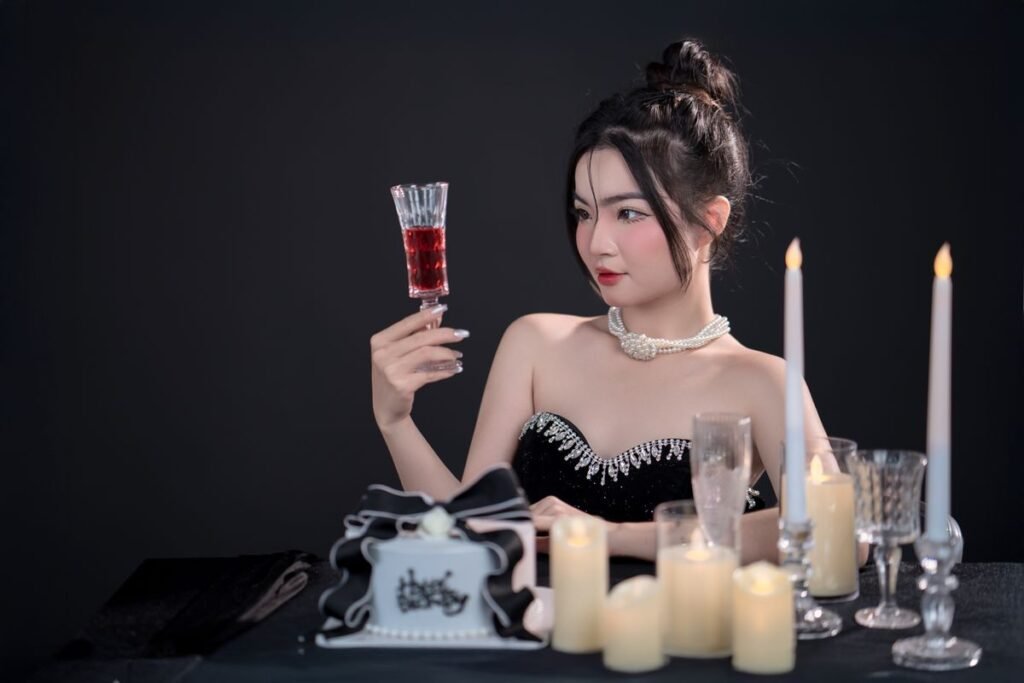
Hair. Soft waves and a sleek low bun are the two party standards: waves for chiffon and cocktail looks, the bun for silk and festive dressing, where it also keeps a heavy pallu and jewelry in clear view. A side-swept style suits one-shoulder and halter blouses. Whatever you choose, style hair to survive the evening, a party is four hours, not a photo shoot’s four minutes.
Makeup. Evening light forgives, and rewards, a stronger eye or a stronger lip, but not both at full volume. Match the intensity to the saree: a sequined saree wants polished, quieter makeup so the face is not competing with the fabric; a plain saree can carry the bold lip. Set everything properly; warm rooms and dancing are unkind to makeup that was only ever decorative.
Footwear. You will stand more than you expect. Block heels and wedges give height without the pain of stilettos on hard floors, and embellished flats are a completely respectable choice for house parties and long evenings. Wear the shoes when you drape: the saree’s hem should just graze the floor over your party footwear, and hemming your evening to the wrong shoes is how sarees get stepped on.
Clutch. A party look ends at the bag. A metallic clutch, an embellished potli or a small structured bag completes the outfit; a daytime handbag, however nice, quietly cancels the party register. Carry only what the evening needs, phone, lipstick, a few safety pins, because a saree outfit has no pockets and one hand is often managing the pallu.
Day to Evening: The Five-Minute Transformation
The most useful party skill is not buying a party saree, it is converting a daytime one. If you are going from work, a family lunch or daytime errands straight to an evening party, these swaps, in this order, do the transformation:
- Swap the blouse. The single biggest change. A sleeveless, sequined or deep-back blouse carried with you turns a day saree into an evening outfit instantly.
- Re-pleat or release the pallu. Loosen a neat daytime pallu into a flowing one, or re-pin it lower and narrower for a sleeker line.
- Add the statement. Put on the one bold piece of jewelry you left off all day, usually the earrings.
- Deepen the makeup. Add eyeliner or a stronger lip over your daytime base; five minutes, no full redo.
- Change the shoes and the bag. Heels on, clutch in hand. The silhouette and the register change together.
A jewel-tone georgette or a softly metallic saree is the best base for this trick, because it reads composed in daylight and glamorous under evening light without changing a thread of the drape itself.
Dance-Proofing and Comfort Checks
A party saree has to survive contact with real life: dancing, buffet plates, hugs, stairs and rideshares. Pin with intention, the pleats at the waist, the pallu at the shoulder, and one extra pin where the pallu meets the blouse if you plan to dance. Wear a petticoat with a firm drawstring, in cotton under fluid fabrics like chiffon, which slip against shiny satin petticoats. Before you leave, run the three-move test: raise both arms, sit down and stand up, and climb a few stairs. Anything that pulls, slips or needs re-tucking will do it worse at midnight. Pack a tiny rescue kit in your clutch, safety pins, a small strip of fashion tape, your lipstick, and then stop thinking about the saree. The whole point of styling it well is being able to forget it.
Frequently Asked Questions
Q: How do I style a saree for a party if I only have a simple saree?
Let the blouse and one accessory do the work. Pair the simple saree with a sequined, metallic or deep-back blouse, add one statement piece of jewelry, usually bold earrings, carry a metallic clutch, and wear heels. A plain saree styled this way reads as deliberately minimal and elegant, and it is the most reliable party formula there is.
Q: Which saree fabric is best for a party?
Georgette is the most versatile party fabric: light, fluid, easy to drape and able to carry embroidery or sequins without heaviness. Chiffon is the classic for soft, flowing looks, sequin sarees are the evening showpiece, satin blends suit cocktail dressing, and tissue and silk belong to festive parties. Choose by the hour, shimmer fabrics are for after dark.
Q: What blouse style works best for a party saree?
It depends on the saree. With a plain saree, choose a statement blouse, sequin, corset, halter, one-shoulder or an embroidered deep back. With a worked or sequined saree, choose a plain blouse in one complementary color so the two do not compete. In both cases, an exact fit matters more than the design itself.
Q: How do I keep my saree in place while dancing at a party?
Pin the pleats at the waist and the pallu at the shoulder, add one extra pin where the pallu meets the blouse, and wear a cotton petticoat with a firm drawstring so fluid fabrics have something to grip. A pleated, pinned pallu or a slim belt over the drape will survive a dance floor that an open, floating pallu will not.
Q: Can I wear a saree to an office party?
Yes, it is often the best-dressed choice in the room. Pick a jewel-tone or softly metallic saree without heavy embellishment, pair it with a tailored blouse that has real coverage, keep jewelry polished and minimal, and drape it neatly in a classic Nivi. It reads as formal and intentional, and it transitions from the workday better than almost any other outfit.

Conclusion
Styling a saree for a party is a sequence, not a shopping trip: read the party, choose a fabric that moves and catches light, let the blouse carry the statement, pin a drape that survives the evening, and finish with one piece of jewelry, considered hair and makeup, real shoes and a clutch. Master the day-to-evening swaps and a single good saree will cover every party on your calendar, cocktail, birthday, office or festival, each time looking like it was chosen for exactly that room. That is the real party skill: not a wardrobe of party sarees, but a saree you know how to make party-ready.