
 Image credit: Pexels
Most saree damage does not happen at weddings or festivals. It happens at the sink, in a single careless wash: hot water on cotton, a hard wring on chiffon, three colors soaking together until the lightest one comes out tinted. Learning how to wash sarees at home is less about one magic method and more about matching the method to the fabric. A mulmul cotton and a sequined georgette are both “sarees,” but they need almost opposite handling. This guide walks through the whole routine, sorting, testing, water, detergent, the wash itself, drying, fabric by fabric, and finishes with a simple framework for deciding which sarees should skip the sink entirely and go to a dry cleaner.
- Before You Wash: Sort, Check and Test
- Water, Detergent and Tools: The Safe Defaults
- The Basic Hand-Wash Method, Step by Step
- Cotton and Handloom Sarees: The Most Wash-Friendly
- Chiffon and Georgette Sarees: Light Hands Only
- Blends and Everyday Synthetic Sarees
- A Short Word on Silk
- Drying and Ironing Without Damage
- Wash at Home or Dry Clean? A Simple Decision Framework
- Frequently Asked Questions
- Conclusion
Before You Wash: Sort, Check and Test
Ten minutes of preparation prevents nearly every home-washing disaster. Start by sorting. Wash one saree at a time, never a mixed bundle, and group your laundry-day plans by fabric and by color depth. Deep reds, indigos and maroons are the most likely to release dye, so they always wash alone, especially for their first few washes.
Next, check the saree itself. Read the care label if it has one; it outranks any general guide, including this one. Shake the saree out, look for stains that need pre-treatment, and check borders and the pallu for loose threads, lifting sequins or embroidery that a wash could worsen. Remove detachable elements, and wash the blouse piece separately, it is usually a different fabric from the saree body.
Finally, test for colorfastness on any saree you have not washed before. Dampen a white cotton cloth, press it firmly against a hidden area such as the inner end of the pallu or the inside of the border fold, and hold for a minute. If color transfers to the cloth, the saree is not colorfast: wash it strictly alone in cold water, keep the wash short, or choose dry cleaning instead.
Water, Detergent and Tools: The Safe Defaults
Water. Cold to lukewarm water is the safe default for every saree fabric. Hot water shrinks cotton, sets many stains, encourages dye loss and can distort synthetic blends. If your tap water is very hard, it can leave sarees feeling stiff and looking dull; washing in the coolest water and rinsing thoroughly helps, and heavily embellished pieces are another argument for professional cleaning.
Detergent. Use a small amount of a mild, pH-neutral liquid detergent, the kind sold for delicates or woolens is ideal, and a gentle baby shampoo works in a pinch. Powders can leave residue in weaves if they do not fully dissolve. Avoid anything with bleach, optical brighteners or “oxy” boosters on colored or handloom sarees, and skip fabric softener on silk-like and embellished fabrics, where it can dull the surface.
Tools. A clean basin or bathtub large enough for the saree to move freely, a soft white cloth for spot work, and a thick dry towel for removing water afterward. That is genuinely all you need.
The Basic Hand-Wash Method, Step by Step
- Pre-treat spots. Dab a drop of diluted detergent onto any stain with a soft cloth. Never scrub; let it sit for a few minutes.
- Fill and dissolve. Fill the basin with cold or lukewarm water and fully dissolve a small amount of liquid detergent before the saree goes in.
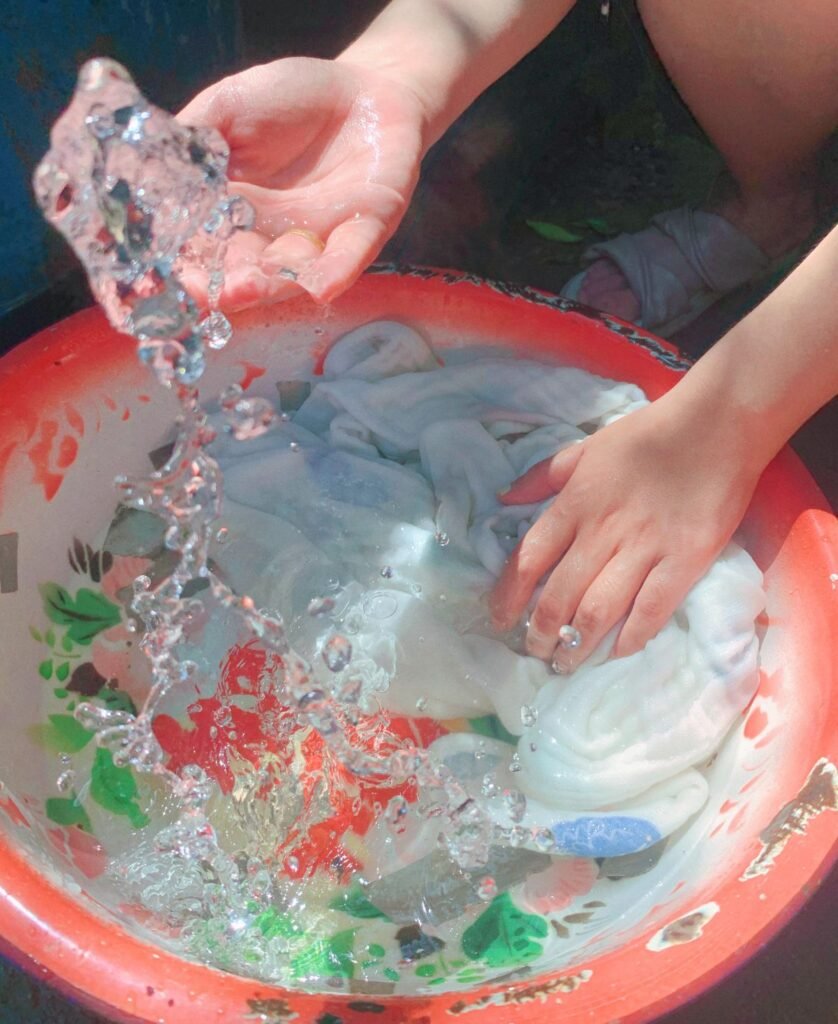
- Submerge gently. Lower the saree in, unfold it in the water, and press it down so it is fully wet. Keep total soaking time short, about 5 to 10 minutes for most fabrics, less for anything non-colorfast.
- Wash with your hands. Move the fabric through the water with gentle squeezing motions, paying attention to the areas that sit against the skin. Do not rub fabric against itself, twist it, or use a brush.
- Rinse clean. Drain and refill with plain cool water, pressing the saree gently until the water runs clear and no suds remain. Detergent left in the weave attracts dirt and stiffens the fabric.
- Remove water without wringing. Lift the saree supported in both arms, never by one end, since wet fabric is heavy and can stretch. Lay it on a dry towel, roll the towel up, and press to draw out the water.
Cotton and Handloom Sarees: The Most Wash-Friendly
Plain cotton sarees, tant, mulmul, khadi and everyday handlooms, are the most forgiving to wash at home. Use cold water, wash dark colors separately for the first few washes, and keep soaking brief, because cotton dyes, especially in handloom pieces, can bleed when left sitting in water. A traditional practice for a brand-new cotton saree is to add a small handful of salt to the first wash water to help set the dye; whether or not you use it, short and cold is the rule that matters. Our guide to the different types of cotton sarees explains how the common weaves differ, which is useful because a crisp tant and a feather-light mulmul should not be handled with the same confidence.
Handloom sarees deserve one extra caution. Weaves such as Jamdani, whose motifs are inlaid by hand, can distort if the wet fabric is pulled or hung carelessly. Support the whole saree when lifting it, avoid hanging it by the pallu, and dry it flat or evenly draped over a line in the shade. Cotton sarees can be ironed once almost dry; starch, if you like a crisp finish, should be light and even.
Chiffon and Georgette Sarees: Light Hands Only
Chiffon and georgette are washed for their drape, and rough handling is exactly what destroys it. Hand wash in cool water with a tiny amount of mild detergent, using the press-and-release motion from the basic method, never rub, never wring, and never twist, because these fabrics crease, snag and lose their fall easily. Keep the soak short, rinse gently, and use the towel-roll method to remove water.
Embellishment changes the calculation. Sequins, beadwork, glued stones and heavy embroidery can loosen, crack or bleed color in water, and foil prints can fade. A plain chiffon or georgette saree is a reasonable home wash; a heavily worked party saree is a dry-clean candidate, and spot cleaning between wears will extend its life more than repeated full washes.

Blends and Everyday Synthetic Sarees
Art silk, polyester and blended sarees are the sturdiest in most wardrobes and the most tolerant of home washing. They hold dye well and resist shrinking, so a gentle hand wash in cool water is all they need. These are also the only sarees where a machine is a realistic option: if the care label allows it, use a mesh laundry bag, the delicate cycle, cold water and no spin or the lowest spin, then remove the saree promptly. Keep blends away from hot water and hot irons, which can glaze or melt synthetic fibers, and wash printed blends inside out to protect the print.
A Short Word on Silk
Silk is the exception in this guide, deliberately. Some lightweight silks can be hand washed successfully with silk-safe detergent and very gentle handling, but zari borders, brocades and heirloom pieces are easily ruined by water, and the margin for error is small. Because the technique deserves more than a paragraph, follow our dedicated step-by-step guide on how to wash silk sarees at home if you decide to wash one yourself, and when in doubt, dry clean.
Drying and Ironing Without Damage
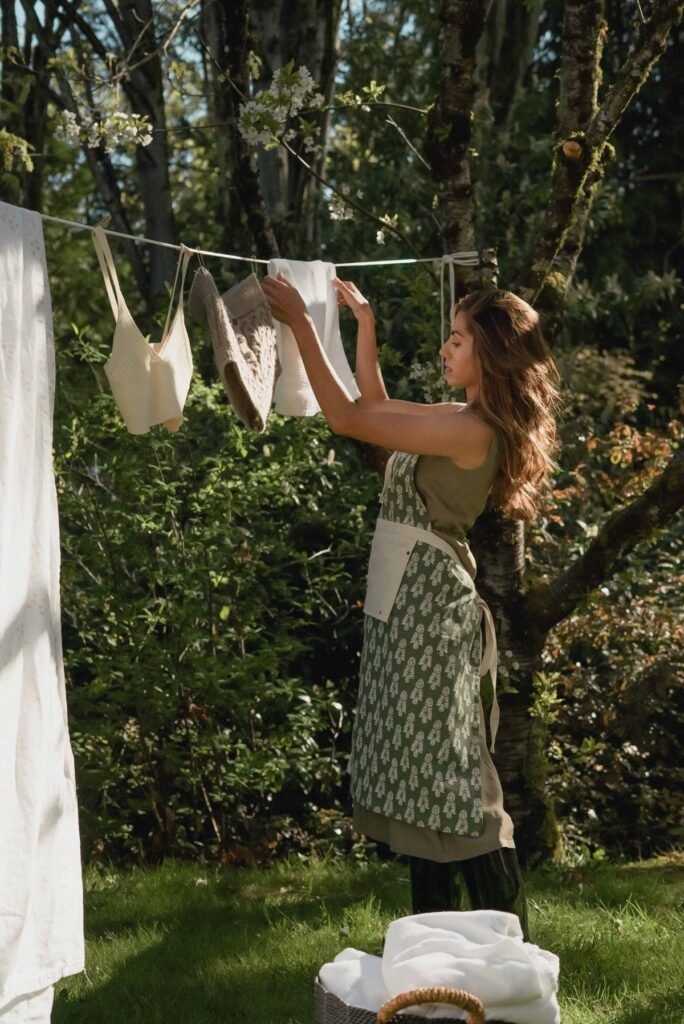
Dry every saree in the shade, always. Direct sunlight fades dyes faster than almost anything else in a saree’s life, and it can yellow pale fabrics. Drape the saree evenly over a line or a wide hanger so the weight is distributed, and straighten borders and pleats with your hands while damp. Cotton dries happily on a line; delicate and handloom pieces do better laid flat or evenly supported. Never leave a wet saree bunched up, it will dry with creases and can develop a musty smell.
Iron on the setting that matches the fabric, ideally while the saree is still very slightly damp. Cotton takes a hot iron; blends and synthetics need low heat; chiffon and georgette prefer a cool iron or gentle steamer. Test the iron on a hidden corner first, and iron embellished areas from the reverse side or not at all.
Wash at Home or Dry Clean? A Simple Decision Framework
| Saree type | Home wash? | Notes |
|---|---|---|
| Plain cotton, tant, mulmul | Yes | Cold water, wash darks alone at first |
| Handloom cotton, Jamdani | Yes, with care | Short soak, support when lifting, dry evenly in shade |
| Plain chiffon or georgette | Yes | No rubbing or wringing; towel-roll to remove water |
| Embellished chiffon, sequin or stone work | Usually no | Water loosens glue and work; dry clean |
| Polyester and art silk blends | Yes | Gentlest option: mesh bag, delicate cycle if label allows |
| Pure silk without zari | Sometimes | Only if colorfast and you follow a silk-specific method |
| Silk with zari, brocade, heirloom pieces | No | Dry clean with a cleaner experienced in sarees |
| Non-colorfast or care label says dry clean only | No | The label and the dye test outrank any guide |
The pattern underneath the table is simple: the more a saree’s value sits in its weave, metal thread, surface work or dye, the stronger the case for professional cleaning. The more it is an everyday woven fabric, the more confidently you can wash it at home.
Frequently Asked Questions
Q: Can I wash a saree in a washing machine?
Sometimes. Sturdy polyester and art silk blends can go through a delicate cold cycle inside a mesh laundry bag if the care label permits it. Cotton sarees are safer hand washed, because machine agitation and spinning encourage dye loss and tangling, and silk, chiffon, georgette, handloom and embellished sarees should never go in a machine. When in doubt, hand washing takes fifteen minutes and removes the risk.
Q: How often should I wash my sarees?
Only when they need it. A saree worn for a few hours at an indoor event can usually be aired in the shade and worn again; wash after heavy wear, visible soiling, food spills or noticeable odor. Every wash costs a saree a little color and softness, so spot cleaning small marks and airing after wear will extend the life of your whole wardrobe.
Q: Why did my saree’s color bleed, and how can I prevent it?
Color bleeds when loose dye meets water, most often in the first few washes, in warm water, or during long soaks, and dark handloom and cotton dyes are the usual culprits. Prevent it by washing one saree at a time in cold water, keeping soaks short, and testing colorfastness on a hidden corner before the first wash. If a saree keeps bleeding after several washes, retire it to dry cleaning.
Q: Can I use regular laundry detergent on sarees?
Regular detergent is too harsh for delicate sarees: it can strip dye, dull zari and leave residue in fine weaves. Use a small amount of mild, pH-neutral liquid detergent made for delicates or woolens. Sturdy synthetic blends tolerate regular detergent better, but a mild liquid is still the safer habit for anything you want to keep for years.
Q: Should I wash a new saree before wearing it for the first time?
It depends on the fabric. Many cotton sarees are sold with starch in the weave and feel softer after one gentle cold wash, and a first wash also reveals whether the dye is fast. Silk, zari and embellished sarees should not be washed before wearing, air them instead. Always run the colorfastness test first so the first wash holds no surprises.
Conclusion
Washing sarees at home comes down to three habits: sort and test before anything gets wet, keep the water cold and the detergent mild, and handle every fabric as gently as the most delicate one in the pile. Cotton, handloom, chiffon, georgette and blends all reward that routine with years of extra life, while silk with zari, heavy embellishment and non-colorfast pieces earn their trip to the dry cleaner. Match the method to the saree in front of you, and home washing stops being a gamble and becomes the easiest part of saree care.