
 Image credit: Pexels
A belt is the smallest addition you can make to a saree, and it changes the most. One well-placed belt gives six yards of fabric a defined waist, holds restless pleats and a sliding pallu in place, and turns a classic drape into a polished, contemporary look. Belted sarees have moved from runway styling to real weddings, receptions and office parties across the US, and the idea is not even new. South Asian women have cinched sarees at the waist for centuries with the kamarbandh and oddiyanam. This guide covers how to wear a saree with a belt the right way: which belt to choose, which sarees belt beautifully (and which to leave alone), and exactly where and how to place it.
Why a Belt Works So Well With a Saree
The saree is an unstitched garment, which is its beauty and its challenge. Everything, the pleats, the tuck, the pallu over the shoulder, is held by friction, folds and a few pins. A belt adds one firm anchor point at the waist, and that single change solves several problems at once:
- It restores your waist. Layers of wrapped fabric can hide your natural shape. A belt marks the waistline clearly and creates a balanced, hourglass proportion.
- It locks the pleats. The front pleats are trapped under the belt, so they stay even and centered instead of fanning out or shifting as you walk.
- It keeps the pallu in place. When the belt passes over the base of the pallu, the pallu stops sliding off the shoulder, a relief at long events where you are greeting, eating and dancing.
- It carries the weight at the waist. Instead of the drape hanging from one shoulder, the belt distributes the hold, so the whole outfit feels more secure.
- It adds finish without more jewelry. A metallic or embellished belt gives the outfit a focal point, which is useful when the neckline is busy or you want to skip a heavy necklace.
If you are newer to draping, it helps to first be comfortable with the basic parts and fall of the garment, our guide to what a saree is walks through the pleats, pallu and standard drape that the belt builds on.
Types of Belts You Can Wear With a Saree
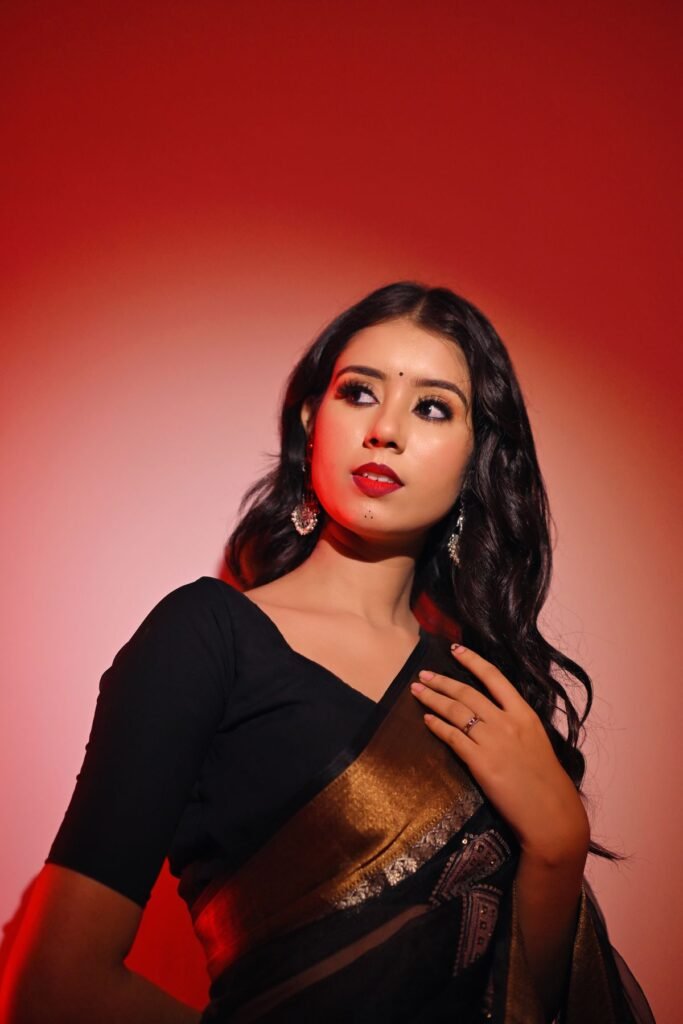
“Saree belt” covers two families: traditional waist ornaments that were designed for the saree, and modern fashion belts borrowed from Western wardrobes. Both work, the occasion and the saree decide which one.
| Belt type | What it is | Best with |
|---|---|---|
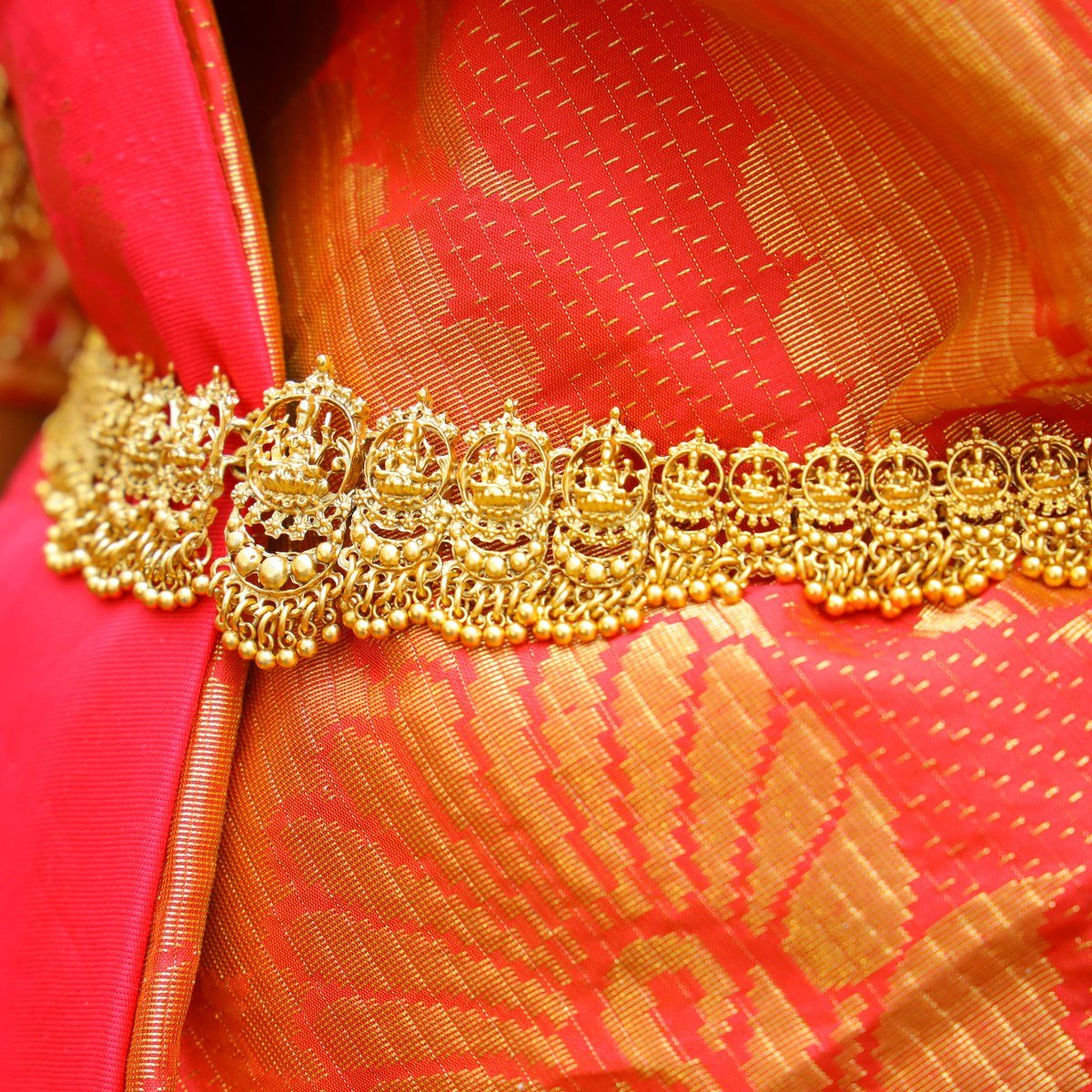
| Kamarbandh / oddiyanam | The traditional waist belt or chain: a broad gold or gold-finish band (oddiyanam in Tamil tradition) or a slimmer chain (kamarbandh), often with temple or coin motifs | Silk sarees, bridal and festive wear, temple jewelry looks |
| Metal chain belt | A slim gold- or silver-tone chain, sometimes layered or with small pendants | Evening sarees, cocktail drapes, plain silks that need a line of shine |
| Leather belt | A standard slim or medium leather (or faux-leather) belt with a simple buckle | Indo-western fusion, cotton-silk and linen sarees, office and daytime looks |
| Fabric belt | A belt made from matching or contrasting cloth, brocade or the saree’s own border fabric, usually tying at the back | Designer-style seamless looks, festive sarees, coordinated outfits |
| Embellished belt | A belt decorated with sequins, mirror work, embroidery, stones or beads | Sangeet, reception and party sarees; plain sarees that need a statement |
| Wide corset-style belt | A broad, structured belt that sits high on the waist like a mini corset | Plain or lightly worked sarees, fashion-forward cocktail styling |
Width matters more than most people expect. Slim belts (under an inch) give a fine line of definition and suit petite frames and busy sarees. Medium widths (about 1 to 1.5 inches) are the safe all-rounders for most sarees and body types. Wide belts (around 3 inches) make a strong statement and need a plain, calm saree underneath, on an already ornate saree, a wide embellished belt competes instead of complementing.
Which Sarees and Fabrics Belt Best
Fluid fabrics benefit most from a belt, because the belt supplies the structure the fabric lacks. These are the easiest wins:
- Georgette and chiffon, light, flowing and prone to shifting; a belt anchors them and sharpens the silhouette.
- Satin and soft silk, smooth surfaces let a belt sit flat and look sleek; a metallic belt on plain satin is a classic evening combination.
- Organza, a slim belt tames organza’s volume and stops the drape from billowing.
- Plain cotton-silk and linen, perfect partners for a leather or fabric belt in daytime fusion looks.
- Pre-draped and ready-to-wear sarees, a belt finishes the look and hides the join lines of the pre-stitched drape.
Use caution, or skip the belt entirely, with these:
- Very heavy zari silk sarees. A bridal Kanjivaram or a dense Banarasi already has a broad, ornate border doing the visual work at the waist and pallu. A belt can crush and abrade delicate zari threads where it rubs, and it usually fights the border for attention. If you belt a silk saree, choose a smooth, soft-lined belt and a lighter weave.
- Heavily embellished sarees. All-over embroidery, sequins or beadwork plus a statement belt is almost always too much; the textures snag against each other as well.
- Very sheer, delicate fabrics. Fine net or tissue can bunch and pucker under a tight belt instead of lying flat.
Our overview of saree fabrics explained goes deeper on how each fabric drapes and behaves, which is exactly the knowledge that predicts whether a belt will help or hinder.
How to Wear a Saree With a Belt, Step by Step
The belt always goes on last, over a fully finished drape. Work in this order:
- Drape the saree completely first. Finish your usual Nivi drape: tuck, wrap, make the front pleats and tuck them in centered, then bring the pallu over your shoulder.
- Arrange the pallu the way you will wear it. Decide whether the pallu will be pinned at the shoulder, left flowing, or pleated neatly, the belt will hold whatever arrangement you choose, so choose before belting.
- Position the belt at your natural waist. That is the narrowest point of your torso, usually just above the navel, not at the hips. Pass the belt over the front pleats and over the lower edge of the pallu where it crosses the waist, so both are trapped underneath.
- Fasten at the back. Buckle, clasp or tie the belt behind you, under the fall of the pallu, so the fastening stays hidden and the front looks clean.
- Set the snugness. The belt should feel firm enough to hold the pleats when you walk, but loose enough that you can sit, eat and breathe comfortably. If the fabric bunches above or below the belt, it is too tight.
- Add a hidden anchor if needed. For a long event, one small safety pin through the belt’s inner edge into the petticoat (hidden underneath) stops any slow downward slide.
- Do the mirror and movement check. Smooth the pleats below the belt so they hang straight, check the buckle sits centered (or deliberately just off-center for a modern touch), then walk, sit and raise your arms once before you leave.
One variation worth knowing: for a longer, leaner line, belt only the pleats and let the pallu fall freely in front of the belt instead of trapping it. The look is softer and less structured, and suits daytime wear.
Styling a Belted Saree for Different Occasions
Festive and wedding guest. Reach for tradition: a gold-finish kamarbandh or an embellished fabric belt over a silk or silk-blend saree, paired with temple or gold jewelry. Keep the rest of the jewelry coordinated rather than maximal, the belt is already a major gold element at the center of the outfit.
Cocktail and reception. This is where the belted saree shines brightest in the US. A slim metallic chain belt or a jeweled belt over a satin, georgette or sequin saree reads modern and intentional. Skip the necklace if the belt is ornate, and let statement earrings do the work.
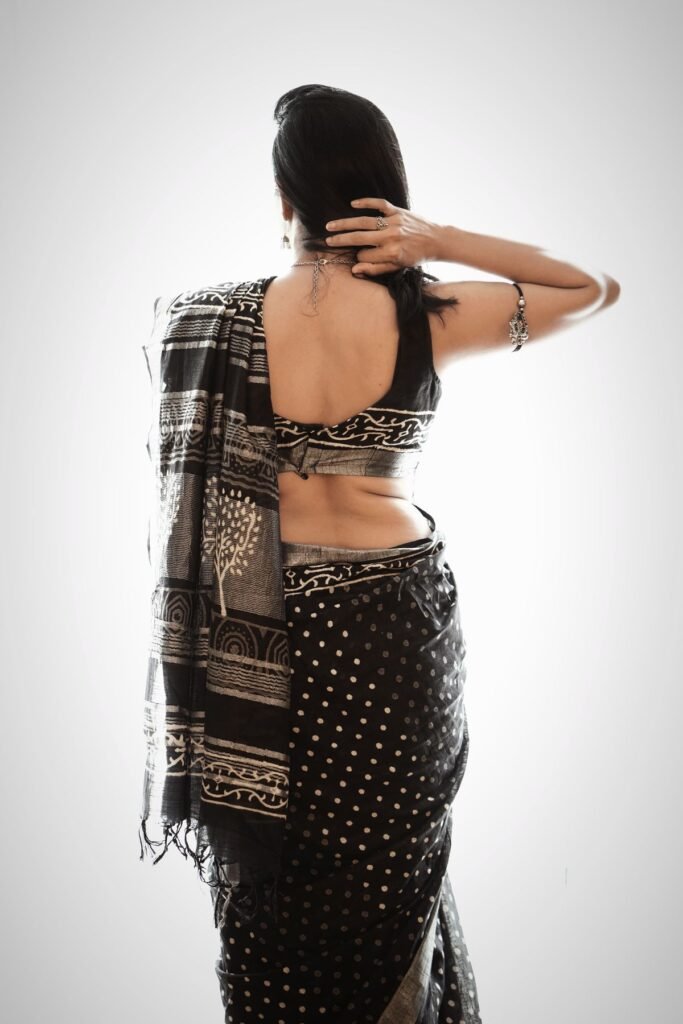
Office and fusion wear. A slim leather belt over a plain cotton-silk, linen or handloom saree gives a structured, blazer-like neatness. Choose matte finishes and a simple buckle, and keep jewelry minimal. It is also a practical choice: the drape stays put through a full workday.
Casual daytime. A fabric or braided belt in a contrasting color adds interest to a simple printed cotton saree for brunches and day events. Keep the width slim and the finish matte, shine belongs to the evening.
Common Mistakes to Avoid
- Wearing the belt too low. Hip-level placement shortens the torso, looks sloppy within an hour and lets the belt slide. Natural waist, always.
- Belting too tightly. Bunched fabric above and below the belt, and discomfort when sitting, mean it is a notch too tight.
- Double statements. A wide embellished belt on a heavily embroidered saree with heavy jewelry, pick one hero piece.
- Ignoring the blouse neckline. High-neck blouses pair best with slim belts; deeper necklines can carry wider, bolder belts.
- Belting fragile zari without protection. Rough buckles and unlined metal edges can snag woven gold thread; choose smooth, lined belts for silk.
- Excess belt length hanging loose. Tuck or loop the tail neatly at the back so it does not flap against the drape.
- Skipping the sit test. A belt that only works standing up will not survive a wedding dinner.
Frequently Asked Questions
Q: Can I wear a belt with any saree?
Almost, fluid and plain sarees in georgette, chiffon, satin, organza, cotton-silk and light silk belt the best. Be careful with very heavy zari silks, densely embroidered sarees and extremely sheer fabrics, where a belt can snag threads, fight the design or bunch the cloth. On those, the traditional draped look is usually stronger without one.
Q: Where should a saree belt sit, at the waist or the hips?
At the natural waist, the narrowest part of your torso, typically just above the navel. That placement defines your shape, traps the pleats and the base of the pallu securely, and keeps the belt from sliding down. Worn at the hips, a belt shortens the torso visually and works loose as you move.
Q: Will a belt damage a silk saree?
It can if the belt is rough. Unlined metal edges, sharp buckles and coarse embellishments may snag or abrade zari and silk threads where they rub at the waist. Choose a smooth belt with a finished or fabric-lined inner side, avoid over-tightening, and skip the belt altogether on heirloom or very heavy zari pieces you want to protect.
Q: Which belt is best for a wedding or festive saree?
A traditional gold-finish kamarbandh or oddiyanam is the classic choice with silk sarees and temple jewelry. An embellished fabric belt that picks up the saree’s border color is the softer, coordinated alternative. For receptions and cocktail functions, a slim metallic or jeweled belt over a plainer saree looks modern and photographs well.
Q: How do I stop a saree belt from slipping during an event?
Three things help: place it at the natural waist rather than the hips, fasten it snugly (firm, not tight) over both the pleats and the pallu base, and anchor the inner edge to your petticoat with one hidden safety pin. Belts with tie-backs or textured inner linings also grip fabric better than smooth, loose chain belts.

Conclusion
Learning how to wear a saree with a belt comes down to three decisions: the right belt type for the occasion, kamarbandh for tradition, metallic for the evening, leather or fabric for fusion, the right saree, meaning fluid or plain fabrics rather than heavy zari and dense embellishment, and the right placement, snug at the natural waist over a finished drape. Get those three right and the belt stops being a trend and becomes what it was for centuries: the hardest-working part of the outfit, holding your pleats, your pallu and your silhouette in place from the first photograph to the last dance.