
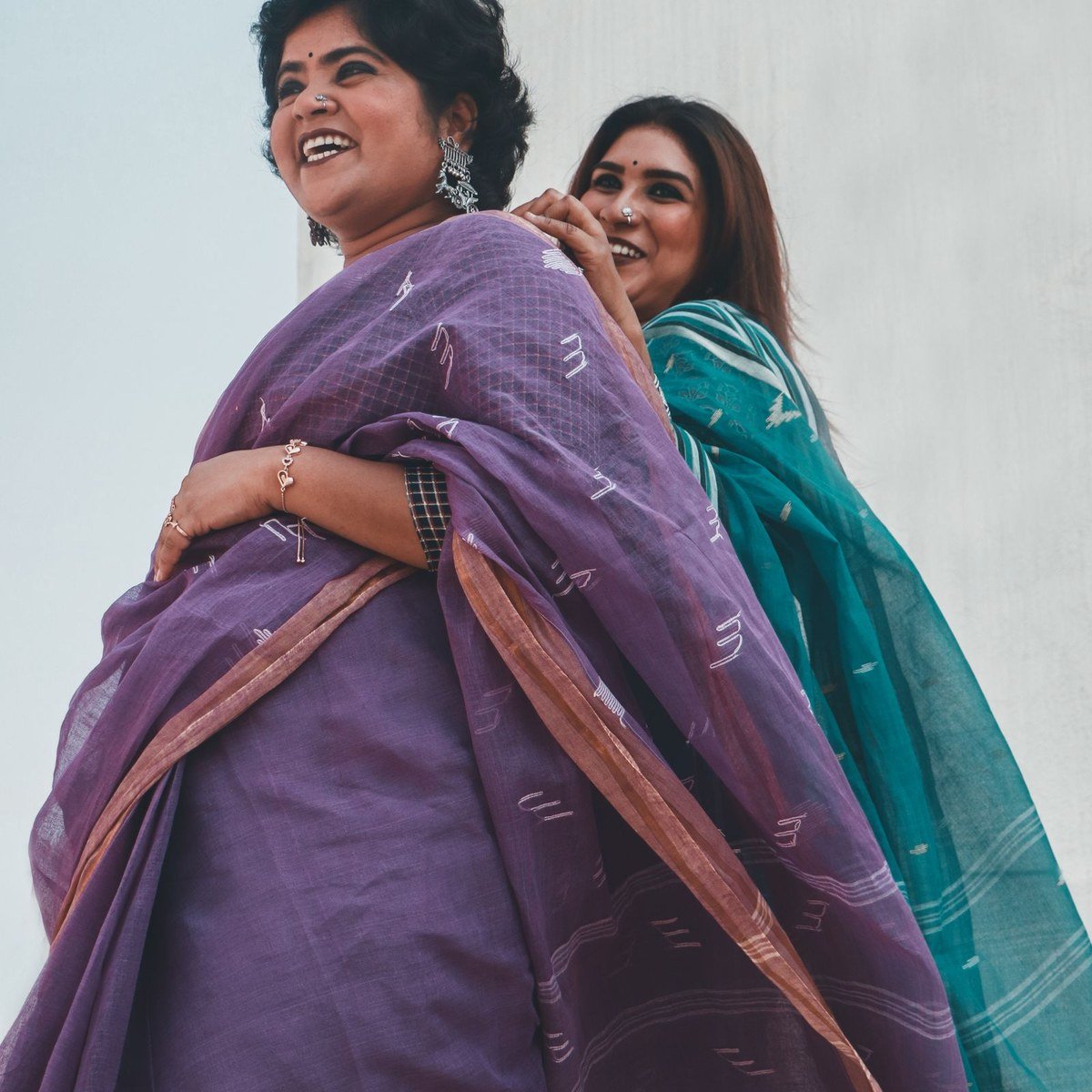
 Image credit: Pexels
A saree is a long, unstitched length of woven fabric that is wrapped around the waist, pleated at the front, and draped over one shoulder to form a complete outfit. It is the traditional dress of women across South Asia, India, Bangladesh, Nepal, Sri Lanka, and Pakistan, and one of the oldest garments in the world still worn every day.
Unlike a dress or a skirt, a saree has no seams, zippers, or fixed shape. The same piece of cloth can be arranged in dozens of ways, which is why one saree can look formal at a wedding and completely ordinary at a market. This guide explains what a saree is made of, how long it is, which fabrics are used, where it is worn, and how it differs from similar garments such as the lehenga.
The Parts of a Saree
A saree outfit has two layers: the cloth itself, which has three zones, and two supporting garments worn with it. Knowing the names of the parts makes every other saree topic, shopping, draping, care, much easier to follow.
The cloth: body, border, and pallu
The body (or field) is the main expanse of the fabric. It wraps around the waist and legs and may be plain, printed, or covered with small woven motifs. Along both long edges runs the border, a band that is often woven in a contrasting color or with metallic thread. The border gives the cloth weight and structure and frames the whole drape.
The pallu (also called the anchal) is the end of the cloth that goes over the shoulder. It is usually the most decorated section, wider patterns, denser motifs, sometimes fringe, because it is the part everyone sees. The opposite end, which gets tucked in first, is typically plain.
The blouse (choli)
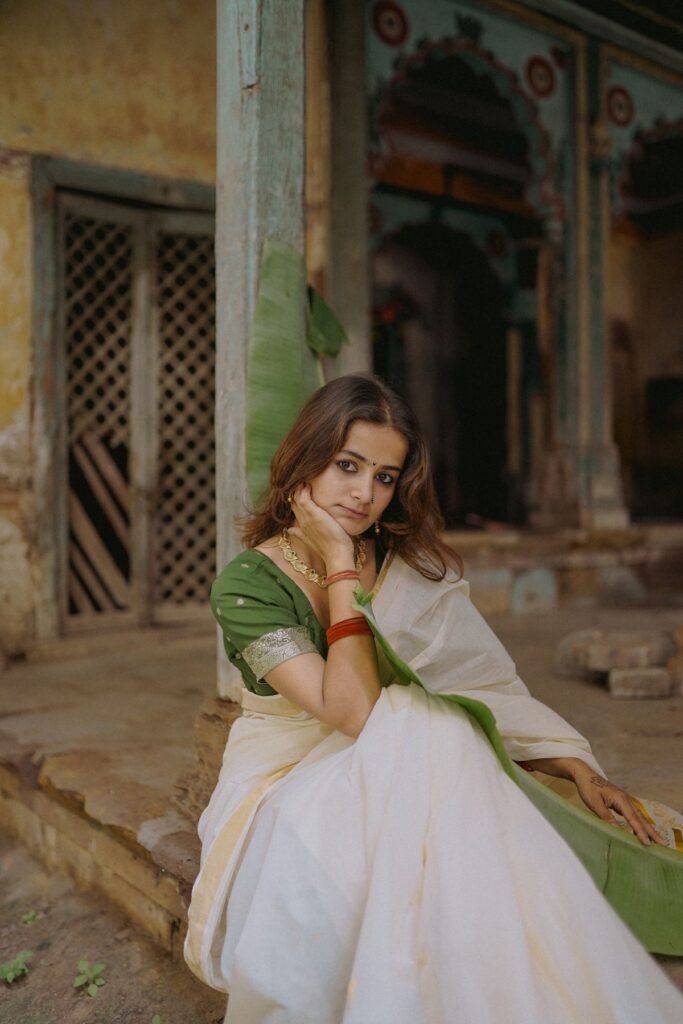
The blouse is a fitted, cropped top worn underneath the saree, ending just below the bust. It covers the upper body where the drape does not, and its neckline, sleeves, and color are a major part of the finished look. Blouses are normally tailored to the wearer, and many sarees are sold with an extra length of matching fabric attached at one end, meant to be cut off and stitched into a blouse. Ready-made blouses in standard sizes are also widely sold for convenience.
The petticoat
The petticoat is a plain, ankle-length underskirt, usually cotton, tied firmly at the waist with a drawstring. It is not decoration, it is the foundation of the outfit. The saree’s tucks and pleats are anchored into the petticoat’s waistband, so the whole drape depends on it being tied securely and matched roughly to the saree’s color in case it shows at the hem.
The pleats
The pleats are the neat folds formed at the front of the waist in the most common draping style. They give the wearer room to walk while keeping the wrapped cloth tidy, and getting them even is the step beginners find trickiest.
How Long and Wide Is a Saree?
Most sarees measure between 4.5 and 9 yards long (about 4.1 to 8.2 meters) and 24 to 47 inches wide (60 to 120 cm). The everyday standard sold today is usually around 5.5 to 6.5 yards, often described simply as “six yards”, which suits the most common draping style with fabric to spare for pleats and the shoulder drape.
Length is not just a size choice. Some regional drapes need more cloth: the nine-yard saree of Maharashtra, for example, is worn with a trouser-like wrap through the legs. Shorter lengths appear in certain work and tribal drapes. Because the garment is unstitched, length and draping style together decide how much coverage and movement the wearer gets.
How a Saree Is Put On
The basic sequence is similar in almost every style. The wearer starts in the blouse and petticoat, tucks one end of the cloth into the petticoat waistband, and wraps it once around the body. She then measures off the pallu length over her shoulder, folds the remaining cloth into front pleats, tucks them in at the waist, and brings the pallu across the chest and over the left shoulder, often pinning it in place.
The whole process takes a few minutes with practice, and because nothing is stitched, small adjustments, a longer pallu, higher pleats, a different shoulder, change the look without changing the garment. Regional styles mostly rearrange these same steps rather than replacing them.
Saree Fabrics at a Glance
Fabric decides how a saree feels, how it falls, and what it suits. These are the fabrics a beginner will meet most often:
| Fabric | Character | Typically worn for |
|---|---|---|
| Cotton | Breathable, matte, comfortable in heat; crisp or soft depending on weave | Everyday wear, office, hot climates |
| Silk | Natural sheen, smooth, holds pleats well; the classic ceremonial fabric | Weddings, festivals, formal events |
| Silk-cotton | A blend with some of silk’s sheen and cotton’s lightness | Semi-formal wear, long days |
| Georgette | Light, slightly textured, fluid drape; easy to pleat | Parties, evening wear, beginners |
| Chiffon | Very light and sheer with a soft, flowing fall | Evening wear, warm-weather occasions |
| Organza | Sheer and crisp, holds a structured shape | Formal and fashion-forward looks |
Within each fabric there are famous regional weaves. Silk alone includes the heavy brocades of Banaras and the temple-bordered silks of Kanchipuram in India, while fine handwoven cotton includes Bengal’s Jamdani. Our overview of traditional Bangladeshi saree types shows how much variety a single region can produce.
Where Sarees Are Worn
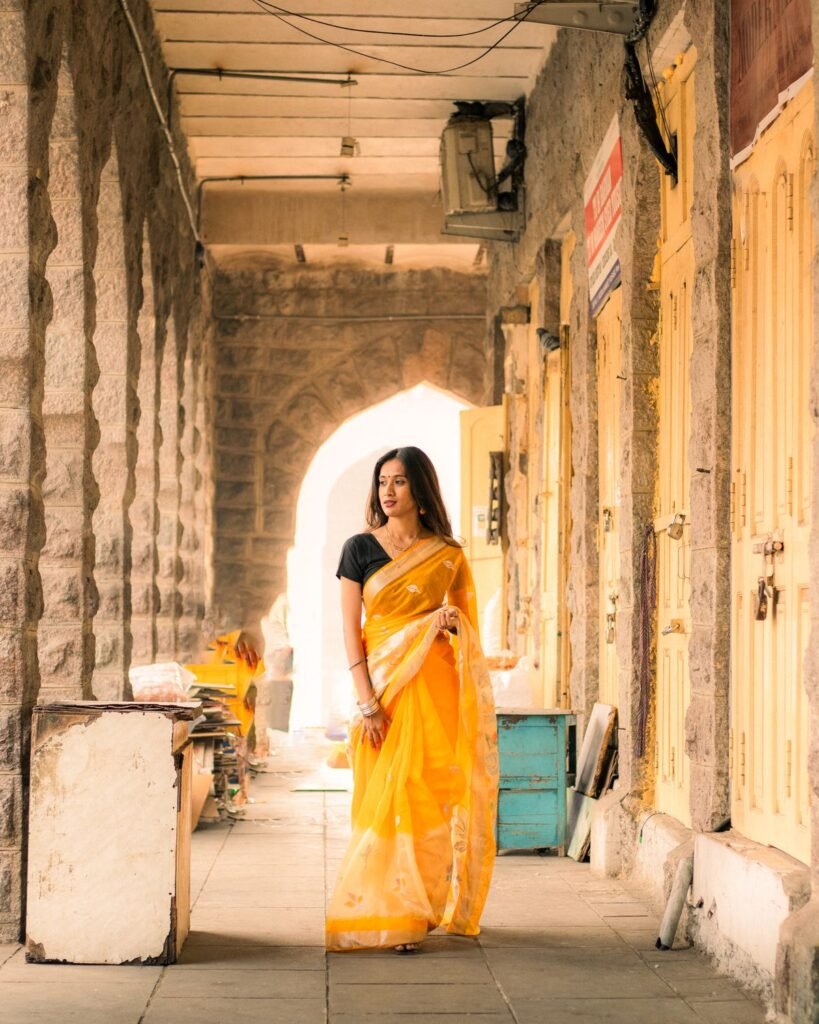
The saree is everyday clothing for millions of women in India and Bangladesh, worn at home, at work, and for travel, and formal dress for special occasions across the whole region. In Nepal and Sri Lanka it is also standard attire, with local draping styles of their own, and it remains popular for weddings and formal functions in Pakistan.
Occasion changes the fabric, not the garment. A plain cotton saree is normal daily wear in Bengal; a silk saree with woven gold thread is wedding clothing. Sarees are also the expected dress at festivals such as Diwali, Eid, and Durga Puja, at religious ceremonies, and in many offices and official settings. Outside South Asia, sarees are worn by diaspora communities worldwide and increasingly by guests at South Asian weddings in the United States and elsewhere.
A Short History
Draped garments resembling the saree appear in the Indus Valley civilization, several thousand years ago, making the saree one of the oldest surviving forms of dress. The word itself comes from the Sanskrit sati, meaning “a strip of cloth.” Early dress in the region was a three-piece ensemble, a lower wrap, a shoulder cloth, and a chest band, which over centuries merged into the single draped garment. The fitted blouse and petticoat worn today became standard much later, in the nineteenth century. The full timeline is traced on Wikipedia’s sari article.
Regional weaving traditions grew up around the garment: silk brocade in Varanasi, temple silk in Tamil Nadu, and in Bengal the figured muslins of Dhaka, the background to the history of the Jamdani saree. More than 80 draping styles have been recorded across the region, though one style, the Nivi drape, pleats at the front, pallu over the left shoulder, is by far the most common today.
How a Saree Differs from Similar Garments
Saree vs. lehenga: a lehenga is a stitched outfit, a long flared skirt, a blouse, and a separate scarf (dupatta). It is put on like ordinary clothing. A saree is a single unstitched cloth that the wearer wraps and pleats herself, so the “fit” is created fresh each time it is worn.
Saree vs. salwar kameez: the salwar kameez is a tunic worn over loose trousers, also usually with a dupatta. It is tailored and stitched throughout, and is everyday dress in much of the region alongside the saree.
Saree vs. half saree: the half saree, worn mainly in South India, combines a skirt, a blouse, and a shorter draped cloth over one shoulder. It looks related, but it is a three-piece stitched outfit, not one continuous length.
“Sari” vs. “saree”: these are simply two spellings of the same word for the same garment. “Saree” is common in India and Bangladesh; “sari” is common in Western dictionaries and shops. In Bengali it is pronounced closer to “shari.”
Frequently Asked Questions
Q: Is “sari” the same thing as “saree”?
Yes. Sari and saree are two English spellings of the same word, from the Sanskrit for “strip of cloth.” They refer to exactly the same garment.
Q: How long is a standard saree?
Most sarees sold today are about 5.5 to 6.5 yards long, though the full range runs from 4.5 to 9 yards. Longer lengths are used for drapes that wrap through the legs; the standard length suits the common Nivi drape.
Q: What do you wear under a saree?
Two things: a fitted blouse (choli) on top, and a drawstring petticoat underneath, into which the saree is tucked. Together they support and shape the drape.
Q: Is a saree a single piece of clothing?
The saree itself is one unstitched piece of cloth. The complete outfit, however, is three pieces: the saree, the blouse, and the petticoat.
Q: Do sarees come in sizes?
Not in the usual sense. Because the cloth is wrapped rather than tailored, one saree fits many body shapes; only the blouse is sized or stitched to measure. Length and fabric choice matter more than size labels.
Conclusion
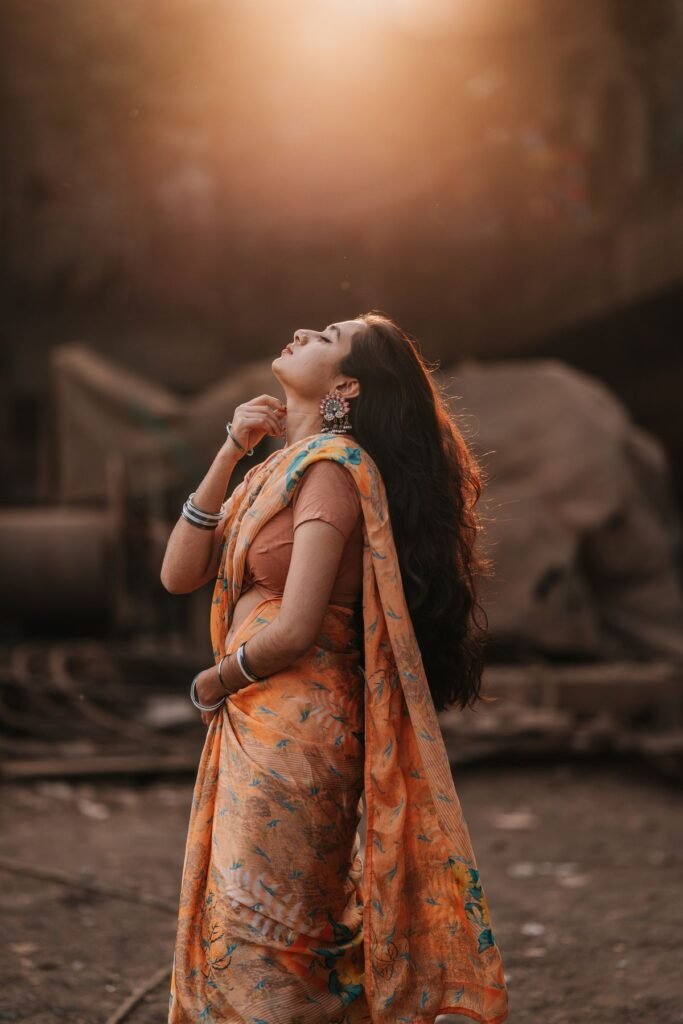
A saree is, at its simplest, one long strip of cloth, but that simplicity is the point. With no stitching and no fixed size, the same garment serves as work clothes, wedding dress, and heirloom, changing character with its fabric, its weave, and the way it is draped. Once the parts, the length, and the main fabrics make sense, the rest of the saree world, regional weaves, draping styles, and buying choices, becomes much easier to explore.