
 Image credit: Pexels
Cotton is the saree fabric most women in South Asia reach for every day, yet “cotton saree” is not one thing. The different types of cotton sarees, from Bengal’s soft Tangail to Tamil Nadu’s bold-checked Chettinad, vary enormously in weight, texture, drape and formality, even though all of them start as the same natural fiber. If you are shopping in the USA, where you usually cannot touch the fabric before buying, the type name on the label is your best clue to how a saree will actually feel and behave. This guide walks through the major cotton saree types, explaining where each comes from, how it is woven, how it feels on the body and what it is best used for.
- What Decides a Cotton Saree’s Character?
- Tangail, Bengal’s Everyday Classic
- Dhaniakhali, Crisp Cotton with Bold Borders
- Cotton Jamdani, Motifs That Float on Muslin
- Mulmul and Muslin, The Feather-Light Originals
- Khadi, Hand-Spun, Honest Texture
- Kota Doria, The Open-Check Summer Weave
- Chanderi, Sheer with a Hint of Shine
- Maheshwari, Reversible Borders from Maheshwar
- Mangalgiri, Durable Cotton with a Fine Zari Edge
- Chettinad (Kandangi), Bold Checks and Earthy Color
- Sungudi, Tie-Dyed Dots from Madurai
- Cotton Saree Types at a Glance
- How to Choose the Right Cotton Saree
- Frequently Asked Questions
- Conclusion
What Decides a Cotton Saree’s Character?
Three things turn plain cotton yarn into very different sarees. The first is the yarn: finer yarns produce lighter, smoother cloth, while coarser yarns give a crisper, more textured fabric. Khadi goes further and uses yarn spun by hand, which is why it has its characteristic slightly uneven texture. The second is the weave: most cotton sarees are plain weave, but some add motifs with extra weft threads worked in by hand (Jamdani), dye the yarn before weaving (ikat and tie-dye traditions such as Sungudi), or mix cotton with a silk warp or weft for sheen. The third is region: weaving clusters across Bangladesh and India developed their own borders, motifs and finishing habits over centuries, and those local signatures are what the type names describe. Keep these three factors in mind and the list below becomes easy to read.
Tangail, Bengal’s Everyday Classic
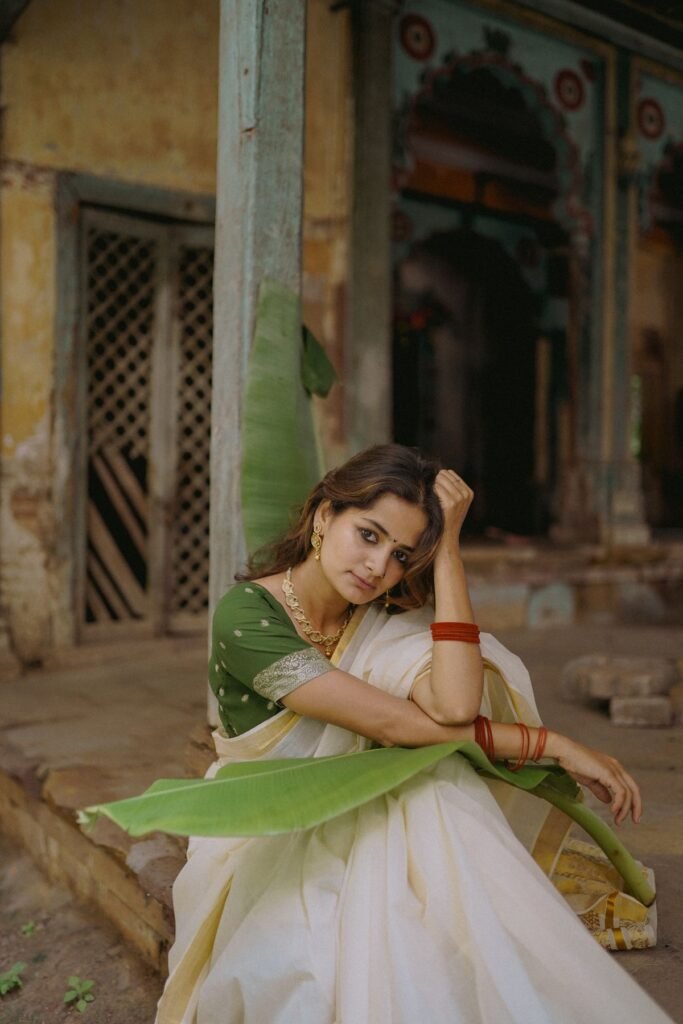
Tangail sarees come from the Tangail district of Bangladesh, and the same tradition is woven across the border in West Bengal, India. They are soft, fine cotton sarees with woven borders and small motifs spread across the body, traditionally made on pit looms by weaving families who have practiced the craft for generations. A Tangail feels light and smooth rather than crisp, drapes without a fight, and works equally well for daily wear, office days and small celebrations. Because it balances comfort, looks and durability so well, the Tangail is the reference point against which other Bengali cottons are usually compared.
Dhaniakhali, Crisp Cotton with Bold Borders
From Dhaniakhali in West Bengal’s Hooghly district, this saree is the Tangail’s sturdier cousin. Dhaniakhali cotton is woven a little coarser and crisper, so it holds sharp pleats and a structured drape through a long day. Its signature is contrast: wide, bold borders and striped or checked pallus set against a plainer body, often in deep, saturated colors. It softens gradually with washing but keeps its body for years, which makes it a favorite for everyday and work wear in Bengal. If you prefer a saree that stays neat rather than flowing, Dhaniakhali is the one to look for.
Cotton Jamdani, Motifs That Float on Muslin
Jamdani is the most celebrated cotton weave of Bengal, made around Dhaka in Bangladesh and in West Bengal. On a ground of fine, sheer cotton muslin, the weaver inlays each motif by hand with a discontinuous extra weft, so flowers, paisleys and geometric butis appear to float on the surface. No two motifs are mechanically identical, and a densely patterned Jamdani can take weeks on the loom. UNESCO inscribed the traditional art of Jamdani weaving on its Intangible Cultural Heritage list in 2013, and Jamdani’s history reaches back centuries to the famed muslins of Dhaka. The result is feather-light, festive and unmistakably handmade. Our guide to the different types of Jamdani sarees explains the Dhakai, half-silk and other variations in detail.
Mulmul and Muslin, The Feather-Light Originals
Mulmul is a very fine, soft cotton with a smooth, almost silky hand-feel, descended from the legendary muslins once woven in Bengal, cloth so fine it was said a length could pass through a ring. Modern mulmul sarees are usually plain, printed or lightly bordered rather than heavily woven with motifs, and their appeal is pure comfort: they are among the lightest sarees you can wear, breathe beautifully and feel gentle on the skin in hot weather. The trade-offs are delicacy and a slight sheerness, so many women pair mulmul with a well-fitted petticoat. For peak summer heat, mulmul is hard to beat.
Khadi, Hand-Spun, Honest Texture
Khadi is cotton with both of its main stages done by hand: the yarn is hand-spun (traditionally on a charkha spinning wheel) and the cloth is hand-woven. That double handwork gives khadi sarees a matte, slightly slubbed texture that machine-made cotton does not have, along with excellent breathability, the uneven yarns leave tiny air channels in the cloth. Khadi became a symbol of self-reliance during India’s independence movement, and it still carries that honest, earthy character. It feels a little coarse at first and softens noticeably with every wash. Choose khadi if you value texture, craft and natural fiber over a polished finish.
Kota Doria, The Open-Check Summer Weave
Kota Doria comes from Kota in Rajasthan and is instantly recognizable by its tiny square checks, called khat, woven into an open, airy grid. Here is the detail sellers do not always state clearly: traditional Kota Doria is a cotton-and-silk blend, with silk in one direction of the weave and cotton in the other, although pure cotton versions are also made today. Either way, it is feather-light, slightly crisp and ventilated by design, so body heat escapes instead of building up. That makes Kota Doria a festive-looking answer to summer weddings and daytime events where plain cotton feels too plain.
Chanderi, Sheer with a Hint of Shine
Chanderi, from the town of the same name in Madhya Pradesh, is another famous name that needs an honest label: classic Chanderi is woven with a silk warp and a cotton weft, so it is a cotton-silk blend rather than a pure cotton, though all-cotton versions exist. The blend explains its character, sheer, lightweight cloth with a soft glow, small woven butis and often a fine zari border. Chanderi drapes fluidly, feels dressy without weight, and suits summer weddings, receptions and evening functions. When you buy one, check the fiber description so you know which version, blend or pure cotton, you are getting.
Maheshwari, Reversible Borders from Maheshwar
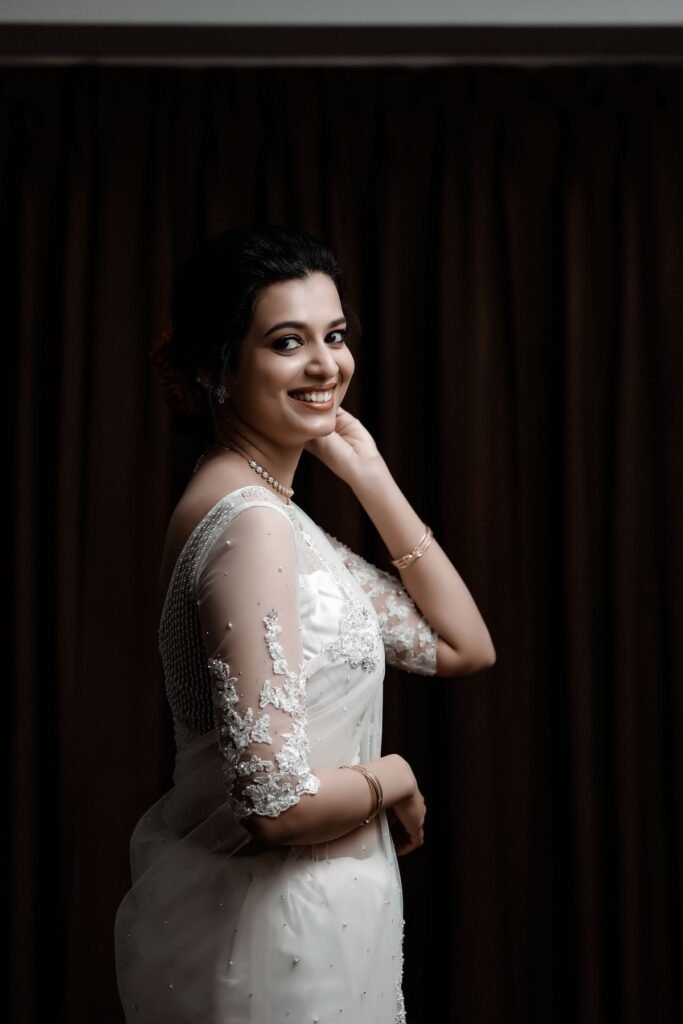
Maheshwari sarees are woven in Maheshwar, Madhya Pradesh, a tradition patronized by Queen Ahilyabai Holkar in the 18th century. The originals were silk; today most Maheshwaris are cotton or cotton-silk, so again, check the label. Their signatures are reversible borders, woven so the border looks correct from both sides, along with neat stripes, checks and a light, slightly glossy body. A Maheshwari feels more structured than mulmul but lighter than Dhaniakhali, and its tidy geometry makes it a polished choice for office wear, formal day events and anyone who likes understated pattern.
Mangalgiri, Durable Cotton with a Fine Zari Edge
Mangalgiri sarees come from the town of Mangalagiri in Andhra Pradesh’s Guntur district. They are tightly woven, durable cottons, usually plain or subtly checked in the body, finished with a fine gold zari border often called the Nizam border. The dense weave gives them a crisp, long-lasting body that stands up to frequent wear and washing better than most cottons. Mangalgiri is the practical person’s festive saree: smart enough for work and functions, tough enough for regular rotation, and comfortable through a long day.
Chettinad (Kandangi), Bold Checks and Earthy Color
The cotton saree of Tamil Nadu’s Chettinad region is known locally as Kandangi, a handloom tradition centered around Karaikudi that holds a Geographical Indication (GI) tag. Kandangi sarees are sturdy, opaque cottons in bold checks and stripes, dyed in deep, earthy palettes, maroon, mustard, emerald, black and brick red, with contrasting borders. The fabric is thicker and more structured than Bengal cottons, drapes with presence, and wears hard for years. If you like strong color and pattern without any shine, this is one of the most characterful cottons in India.
Sungudi, Tie-Dyed Dots from Madurai
Sungudi sarees are made in and around Madurai, Tamil Nadu, using a knot tie-dye technique: hundreds of tiny points of the cloth are tied before dyeing, leaving a field of small dots, the sungudi pattern, across a bright cotton ground, usually finished with a contrasting or zari border. The cotton itself is light and soft, the colors are joyful, and the saree is traditionally sun-dried, which is part of its making story. Sungudi is an everyday and festive cotton with a distinctly South Indian personality, quite different in look from the woven-border sarees above.
Cotton Saree Types at a Glance
| Type | Origin | Feel & Character | Best For |
|---|---|---|---|
| Tangail | Tangail, Bangladesh & West Bengal | Soft, smooth, light; woven borders | Daily wear, office, small occasions |
| Dhaniakhali | Hooghly, West Bengal | Crisp, structured; bold contrast borders | Everyday and work wear |
| Cotton Jamdani | Dhaka, Bangladesh & West Bengal | Feather-light muslin; hand-inlaid motifs | Festive wear, gifts, heirloom pieces |
| Mulmul | Bengal tradition | Very fine, soft, slightly sheer | Peak summer heat, home and casual wear |
| Khadi | Across India | Matte, textured, hand-spun yarn | Natural-fiber lovers, all-day wear |
| Kota Doria | Kota, Rajasthan | Open square checks; usually cotton-silk | Summer functions and daytime events |
| Chanderi | Chanderi, Madhya Pradesh | Sheer, soft glow; usually cotton-silk | Weddings, receptions, evenings |
| Maheshwari | Maheshwar, Madhya Pradesh | Light, neat stripes; reversible borders | Office and formal day wear |
| Mangalgiri | Guntur, Andhra Pradesh | Dense, durable; fine zari border | Frequent wear, work and functions |
| Chettinad (Kandangi) | Chettinad, Tamil Nadu | Sturdy, opaque; bold checks, deep colors | Daily wear with strong pattern |
| Sungudi | Madurai, Tamil Nadu | Light, soft; tie-dyed dot pattern | Everyday and festive wear |
How to Choose the Right Cotton Saree
Start with climate and hours of wear. For hot, humid days, the open and fine weaves, mulmul, cotton Jamdani and Kota Doria, stay coolest; our ranking of the best saree fabrics for summer explains how they compare with linen and other fibers. For structure and all-day neatness at work, pick Dhaniakhali, Mangalgiri or Maheshwari. For a festive look without silk’s weight or upkeep, cotton Jamdani and Chanderi carry the most occasion presence. And if the craft itself matters to you, khadi and the handloom Bengali weaves put the most handwork into every yard. There is no single “best” type, only the best match for your weather, your day and your taste.
Frequently Asked Questions
Q: Which type of cotton saree is best for summer?
Mulmul is the coolest for most people, followed closely by cotton Jamdani and Kota Doria. All three are fine, open weaves that let air move and weigh very little. For humid heat, khadi and handloom cotton also perform well because they absorb moisture instead of trapping it.
Q: What is the difference between Tangail and Dhaniakhali sarees?
Both are Bengali handloom cottons, but Tangail is softer, finer and smoother, with woven borders and small body motifs, while Dhaniakhali is crisper and slightly coarser, with wide, bold contrast borders. Tangail drapes fluidly; Dhaniakhali holds a structured shape and sharper pleats.
Q: Are Kota Doria and Chanderi pure cotton?
Traditionally, no. Classic Kota Doria mixes silk with cotton in its check weave, and classic Chanderi uses a silk warp with a cotton weft. Pure cotton versions of both are made today, so check the fiber content on the product description before you buy.
Q: Which cotton saree is best for office wear?
Dhaniakhali, Mangalgiri and Maheshwari are the strongest office choices. They hold a neat, structured drape for hours, look polished without shine, and tolerate regular wear and washing. Tangail is a good softer alternative if you prefer a fluid drape.
Q: How can I tell if a cotton saree is handloom?
Look for small irregularities in the weave or motif spacing, a selvedge that is not ruler-straight, and motifs that are woven in rather than printed. In India, genuine handloom products may carry the Handloom Mark label. No single check is proof, so buy from sellers who state the weave clearly.
Conclusion
The different types of cotton sarees are really a map of the subcontinent’s weaving regions: Bengal’s soft Tangail, crisp Dhaniakhali and floating-motif Jamdani; the feather-light comfort of mulmul and khadi’s hand-spun texture; Rajasthan’s checked Kota Doria; the cotton-silk glow of Chanderi and Maheshwari; and the durable, bold cottons of the south, Mangalgiri, Chettinad and Sungudi. Once you know what each name promises in weight, feel and structure, choosing a cotton saree online stops being guesswork. Pick the weave that fits your climate and your day, and cotton will repay you with years of comfortable wear.