
 Image credit: Pexels
“Jamdani” names a weaving technique, not a single fabric, so Jamdani sarees come in several distinct types that feel, look, and cost quite different from one another. The main varieties are classic Dhakai cotton Jamdani, half-silk Jamdani, pure silk Jamdani, and Tangail Jamdani, with further variation in motif style and weave density on top of those. Knowing which type you are looking at makes it much easier to judge whether a saree suits your occasion, your climate, and your budget.
All genuine Jamdani shares the same foundation: motifs are woven into the cloth by hand during weaving, using the discontinuous weft technique, rather than being printed or embroidered afterward. The tradition is centered in Bangladesh, where UNESCO recognized the traditional art of Jamdani weaving in 2013, and Jamdani received geographical indication (GI) status in Bangladesh in 2016. What changes from type to type is the fiber, the region, and how much pattern the weaver works into the cloth.
How Jamdani Types Are Classified
Jamdani sarees are usually sorted in three overlapping ways. The first is by fiber: pure cotton, half-silk (silk and cotton combined), or pure silk. The second is by place and tradition, Dhakai and Tangail are the two best-known Bangladeshi styles. The third is by pattern layout and density: how much of the saree the motifs cover and how finely they are woven.
In practice, sellers combine these labels. A single saree might be described as a half-silk Dhakai Jamdani with an all-over jaal pattern, fiber, origin, and layout in one phrase. The sections below untangle the main types one by one.
Classic Dhakai Cotton Jamdani
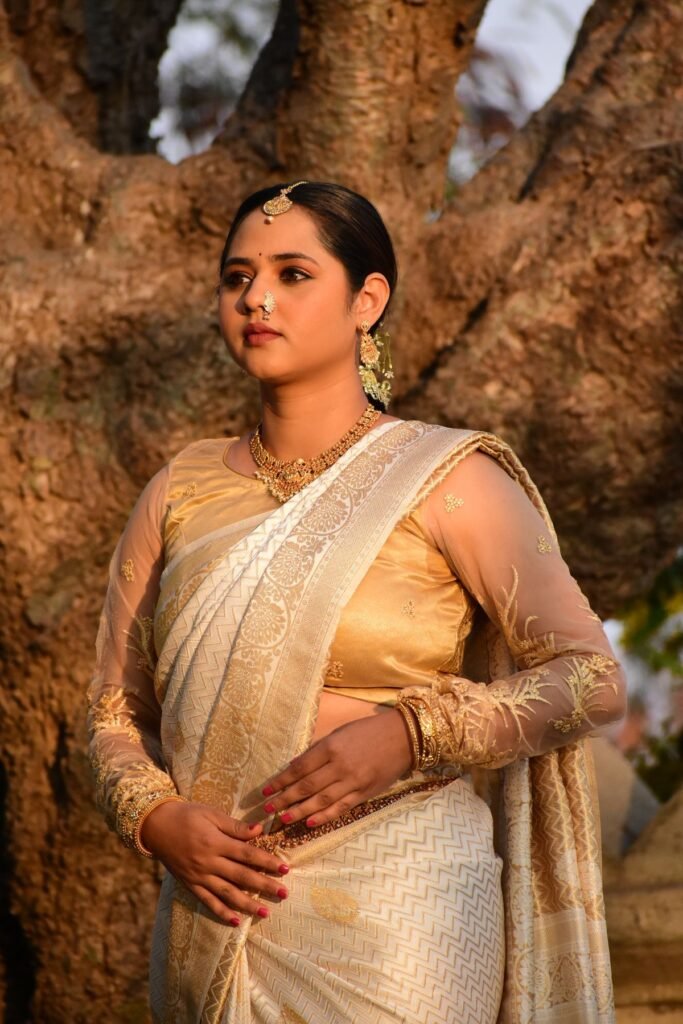
Dhakai Jamdani is the original style, woven in the villages around Dhaka, particularly in the Narayanganj area. Traditionally it is made in pure, very fine cotton, the direct descendant of the region’s famous muslin cloth, with yarn counts commonly in the 40 to 120 range, the higher counts giving the sheerest, most featherweight fabric.
A fine Dhakai saree feels almost weightless and slightly crisp, with a translucent ground against which the motifs appear to float. The patterning is often dense: small floral butis, vines, and geometric designs may cover the entire body of the saree rather than only the border and pallu (the decorative end). Because of the fine yarn and the sheer amount of handwork, a top-quality Dhakai piece can take months to weave.
In price character, authentic Dhakai cotton Jamdani sits at the premium end of the cotton range, the finer the count and the denser the motifs, the higher it climbs. It is the type most often bought as an heirloom or for major occasions, though simpler Dhakai pieces with scattered motifs are made for regular wear as well.
Half-Silk Jamdani
Half-silk Jamdani combines silk in one direction of the weave and cotton in the other, silk supplying sheen and smoothness, cotton keeping the fabric light and more manageable. Along with cotton, it is one of the two most commonly woven kinds of Jamdani today.
The look is noticeably different from pure cotton: a soft, gentle gloss on the surface, colors that appear slightly richer, and a drape that falls a little more fluidly. It still feels light, this is not a heavy silk saree, but it reads as dressier than matte cotton, which is why half-silk is a popular choice for festivals, weddings as a guest, and evening occasions.
Half-silk generally sits in the middle of the Jamdani price range: above basic cotton pieces, below fine pure silk and the finest high-count Dhakai work. One caution when shopping: the term “half-silk” is sometimes used loosely, and some inexpensive sarees sold under similar names use synthetic yarn instead of silk. Checking what the seller actually means by the label is worthwhile, our guide on how to choose the perfect Jamdani saree covers what to look for.
Pure Silk Jamdani
Pure silk Jamdani, often called resham Jamdani, is woven entirely in silk, with the Jamdani motifs worked into a lustrous silk ground. It is the rarest of the main types and is produced in smaller quantities than cotton or half-silk.
Silk changes the character of the weave completely. The fabric has a natural sheen, a smoother and more fluid drape, and a richness that suits weddings and formal events. Motifs in silk or zari (metallic thread) catch the light against the glossy base, giving these sarees a more opulent look than the airy, matte elegance of cotton Dhakai.
In price character, pure silk Jamdani is at the top of the range, reflecting both the cost of the yarn and the weaving time. It is typically bought as a special-occasion or heirloom piece rather than an everyday saree.
Tangail Jamdani
Tangail Jamdani comes from the Tangail district of Bangladesh, and the style is also woven in West Bengal by families who carried the craft across the border after Partition. Where Dhakai aims for an all-over pattern on a sheer ground, Tangail takes a different approach: a softer, lighter body with the decoration concentrated in a broad, richly worked border and pallu, and small butis scattered across the field.
Traditional Tangail borders feature motifs such as lotus, lamp, and fish-scale designs. The overall feel is soft and comfortable rather than crisp, and the sarees are made to be worn often, not only saved for occasions. Many wearers find Tangail the most approachable everyday Jamdani.
Tangail Jamdani is usually more affordable than fine Dhakai work, lighter patterning means fewer weeks at the loom, which makes it a common first handwoven Jamdani for many buyers.

Motif and Density Variations
Within every fiber type, Jamdani is further distinguished by how the motifs are arranged. Traditional layouts have their own names:
- Butidar, small floral sprays scattered across the body of the saree; the most common layout.
- Jaal, a continuous network of motifs covering the whole saree; dense and labor-intensive.
- Tercha, motifs arranged in diagonal lines across the fabric.
- Fulwar, flowers arranged in straight rows.
- Duria, small spot or polka-style motifs.
- Panna hajar, a famously dense pattern whose name means “a thousand emeralds.”
Density matters as much as layout. A saree with a few scattered butis may take days to a few weeks to weave, while an all-over jaal in fine yarn can take months, and the price follows the weaving time. Thread count works the same way: higher counts produce a finer, lighter, more translucent cloth that is slower and more demanding to weave. These two factors, density and count, explain most of the price spread within any single type, as explained in our breakdown of why Jamdani sarees are expensive.
Other Variations Worth Knowing
Khadi Jamdani
A small number of Jamdani sarees are woven in khadi, hand-spun cotton yarn, sometimes in very high counts. These are rare, usually made to order, and valued by collectors for continuing the oldest hand-spinning tradition behind Dhaka’s muslins.
Shantipur and Dhaniakhali Jamdani
Across the border in West Bengal, Shantipur is known for fine-textured Jamdani, often with elegant striped designs, while Dhaniakhali pieces have a somewhat tighter weave, bolder colors, and strong contrasting borders. Both are generally more accessible in price than fine Dhakai pieces.
Quick Comparison
| Type | Fiber | Feel and Look | Price Character |
|---|---|---|---|
| Dhakai cotton | Fine pure cotton | Sheer, crisp, motifs floating on a translucent ground | Premium for cotton; finest pieces are heirloom-level |
| Half-silk | Silk and cotton combined | Light with a soft sheen and fluid drape | Mid-range; above basic cotton, below pure silk |
| Pure silk (resham) | All silk | Lustrous, smooth, rich drape | Top of the range; special-occasion pieces |
| Tangail | Soft cotton | Soft and light, broad decorated border, butis on the body | Generally the most affordable handwoven option |
Which Type Should You Choose?
For hot, humid weather and daytime wear, cotton, Dhakai or Tangail, is the most breathable and comfortable. For weddings and formal events, pure silk or a richly patterned half-silk gives the occasion the sheen it calls for. If you are buying your first handwoven Jamdani, a Tangail or a mid-range half-silk offers the handloom character at a gentler price, while collectors and heirloom buyers usually look to high-count Dhakai cotton or fine silk. Whichever type you choose, the type label is only the starting point, yarn fineness, motif density, and the quality of the weaving itself decide the individual saree’s value.
Frequently Asked Questions
Q: What is the finest type of Jamdani saree?
High-count Dhakai cotton Jamdani is generally considered the finest: it uses the sheerest yarn, the densest hand-worked motifs, and takes the longest to weave. Fine pure silk Jamdani is comparably prestigious, with a richer, more lustrous character.
Q: What is the difference between half-silk and cotton Jamdani?
Cotton Jamdani is all-cotton, matte, breathable, and slightly crisp. Half-silk combines silk with cotton, which adds a soft sheen, richer-looking color, and a more fluid drape, while staying light. Half-silk usually costs more than comparable cotton and needs somewhat gentler care.
Q: Is Tangail Jamdani the same as Dhakai Jamdani?
No. Both are Bangladeshi Jamdani traditions using the same hand-weaving technique, but Dhakai Jamdani typically has dense motifs across a sheer, fine body, while Tangail Jamdani is softer and lighter, with the pattern concentrated in a broad border and pallu and small motifs on the body.
Q: Which type of Jamdani saree is best for a wedding?
Pure silk Jamdani is the classic wedding choice for its sheen and rich drape. Half-silk is a lighter, more comfortable alternative that still looks festive, and a fine, densely patterned Dhakai cotton is an elegant option for daytime ceremonies.
Q: How does thread count affect a Jamdani saree?
Thread count describes the fineness of the yarn. Higher counts produce a lighter, finer, more translucent fabric, and take longer to weave, which raises the price. Lower counts give a sturdier, more opaque cloth that is usually more affordable and easier to wear every day.
Conclusion
The different types of Jamdani sarees, Dhakai cotton, half-silk, pure silk, and Tangail, each with its own motif layouts and densities, all come from the same hand-weaving tradition, but they suit different needs. Cotton Dhakai offers the classic sheer, heirloom character; half-silk adds sheen for festive wear; pure silk is the formal, top-end option; and Tangail gives a softer, more affordable everyday Jamdani. Once you know which type you are looking at, comparing quality and price becomes far more straightforward.