
 Image credit: Pexels
Festival season has a way of sneaking up on you. One week the calendar is quiet, and the next it brings an Eid open house, a community Durga Puja, a Diwali party, and a December wedding, sometimes all within a few weeks of each other. If you live in the United States, these celebrations are also some of the warmest gatherings of the year, and the saree is the one outfit that rises to every single one of them. The trick is knowing which sarees truly count as the best sarees for festive occasions, and why.
A festive saree is not simply your fanciest saree. It is the one that matches the mood of the celebration: joyful in color, a little luminous in fabric, comfortable enough for hours of greeting, eating, and photographs, and respectful of the traditions behind the day. This guide walks through the whole festive calendar, Eid, Durga Puja, Diwali, Christmas, Pohela Boishakh, and wedding season, and shows how a small, well-chosen festive wardrobe can cover all of it beautifully.
What Makes a Saree Festive?
Three things separate a festive saree from an everyday one. The first is fabric with presence. Festive fabrics catch the light or carry visible craft: the soft gleam of silk, the handwoven motifs of Jamdani, the shimmer of tissue and organza, or the crisp body of a fine handloom cotton finished with a woven zari border. The second is color. Festivals celebrate abundance, renewal, and light, so festive sarees lean toward saturated, auspicious shades, reds, maroons, deep greens, royal blues, mustards, and golds, with ivory and pastels playing a graceful supporting role at daytime events. The third is detail: a woven border, an ornamented pallu, a touch of embroidery, or a blouse that does some of the dressing-up for you.
Just as important is what a festive saree is not. It does not have to be your heaviest or most elaborate drape. A saree you cannot sit, eat, or move around in will quietly ruin the day, no matter how stunning it looks in the mirror. The best sarees for festive occasions balance celebration with wearability, a lesson every seasoned festival-goer learns exactly once.
The Festive Calendar, Festival by Festival
Eid. Eid gatherings tend to be elegant rather than flashy: morning prayers, family visits, and open houses that stretch from lunch into the evening. Soft silks, chiffon and georgette with delicate work, and Jamdani in gentle colors all suit the mood of Eid al-Fitr beautifully. Pastels, ivory, mint, and soft gold feel fresh for spring and summer Eids, and a slightly modest drape with a longer blouse keeps the look graceful for religious settings before the party begins.
Durga Puja. The great Bengali autumn festival calls for the most storied festive dressing of all: white sarees with red borders, handloom cottons and Jamdani for the daytime, and richer silks for the evening cultural programs. Puja days are long, anjali in the morning, pandal visits, bhog at midday, adda with friends, so breathable, easy drapes win the day and glamour is saved for after dark.
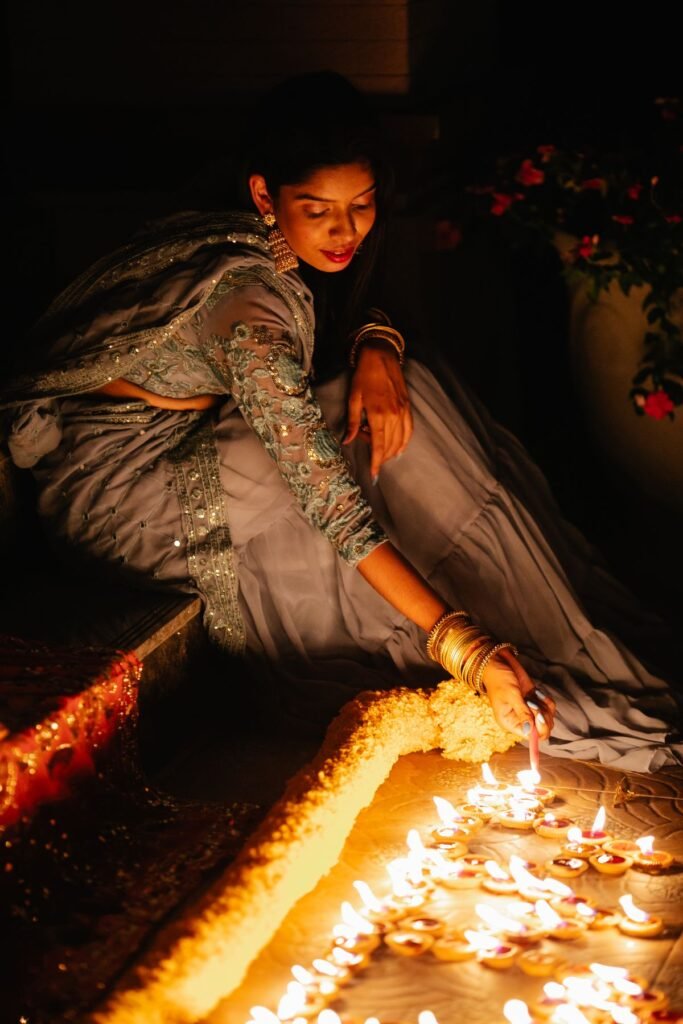
Diwali. The festival of lights is the most glamorous date on the calendar, and it invites shimmer: silk with zari, tissue sarees that glow like lamplight, and embroidered georgette in jewel tones. As the Diwali tradition centers on light triumphing over darkness, gold accents and deep, luminous colors, maroon, emerald, royal blue, rani pink, feel especially right at evening parties.
Christmas. For South Asian Christians and for the many festive parties of December, the saree holds its own beautifully. Deep red and emerald silk, a gold-bordered drape for church, or a festive Jamdani for a family dinner all strike the right note. A blouse with a hint of velvet or a metallic finish nods to the season without turning the outfit into a costume.
Pohela Boishakh. The Bengali New Year arrives in spring with a look that is practically a uniform: crisp white cotton with a red border, worn fresh and simple in the daytime. Light handloom weaves, soft Jamdani, and bright spring colors, leaf green, turmeric yellow, sky blue, carry the same joyful, new-beginnings spirit.
Wedding season. Weddings are the unofficial festival that anchors the whole calendar. Rich Banarasi and Kanjivaram silks belong to close family and the most formal ceremonies, while guests can shine in festive sarees of every kind, silk-cotton, embroidered chiffon, organza, chosen in jewel tones that photograph well under evening light.
Festive Fabrics, Explained
Silk remains the festive benchmark. Banarasi brocades, Kanjivaram weaves with their bold temple borders, and the lighter silks of Bengal bring instant ceremony to an evening event. If you are comparing the major weaves before you commit your wardrobe to one, our guide to the types of sarees walks through how the classic varieties differ in weight, weave, and character.
Jamdani is the festive choice for women who want craft without weight. Its motifs are woven by hand directly into a fine, airy ground, so it reads as richly decorated while staying comfortable through a long day of rituals and visits. It is equally at home at Pohela Boishakh, Durga Puja, and an Eid lunch.
Georgette and chiffon, especially with embroidery, sequin touches, or a worked border, are the movement-friendly party fabrics. They drape fluidly, travel well in a suitcase to out-of-state celebrations, and suit Diwali parties and receptions where you will be on your feet and dancing.
Organza and tissue bring structure and glow. Their crisp, translucent body holds a dramatic silhouette and catches evening light, making them favorites for receptions and staged photo moments, best reserved for shorter events, since they are less forgiving over a long day.
Handloom cotton and silk-cotton are the unsung heroes of daytime festivity. A fine tant, a silk-cotton with a woven border, or a soft handloom in a festive color keeps you comfortable through morning rituals, outdoor pandals, and warm community halls, while still looking unmistakably celebratory.
Colors That Carry a Celebration
Festive color is a language of its own. Red and maroon speak of celebration, prosperity, and auspicious beginnings, which is why they appear at Durga Puja, Diwali, weddings, and Christmas alike. Yellow and mustard carry spring, turmeric, and new harvests, the colors of Pohela Boishakh mornings and haldi festivities. Green suggests growth and renewal and flatters nearly every skin tone. Royal blue and peacock shades bring evening depth, while gold and metallic accents echo lamplight, diyas, and festive sparkle. Ivory, white, and pastels anchor the daytime end of the calendar, the white-and-red of Bengali tradition, the soft shades of Eid, the fresh cottons of New Year morning.
| Festival | Classic Saree Choices | Colors That Work | Best Moment |
|---|---|---|---|
| Eid | Jamdani, chiffon, soft silk | Pastels, ivory, soft gold | Day into evening |
| Durga Puja | Red-and-white tant or garad, Jamdani, silk | White and red, maroon, deep pink | All day; silk after dark |
| Diwali | Silk, tissue, embroidered georgette | Jewel tones, gold, maroon | Evening |
| Christmas | Silk, Jamdani, metallic-accented drapes | Deep red, emerald, gold | Day and evening |
| Pohela Boishakh | Cotton handloom, light Jamdani | White and red, spring brights | Daytime |
| Weddings | Banarasi, Kanjivaram, rich silks | Jewel tones, metallics | Evening |
Daytime Rituals vs. Evening Parties
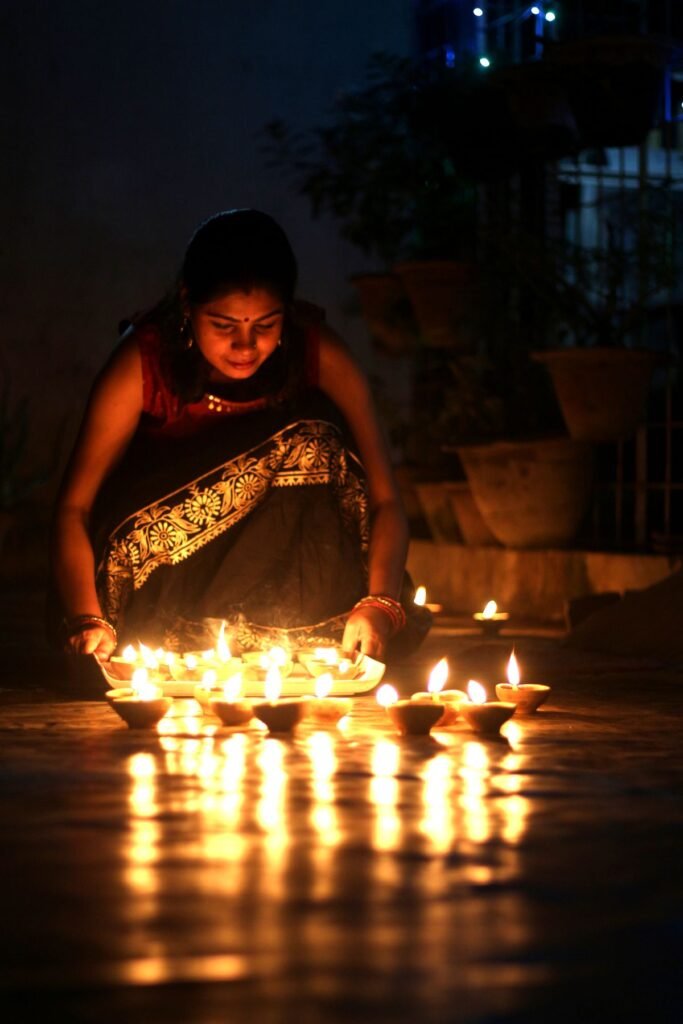
The same festival often contains two different dress codes. Daytime means rituals, walking, queues for bhog or lunch, and natural light: choose lighter fabrics, softer or brighter colors, a secure and simple drape, and jewelry you can forget you are wearing. Comfort is not a compromise here, it is what lets you actually participate in the celebration instead of managing your outfit through it.
Evening is when the calendar turns glamorous. Cultural programs, Diwali parties, receptions, and wedding ceremonies reward deeper colors, visible sheen, zari and embroidery, and a more deliberate drape. If one day holds both kinds of events, a silk-cotton or Jamdani saree is the classic bridge: dress it simply in the morning, then add the statement blouse, the gold jewelry, and the darker lipstick after dark.
One Saree, Many Festivals: The Re-Wear Playbook
The smartest festive wardrobe is not the biggest one. A single well-chosen saree, a deep maroon silk, a classic Jamdani, a jewel-toned silk-cotton, can serve Durga Puja, Diwali, and a wedding in the same season if you restyle it with intention. Nobody at these gatherings is keeping score, and a beautiful saree deserves more than one outing a year.
Start with the blouse. A contrasting embroidered blouse makes the saree feel new; a simple matching one returns it to classic; a different neckline or sleeve changes the silhouette entirely. Then change the drape, the classic Nivi for a wedding, the Bengali Aatpoure for Puja morning, a seedha pallu to show off a decorated end at a Diwali party. If you want fresh ways to re-drape the sarees you already own, these modern saree draping ideas are an easy place to start.
Finally, change the jewelry story. Gold temple-style pieces read traditional and ceremonial; oxidized silver feels artistic and daytime; pearls soften everything for Eid or Christmas. Hair and makeup complete the transformation, a neat bun and bindi for rituals, loose waves and a bolder eye for the evening. Same saree, four festivals, four different women, all of them you.
Frequently Asked Questions
Q: Which saree fabrics are best for festive occasions?
Silk is the classic festive fabric for evenings, while Jamdani offers handcrafted richness without the weight. Embroidered georgette and chiffon suit parties and dancing, organza and tissue bring evening glow, and fine handloom cotton or silk-cotton is the most comfortable choice for daytime rituals and long festival days.
Q: What colors work best for festival sarees?
Red, maroon, deep green, royal blue, mustard, and gold are the festive mainstays because they carry associations of prosperity, light, and renewal. Ivory, white, and pastels work beautifully for daytime events, Eid gatherings, and spring festivals like Pohela Boishakh. When in doubt, a jewel tone with a gold border suits almost any celebration after dark.
Q: Can I wear the same saree to different festivals?
Absolutely, and it is the smartest way to build a festive wardrobe. Restyle the saree with a different blouse, a different drape, and a different jewelry story, and it reads as a new outfit at each event. A maroon silk or a classic Jamdani can move from Durga Puja to Diwali to a wedding without ever looking repeated.
Q: What saree should I wear to a daytime festival event?
Choose comfort with a festive finish: a handloom cotton, silk-cotton, or light Jamdani saree in a bright or classic color, with a woven border for polish. Keep the drape secure and simple, jewelry light, and footwear practical, daytime festivals involve walking, standing, and eating, and your saree should let you enjoy all three.
Q: How do I make a simple saree look more festive?
Let the styling do the work. Pair the saree with a richer or contrasting blouse, add gold or statement jewelry, choose a more deliberate drape such as a seedha pallu that displays the border, and finish with a bindi, defined eyes, and a neat hairstyle. A simple saree with festive styling almost always looks better than an overloaded outfit.
Conclusion
The best sarees for festive occasions are the ones that honor the celebration and the woman wearing them at the same time: luminous fabrics, joyful colors, and enough comfort to stay for the last song, the last sweet, and the last photograph. Build your festive wardrobe around a few versatile, well-loved sarees, learn to restyle them across the calendar, and every invitation, Eid, Puja, Diwali, Christmas, Boishakh, or a wedding, becomes a reason to celebrate rather than a reason to shop.