
 Image credit: Pexels
A saree gets the compliments, but the blouse decides whether the outfit actually works. The choli, the fitted blouse worn under a sari, sets the neckline that frames your face and jewelry, the sleeve that has to survive the event, the back that shows when the pallu moves, and the fit that decides whether you are comfortable at hour one or miserable by hour four. Learning how to choose the right saree blouse is mostly learning the sequence: start with the saree, make five decisions, neckline, sleeves, back, fabric, fit, and finish with one practical question, stitched or readymade.
- Step 1: Start With the Saree, Not the Blouse
- Step 2: Choose the Neckline
- Step 3: Choose the Sleeve Length
- Step 4: Decide the Back Design
- Step 5: Pick the Blouse Fabric
- Step 6: Get the Fit and Support Right
- Stitched or Readymade? The Decision Factors
- Build a Small Blouse Wardrobe
- Frequently Asked Questions
- Conclusion
Step 1: Start With the Saree, Not the Blouse
Three facts about the saree come before any blouse decision, because they narrow every later choice.
Fabric weight. Blouse and saree should be broadly matched in structure. A heavy Banarasi or stiff brocade saree needs a blouse with body, silk, raw silk or brocade with proper lining, or the drape looks unsupported at the shoulders. A light chiffon or georgette saree looks unbalanced under a stiff, heavy blouse; it wants something soft and fluid. If you are unsure how a saree fabric behaves, our guide to saree fabrics explained covers the weight and drape of the common options.
The border. A wide, ornate zari border is already a strong design element near the blouse at waist and shoulder. The busier the border, the calmer the blouse should be, plain fabric, a classic neckline, detail kept to the sleeves or back. A plain saree with a narrow border reverses the rule: the blouse gets permission to carry the embroidery, statement sleeve or dramatic back.
Color strategy. Decide deliberately among three approaches. Matching, the blouse in the saree’s own fabric or exact shade, is the traditional, formal choice, and most sarees include a blouse piece for it. Contrast means pulling a secondary color out of the saree, from its border or motifs; it is easier to get right than a separately bought exact match, because a shade half a tone off reads as a mistake while a clear contrast reads as a decision. Metallic neutrals, antique gold, silver, copper, bypass matching altogether and pair across many sarees, which matters in the wardrobe step below.
The occasion sits over all three: the same silk saree takes a modest, classic blouse to a temple ceremony and a far more designed one to a reception.
Step 2: Choose the Neckline
| Neckline | Character | Jewelry that works | Best for |
|---|---|---|---|
| Round | The versatile classic, close to the base of the neck | Statement necklaces and sets | Almost any saree; everyday to formal |
| V-neck | Lengthens the neck and torso | Pendants and shorter chains | Evening wear; balancing a heavy pallu |
| Boat | Wide across the shoulders, high at the front | Statement earrings, no necklace | Silk and handloom sarees; office-appropriate looks |
| Sweetheart | Curved dip at the bust; contemporary | Short pendants or none | Cocktail and reception styling |
| Square | Clean, structured edge | Pendants and temple jewelry | Cotton and handloom sarees; a traditional-modern balance |
| High neck / collar | Closed and regal | Earrings only | Formal events, winter, brocade blouses |
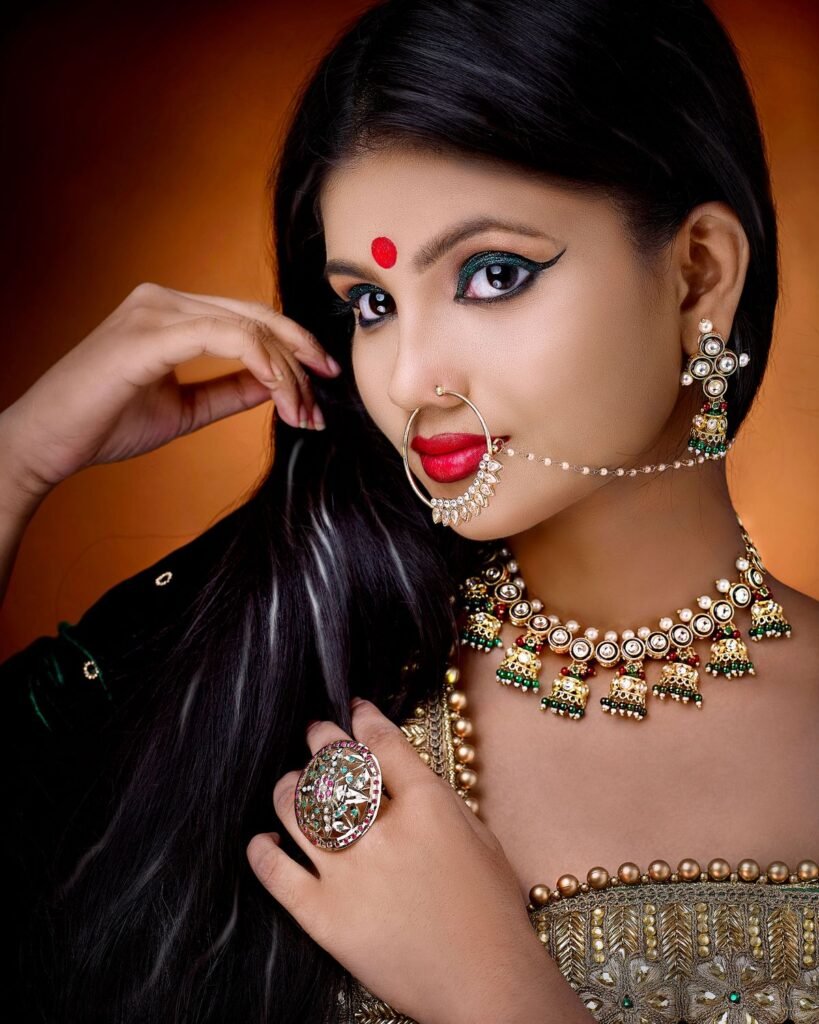
Two cautions keep a neckline choice honest. First, depth is a budget: a blouse is held up by its shoulders and under-bust band, so the deeper the front, the higher the back should stay, deep on both sides leaves too little structure, and the blouse starts to slide. Second, use proportions as information, not rules: a boat neck widens the shoulder line, a V lengthens a shorter neck, and a high neck flatters with the right earrings. Choose the effect you want, then check it against the jewelry you plan to wear.
Step 3: Choose the Sleeve Length
Sleeves are where occasion, season and comfort meet. Sleeveless and cap sleeves read contemporary and suit summer events, but demand a perfectly fitted armhole, there is no sleeve to hide a gaping one. Short and elbow sleeves are the most versatile lengths: appropriate almost everywhere and the natural choice with heavy silk sarees. Three-quarter sleeves add formality and coverage while staying cooler than full length. Full sleeves are the formal, winter and modest-styling option, ranging from fitted silk to sheer net. Let the setting arbitrate, an air-conditioned ballroom, an outdoor August ceremony and an office party are three different sleeve decisions for the same saree. And plan heavy sleeve embroidery around the pallu: on the pallu side it stays half-hidden, rubbing against the drape.
Step 4: Decide the Back Design
The back is the most designed part of the modern blouse, deep U and V cuts, keyholes, sheer illusion panels, cutwork, and the classic dori tie-up with tassels. Before paying for any of it, answer one question: will it be seen? A traditional drape with the pallu over the shoulder covers most of the back most of the evening. Detailed backs earn their keep when the pallu is pinned back or draped to the side, otherwise the money is better spent on the front and sleeves. A deep back also needs compensation: a well-fitted front, built-in cups, or a dori placed high enough to anchor the blouse. And keep the Step 2 budget in mind, deep back, higher front; deep front, modest back.
Step 5: Pick the Blouse Fabric
Blouse fabric should converse with the saree rather than compete with it. The working pairings are well established: silk and raw silk under silk sarees, formal and structured; brocade under plain sarees, its woven pattern supplying the richness; cotton and silk-cotton under handloom cotton and Jamdani; velvet for winter evenings; net and sequin fabrics for cocktail and sangeet looks, kept away from heavily worked sarees to avoid a texture clash. Two checks apply to any fabric: it should sit close to the saree in weight (Step 1), and it should be comfortable against the skin for hours, a blouse is worn tighter than almost anything else you own, so a scratchy fabric is not a small flaw. The saree’s own blouse piece guarantees the match; a separate fabric is right when you want contrast or more structure.

Step 6: Get the Fit and Support Right
More blouses fail on fit than on design. A good blouse sits close without pulling at the bust, back or armholes, and lets you raise your arms, sit and bend without anything cutting in or riding up. The details that decide it:
- The armhole is the single most important measurement. It should sit close and slightly high; a low or loose armhole gapes, shows innerwear, and makes the whole blouse lift when you raise an arm.
- Cups and lining. Deep backs, halters and sleeveless styles usually need built-in cups or a structured lining; a classic blouse worn with your usual innerwear needs neither. Trying the blouse with the exact innerwear you will use at the event is not optional.
- Closures. Front hooks are traditional and easy to manage alone; back hooks give a cleaner front but need help dressing; a side or back zip is the smooth modern option. Match the closure to the back design, a dori back and a back-hook closure solve the same job twice.
- Seam allowance. Ask for extra margin inside the seams, roughly an inch or more at the sides. It costs nothing at stitching time and doubles the blouse’s useful life, since blouses show small weight changes first.
- The fitting tests. At the trial, raise both arms, sit, bend, and mimic pinning your pallu; check the back in a mirror for pulling across the shoulder blades. A blouse that only works standing still before the tailor’s mirror will not survive a wedding.
Body shape enters here as information, not verdict: fuller arms are usually more comfortable in elbow or three-quarter sleeves, a shorter torso in a standard rather than long-line blouse, broader shoulders with sleeve volume kept low. Test these notes at the fitting; how the blouse feels on you is the final authority. Once the decisions are made, our overview of the latest saree blouse designs is a useful companion for the current design vocabulary.
Stitched or Readymade? The Decision Factors
| Factor | Stitched to measure | Readymade |
|---|---|---|
| Fit | Cut to your measurements; best for deep backs and unusual proportions | Standard sizing; may need alteration |
| Match | Uses the saree’s own blouse piece, an exact match | Rarely an exact match; works best as a deliberate contrast or metallic |
| Time | Needs days to weeks, plus a fitting | Immediate; the answer when the event is close |
| Design control | Full: neckline, sleeve, back, closures all chosen | Limited to what exists in your size |
| Reusability | Made for one saree, though neutrals cross over | Often chosen to serve several sarees |
| Best when | The saree is special, the design is specific, time allows | Time is short, the saree’s blouse piece was never stitched, or you want a versatile staple |
For US readers there is a practical middle path: keep a small set of readymade staples for everyday sarees, and stitch blouses only for significant sarees, a wedding silk, a gifted Jamdani, where the fit and match justify the effort. Neither route is the “real” one; the right answer fits your timeline, your saree and your standards for fit.
Build a Small Blouse Wardrobe
You do not need a blouse per saree. A small, deliberate set covers most of a wardrobe: an antique gold blouse, the single hardest-working piece, pairing with most silk sarees, a black for evening and printed sarees, a maroon or deep red for festive looks, one ivory or cream for light sarees and daytime, and one contrast in a color your sarees share, such as bottle green, royal blue or magenta. Choose these staples in classic necklines and elbow or three-quarter sleeves, and let stitched, saree-specific blouses carry the dramatic designs. Five blouses chosen this way quietly cover dozens of sarees.
Frequently Asked Questions
Q: How do I match a blouse to my saree?
Choose one of three deliberate strategies. Match exactly, using the saree’s own blouse piece or the identical shade. Contrast, by pulling a secondary color from the saree’s border or motifs, easier to get right than a separate near-match. Or use a metallic neutral such as antique gold, which pairs across most silk sarees. Whichever you choose, keep the blouse fabric close to the saree in weight.
Q: Which neckline is best for a saree blouse?
The round neck is the most versatile, it suits nearly every saree and leaves room for necklaces. The boat neck is the most polished modest option and pairs with statement earrings instead of a necklace. A V-neck lengthens the neck and suits evening wear; high necks and collars are the formal winter choice. The real rule is coordination: the neckline must leave the right space for your jewelry.
Q: Is a stitched blouse better than a readymade one?
Neither is universally better. A stitched blouse wins on fit, exact matching and design control, the right choice for special sarees and deep or structured designs, but it needs time and a fitting. A readymade blouse wins on speed and reusability, and works best as a deliberate contrast or metallic staple. Many women use both: readymade staples for everyday sarees, stitched blouses for significant ones.
Q: How should a saree blouse fit?
Close to the body without pulling at the bust, back or armholes. You should be able to raise your arms without the blouse lifting or the armhole cutting in, and sit and bend comfortably, with no gaping at the armhole. The armhole fit matters most, then the under-bust band. Always try the blouse with the innerwear you will actually use, and test movement, not just the mirror, before accepting the fit.
Q: Can one blouse work with several sarees?
Yes, that is the logic of the staple blouse. An antique gold, black, maroon or ivory blouse in a classic neckline with elbow or three-quarter sleeves pairs with many sarees, especially silks and prints that share those tones. Keep the staple’s design calm so it does not fight different borders, and reserve dramatic necklines, backs and sleeves for blouses stitched to a specific saree.
Conclusion
Choosing the right saree blouse is a sequence, not a shopping trip: read the saree first, its weight, border and occasion, then decide the neckline with your jewelry in mind, the sleeve with the setting, the back with your drape, and the fabric as a partner to the saree rather than a rival. Protect the fit with a close armhole, the right support, a workable closure and seam allowance, and let your timeline, not fashion, settle the stitched-versus-readymade question. Do that, in that order, and the blouse stops being the risky half of the outfit and becomes what it should be: the part that makes the saree look inevitable.