
 Image credit: Pexels
If you are new to sarees, the fabric matters more than the color, the border, or even the blouse. The same six yards can feel effortless in one fabric and like a wrestling match in another. So which saree fabric is easiest to wear? The short answer is georgette, with crepe and soft cotton close behind. But the honest answer depends on what “easy” means for you: easy to drape in the morning, easy to keep in place through a long day, or easy to wash and wear again next week.
This guide ranks the most common saree fabrics by how they actually behave on the body, not just how they look on a hanger. If you want background on how each fabric is made and finished first, our guide to saree fabrics explained covers that ground; here, we focus purely on wearability.
- What “Easy to Wear” Actually Means
- The Fabrics, Ranked from Easiest to Hardest
- Georgette, The Easiest All-Rounder
- Crepe, Smooth, Stable, and Office-Ready
- Soft Cotton, Grips Beautifully, with One Big Caveat
- Linen, Structured and Stay-Put, but Creases
- Chiffon, Featherlight and Flowy, Needs a Little Help
- Silk, Beautiful, but Slippery and Heavy at the Top End
- The Hardest: Satin, Art Silk, Organza, and Net
- The Ranking at a Glance
- The Best Easy Fabric for Your Situation
- Small Things That Make Any Fabric Easier
- Frequently Asked Questions
- Conclusion
What “Easy to Wear” Actually Means
A saree is unworn, unstitched cloth. Nothing holds it on your body except tucks, pleats, friction, and a pin or two. That is why five fabric properties decide whether a saree feels easy or exhausting:
- Weight. Six yards of heavy fabric pulls at your waist and shoulder for hours. Light fabrics are simply less tiring, especially for beginners whose draping is not yet efficient.
- Grip. Fabrics with a matte, slightly textured surface grip themselves, the petticoat, and your blouse. Smooth, glassy fabrics slide, pleats creep, and the pallu slowly migrates off your shoulder.
- Pleat-holding. Some fabrics fold into crisp pleats and keep them. Others spring open, unfold as you walk, or need constant re-tucking.
- Stiffness and body. Very stiff fabric resists being folded at all; very limp fabric collapses and clings. The easiest fabrics sit in the middle, soft, but with just enough body to hold a fold.
- Maintenance. An “easy” saree you are afraid to wash is not easy. Fabrics that tolerate gentle home washing and do not wrinkle in the drawer lower the total effort of owning them.
No fabric wins on all five. That trade-off is exactly why rankings online contradict each other, and why the ranking below scores each fabric against all five factors instead of just first impressions.
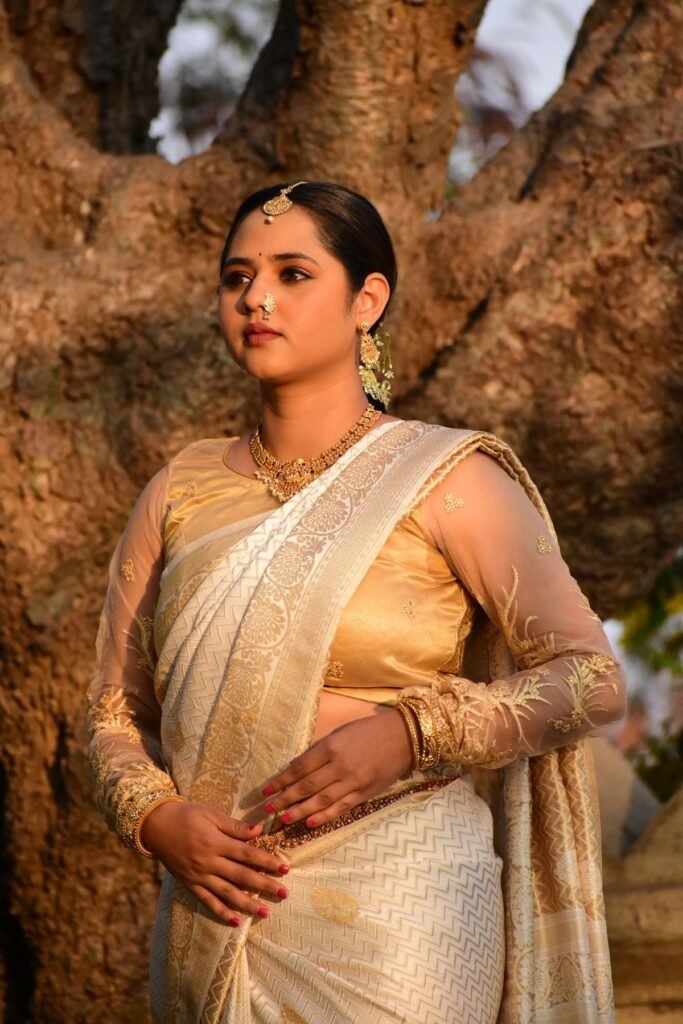
The Fabrics, Ranked from Easiest to Hardest
1. Georgette, The Easiest All-Rounder
Georgette earns the top spot because it is the most forgiving fabric across every factor. It is a lightweight crepe weave with a slightly grainy, matte surface, and that texture is the secret: georgette grips itself instead of sliding, so pleats stay where you put them and the pallu stays on your shoulder with a single pin. It is light enough for all-day wear, falls in soft, flattering folds rather than clinging or ballooning, and resists wrinkles, you can sit through a long event and stand up looking tidy.
It is also low-maintenance by saree standards and widely available in the USA in every style from plain daily-wear drapes to embellished party pieces. If you buy one first saree to learn on, make it georgette.
2. Crepe, Smooth, Stable, and Office-Ready
Crepe runs a close second. Like georgette, it has a subtly textured surface that holds pleats well and does not slip much, but it is slightly heavier and more fluid, so it drapes in a smooth, polished line that looks more formal. Crepe barely wrinkles, travels well, and needs very little pinning, which makes it a favorite for office wear and long functions where you cannot keep checking a mirror. Its only beginner drawback is that the fluid fall is a little less “grippy” in the hands while you are learning to pleat, a minor issue that disappears with one or two practice sessions.
3. Soft Cotton, Grips Beautifully, with One Big Caveat
Soft cotton, mulmul, voile, and soft handloom cottons, grips better than any other fabric. Cotton pleats lock into place, the pallu never slides, and it breathes beautifully through a hot day. For pure stay-put security, nothing beats it.
The caveat is stiffness. Heavily starched cotton, crisp tant, and stiff handloom weaves can be genuinely hard to pleat: the fabric fights your fingers, the pleats look bulky, and the drape stands away from the body. Cotton also creases as the day goes on, so a drape that looked crisp at 9 a.m. can look tired by evening. The rule is simple, the softer and more washed-in the cotton, the easier it is. A soft, pre-washed cotton saree is a top-three fabric; a stiff, heavily starched one drops to the bottom half of this ranking.
4. Linen, Structured and Stay-Put, but Creases
Linen has natural body and a dry, matte texture, so it stays exactly where you tuck it and gives a clean, structured silhouette with almost no pinning. It is breathable and comfortable for daytime and office wear, and many beginners find its slight crispness reassuring, the fabric feels like it is cooperating. Linen’s weaknesses are creasing (it wrinkles visibly where you sit) and a certain firmness when new, though it softens noticeably with washing. It ranks just below soft cotton because its pleats are a little bulkier and it demands a quick iron more often.
5. Chiffon, Featherlight and Flowy, Needs a Little Help
Chiffon is the lightest fabric on this list and drapes in the soft, flowing silhouette many people picture when they think of an elegant saree. Its fine, slightly matte finish gives it more hold than satin or silk, and once pinned at the shoulder it generally stays put. What keeps chiffon out of the top three is control during draping: the fabric is so light and fluid that pleats can shift while you are forming them, and it shows every bump of what is underneath, so a smooth, well-fitted petticoat matters. With a grippy cotton petticoat and one or two pins, chiffon is very wearable, it just asks for slightly more setup than georgette or crepe.
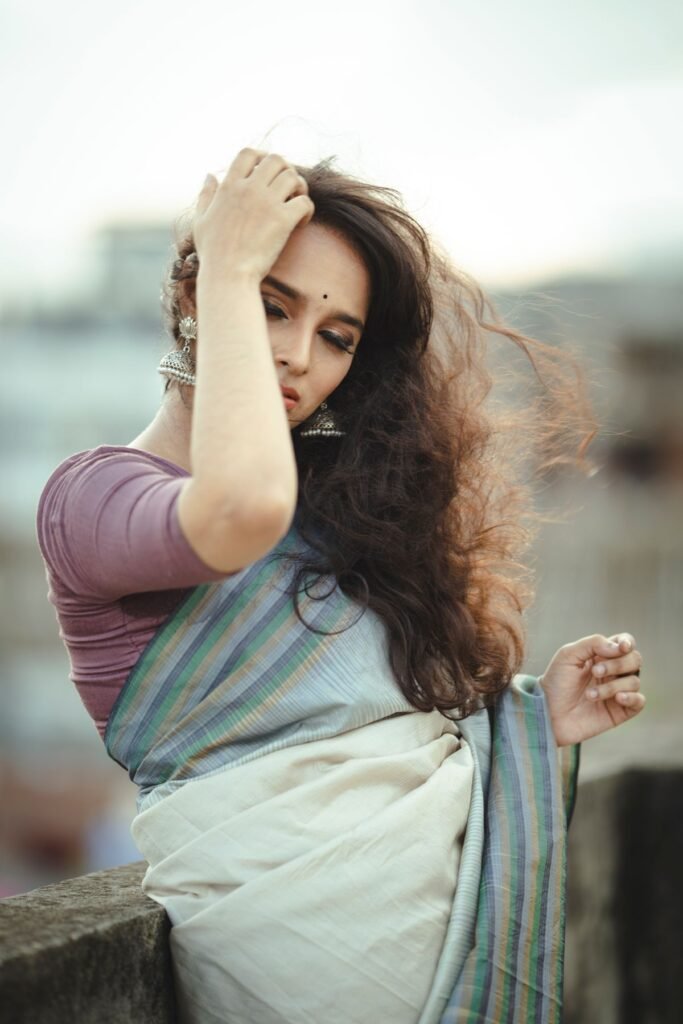
6. Silk, Beautiful, but Slippery and Heavy at the Top End
Silk is where “easy” splits in two. Silk-cotton blends and lighter silks are reasonably manageable, the cotton content adds grip and reduces weight, and they are a good festive step-up once you have draped a few georgette or crepe sarees. Pure silk is harder: smooth silk slides against itself, so pleats and pallu need more pinning, and the grand wedding silks, Kanjivaram and Banarasi brocades with heavy zari, add serious weight and stiffness on top of that. They are heirloom pieces, not learning pieces. Save pure silk until draping feels automatic, and expect to spend longer getting ready when you wear it.
7. The Hardest: Satin, Art Silk, Organza, and Net
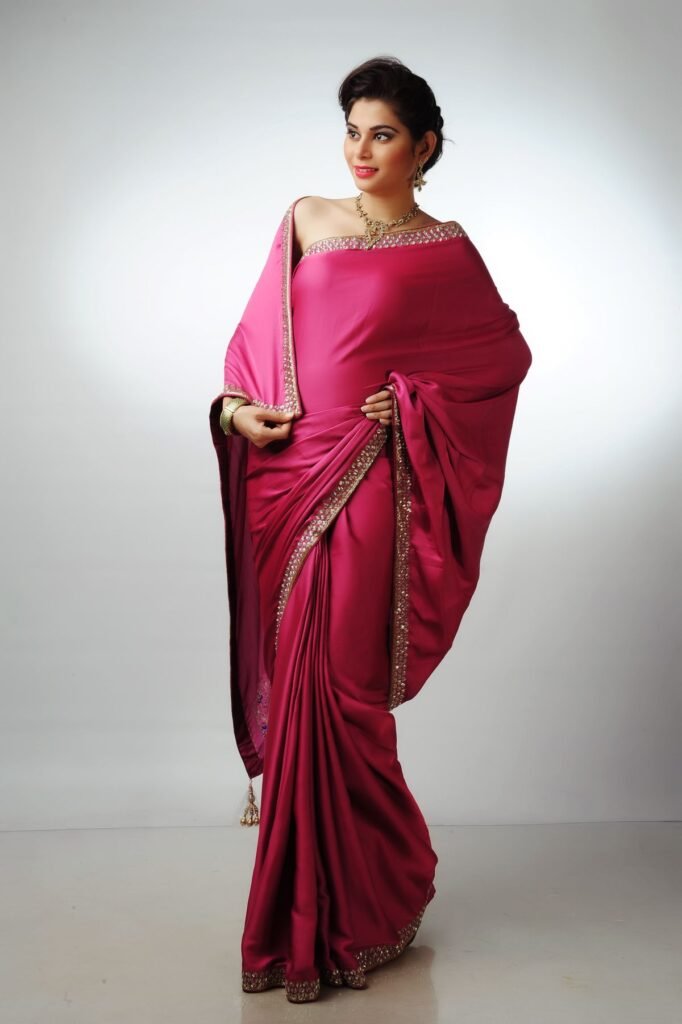
At the bottom sit the fabrics that fight you all day. Satin and glossy art silk (polyester woven to imitate silk) have a glassy surface with almost no friction, pleats unfold, the pallu slides off the shoulder repeatedly, and pins become load-bearing. Organza and tissue fail from the opposite direction: they are so stiff and springy that pleats puff open instead of folding flat. Net and heavily sequined fabrics are scratchy, catch on themselves, and carry their embellishment weight unevenly. All four can look stunning; none belongs in a beginner’s first year.
The Ranking at a Glance
| Fabric | Weight | Grip | Pleat-Holding | All-Day Comfort | Ease Verdict |
|---|---|---|---|---|---|
| Georgette | Light | High | Excellent | Excellent | Easiest overall |
| Crepe | Light–medium | High | Excellent | Excellent | Easiest polished option |
| Soft cotton | Light | Very high | Very good | Good (creases) | Easiest natural fabric |
| Linen | Medium | High | Good | Good (creases) | Easy, structured |
| Chiffon | Featherlight | Medium | Fair | Very good | Easy with pins |
| Silk-cotton blend | Medium | Medium | Good | Good | Moderate |
| Pure silk (heavy zari) | Heavy | Low | Fair | Fair | Hard for beginners |
| Satin / art silk | Light–medium | Very low | Poor | Poor | Hardest to keep in place |
The Best Easy Fabric for Your Situation
Your very first saree: georgette, in a solid color or small print with a light border. It forgives imperfect pleats, needs minimal pinning, and works for almost any occasion, so you will actually practice in it.
All day at the office: crepe or soft cotton. Crepe looks polished and never wrinkles; soft cotton is cooler and grips all day. Linen is the third choice when you want a sharper, structured look. Our guide to the best saree fabrics for summer goes deeper on hot-weather comfort if your office days are warm ones.
A wedding or evening event as a guest: georgette with a worked border, or a silk-cotton blend once you have some practice. Both photograph well, feel festive, and will not need adjusting between the ceremony and dinner.
Hot and humid weather: soft cotton or linen, breathability beats everything else, and both grip well enough that humidity will not loosen your drape.
Small Things That Make Any Fabric Easier
- Wear a cotton petticoat with a firm drawstring. Half of all “slippery saree” problems are actually a slippery petticoat. Cotton gives the tucks something to grip.
- Pre-pleat and iron the pleats before you start. Folding the front pleats in advance turns the hardest step into the fastest one.
- Get the fall and pico done. A finished fall (the reinforced inner edge) adds just enough weight for pleats to hang neatly.
- Pin with intention, not everywhere. One pin at the shoulder and one at the waist pleats is enough for grippy fabrics, and a sign your fabric choice is doing its job.
Frequently Asked Questions
Q: What is the easiest saree fabric for a beginner to drape?
Georgette. Its matte, slightly textured weave grips itself, so pleats stay in place and the pallu stays on your shoulder with minimal pinning. It is also lightweight, wrinkle-resistant, and comfortable for a full day, which makes it the most forgiving fabric to learn on. Crepe and soft, pre-washed cotton are close runners-up.
Q: Is chiffon or georgette easier to wear?
Georgette, for most people. Both are light and flowy, but georgette’s grainier crepe texture gives it more grip, so pleats hold better and need less adjusting. Chiffon is softer and more fluid, which makes it a little harder to control while draping, though it wears comfortably once pinned. If you love chiffon’s look, pair it with a cotton petticoat for extra grip.
Q: Why is a cotton saree sometimes hard to drape?
Starch and stiffness. Soft cotton grips beautifully, but heavily starched or crisp handloom cotton resists folding, makes bulky pleats, and stands away from the body. The fix is to choose soft, pre-washed cotton (such as mulmul) or wash a stiff saree once before wearing it, washed-in cotton is one of the easiest fabrics of all.
Q: Can a beginner wear a silk saree?
Yes, but choose the silk carefully. Start with a silk-cotton blend, which adds grip and reduces weight, and expect to use a few more pins than with georgette, since smooth silk slides against itself. Save heavy pure silks like Kanjivaram and Banarasi brocades, beautiful but heavy, stiff, and slippery, until draping feels automatic.
Q: Which saree fabric is best for wearing all day at work?
Crepe is the best all-round office choice: it holds its pleats, barely wrinkles, and looks polished from morning to evening. Soft cotton and linen are better in hot weather because they breathe, though both crease more by the end of the day. Avoid satin and art silk for long days, their pleats and pallu need constant re-adjusting.
Conclusion
The easiest saree fabric to wear is the one that grips, holds its pleats, and does not weigh you down, and by those measures georgette comes first, followed by crepe, soft cotton, and linen. Chiffon is a pleasure once pinned, silk rewards experience, and satin, art silk, organza, and net are best left until draping is second nature. Choose for your situation rather than for the photograph, and the saree stops being a challenge and starts being the easiest elegant thing you own.