
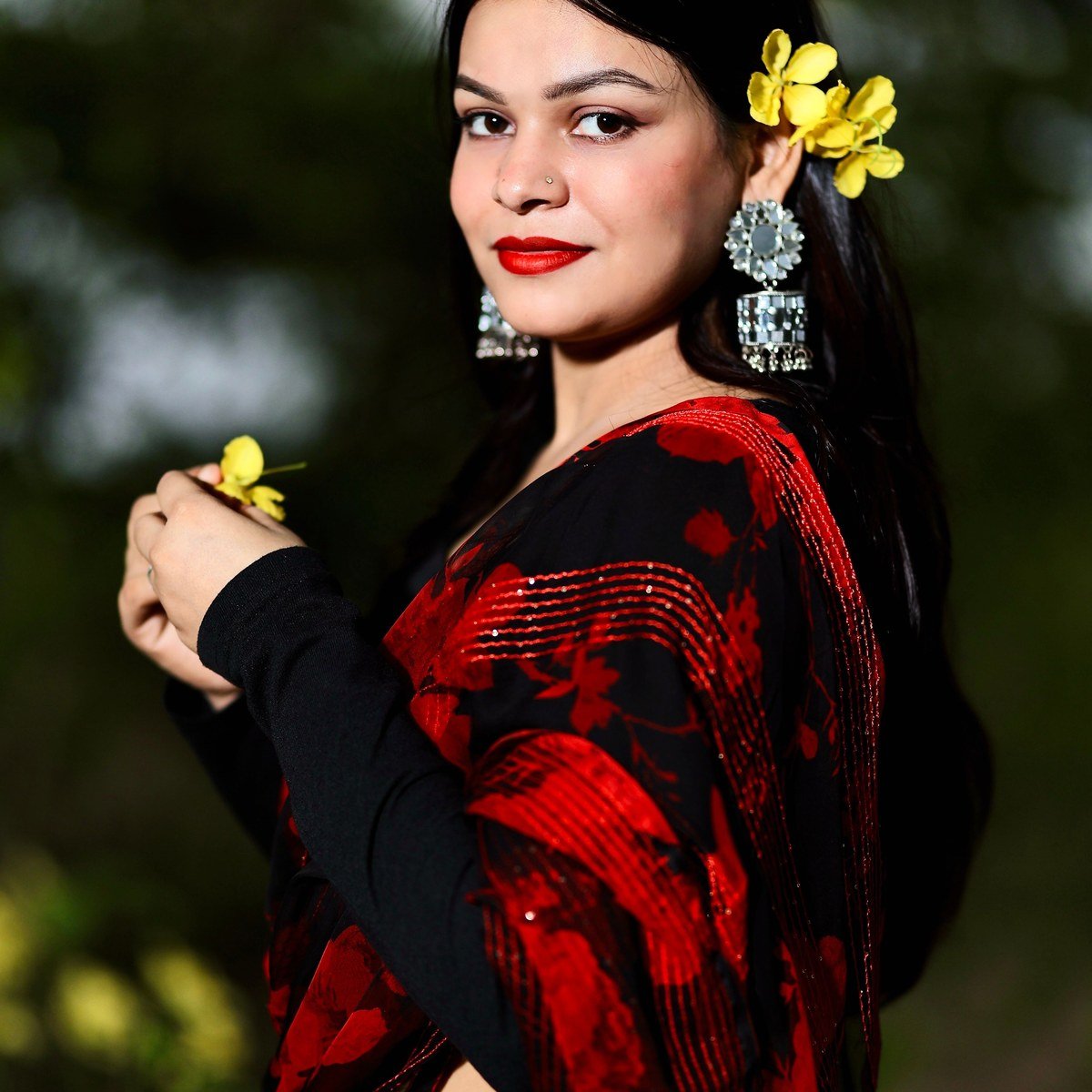
 Image credit: Pexels
A saree is a single length of unstitched cloth, yet across India, that one garment is worn in dozens of distinctly different ways. Pleats move from front to back, the decorative end (the pallu) crosses to the opposite shoulder, the cloth lengthens from six yards to nine, and in some regions the “saree” is not one piece of cloth at all, but two. Each traditional Indian saree draping style is a piece of regional identity, shaped by climate, work, ritual, and the local weave.
This is a survey of the ten most significant regional drapes, what each one looks like, where it comes from, which sarees it is traditionally worn with, and when you would see it. If you are still getting oriented, our primer on what a saree is covers the garment’s parts and standard measurements; here, we travel region by region.
- Four Differences That Define Every Drape
- Nivi, Andhra Pradesh and Telangana (the Pan-India Standard)
- Bengali Aatpoure, West Bengal
- Gujarati Seedha Pallu, Gujarat and Rajasthan
- Maharashtrian Nauvari (Kashta), Maharashtra
- Tamil Madisar, Tamil Nadu
- Mundum Neriyathum, Kerala
- Mekhela Chador, Assam
- Kodagu (Coorgi), Kodagu, Karnataka
- Odia Drape, Odisha
- Manipuri Ensemble, Manipur
- The Ten Styles at a Glance
- Seeing These Drapes in the United States
- Frequently Asked Questions
- Conclusion
Four Differences That Define Every Drape
Regional drapes look bewilderingly different, but they vary along just four lines:
- Length. Most drapes use the standard saree of about six yards. The great exceptions, the Maharashtrian Nauvari and the Tamil Madisar, use a nine-yard saree, because the extra cloth passes between the legs.
- Pleats. Pleats may sit at the front (Nivi), be tucked at the back (Kodagu), take wide box form (Bengali), or be absent altogether.
- The pallu. The decorated end may fall over the left shoulder (Nivi), be displayed across the chest (Gujarati), wrap around both shoulders (Bengali), or be pinned behind the back (Kodagu).
- One piece or two. Kerala’s Mundum Neriyathum and Assam’s Mekhela Chador are two-piece ensembles, a wrapped lower cloth and a separately draped upper cloth.
Keep those four axes in mind and the ten styles below sort themselves out quickly.
1. Nivi, Andhra Pradesh and Telangana (the Pan-India Standard)
The Nivi is the drape the world pictures when it hears the word “saree,” and the default style across most of India today. Generally traced to Andhra Pradesh, it spread nationwide during the twentieth century through painting, cinema, and urban fashion. The saree is tucked into a petticoat at the waist, a fan of neat pleats is tucked at the front just left of the navel, and the pallu is carried over the left shoulder.
Because it works with virtually any six-yard saree, cotton for daily wear, silk for weddings, the Nivi is the drape of offices, festivals, and formal occasions alike, and the reference point against which every other style in this survey is a variation.
2. Bengali Aatpoure, West Bengal
The Aatpoure (also written Atpoure) is Bengal’s graceful drape, instantly recognizable at Durga Puja. Unlike the Nivi, it has no front pleats; instead, the saree is wrapped around the waist with wide box pleats, and the pallu is brought over the left shoulder, looped around the body, and thrown back over the right shoulder, framing the torso from both sides. Traditionally, the mistress of the house tied her bunch of household keys to the end of the pallu, a detail that became the drape’s signature image.
The classic Aatpoure pairing is the red-and-white saree, white or off-white body, deep red border, in tant cotton, Jamdani, garad, or tussar silk, worn for festivals, weddings, and cultural occasions.
3. Gujarati Seedha Pallu, Gujarat and Rajasthan
“Seedha” means straight: after Nivi-style front pleats, the pallu is brought from behind over the right shoulder and spread across the front of the chest, pleated and pinned so the decorated end faces the viewer. Where the Nivi sends the saree’s most ornate section down the back, the Gujarati drape puts it on display, the natural partner for sarees whose artistry is concentrated in the pallu.
It is traditionally worn with Patola and Bandhani (tie-dyed) sarees and embroidered festive pieces, at weddings, pujas, and Navratri celebrations, where the front-displayed pallu moves beautifully during garba dancing.
4. Maharashtrian Nauvari (Kashta), Maharashtra
The Nauvari, literally “nine yards”, is the most physically distinctive drape in India. The long saree is worn dhoti-style: part of the cloth passes between the legs and is tucked at the back, so the lower half resembles trousers, while the pallu crosses the chest and over the shoulder. No petticoat is worn. The style is also called Kashta, after the back tuck (kachha).
This was historically a working woman’s drape, allowing complete freedom of movement for farming, riding, and, in Maratha history, even battle. Today it is worn at Maharashtrian weddings, Ganesh Chaturthi, and Gudi Padwa, and it is the iconic costume of Lavani folk dance. Traditional pairings are Paithani silk for celebrations and plain cotton for everyday wear.
5. Tamil Madisar, Tamil Nadu
The Madisar is Tamil Nadu’s nine-yard ritual drape, traditionally worn by married Tamil Brahmin women for weddings, temple worship, and religious ceremonies. Like the Nauvari, it divides the cloth so the lower portion wraps dhoti-like between the legs, while the upper portion crosses the torso and the pallu is secured over the shoulder. It is intricate, many women learn it from mothers and grandmothers specifically for ceremonial days.
Madisar has two recognized community variations, Iyer and Iyengar, which differ in pleating direction and how the pallu is wrapped and pinned, a reminder that “regional” drapes often have sub-styles of their own. It is worn almost exclusively with Kanjivaram (Kanchipuram) silk sarees.
6. Mundum Neriyathum, Kerala
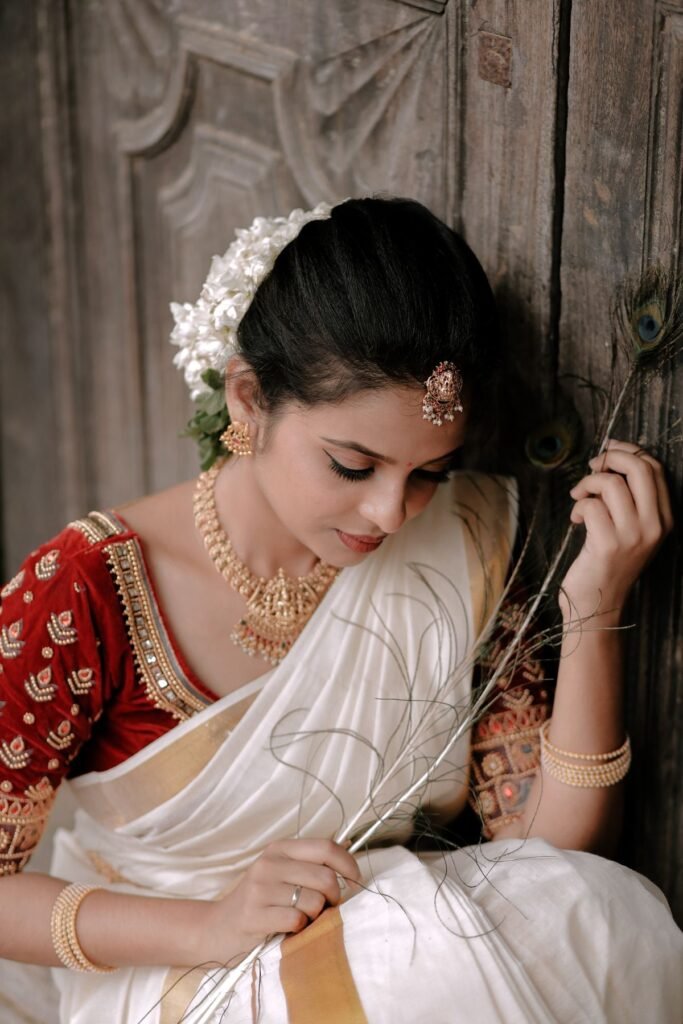
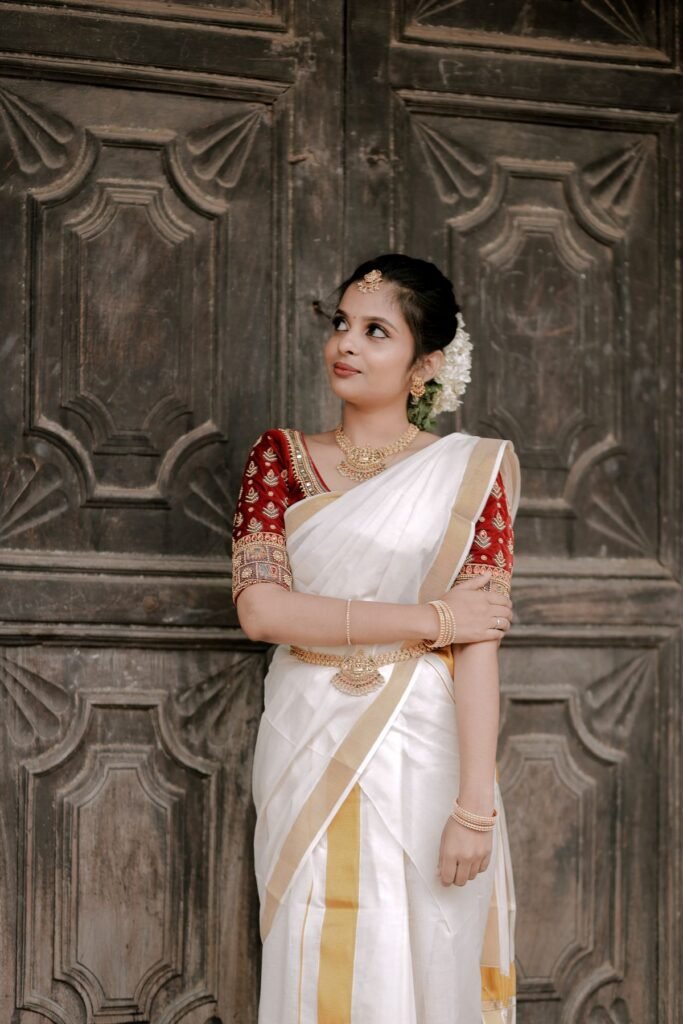
Kerala’s traditional ensemble is a two-piece garment. The mundu is a cloth wrapped around the waist as the lower garment, and the neriyathu is the upper cloth, draped diagonally across the torso with one end tucked at the waist and the rest carried over the shoulder like a pallu. The classic fabric is undyed off-white cotton with a woven gold border, the famous kasavu, and the complete look is known as the Kerala saree or Kasavu saree. (A single-piece six-yard saree in the same off-white and gold is also worn, in the Nivi style.)
Mundum Neriyathum is the dress of Onam, temple visits, and weddings, traditionally completed with gold jewelry and jasmine in the hair. Its restraint, one color, one border, is precisely its elegance.
7. Mekhela Chador, Assam
Assam’s Mekhela Chador is the Northeast’s great two-piece tradition. The mekhela is a wide cloth wrapped around the waist like a cylindrical skirt, folded into pleats at the front; the chador is a separate long cloth draped over the blouse, one end tucked at the waist and the other carried over the shoulder. A third piece, the riha, is sometimes added on ceremonial occasions.
The prestige fabrics are Assam’s own silks: golden muga, unique to the region, along with eri and pat (mulberry) silk, and cotton for daily wear. It is worn for Bihu festivals, weddings, and cultural events, and Assamese wearers consider it their own garment tradition, related to but distinct from the saree.
8. Kodagu (Coorgi), Kodagu, Karnataka
The Kodava drape from Karnataka’s hill district of Kodagu (Coorg) is essentially the Nivi turned around. The pleats are gathered and tucked at the back of the waist rather than the front, and the pallu is brought over the right shoulder and pinned firmly with a brooch so it falls behind the back. The front of the saree lies smooth and unbroken.
The logic is practical: in steep coffee-estate country, a drape with nothing loose at the front stays put through physical work. Today the Coorgi drape is worn with silk sarees at Kodava weddings and festivals, where its sleek silhouette stands out immediately among Nivi drapes.
9. Odia Drape, Odisha
Odisha’s traditional style is close to the Nivi in its lower half, the saree is wrapped and tucked at the waist, but it is distinguished by the pallu, traditionally drawn over the right shoulder or across the front in a seedha-pallu arrangement, echoing the Gujarati preference for showing the decorated end. Some traditional Odia drapes dispense with front pleats, giving a smooth wrapped front. The style is inseparable from Odisha’s celebrated ikat weaving: Sambalpuri sarees, with their tie-dyed motifs, and Bomkai cotton and silk sarees are the classic fabrics. You will see it at temple visits in Puri, at Raja festival, and at weddings.
10. Manipuri Ensemble, Manipur
Manipur’s traditional dress comes with an honest caveat: like the Mekhela Chador, it is a distinct ensemble rather than a way of draping a standard saree. It has three parts, the phanek, a wrap-around lower garment worn like a sarong skirt; the innaphee, a sheer, veil-like cloth draped over the upper body and shoulders; and a fitted blouse or chola. Manipuri textiles are known for their woven borders and motifs, including the Moirang phee. The ensemble is worn at festivals, weddings, and Manipuri classical dance performances, the Northeast’s second great draping tradition.
The Ten Styles at a Glance
| Style | Region | Cloth | Pleats | Pallu | Traditional Fabrics | Typical Occasions |
|---|---|---|---|---|---|---|
| Nivi | Andhra Pradesh / Telangana | 6-yard, one piece | Front, at navel | Over left shoulder | All, cotton to silk | Everyday to weddings |
| Bengali Aatpoure | West Bengal | 6-yard, one piece | None (wide box folds) | Both shoulders, looped | Tant, Jamdani, garad, tussar | Durga Puja, festivals, weddings |
| Gujarati Seedha Pallu | Gujarat / Rajasthan | 6-yard, one piece | Front, Nivi-style | Over right shoulder, across chest | Patola, Bandhani, embroidered | Weddings, Navratri, pujas |
| Nauvari (Kashta) | Maharashtra | 9-yard, one piece | Dhoti-style, between legs | Across chest, over shoulder | Paithani, cotton | Weddings, Ganesh Chaturthi, Lavani |
| Madisar | Tamil Nadu | 9-yard, one piece | Dhoti-style lower half | Over shoulder, secured | Kanjivaram silk | Weddings, temple rituals |
| Mundum Neriyathum | Kerala | Two pieces | Mundu wrap, no pleats | Neriyathu over shoulder | Off-white cotton, gold kasavu border | Onam, temple, weddings |
| Mekhela Chador | Assam | Two pieces | Front pleats in mekhela | Chador over shoulder | Muga, eri, pat silk; cotton | Bihu, weddings, festivals |
| Kodagu (Coorgi) | Kodagu, Karnataka | 6-yard, one piece | Tucked at back | Over right shoulder, pinned behind | Silk sarees | Kodava weddings, festivals |
| Odia | Odisha | 6-yard, one piece | Front or none | Over right shoulder / front | Sambalpuri ikat, Bomkai | Temple visits, festivals, weddings |
| Manipuri ensemble | Manipur | Two–three pieces | Phanek wrap skirt | Innaphee over shoulders | Moirang phee and woven cottons/silks | Festivals, weddings, classical dance |
Seeing These Drapes in the United States
At Indian cultural events in the USA, Durga Puja pandals, Onam gatherings, Bihu celebrations, temple festivals, you will see this whole map worn in one room, because families drape the style of their home region for that region’s festivals. If you are building a saree wardrobe, the regional weaves matter as much as the drape: our overview of the major types of sarees introduces the Patolas, Paithanis, Sambalpuris, and Kanjivarams these drapes were designed around. Note, too, that the nine-yard drapes require an actual nine-yard saree, a six-yard saree cannot be substituted, and the two-piece ensembles are bought as sets.
Frequently Asked Questions
Q: How many saree draping styles are there in India?
Far more than any single list can hold. Researchers of Indian dress, most notably the French anthropologist Chantal Boulanger, have documented well over a hundred distinct draping styles across India’s regions, communities, and occupations. The ten in this survey are the most widely recognized traditional styles; dozens of local and community drapes exist beyond them.
Q: Which is the most common saree draping style?
The Nivi drape, originally from Andhra Pradesh and Telangana. Its combination of front pleats and a pallu over the left shoulder is the standard across most of India today, and the style seen most often in films, offices, and formal events. It is also the drape beginners usually learn first, since it works with any standard six-yard saree.
Q: What is a nine-yard saree, and which drapes use one?
A nine-yard saree (about 8 metres) is a longer version of the standard six-yard saree. The extra length is needed by drapes that pass cloth between the legs in dhoti fashion: principally the Maharashtrian Nauvari and the Tamil Madisar. These drapes cannot be done with a six-yard saree.
Q: What is the difference between a saree and the Mekhela Chador or Mundum Neriyathum?
A saree is one continuous length of cloth draped around the body. The Mekhela Chador (Assam) and Mundum Neriyathum (Kerala) are two-piece ensembles: a wrapped lower garment (mekhela or mundu) plus a separate upper cloth (chador or neriyathu) over the shoulder. They are close cousins of the sari, sharing its draped-cloth logic, but are bought, worn, and culturally regarded as distinct garments.
Q: Can I wear a regional draping style if I am not from that region?
Yes, regional drapes are widely worn across India for festivals, weddings, and cultural events, and wearing one respectfully is generally received as appreciation, especially paired with the region’s traditional weave. Two practical notes: nine-yard and two-piece styles are harder to learn from a video alone, so practice before the event; and at strongly traditional or ritual occasions, follow the host community’s lead on what is appropriate.
Conclusion
India’s traditional draping styles turn one unstitched cloth into a map of the country: the Nivi’s neat universality, Bengal’s pleatless grace, Gujarat’s displayed pallu, the nine-yard working drapes of Maharashtra and Tamil Nadu, Kerala’s white-and-gold restraint, the two-piece traditions of Assam and Manipur, and Kodagu’s back-pleated practicality. Learn to read the four differences, length, pleats, pallu, and pieces, and you can identify a drape, and its region, from across a crowded festival hall.