
 Image credit: Pexels
“Pure cotton” is one of the most used, and most loosely used, labels in the saree market. Cotton-polyester blends, cotton-silk mixes and heavily starched fabrics are all sold under wording that sounds like pure cotton, and the difference matters: pure cotton breathes, absorbs sweat and softens with every wash, while a synthetic blend can feel clammy in summer and age very differently. Learning how to identify a pure cotton saree is a hands-on skill, and no single test settles it. This guide walks through eight checks, touch, weave, light, drape, label and more, in the order you would actually use them in a shop or when a parcel arrives, and finishes with the one test to keep as a last resort.
One distinction before the checks begin: purity and weaving method are separate questions. A saree can be pure cotton woven on a powerloom, or a cotton blend woven by hand. These checks answer the fiber question, is it really all cotton? For background on how cotton behaves compared with other fibers, see our guide to different saree fabrics explained.
- Check 1: The Touch Test, Matte, Dry and Slightly Cool
- Check 2: Look Closely at the Weave
- Check 3: Hold It Up to the Light
- Check 4: Drape and Crease Behavior
- Check 5: Read the Label Like a Lawyer
- Check 6: The Water and Wash Clues
- Check 7: Recognize Artificial Stiffening
- Check 8: The Burn Test, A Last Resort Only
- Pure Cotton vs. Blend at a Glance
- Questions to Ask the Seller
- Frequently Asked Questions
- Conclusion
Check 1: The Touch Test, Matte, Dry and Slightly Cool
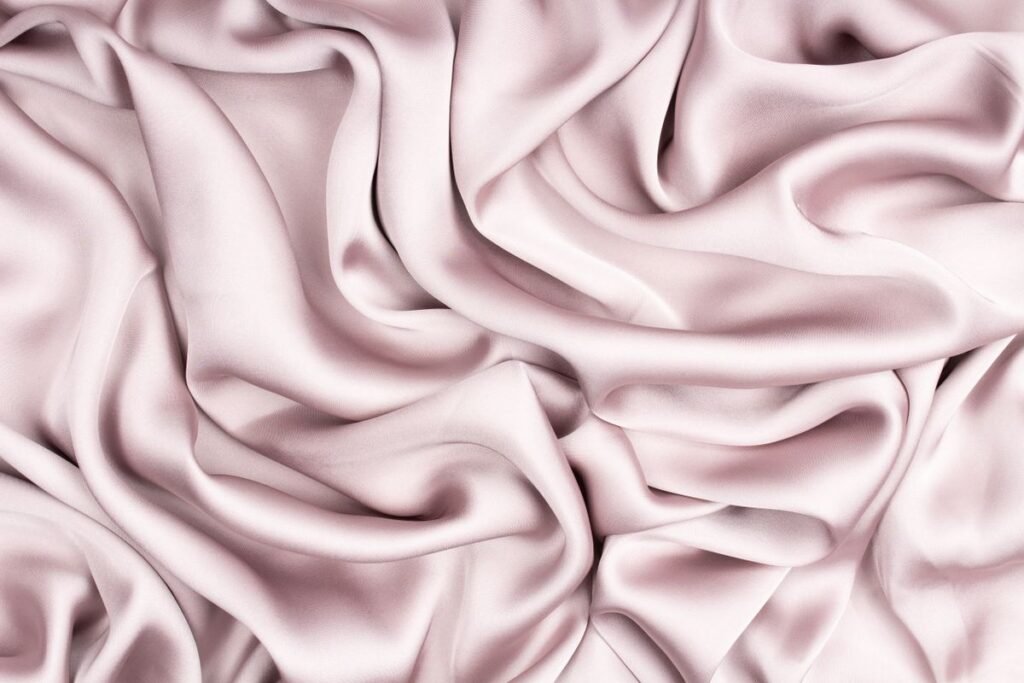
Run the fabric slowly between your fingers and across the back of your hand. Pure cotton has a matte, dry feel, soft but never slippery, with a faint natural texture from the yarn itself. It feels slightly cool at first touch and warms gently as you handle it.
Polyester and polyester-rich blends feel different: smoother in an artificial way, faintly slippery or “glassy,” and they may cling to your fingers with static, especially in dry, air-conditioned air. Cotton-silk blends sit in between, they carry a gentle sheen and a smoother glide than pure cotton. Neither blend is a bad fabric, but if you paid for pure cotton, the matte, dry hand-feel is the first thing that should be there.
Check 2: Look Closely at the Weave
Hold the saree at eye level in good light and look at the threads themselves. Cotton yarn is made of short natural fibers twisted together, so under close inspection it looks softly matte and very slightly fuzzy or uneven, thread thickness varies a little along its length, and handwoven cotton shows small knots and gentle irregularities in spacing.
Synthetic filament yarn, by contrast, is perfectly uniform: every thread the same thickness, the same smoothness, row after row. A weave that looks machine-flawless with a slight plasticky shine is a blend suspect. Also check how any motif is made, on genuine woven cotton, patterns are part of the fabric structure and visible on the reverse; a design that sits on the surface is a print, whatever the label says about the base cloth.
Check 3: Hold It Up to the Light
Raise a single layer of the saree’s body against a window or bright light and look through it. Cotton’s natural yarn and relatively open weave let a soft, diffused light through, with fine cottons such as mulmul or Kota, you can often make out the shadow of your fingers behind the cloth. This breathability is precisely why cotton tops the list of best saree fabrics for summer.
Read the result with judgment. A very dense, heavy cotton will pass less light without being any less pure, so the light test works best in combination: a fabric that blocks light completely and feels slippery and shines like plastic is telling a consistent story. Note too that heavy starch (see Check 7) can make even genuine cotton look temporarily opaque and stiff.
Check 4: Drape and Crease Behavior
Cotton has a well-known personality: it creases. Scrunch a corner of the fabric in your fist for a few seconds and let go. Pure cotton will hold visible creases and wrinkles, that is normal, honest behavior for the fiber, and the reason cotton sarees look crisp rather than flowing. Polyester-rich fabric springs back almost crease-free, which is convenient for travel but a strong purity clue.
Drape tells the same story from the other side. Pure cotton holds its shape: pleats stay where you put them, the fabric has body, and it does not slide or slip against itself. Blends with synthetic filament tend to drape more fluidly and feel slippery when layered. If a “pure cotton” saree drapes like chiffon and refuses to wrinkle, ask questions.
Check 5: Read the Label Like a Lawyer
In the United States, textile labeling law requires fiber content to be disclosed on garments, listed by generic fiber name in descending order by weight, so a genuine product sold for the US market should say “100% Cotton,” while a blend must name its other fibers and percentages, such as “80% Cotton, 20% Polyester.” Vague wording is the warning sign: “cotton feel,” “cotton-rich,” “cotton blend” (with no percentages) or “pure cotton look” are marketing phrases, not composition statements.
For Indian handloom cotton, certifications add a second layer. The Government of India’s Handloom Mark certifies the weaving method, and GI tags certify regional weaves where applicable, neither certifies fiber content by itself, but a seller offering both a clear fiber label and recognized marks is demonstrating the transparency you want. Lifestyle guides such as Her Zindagi’s overview of ways to spot a genuine cotton saree make the same point: documentation is part of the product.
Check 6: The Water and Wash Clues
Cotton loves water; polyester avoids it. If a seller lets you test an inconspicuous corner, or once the saree is home, place a drop of water on the fabric. On pure cotton it soaks in quickly and spreads. On a synthetic-heavy fabric it tends to bead and sit on the surface before slowly sinking.
The first wash is equally revealing. Pure cotton may shrink slightly, release any factory starch, and emerge noticeably softer, cotton famously improves with washing. A fabric that comes out of the wash feeling exactly as stiff and shiny as it went in is behaving like a synthetic. Do this check after purchase rather than in the shop, and always follow the care label for the first wash.
Check 7: Recognize Artificial Stiffening
Here is the trap that confuses buyers in both directions. New cotton fabric is often treated with sizing or starch, a stiffening finish applied so the saree looks crisp on the shelf. A brand-new pure cotton saree can therefore feel board-stiff and look almost glossy, and soften completely after one wash. Stiffness alone does not prove a fake.
Artificial stiffening meant to disguise a blend behaves differently. Warning signs: stiffness combined with a slippery, plasticky surface shine; a chemical or synthetic smell when the fabric is warmed in your hands; and a finish that stays rigid and shiny after washing rather than relaxing into cotton’s natural softness. Judge the fabric by touch, sheen and smell together, and, when you can, by how it behaves after the first gentle wash.
Check 8: The Burn Test, A Last Resort Only
The burn test is the most decisive home check, and the one to treat with the most respect. It destroys the thread it uses, so treat it strictly as a last resort: only on a single loose thread from the fringe or an inner edge, only with the seller’s explicit permission if you have not bought the saree yet, and only somewhere safe, away from the fabric itself.
If it is done, pure cotton behaves unmistakably: it ignites readily, burns steadily with a soft flame, smells like burning paper or leaves, and leaves a fine, soft grey ash that crumbles to powder between your fingers. Polyester does the opposite, it shrinks away from the flame, melts, and forms a hard bead that will not crumble, with a chemical smell. A cotton-polyester blend does both: ash plus hard beads. In almost every real purchase, Checks 1–7 give you enough evidence; reach for this one only when money is significant and doubt remains.
Pure Cotton vs. Blend at a Glance
| Signal | Pure Cotton | Cotton-Polyester Blend |
|---|---|---|
| Touch | Matte, dry, slightly cool; softens in the hand | Smoother, faintly slippery; may cling with static |
| Surface | Soft matte finish, slight natural fuzz on yarns | Even, plasticky sheen |
| Weave | Slight yarn variation; small knots in handwoven pieces | Perfectly uniform threads, row after row |
| Light test | Soft diffused light through a single layer | Varies; often denser, coated look |
| Crease test | Creases readily and holds wrinkles | Springs back nearly crease-free |
| Drape | Holds shape and pleats; not slippery | More fluid, slippery drape |
| Water drop | Soaks in quickly and spreads | Beads on the surface |
| After washing | Softens noticeably; may shrink slightly | Stays much the same; shine persists |
| Burn test (last resort) | Burns steadily, paper smell, soft grey ash | Melts into hard beads, chemical smell |
Questions to Ask the Seller
- Is it 100% cotton, or a blend, and if a blend, what are the percentages?
- Is the fiber content printed on the label or invoice, or only described verbally?
- Is it handloom or powerloom woven, and does it carry a Handloom Mark or GI tag?
- Has the fabric been starched or sized, and how will it feel after the first wash?
- What is your return policy if the fabric is not as described?
An honest seller answers these without hesitation, blends are legitimate products when they are labeled as blends. What you are screening for is not the existence of blends but the mismatch between the description and the cloth.
Frequently Asked Questions
Q: How can I tell if a saree is pure cotton or a polyester blend?
Combine the quick checks: pure cotton feels matte and dry, creases when scrunched, absorbs a water drop quickly, and shows slight natural variation in its yarns. A polyester blend feels smoother and more slippery, springs back from creasing, beads water, and often has a plasticky sheen and perfectly uniform threads. If doubt remains, the burn test on a loose thread, with permission, settles it: cotton leaves soft ash, polyester melts into hard beads.
Q: Does pure cotton feel rough or smooth?
Neither extreme. Pure cotton feels soft and matte with a dry, natural texture, not slippery-smooth like synthetics, and not genuinely rough unless the weave is coarse, as with khadi. Very fine cottons like mulmul feel exceptionally soft. What pure cotton should never feel is glassy or plasticky; that finish points to synthetic content or heavy artificial coating.
Q: What does the burn test show for pure cotton?
Pure cotton burns readily and steadily, smells like burning paper, and leaves a soft, fine grey ash that crumbles completely between your fingers. Polyester shrinks from the flame and melts into a hard, uncrushable bead with a chemical smell. Use the test only as a last resort, on a single loose thread, and only with the seller’s permission before purchase.
Q: Why does a brand-new cotton saree feel stiff if it is pure cotton?
Because of sizing or starch, a stiffening finish applied to new fabric so it displays crisply. It washes out: a genuine cotton saree softens noticeably after its first gentle wash. Stiffness becomes suspicious only when it comes with a slippery plasticky shine and a chemical smell, and when the fabric stays rigid and glossy after washing.
Q: Can I identify a pure cotton saree when buying online?
Partly. Before ordering, look for an explicit fiber-content statement (“100% Cotton,” not “cotton feel”), certifications such as the Handloom Mark where relevant, close-up photos showing weave texture, and a return policy that covers misdescription. When the saree arrives, run the touch, crease, light and water checks before removing tags, together they catch most mislabeled blends.

Conclusion
Identifying a pure cotton saree is a matter of accumulating small, consistent evidence. Cotton feels matte and dry, creases honestly, drinks water, softens with washing, and shows the slight irregularity of a natural yarn; polyester blends feel slippery, spring back, bead water and shine like plastic. Read the label for percentages rather than adjectives, allow for harmless factory starch on a new saree, ask the seller direct questions, and keep the burn test as a permitted, last-resort check on a single loose thread. Run the checks in this guide and the fabric in your hands will tell you what it is, whatever the tag claims.