
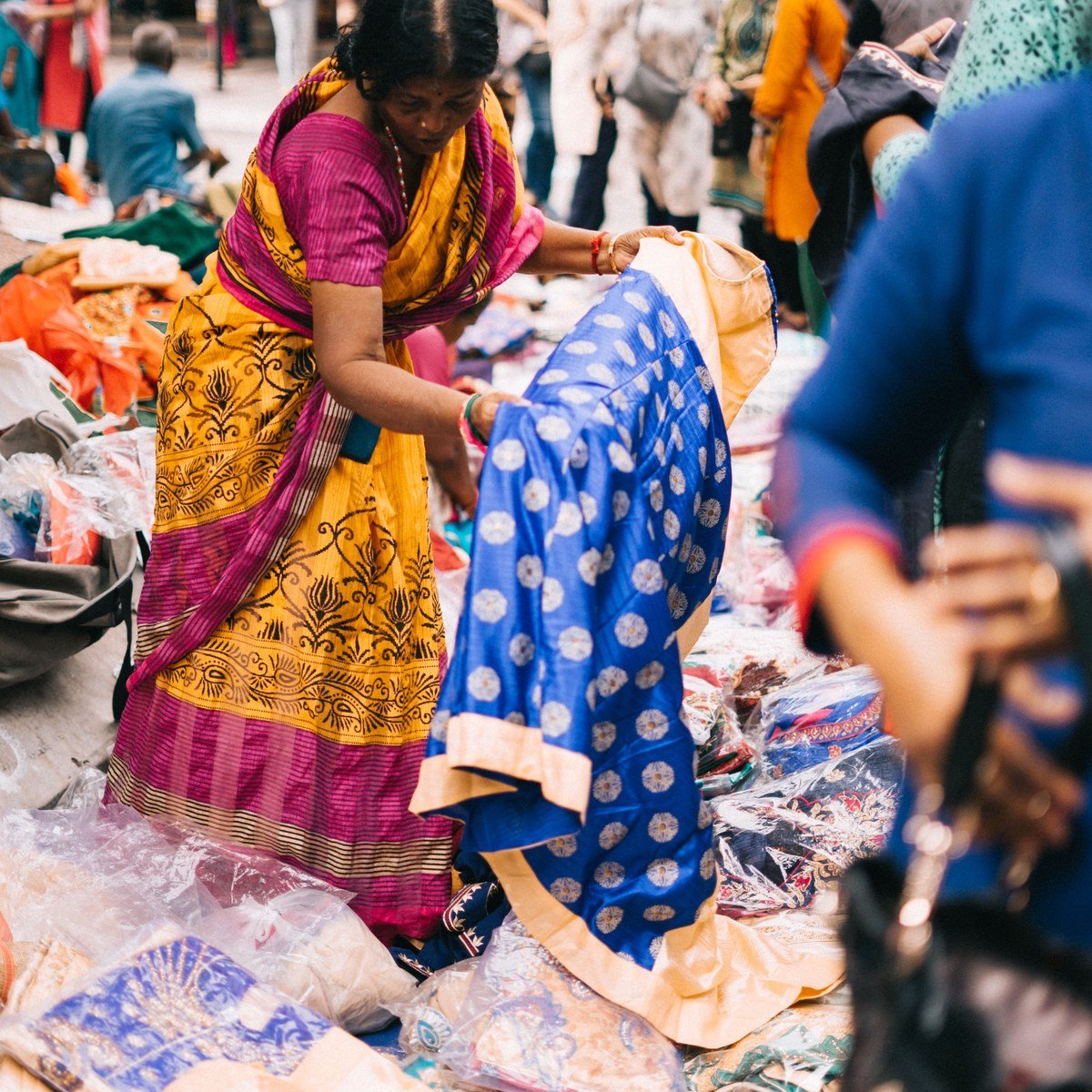
 Image credit: Pexels
A saree is six to nine yards of fabric with no zips, seams or structure to hold its shape, which means how you put it away matters almost as much as how you wear it. Learning how to fold sarees properly protects the weave, the borders and the zari work from the three things that quietly ruin stored sarees: sharp permanent creases, cracked metallic thread and crushed embroidery. The good news is that good folding is a skill, not a talent. This guide walks through three reliable methods, the classic rectangle fold, the hanger method and the roll method, then shows how to adjust your fold for silk, cotton, georgette and heavily embroidered sarees, how often to refold, where to store folded sarees in a US home, and how to pack a saree for travel so it arrives ready to wear.
- Why the Fold Matters More Than You Think
- Before You Fold: A Quick Prep Routine
- Method 1: The Classic Rectangle Fold
- Method 2: The Hanger Method
- Method 3: The Roll Method
- Folding by Fabric: What Changes
- The Refolding Rule: Rotate Your Folds
- Where to Store Folded Sarees in a US Home
- How to Fold a Saree for Travel
- Frequently Asked Questions
- Conclusion
Why the Fold Matters More Than You Think
A saree spends far more of its life folded in a drawer than draped on a body, and fabric remembers how it is stored. A fold pressed along the same line for a year or two becomes a permanent crease that no iron fully removes, and on silk that crease can eventually split along the fold line. Metallic zari thread is even less forgiving. It is a fine flattened metal strip wound around a yarn core, and bending it sharply at the same point again and again can crack the metal surface, leaving dull, broken lines across a border that once shone. Heavy embroidery suffers differently: stacked weight presses raised motifs flat and can snap the threads holding sequins and stones. Folding well is about spreading pressure out, padding the bends and changing the fold lines over time. A careful fold takes three or four minutes, and it is the cheapest insurance a saree collection can have.

Before You Fold: A Quick Prep Routine
Whatever method you choose, the preparation is the same. Five minutes of prep prevents most storage damage:
- Fold only a clean saree. Perfume, body oil and food splashes attract insects and set into stains. If the saree needs washing first, follow the method for its fabric, our guide on how to wash silk sarees at home covers the gentlest approach for delicate weaves.
- Make sure it is completely dry. Even slight dampness trapped in a fold can mildew in a closed drawer.
- Work on a clean, flat surface. A made bed or a wiped-down dining table gives you the full length you need.
- Remove pins and brooches. Safety pins left in fabric rust, tear holes and leave marks.
- Keep tissue or muslin ready. A sheet of acid-free tissue or a thin cotton cloth laid along a fold cushions zari and embroidery.
Method 1: The Classic Rectangle Fold
This is the traditional fold used in saree shops across Bangladesh and India, and it suits most sarees for drawer and shelf storage.
- Step 1: Spread the saree flat, face down, and smooth out wrinkles with your palms.
- Step 2: Fold the saree in half lengthwise, bringing one long edge to meet the other, so the borders align.
- Step 3: Fold lengthwise once more into a long strip roughly the width of the border. For zari sarees, fold so the zari border sits on the inside of the strip, protected by layers of plain fabric.
- Step 4: Lay a sheet of tissue or muslin along the strip if the saree has zari or embroidery.
- Step 5: Starting from one end, fold the strip over itself in sections about 10 to 12 inches long, keeping the folds soft and rounded rather than pressed flat.
- Step 6: Finish with the pallu, the decorative end, folded on top or tucked visibly at the front, so you can identify the saree at a glance.
Stack folded sarees no more than five or six high, with the heaviest at the bottom, so the lower layers are not crushed.
Method 2: The Hanger Method
Hanging works well for sarees you wear often, because there are no cross-folds to iron out before an event. Fold the saree lengthwise into a strip as in steps 1 to 3 above, then drape it evenly over the bar of a sturdy hanger so equal lengths hang on both sides. Use padded or velvet-flocked hangers, which grip slippery fabrics and avoid the sharp shoulder points that can mark silk. A length of muslin draped over the saree first keeps the hanger bar from pressing a line into the fold.
Reserve this method for lightweight cotton, georgette, chiffon and crepe sarees. Heavy silk, dense zari borders and stone-work sarees should not hang long-term: their own weight slowly pulls on the weave at the fold over the bar, stretching and weakening it. Hang those only overnight to air, then fold them.
Method 3: The Roll Method
Rolling creates no sharp folds at all, which makes it the kindest method for fragile fabrics and the smartest for travel. Fold the saree lengthwise into a strip, lay it flat, and roll it up firmly but not tightly, starting from the blouse end toward the pallu. For a valuable saree, roll it around a tube of acid-free tissue or a clean cotton cloth so the innermost layer is never bent tightly. Rolled sarees store neatly standing upright in a deep drawer or bin, file-style, so every saree is visible without unstacking. The trade-off is space: rolls take more room than flat folds, so many collectors roll their best pieces and flat-fold everyday cottons.

Folding by Fabric: What Changes
The right method depends on what the saree is made of. If you are not sure which fabric you are holding, our guide to saree fabrics explained walks through how each one looks and behaves. As a quick reference:
| Fabric | Best Method | Key Rule |
|---|---|---|
| Silk with zari | Rectangle fold or roll | Pad every fold with tissue; borders folded inward |
| Cotton and handloom | Rectangle fold | Fold only when fully dry; cotton forgives firm folds |
| Georgette and chiffon | Roll or hanger | Keep folds loose; these fabrics slip and slide out of stacks |
| Heavy embroidered or bridal | Wide, flat rectangle fold | Embroidery face-in, tissue between layers, store on top of the pile |
| Jamdani and fine muslin | Roll | Use as few folds as possible and support the full length |
Silk with zari needs padding and softness: never press a hard crease into a zari border, and never fold the border exactly on its edge. Cotton is the most forgiving fabric and takes a compact rectangle fold happily, which is why everyday cottons are the natural bottom layer of any stack. Georgette and chiffon spring out of neat stacks, so rolling or hanging keeps them tidier. Heavily embroidered sarees, including zardozi and stone work, should be folded wide rather than small, with the embroidery turned inward and tissue between every layer, and stored flat on top so nothing heavy rests on the motifs.
The Refolding Rule: Rotate Your Folds
Even a perfect fold becomes a problem if it never changes. Every three months for heavy zari sarees, and every four to six months for the rest, take each saree out, shake it gently, let it air for an hour or two away from direct sunlight, and refold it so the new fold lines fall in different places from the old ones. Shifting a fold by even two inches moves the stress to fresh yarn. This simple rotation is the single most effective habit for preventing permanent crease lines and zari cracking, and it doubles as a regular inspection: you will spot mildew, insects or stains while they are still small problems. Many families time refolding with seasonal wardrobe changes, which makes it easy to remember.
Where to Store Folded Sarees in a US Home
The best storage spot is cool, dry, dark and easy to reach, which in most US homes means a bedroom closet shelf or a dresser drawer, not the basement, attic or garage, where temperature and humidity swing hardest. Lined drawers and fabric storage cubes work well for flat folds; deep bins suit rolls. Slip each folded saree into its own breathable cotton or muslin bag before stacking: bags prevent zari from snagging a neighbor’s embroidery, keep dust off, and let you pull one saree out without disturbing the pile. Leave a little breathing room rather than packing sarees in tightly, and keep the heaviest bridal pieces on top of a stack or in a separate flat box so their weight works on nothing but the shelf.
How to Fold a Saree for Travel
For a suitcase, the roll method wins. Roll each saree around its blouse piece and place the rolls side by side in a packing cube or a zippered fabric pouch; rolled sarees use the corners of a suitcase well and come out with soft waves instead of hard crease lines. If you must flat-fold for a carry-on, fold along different lines than your home storage folds, and pad the folds with a T-shirt or scarf. On arrival, hang the saree in the bathroom while you shower, the steam relaxes most travel wrinkles without an iron. Wear your heaviest saree on the flight only if it is comfortable; otherwise it travels best rolled in the middle of the suitcase, cushioned by clothes on all sides.
Frequently Asked Questions
Q: How often should I refold my sarees?
Refold heavy zari and bridal sarees about every three months, and lighter silk, cotton and georgette sarees every four to six months. Each time, shift the fold lines a couple of inches so no single line of yarn carries the bend permanently, and let the saree air before it goes back.
Q: Is it better to fold or hang a saree?
It depends on weight. Lightweight cotton, georgette and chiffon sarees hang well on padded hangers and come out nearly wrinkle-free. Heavy silk, wide zari borders and embroidered sarees should be folded or rolled, because hanging lets their own weight pull against the weave at the hanger bar over time.
Q: Can folding damage zari work?
Yes, if the same sharp fold sits in the same place for years. Zari is metal strip wound around a yarn core, and repeated hard bending at one point can crack its surface and dull the border. Soft, padded folds that you rotate every few months prevent almost all of this damage.
Q: What is the best way to fold a saree for a suitcase?
Roll it. Fold the saree lengthwise into a strip, roll it firmly around the blouse piece, and pack the rolls in a cube or pouch. Rolled sarees develop no hard creases, fill suitcase corners efficiently, and usually need nothing more than a hanging steam to be ready to wear.
Q: Should I fold the blouse piece with the saree?
Yes, keep the blouse piece and the saree together, either folded inside the saree’s final fold or rolled inside it. Separately stored blouse pieces get lost, fade at a different rate, and add a frustrating search to every occasion. One package per saree keeps a collection simple.

Conclusion
Folding a saree properly is a small ritual with an outsized payoff: soft, padded folds, the right method for the fabric, a breathable bag, and a refold every few months so the lines keep moving. Choose the rectangle fold for everyday storage, the hanger for light sarees in regular rotation, and the roll for heirlooms and travel. Do that consistently, and a saree folded away today will drape as beautifully years from now as the day you bought it.