
 Image credit: Pexels
A silk saree is often the most valuable garment in a wardrobe, and it is also the easiest to damage in a single careless wash. Hot water can dull the sheen, rough handling can distort the weave, and real zari can tarnish the first time it meets water. The good news is that many silk sarees can be washed safely at home, as long as you know which ones qualify and you follow a gentle, unhurried process from start to finish.
Silk is a natural protein fiber, which is why it reacts badly to heat, harsh detergents and agitation that cotton would shrug off. Of all the common saree fabrics, it asks for the most careful washing routine. This guide walks through the whole process: deciding whether your saree should be washed at home at all, the checks to run first, the wash itself step by step, and then drying, ironing and storing it correctly afterward.
- Step One: Decide, Hand-Wash at Home or Dry Clean?
- Before You Wash: Three Quick Checks
- What You Need
- How to Wash a Silk Saree at Home, Step by Step
- How to Dry a Silk Saree
- How to Iron a Silk Saree Safely
- How to Store a Silk Saree After Washing
- Common Mistakes That Ruin Silk Sarees
- Frequently Asked Questions
- Conclusion
Step One: Decide, Hand-Wash at Home or Dry Clean?
This is the most important decision in the entire process, and it depends on what your saree is made of and how it is decorated. Washing the wrong saree at home is how heirlooms get ruined.
Usually safe to hand-wash at home:
- Plain or lightly decorated silk sarees with little or no zari
- Everyday silk and semi-silk sarees
- Sarees that pass the colorfastness test described below
- Pure silk sarees that have already been professionally cleaned a few times, washed only occasionally and very gently
Always send to a professional dry cleaner:
- Sarees with heavy zari work, especially real gold or silver zari, which can tarnish in water
- Bridal sarees and heavily worked Banarasi or Kanjivaram pieces
- Sarees with stones, beadwork, sequins or glued embellishments
- Heirloom and older sarees, whose fibers grow fragile with age, a fine handwoven silk Jamdani saree belongs in this group
- Any saree whose dyes bleed in the colorfastness test
One rule surprises many owners: the Silk Mark Organisation of India, the government-backed silk authority, advises dry cleaning pure silk sarees for their first three washes to protect the fabric and the color. Only after those first professional cleans should you even consider an occasional, very gentle hand-wash, and zari-heavy or bridal pieces should stay with the dry cleaner permanently.
Before You Wash: Three Quick Checks
1. Read the care label. If the label says “dry clean only,” believe it. Embellished and zari-rich sarees are labeled that way for a reason.
2. Test for colorfastness. Silk dyes can bleed. Dip a hidden corner of the saree, the inner edge of the pallu works well, into cold, mildly soapy water for about a minute, then press it against a clean white cloth. If color transfers to the cloth, do not wash the saree at home; take it to a dry cleaner instead.
3. Wash one saree at a time. Never wash two silk sarees together, and never wash silk with other garments. A single deep-colored saree washed alone cannot stain anything else, and nothing else can snag its weave.
What You Need
- A clean basin, tub or sink large enough for the saree to move freely
- Cold to lukewarm water, never hot
- A small amount of mild, pH-neutral detergent made for delicates (a few drops is enough; skip regular detergent, powders and anything containing bleach)
- Two clean, light-colored towels
- A flat drying surface, a padded hanger or a smooth rounded rod
How to Wash a Silk Saree at Home, Step by Step
- Fill the basin with cold or lukewarm water and stir the mild detergent in until it is fully dissolved before the saree goes in. Undissolved detergent should never sit directly on silk.
- Turn the saree inside out and lower it gently into the water until it is fully submerged. Turning it inside out protects the outer surface and any light zari from friction.
- Let it soak only briefly, three to five minutes at most. Long soaking weakens silk fibers and encourages dye to bleed, so keep this stage short.
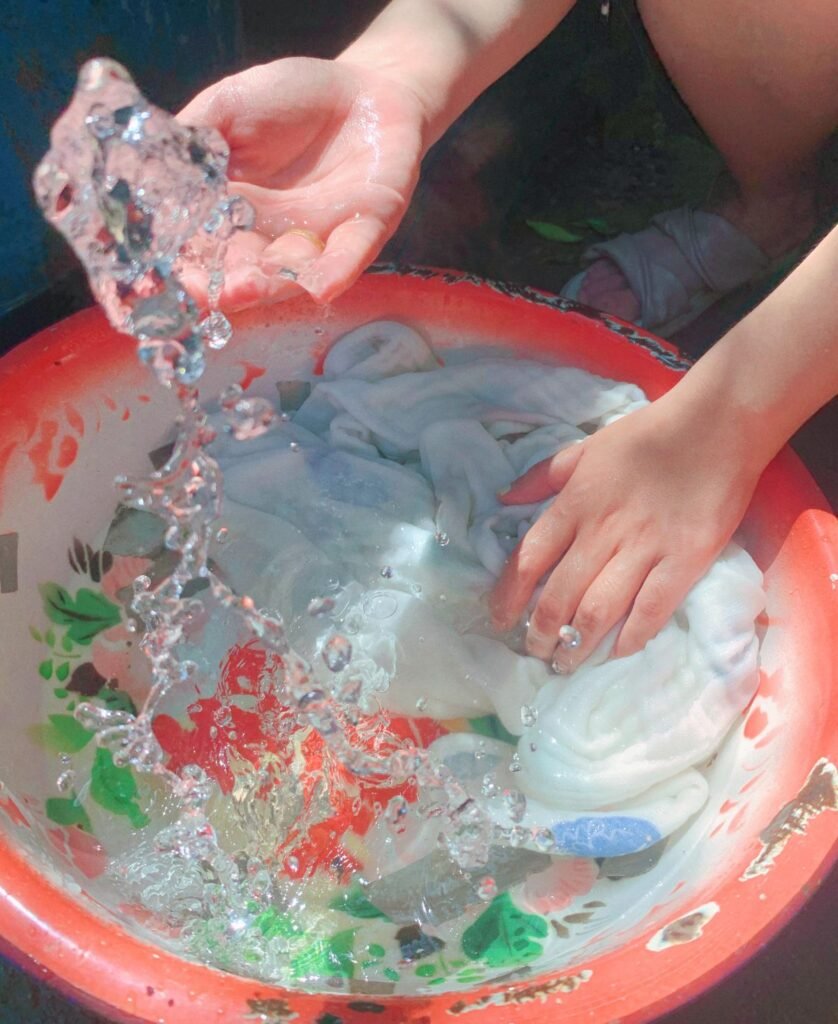
- Wash by moving, not scrubbing. Swirl the saree slowly through the water and press it gently with open palms. Never scrub, twist or wring it. For a marked spot, dab it lightly with a soft cloth, blot, never rub, so the stain is not pushed deeper into the weave.
- Rinse in clean, cool water until the water runs completely clear. Leftover detergent residue stiffens silk and attracts dirt, so rinse more than you think you need to.
- Lift the saree out, supporting its full weight with both hands. Wet silk is heavier and weaker than dry silk, and letting it hang from one point can stretch the weave.
- Remove water with a towel, never by wringing. Lay the saree flat on a dry towel, roll the towel up with the saree inside, and press gently along the roll to absorb the water.
How to Dry a Silk Saree
Dry the saree in a shaded, well-ventilated spot, laid flat on a clean dry towel, or draped over a padded hanger or a smooth, rounded rod so the weight is evenly spread. Keep it out of direct sunlight, which fades the color and weakens the fiber over time. Never put a silk saree in a tumble dryer: the heat and tumbling will damage it beyond repair. Make sure the saree is completely dry before you fold it away, because silk stored even slightly damp can develop a musty smell and mildew spots that only appear months later.

How to Iron a Silk Saree Safely
Iron the saree while it is almost dry but still very slightly damp, which makes creases release easily. Use the lowest heat, the silk setting if your iron has one, and always iron on the reverse side so the heat never sits directly on the visible surface or the zari. A thin cotton pressing cloth between the iron and the saree adds another layer of protection. Keep the iron moving in one direction rather than scrubbing it back and forth, and never rest a hot iron on a zari border: prolonged direct heat is one of the most common causes of premature zari tarnishing.
How to Store a Silk Saree After Washing
Good storage is what makes all the washing effort worthwhile. Wrap the clean, fully dry saree in soft muslin or breathable cotton cloth, never in plastic, which traps moisture and can yellow the silk. Store it in a cool, dry, well-ventilated cupboard away from sunlight, and refold it along different lines every two to three months; a saree left in the same fold for years wears thin and can crack exactly along that crease. If the saree has zari or embroidery, fold it with the decorated side facing inward to reduce friction. Dried neem leaves, cloves or silica sachets kept nearby help deter pests, but keep naphthalene balls from touching the fabric or zari directly, as contact can discolor them. Airing stored sarees in the shade a couple of times a year keeps them fresh and lets you catch any dampness or insect activity early.
Common Mistakes That Ruin Silk Sarees
- Using hot water, which shrinks fibers and permanently dulls the luster
- Using regular detergent, alkaline soap or bleach
- Soaking for a long time instead of a few minutes
- Scrubbing, twisting or wringing the fabric
- Machine washing, even on a delicate cycle, the agitation stretches silk and damages zari
- Drying in direct sunlight or in a tumble dryer
- Reaching for home remedies like petrol or toothpaste on stains, which can damage the fabric and zari worse than the stain itself
- Folding the saree away while it is still damp, or storing it in plastic
Frequently Asked Questions
Q: Can I wash a pure silk saree at home?
Sometimes, but not at first. Silk Mark India advises dry cleaning pure silk for its first three washes. After that, a plain pure silk saree with little zari can be hand-washed occasionally, very gently, in lukewarm water with a neutral detergent. Pure silk sarees with heavy zari, bridal work or embellishment should always be dry cleaned.
Q: Can I wash a silk saree in a washing machine?
No. Machine agitation stretches silk fibers, distorts the weave and can crack or tangle zari, even on a delicate or silk cycle. Hand-washing in cold water is the safest home method, and many silk sarees should be dry cleaned instead.
Q: How often should I wash a silk saree?
As rarely as possible. Over-washing is one of the fastest ways to fade color and dull the sheen. Air the saree in the shade after each wear and deal with small marks promptly; a full wash or professional clean is only needed when the saree is actually soiled.
Q: What temperature water should I use to wash a silk saree?
Cold to lukewarm, for both washing and rinsing. Hot water shrinks silk fibers, roughens the surface so it reflects less light, and encourages dyes to bleed.
Q: How do I remove a stain from a silk saree?
Act while the stain is fresh and blot it gently with a clean white cloth, never rub. On a washable saree, a light stain can be dabbed with a little mild detergent solution. For pure silk, zari or embroidered pieces, take the stain to a professional silk dry cleaner rather than treating it at home, and never use bleach, petrol or toothpaste on it.

Conclusion
Washing a silk saree at home is safe when three things line up: the saree is a washable type, the water stays cold or lukewarm, and your hands stay gentle from the first soak to the final fold. Decide honestly between hand-washing and dry cleaning, test the colors before you commit, never wring or scrub, dry in the shade, iron low and inside out, and store the saree dry and wrapped in cotton. Follow that sequence and a silk saree will keep its color, sheen and drape for decades, often long enough to be handed down.