
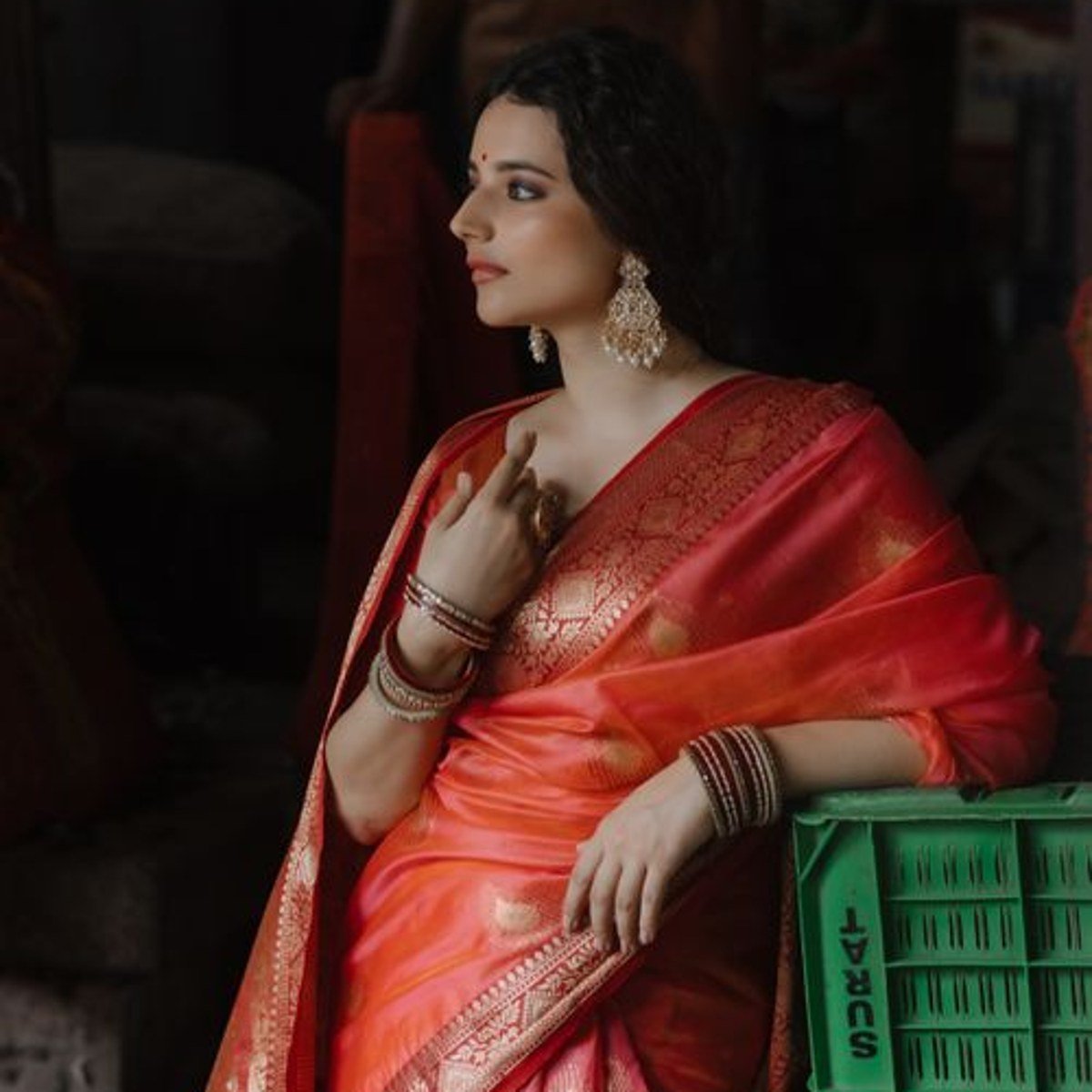
 Image credit: Pexels
Two Banarasi sarees can look almost identical in an online photo, same deep red silk, same golden border, and yet one costs several times more than the other. Handloom specialists in Varanasi quote prices for genuine handwoven Banarasi sarees running from around ₹15,000 to well over ₹1 lakh, and the gap is not arbitrary. It is the visible result of everything that happened before the saree reached the shelf: the silk, the zari, the design work, and weeks or months of a skilled weaver’s time.
Like the Jamdani it is so often compared with (see our Jamdani vs Banarasi saree comparison), a Banarasi is priced by its materials and its making, not by its looks alone. Here is the full breakdown of where the money goes.
- The Short Answer: What You Are Paying For
- Pure Mulberry Silk Is a Premium Raw Material
- Zari: Real, Tested or Imitation
- The Naksha: Design Work That Happens Before Weaving Begins
- Weeks to Months of Skilled Handloom Labor
- GI Protection: A Certified, Place-Bound Craft
- Why Powerloom Imitations Cost So Much Less
- Is a More Expensive Banarasi Always a Better One?
- Frequently Asked Questions
- Conclusion
The Short Answer: What You Are Paying For
| Cost component | What you are paying for | How it affects the price |
|---|---|---|
| Silk yarn | Pure mulberry silk, twisted, dyed and prepared | Finer, denser silk raises the material cost |
| Zari | The metallic thread woven into borders and motifs | Real gold-and-silver zari costs far more than imitation |
| Design preparation | The naksha pattern and its punched loom cards | Intricate or new designs need weeks of prep work |
| Loom setup | Warp preparation and setting the loom for the design | Adds skilled labor before weaving even begins |
| Weaving labor | A master weaver’s time at a handloom | Weeks to months of work on a single saree |
| Weaving technique | Methods such as Kadhwa or Cutwork | Complex techniques multiply the time and skill required |
| Finishing | Trimming, inspection and quality checks | Final skilled labor before the saree is sold |
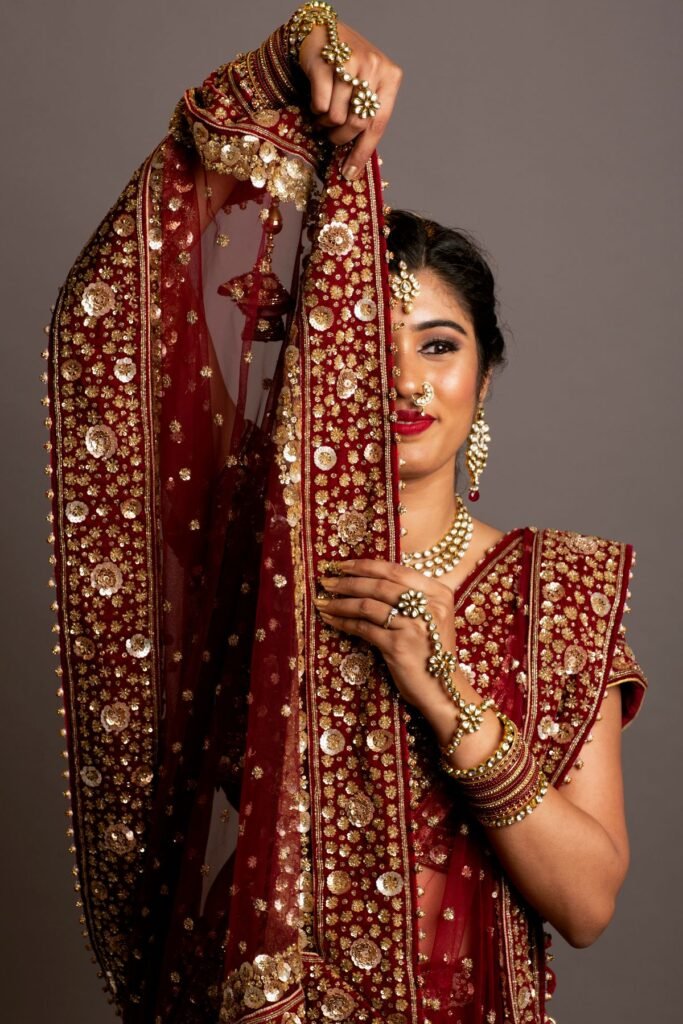
1. Pure Mulberry Silk Is a Premium Raw Material
Every high-value Banarasi starts with its yarn. Pure mulberry silk, the finest grade, from silkworms raised on mulberry leaves, is the traditional foundation, and the classic Banarasi base is Katan silk, made from twisted silk yarns that give it the strength and smooth texture needed to support dense brocade weaving.
The yarn also has to be prepared before it reaches the loom: twisting, dyeing, winding and warp preparation are separate stages, often handled by different specialists, and each one adds material or labor cost. Quantity matters too. A densely woven Katan saree uses considerably more silk than a sheer organza or georgette Banarasi, so two sarees in the same shop can start from very different material bills. But silk alone does not set the price, a pure silk saree with simple motifs and little zari can cost less than another pure silk piece with complex weaving, because the remaining cost drivers stack on top of the yarn.
2. Zari: Real, Tested or Imitation
Zari is the metallic thread that creates the glowing borders, butis and pallus Banarasi sarees are famous for, and it is one of the biggest price variables, because “zari” covers three very different materials.
- Real zari is a fine pure silver wire coated with real gold, wound around a silk core thread. It is the traditional, costliest form, and a saree woven with it carries the price of precious metal in every motif.
- Tested zari is a mid-tier option with a verified metal content lower than real zari, the term you will hear from honest sellers for good-quality bridal and festive pieces.
- Imitation zari is metallized synthetic thread. It looks bright when new but contains no precious metal and costs a fraction of the real thing.
Quantity multiplies the effect. A saree with a narrow zari border and a few scattered bootis uses little metallic thread; a saree with broad borders, an elaborate pallu and dense zari jaal work covering the body uses a great deal more, and takes far longer to weave. One caution worth remembering: a gold color does not automatically mean real gold zari. Always ask the seller what the zari actually is.
3. The Naksha: Design Work That Happens Before Weaving Begins
Before a single thread is woven, someone has to turn a motif into loom instructions. In Varanasi this design stage is called the naksha, and it is skilled work in its own right.
A pattern maker, traditionally known as a nakshaband, works the motif out on meticulously numbered graph paper, a process called likhai, counting out tiny squares where each square corresponds to thread crossings in the finished cloth. The graphed design is then handed to card punchers, who punch it into long cardboard strips called naksha pattas. Strung together in a chain and mounted on the jacquard head above the loom, these cards control which warp threads lift for every row of the pattern.
The scale of this preparation is easy to underestimate. According to the Dastkari Haat Samiti’s documentation of the craft on Google Arts & Culture, an average saree uses roughly 1,500 to 2,500 punched cards, and a more elaborate pattern can raise that number tenfold. Graphing a design can take a week or two, and punching a complex border can take far longer. Those classic saree designs and patterns, the jaal lattices, jangla vines and shikargah scenes, each begin life as one of these graph-paper blueprints. When a design is woven in small quantities, that entire preparation cost is spread across only a few finished sarees, which pushes each one’s price up further.
4. Weeks to Months of Skilled Handloom Labor
The largest single cost in a fine Banarasi is time. An authentic saree is woven on a handloom, traditionally a pit loom, where the weaver powers and controls everything manually, maintaining tension and checking the fabric as it grows. Depending on the complexity of the design, weaving one saree takes anywhere from about 15 days to six months.
Technique decides where in that range a saree falls:
- Kadhwa (Kadwa) is the most labor-intensive method. Each motif is woven individually, with separate supplementary weft threads worked in motif by motif, leaving no loose floating threads on the back. The result is crisp, durable and cleanly finished, and dramatically slower to produce.
- Cutwork carries the pattern threads across and trims the unwanted floats afterward. It produces a similar look more economically, which is why a cutwork saree costs less than a comparable Kadhwa piece.
Design complexity matters more than sheer weight. A lightweight saree with a fine, multi-colored jaal can take longer, and cost more, than a heavier saree with a simple repeated booti. And the economics are unforgiving: a weaver who spends two months on one intricate saree cannot use that loom time to make anything else, so the full value of that time has to live in the price of the single piece. The heaviest bridal pieces may even need a second weaver working alongside the master at the same loom.

5. GI Protection: A Certified, Place-Bound Craft
Authentic Banarasi sarees carry a Geographical Indication (GI) tag, which reserves the Banarasi name for sarees genuinely woven in Varanasi and its specified surrounding districts using the traditional craft. GI protection exists because the name itself has value, and because imitations were trading on it.
For buyers, the GI framework and related marks add a layer of accountability that anonymous factory production does not have. A Silk Mark tag, for example, assures the silk content of a saree (though it does not by itself certify handloom origin or zari purity). Certification, inspection and the finishing and quality checks that happen after weaving, trimming loose threads, checking for defects, pressing and measuring, all add skilled labor to the final price, but they are also what let a buyer trust that the expensive saree is the real thing.
6. Why Powerloom Imitations Cost So Much Less
The clearest way to understand the handloom price is to look at what a powerloom “Banarasi-style” saree skips:
| Handloom Banarasi | Powerloom imitation | |
|---|---|---|
| Weaving time | 15 days to 6 months per saree | Hours to a few days |
| Yarn | Pure mulberry silk (Katan) | Art silk or synthetic blends |
| Zari | Real or tested zari | Imitation metallized thread |
| Design | Naksha graphed and punched for the loom | Copied patterns, mechanically repeated |
| Labor | Master weavers and specialist hands at every stage | Machine operation at factory scale |
Every row of that table is a cost the powerloom version does not carry. Machine speed replaces months of wages; synthetic yarn replaces mulberry silk; imitation zari replaces precious metal. The result can look convincingly similar in a photograph, which is exactly why the price difference confuses buyers, and why sellers of the genuine article should be able to explain what their saree is made of and how it was woven.
Is a More Expensive Banarasi Always a Better One?
Not automatically. A high price can reflect premium silk, real zari and Kadhwa weaving, or it can reflect retail margins and exclusivity. A simpler handwoven Banarasi with a modest border and well-executed motifs can be excellent quality without a top-end price. Before paying a premium, ask five questions: Is it genuinely handwoven or powerloom-made? Is the fabric pure silk, a blend or art silk? What type of zari is used? Which weaving technique? And what certification comes with it? A seller who can answer all five is showing you where the money goes.
Frequently Asked Questions
Q: How long does it take to weave a Banarasi saree?
Anywhere from about 15 days to six months, depending on the design. A relatively simple brocade sits at the shorter end; a dense, intricately patterned saree, especially one woven in the Kadhwa technique, can occupy a loom and its weaver for months.
Q: What is real zari in a Banarasi saree?
Real zari is a fine pure silver wire coated with real gold and wound around a silk core thread. Below it sits tested zari, with a lower verified metal content, and imitation zari, which is metallized synthetic thread with no precious metal at all. The type and amount of zari is one of the biggest single drivers of a Banarasi saree’s price.
Q: What is Kadhwa weaving and why does it cost more?
Kadhwa (also spelled Kadwa) is a technique in which every motif is woven individually using separate supplementary weft threads, instead of carrying one pattern thread across the whole width. It leaves no loose floats on the back of the fabric, but each motif demands extra handling by the weaver, so a Kadhwa saree takes far longer to weave than a comparable cutwork or standard brocade piece, and costs accordingly.
Q: Why are powerloom Banarasi sarees cheaper?
Because nearly every cost driver is removed: a machine weaves in hours what a handloom takes weeks or months to produce, and powerloom versions typically use art silk or synthetic yarn and imitation zari instead of pure mulberry silk and real metallic thread. They copy the look of a Banarasi without its materials or labor.
Q: What does the GI tag mean for a Banarasi saree?
The Geographical Indication tag reserves the Banarasi name for sarees woven in Varanasi and its specified surrounding districts by the traditional method. It protects buyers and weavers against imitations sold under the same name, and it is one reason an authentic, certified Banarasi commands a premium over an unlabelled lookalike.
Conclusion
A handloom Banarasi saree is expensive because almost nothing about it is cheap: the mulberry silk is premium, the finest zari contains real gold and silver, the naksha design can take weeks of graphing and card punching before weaving even starts, and a master weaver may spend months at the loom on a single piece, all under a GI-protected name that has to be earned. Once you can see the cost stack, the price stops looking like a markup and starts looking like an itemized bill for materials, skill and time. That is also why a well-kept Banarasi holds its value as an heirloom: you are not paying for six yards of cloth, but for everything woven into it.