
 Image credit: Pexels
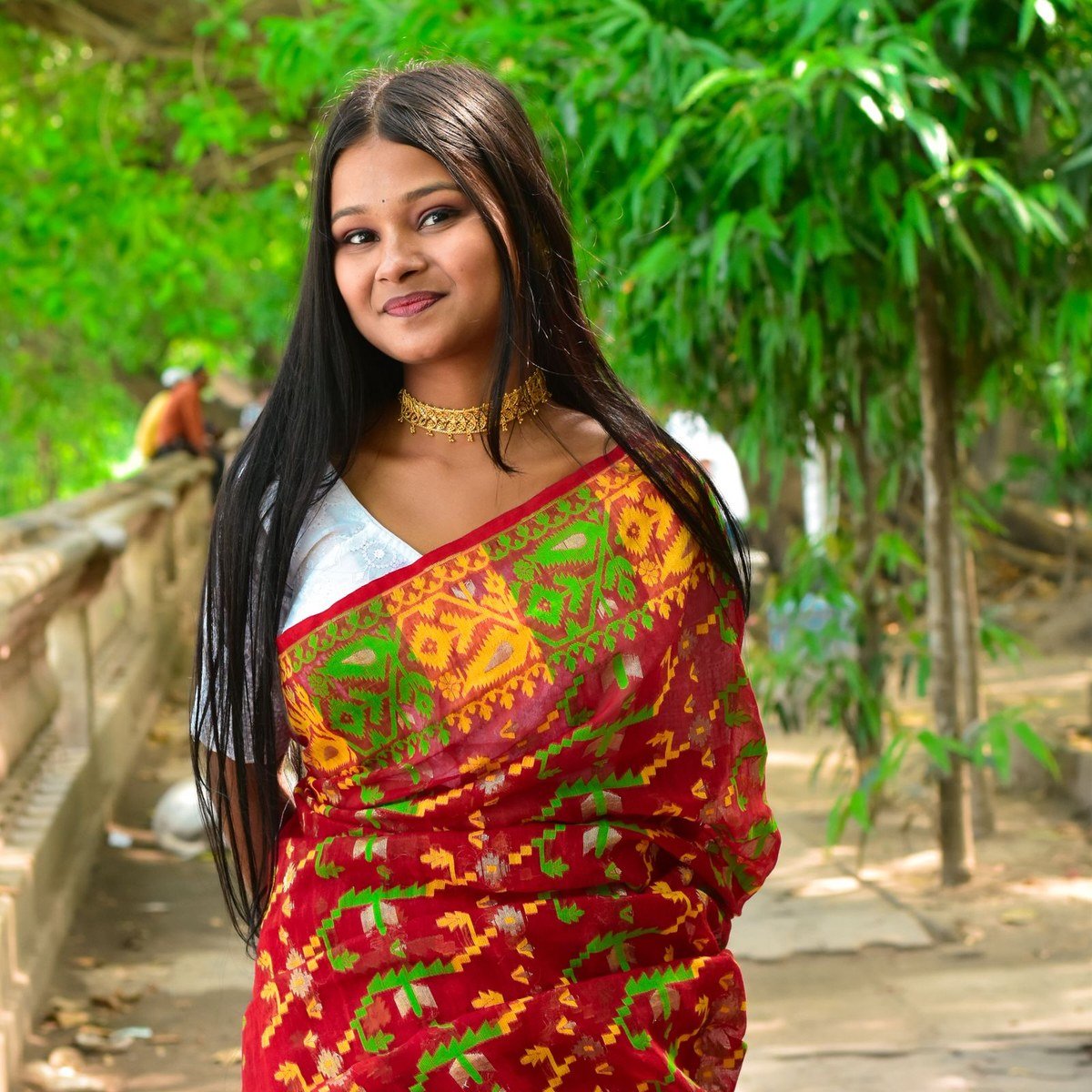
Every traditional saree carries a design language of its own. The small flowers scattered across the body, the gleaming band along the edge, the richly worked end piece that falls over the shoulder, none of it is random. Traditional saree designs and patterns follow a vocabulary that weavers across South Asia have refined over centuries: named motifs, set layouts, and border and pallu designs that signal where a saree comes from, how it was made, and what it is meant for.
This guide explains that vocabulary in plain terms, the classic motifs, the parts of a saree where design is placed, and how to read a saree’s pattern the next time you shop for one in the United States or anywhere else.
The Three Design Zones of a Saree
A saree is one long, unstitched length of cloth, but its design is organized into three zones, each with its own role.
The Body (Field)
The body is the large central field that wraps around the wearer. It carries the ground color and, in most traditional designs, a repeating pattern, either small, spaced-out motifs or a dense all-over design. Because much of the body is covered by pleats and the pallu once the saree is draped, its patterns tend to be regular and evenly distributed.
The Border
The border runs along both long edges of the saree and frames the whole drape. Borders protect the edges of the cloth, add weight so the saree hangs well, and carry some of the most recognizable traditional designs, temple rows, floral vines, and bands of zari. A border may be narrow and simple for everyday wear, or several inches wide and heavily worked for weddings.
The Pallu (Anchal)
The pallu, called anchal in Bengal, is the decorated end piece that falls over the shoulder or around the back. It is the most visible part of a draped saree, so weavers traditionally concentrate their finest work here: larger motifs, denser patterning, and the richest zari. On many heirloom sarees, the pallu is effectively the signature of the piece.
Classic Saree Motifs and What They Mean
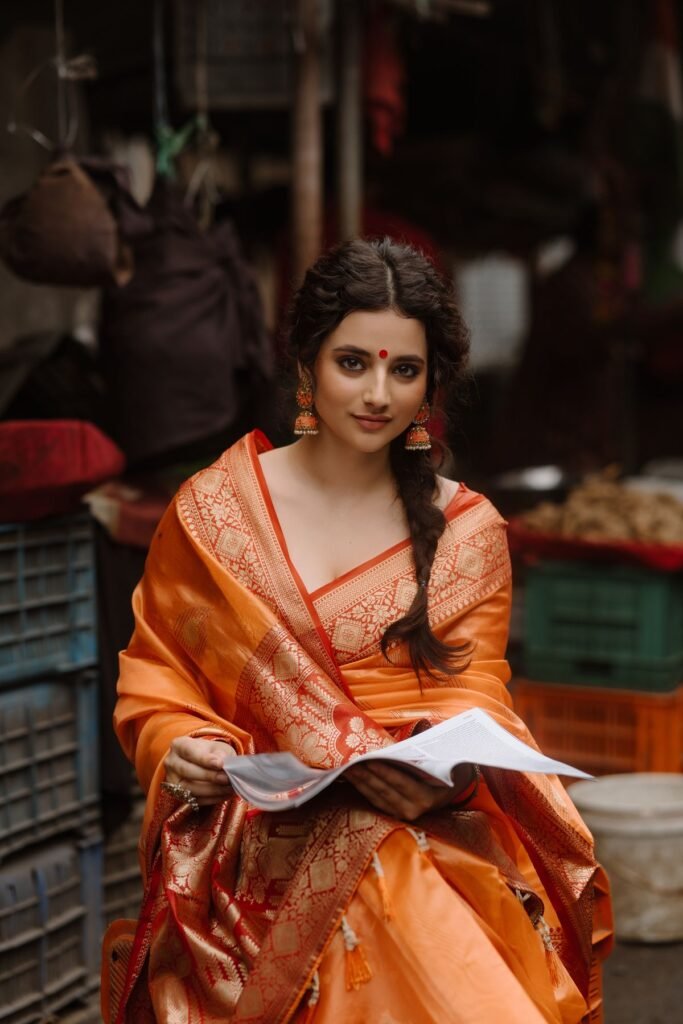
Motifs are the individual design units, a flower, a bird, a diamond, repeated or combined across the cloth. Their meanings are traditional associations rather than fixed rules, and the same motif can carry slightly different readings in different regions.
Paisley (Kolke or Kalka)
The paisley is the curved teardrop motif known across Bengal as kolke or kalka, and in the north as ambi or kairi, after the shape of a young mango. The form traveled from Persia into Indian textiles centuries ago and became one of the most widespread motifs in the subcontinent. It is traditionally associated with fertility, growth, and the continuity of life. Paisleys appear everywhere: as small repeats on the body, enlarged on the pallu, and lined up along borders.
Buti and Boota
A buti is a small, single motif, often a tiny flower, dot, or paisley, repeated at regular intervals across the body of the saree. A boota (or buta) is the larger version, used where a bolder statement is wanted, especially on the pallu. A saree covered in small woven butis is sometimes described as butidar. Buti patterns are the workhorse of traditional design: understated, versatile, and suitable for everything from daily wear to formal occasions, depending on the thread used.
Jaal and Bel
Jaal means “net.” A jaal design covers the body with an interconnected lattice of vines, leaves, and flowers, so the pattern reads as one continuous web rather than separate motifs. The flowing creeper element within it is the bel. Jaal work is dense and rich, and because it covers so much of the cloth, it is most often seen on festive and bridal sarees.
Lotus and Floral Motifs
Flowers are the oldest and most universal saree motifs. The lotus (kamal) holds a special place: in Hindu and Buddhist traditions it stands for purity and renewal, and it appears on borders and pallus and as a central medallion in Bengal’s embroidered kantha work. Roses, jasmine, marigolds, and stylized blossoms of no specific species fill out the floral vocabulary, woven, printed, or embroidered depending on the saree’s technique.
Peacocks, Parrots, and Animal Motifs
The peacock (mor) is the most beloved bird motif, associated with beauty and grace and linked in tradition to Krishna and Saraswati. Parrots suggest love and companionship; elephants stand for strength, wisdom, and royalty; fish, an important motif in Bengal, symbolize water, fertility, and abundance. Animal motifs are often reserved for the pallu and border, where they can be drawn at a larger scale.
Geometric Patterns
Not all traditional patterns are floral. Diamonds, checks, stripes, and zigzags form a geometric vocabulary that is especially strong in handloom cottons. In Jamdani weaving, diamond and rectangular motifs sit alongside flowers; in the south, checked bodies with plain zari borders are a classic format. Geometric designs may read as structured and modern, but most of them are centuries old.
Temple Borders: Architecture in Cloth
A temple border is a row of repeated triangular motifs along the border of the saree, echoing the stepped towers (gopurams) of South Indian temples. The triangles point inward, into the body of the saree, like a row of small shrines standing along the edge of the cloth.
Temple borders are most closely associated with the silk sarees of Kanchipuram in Tamil Nadu, where contrast borders are traditionally joined to the body with the korvai technique, an interlocking weave that locks the two colors together without any stitching. The temple row is considered auspicious, which is one reason it appears so often on bridal and festival sarees. Simplified temple-style borders have since been adapted by weaving regions across India, in cotton as well as silk.
Zari: The Metal Thread Behind the Shine
Zari is the metallic thread, traditionally fine silver wire wound around a silk core and coated with gold, that gives formal sarees their glow. It is woven into borders and pallus to outline motifs and build up bands of pattern. In Banarasi weaving, zari brocade is the defining feature; in Bengal’s Jamdani, fine zari is sometimes used for accent motifs on a cotton ground.
A related term is meenakari: the use of colored silk threads inside zari motifs, so that a gold flower might carry a pink or green center. It adds small points of color to an otherwise metallic design. Because real metal-wrapped thread is costly, many modern sarees use imitation zari, but the design vocabulary remains the same.
To see how these woven motif traditions compare in practice, our guide to Jamdani vs. Banarasi sarees looks at the two best-known handloom styles side by side.
Printed and Embroidered Patterns
Not every traditional pattern is woven in. Two other techniques carry a large share of the design heritage.
Block Print
In hand block printing, the design is carved into wooden blocks, one block per color, and stamped onto the cloth by hand. The famous printing centers of Rajasthan produce distinct styles: Sanganeri prints are fine florals and butis on light grounds, while Bagru prints are bolder and earthier, often in indigo and black, and include mud-resist (dabu) work. Slight irregularities in alignment are normal in hand printing and are part of its character.
Nakshi Kantha: Bengal’s Stitched Patterns
Kantha is Bengal’s traditional running-stitch embroidery, historically used to stitch layers of worn sarees into quilts. Its figured form, nakshi kantha, builds a design around a central lotus, ringed by undulating vines and filled with birds, fish, animals, and scenes of daily life, all worked in a simple running stitch. According to Banglapedia, the national encyclopedia of Bangladesh, kantha motifs traditionally expressed the maker’s wishes for happiness, prosperity, marriage, and fertility.
Kantha’s influence reaches sarees directly. Kantha-stitch sarees, embroidered with running-stitch motifs on cotton or silk, are a recognized category of Bengal handloom, and the lotus-and-vine layouts of kantha echo through Bengali saree design in general.
How to Read a Saree’s Design
Once you know the vocabulary, you can read a saree the way you would read a label. A few checks tell you most of the story:
- Find the technique. Turn the cloth over. Woven motifs are part of the fabric and show on the reverse; printed motifs sit on the surface and are faint or absent on the back; embroidery shows stitches and thread ends.
- Check the layout. Scattered butis make an easy, versatile saree; an all-over jaal or a heavily worked pallu signals a formal or festive piece.
- Read the border. A wide zari or temple border points to weddings and festivals. A narrow woven border in cotton points to everyday handloom wear.
- Note the motif family. Florals and paisleys are pan-Indian; fish and lotus medallions lean Bengali; temple rows lean South Indian. Motifs are a quick clue to a saree’s regional roots, our overview of traditional Bangladeshi saree types shows how they combine in Bengal’s own weaves.
- Look at density and finish. In handwoven and hand-printed work, tiny variations between repeats are normal and expected. Perfectly identical, mechanically regular patterning usually means machine production.
Frequently Asked Questions
Q: What is the most common traditional saree motif?
The buti, a small floral or paisley motif repeated across the body, is the most widespread, because it suits every fabric, technique, and occasion. The paisley (kolke) is the most recognizable single motif shape.
Q: What does the paisley (kolke) motif symbolize on a saree?
The paisley, shaped like a young mango, is traditionally associated with fertility, growth, abundance, and the continuity of life. It is one of the oldest and most widely used motifs in South Asian textiles.
Q: What is the difference between a buti pattern and a jaal pattern?
A buti pattern is made of small, separate motifs spaced evenly across the body, with plain ground visible between them. A jaal pattern is an interconnected, all-over lattice of vines and flowers that covers the body like a net, with little or no plain ground showing.
Q: What is a temple border on a saree?
A temple border is a row of repeated triangular motifs along the border, inspired by the stepped towers (gopurams) of South Indian temples. It is a classic feature of Kanchipuram silk sarees and is considered auspicious, so it is popular for bridal and festival wear.
Q: How can you tell if a saree’s pattern is woven, printed, or embroidered?
Look at the reverse side. A woven pattern is part of the cloth and appears on the back as well as the front. A printed pattern sits on the surface and is faint or missing on the back. Embroidery is stitched onto finished cloth, so you will see individual stitches and thread ends on the reverse.

Conclusion
Traditional saree designs and patterns are not decoration for its own sake. They are a working language, of motifs like the paisley, buti, and jaal; of borders that frame and protect; of pallus that carry a weaver’s finest work. Once you can name what you are looking at, choosing a saree becomes much simpler: you can tell a festive jaal from an everyday buti, a temple border from a plain one, and a woven design from a printed copy. And the saree you choose will mean more, because you know what its patterns are saying.