
As an Amazon Associate, SareeBD may earn from qualifying purchases. This means we may receive a small commission when you purchase through links on our website, at no additional cost to you.
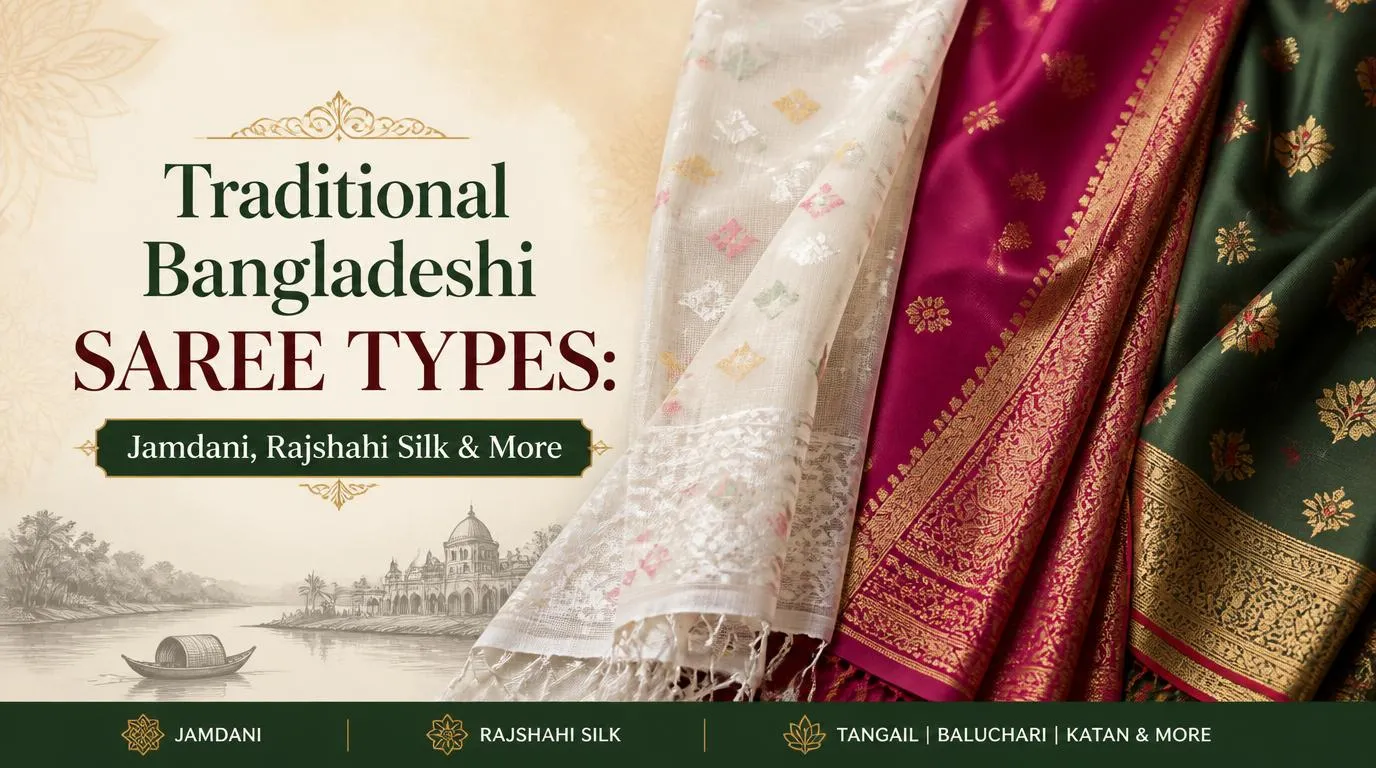
Image Credit: AI Generated
- Introduction
- Jamdani – The Queen of Weaves
- Tangail – The Border Beauty
- Benarasi – The Royal Heritage
- Rajshahi Silk – The Golden Thread
- Muslin – The Lost Treasure
- Katan Silk – The Modern Classic
- Handloom Cotton – The Everyday Elegance
- Quick Comparison – which traditional saree is for you?
- Popular Posts
- Traditional Bangladeshi saree FAQs
Introduction
Bangladesh is a land woven in threads. For centuries, the traditional Bangladeshi saree has been more than just clothing – it’s a cultural identity, a symbol of heritage, and a testament to the extraordinary skill of its weavers. From the gossamer elegance of Jamdani to the rustic charm of handloom cotton, each saree type tells a unique story of the region it comes from.
I’ve travelled across Bangladesh – from the looms of Narayanganj to the weaving villages of Tangail and the silk farms of Rajshahi. In this guide, I’ll walk you through the seven most iconic traditional saree types that define Bangladesh’s textile heritage. Whether you’re a collector, a bride-to-be, or simply someone who appreciates fine craftsmanship, this is your complete introduction to the soul of Bangladeshi weaving.
1. Jamdani – The Queen of Weaves
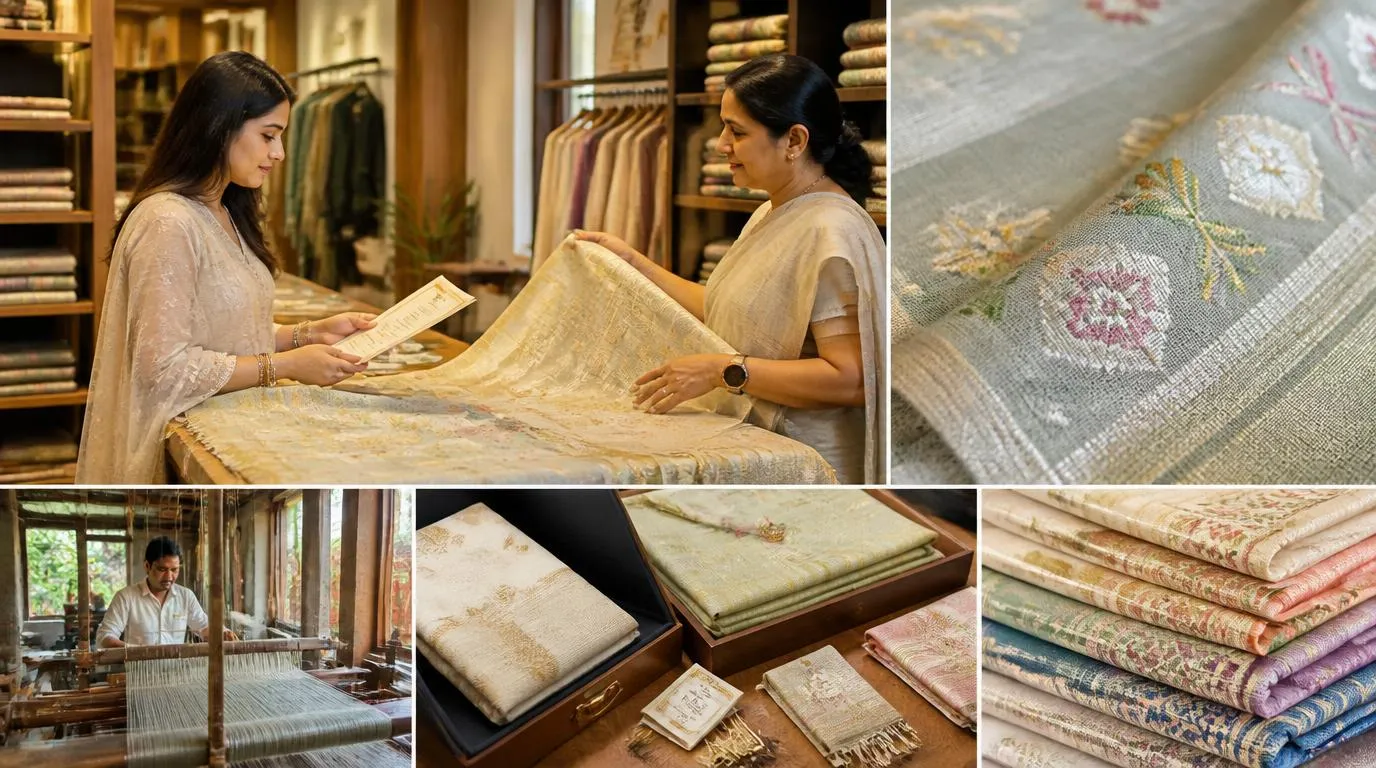
Image Credit: AI Generated
Origin: Dhaka region (Narayanganj, Sonargaon)
Fabric: Fine cotton or silk with supplementary weft motifs
Significance: UNESCO Intangible Cultural Heritage
Jamdani is not just a saree – it’s a living heritage. Woven on traditional pit looms in the Dhaka region, Jamdani is renowned for its incredibly fine fabric and intricate motifs that appear to float on the surface. The weaving technique is unique to Bangladesh: the weaver adds supplementary weft threads by hand, creating patterns that are visible on both sides of the fabric.
Traditional Jamdani motifs include flowers (lotus, jasmine, rose), vines (tor), geometric patterns (jali), and paisley (kalka). The warp count – the number of threads per inch – can range from 100 to over 200, with higher counts indicating finer, more premium sarees. A high-quality Jamdani is lightweight, breathable, and has a subtle, natural sheen.
Cultural significance: Jamdani has been woven in Bengal since the Mughal era and was highly prized by royalty. Today, it’s the saree of choice for brides, dignitaries, and anyone celebrating a special occasion. The UNESCO recognition in 2013 cemented its place as a global cultural treasure.
Colour palette: Traditional Jamdani uses white or off-white bases with coloured motifs – red, maroon, indigo, green, and gold are classic choices. Contemporary versions also feature pastel shades and earthy tones.
Did you know? A single Jamdani saree can take several weeks to several months to complete, depending on the intricacy of the design. The most expensive Jamdani sarees are completely handwoven with real gold or silver zari and can cost upwards of ৳50,000.
2. Tangail – The Border Beauty
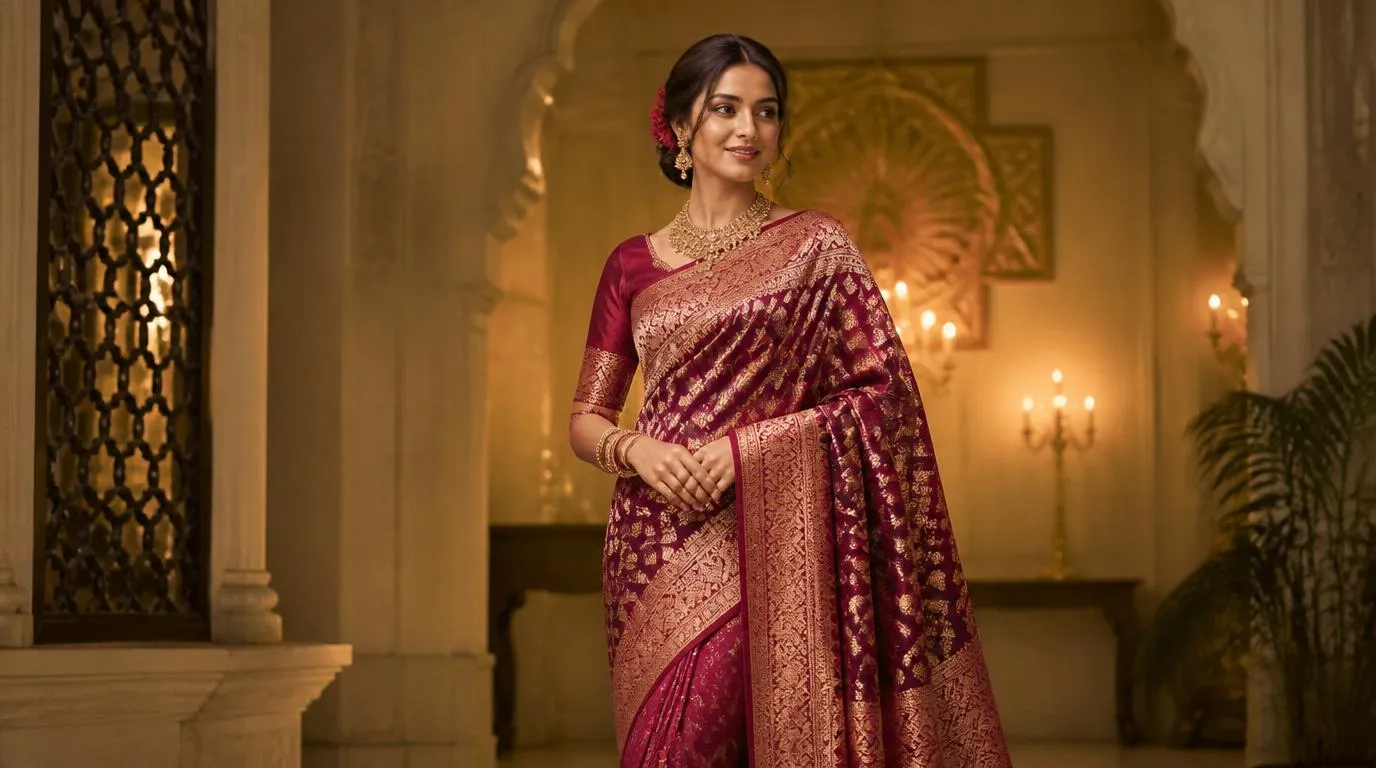
Image Credit: AI Generated
Origin: Tangail district
Fabric: Cotton, silk-cotton blend, or pure silk
Significance: Known for its distinctive borders and affordable elegance
Tangail sarees are the everyday heirlooms of Bangladesh. Woven in the Tangail district, these sarees are celebrated for their distinctive borders, which are often wider and more colourful than those of Jamdani. The weaving technique is similar to Jamdani but less intricate, making Tangail sarees more affordable and accessible.
What makes Tangail sarees special is the variety of border designs. You’ll find geometric patterns, floral vines, and even paisley motifs woven into the borders. The pallu (the decorative end) often features parallel stripes or buttidar (small motif) work. Tangail sarees are typically woven in cotton or a silk-cotton blend, making them comfortable for daily wear yet festive enough for casual celebrations.
Why it’s beloved: Tangail sarees are the workhorses of the Bengali wardrobe. They are easy to drape, comfortable in all seasons, and come in a wide range of colours to suit every taste. They are also incredibly durable – a well-made Tangail saree can last for decades.
Styling tip: Pair a Tangail saree with traditional silver or gold jewellery for a classic look. For a more contemporary vibe, style it with a contrasting blouse and modern accessories.
3. Benarasi – The Royal Heritage
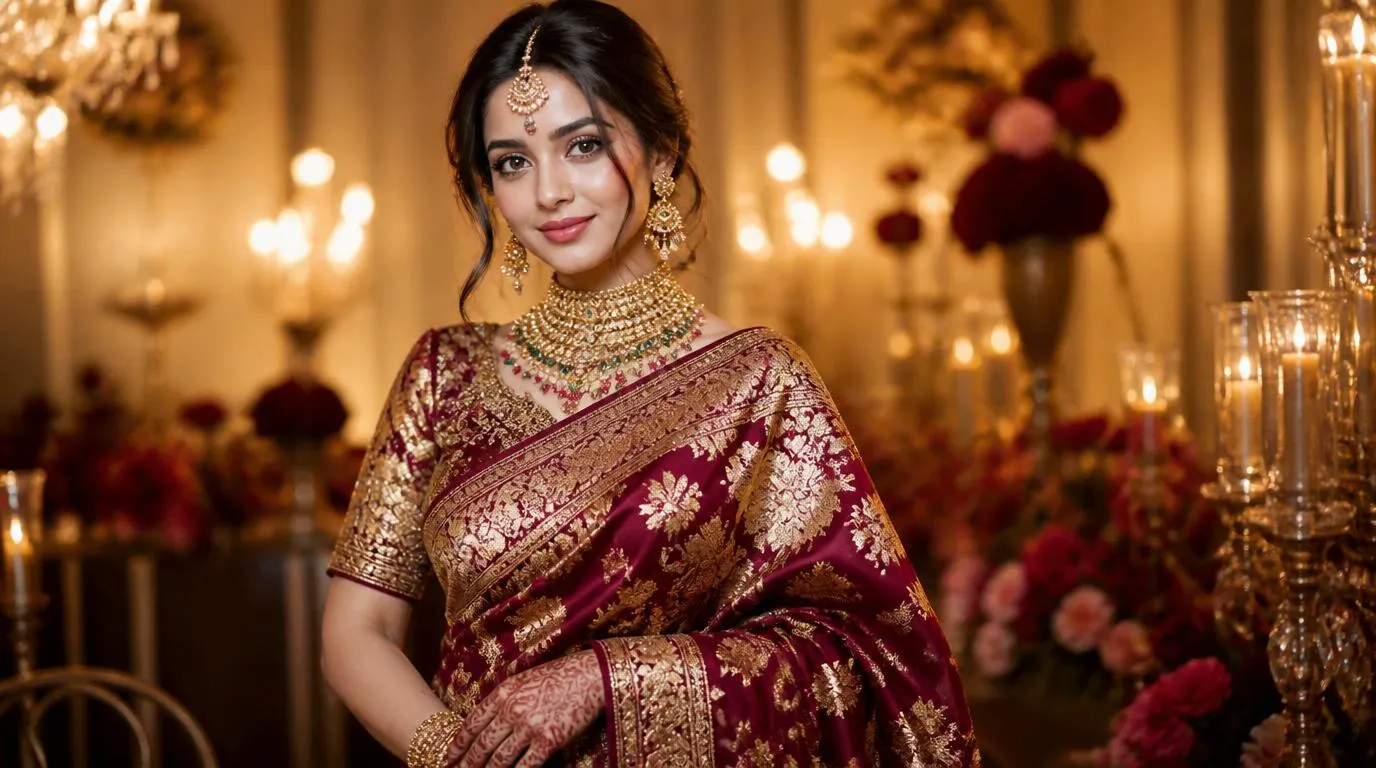
Image Credit: AI Generated
Origin: Woven in Bangladesh (traditionally from Varanasi, India)
Fabric: Pure silk with real or imitation zari
Significance: The quintessential bridal saree
Benarasi sarees are the crown jewels of Bangladeshi wedding trousseaus. Though they originated in Varanasi, India, Benarasi sarees have been woven in Bangladesh for over a century and have become an integral part of the country’s wedding traditions. Bangladeshi Benarasi sarees have developed their own distinct character – with unique colour combinations, motif designs, and weaving techniques.
A traditional Benarasi is woven with pure mulberry silk and real zari (silver wire coated with gold). The pallu is densely covered with floral, paisley, or geometric patterns, and the border is heavy and structured. The body of the saree features buttidar (small motifs) work that adds depth and richness.
Regional variations: Bangladeshi Benarasi sarees often feature more vibrant colours – deep reds, royal purples, emerald greens, and gold – compared to their Indian counterparts. They are also lighter, more breathable fabrics, making them better suited for Bangladesh’s warm climate.
Occasion: Benarasi sarees are reserved for the most special occasions – weddings, receptions, and major festivals. A bride’s Benarasi saree is often passed down through generations, becoming a cherished family heirloom.
4. Rajshahi Silk – The Golden Thread
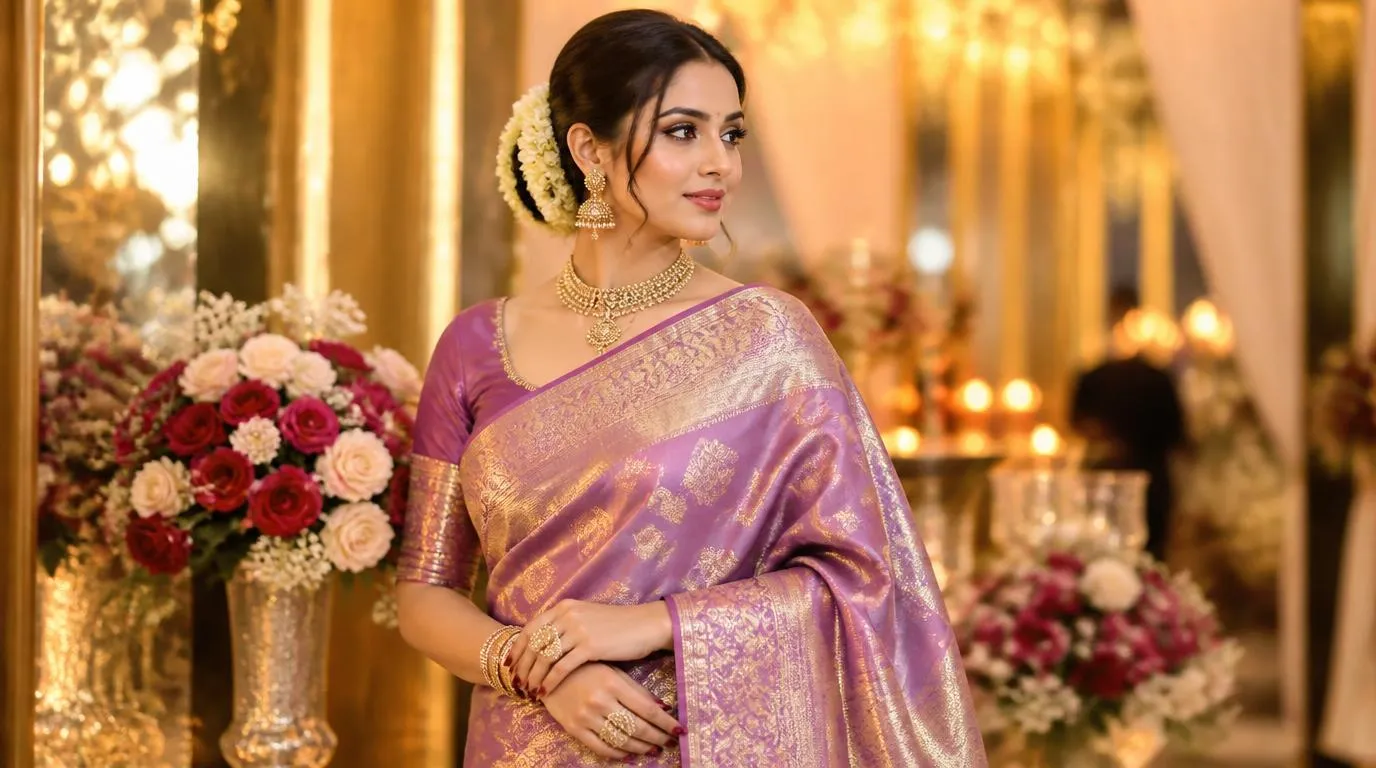 Image Credit: AI Generated
Origin: Rajshahi division
Fabric: Pure mulberry silk (matka silk)
Significance: Known as the “Golden Thread” of Bangladesh
Rajshahi silk is the pride of northern Bangladesh. Woven from mulberry silk produced by silkworms fed on mulberry leaves, Rajshahi silk is known for its natural sheen, smooth texture, and durability. The silk industry in Rajshahi has a long history, and the region is often called the ‘Silk City‘ of Bangladesh.
What distinguishes Rajshahi silk is its rustic, textured feel. Unlike the ultra-fine Jamdani, Rajshahi silk has a slightly heavier drape and a subtle, organic texture that gives it character. The natural silk fibres are hand-spun and hand-woven, resulting in a fabric that is breathable yet structured.
Craftsmanship: Rajshahi silk sarees are woven by skilled artisans who have inherited the craft from their ancestors. The weaving process is similar to Jamdani but less intricate, making Rajshahi silk more accessible in terms of price.
Colour palette: Rajshahi silk sarees come in warm, earthy tones – golds, oranges, deep reds, and rich browns – as well as pastel shades like peach, mint green, and lavender. The golden sheen of the silk is particularly striking in natural light.
5. Muslin – The Lost Treasure
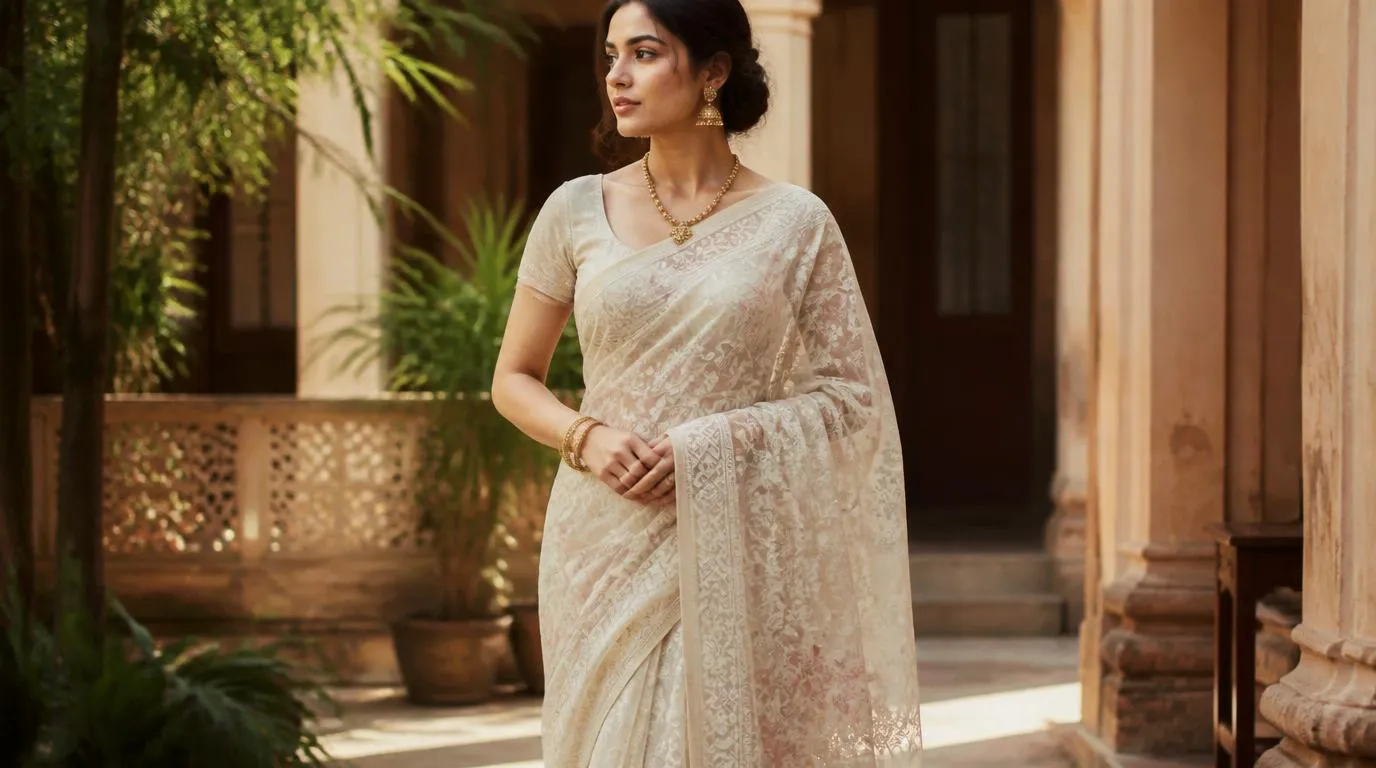 Image Credit: AI Generated
Origin: Dhaka region (historic)
Fabric: Ultra-fine hand-spun cotton
Significance: A legendary fabric, once the most prized textile in the world
Muslin is the legendary fabric of Bengal. In the 17th and 18th centuries, muslin from Dhaka was considered the finest fabric in the world – so sheer and delicate that it was said to be woven from air. European royalty and Mughal emperors prized muslin for its translucency, softness, and intricate craftsmanship.
The original muslin was woven from hand-spun cotton with an extremely high thread count (up to 1,000 threads per inch). The technique was so specialised that only a few families in the Dhaka region knew how to produce it. Sadly, the craft was lost during the British colonial period, when machine-made fabrics flooded the market and handloom weavers were driven out of business.
Revival: Today, there is a growing movement to revive muslin weaving in Bangladesh. Researchers and weavers are working together to rediscover the ancient techniques and produce contemporary muslin that honours the legacy of this legendary fabric. While the original ‘woven air’ muslin may be lost, modern muslin-inspired Jamdani sarees carry forward its spirit.
Why it matters: Muslin is not just a fabric – it’s a symbol of Bengal’s textile heritage. Its story reminds us of the incredible skill of our ancestors and the importance of preserving traditional crafts.
6. Katan Silk – The Modern Classic
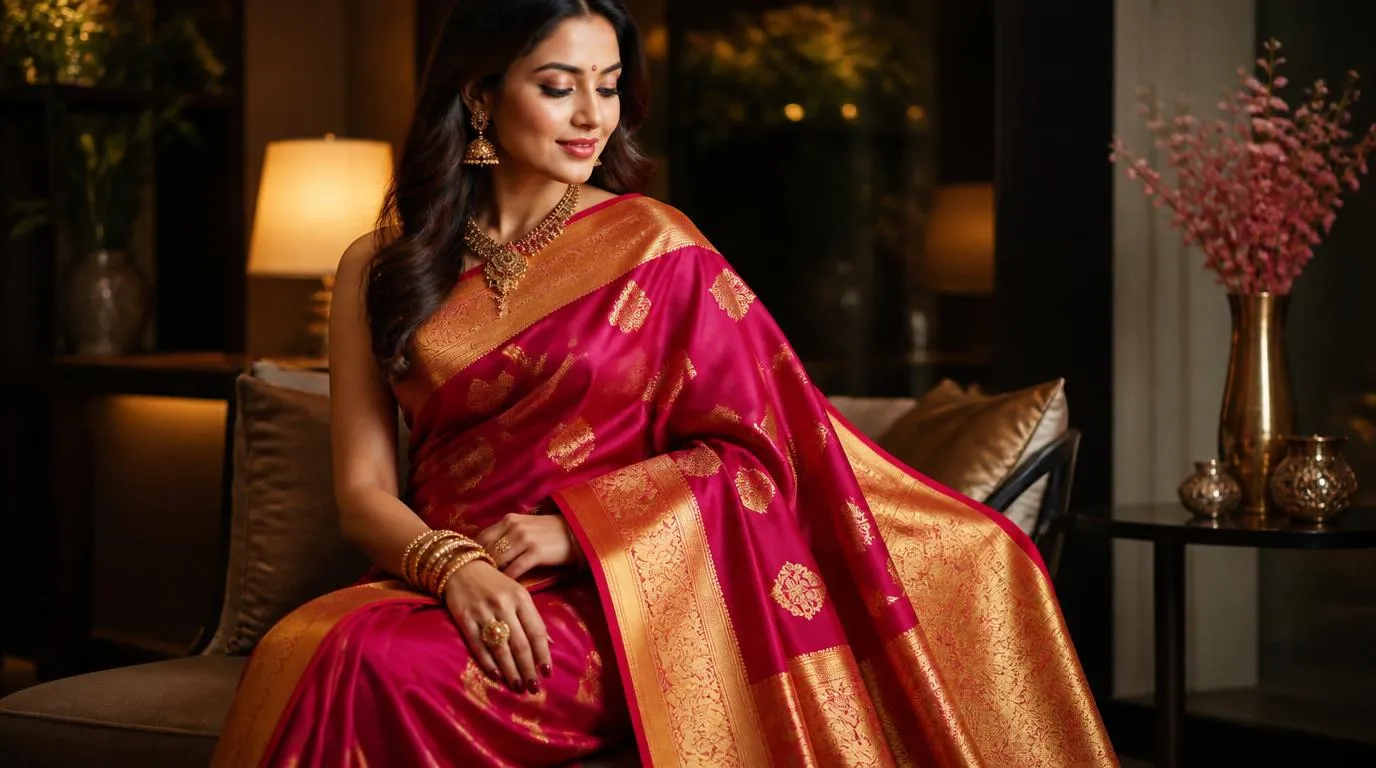 Image Credit: AI Generated
Origin: Bangladesh and India
Fabric: Pure silk with buttidar (small motif) work
Significance: A versatile silk saree for both festive and everyday wear
Katan silk is the modern classic of Bangladeshi sarees. Woven from pure silk with a smooth, lustrous finish, Katan silk sarees are known for their elegant drape and subtle sheen. The fabric is lighter and more breathable than Benarasi, making it suitable for both festive occasions and everyday wear.
What makes Katan silk special is its versatility. The buttidar (small motif) work is subtle and understated, adding texture without overwhelming the fabric. Katan silk sarees come in a wide range of colours – from deep, rich tones to soft pastels – and can be styled for any occasion.
Styling: Katan silk sarees are easy to drape and comfortable to wear for long periods. They pair beautifully with both traditional and contemporary jewellery, making them a wardrobe staple for the modern Bengali woman.
Occasion: Katan silk sarees are perfect for office wear, family gatherings, and casual celebrations. They are also an excellent choice for bridesmaids and wedding guests who want a look that is elegant yet not overly formal.
7. Handloom Cotton – The Everyday Elegance
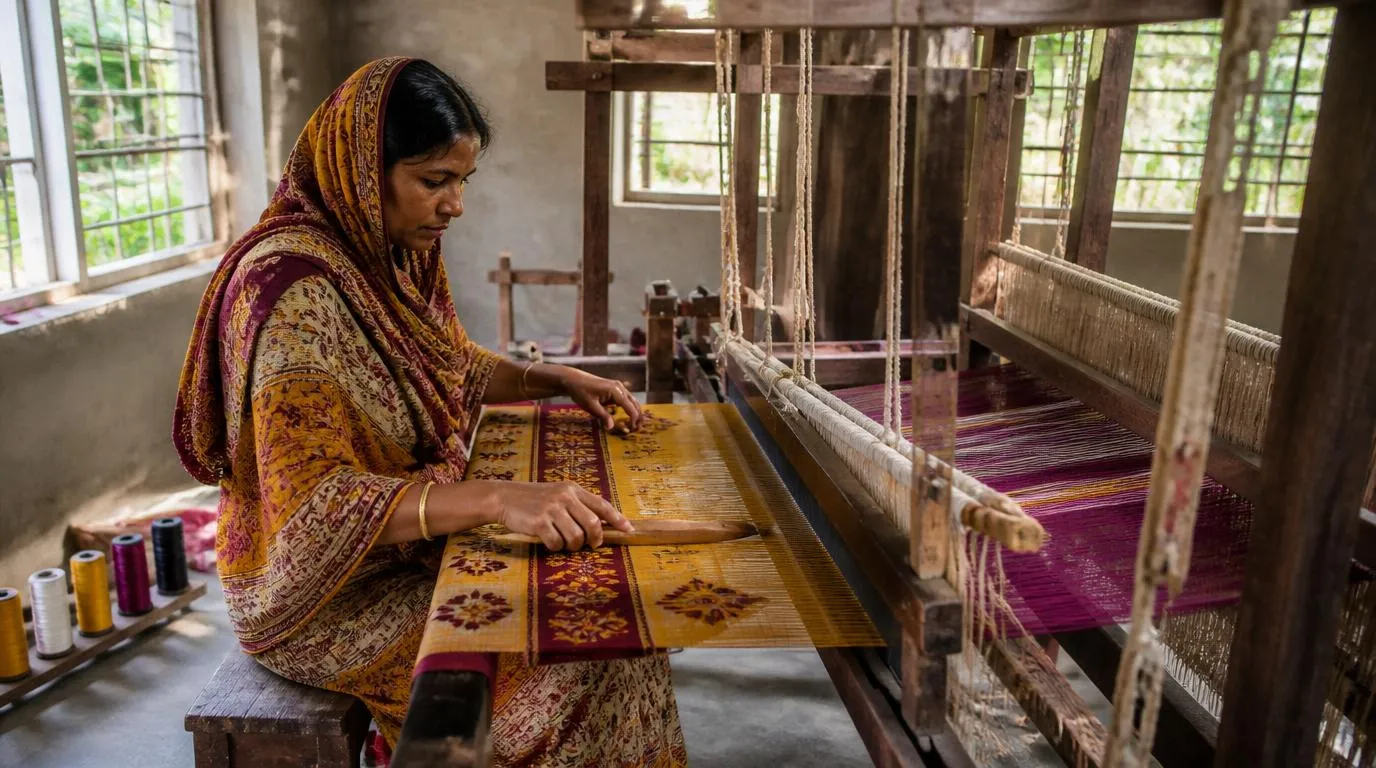 Image Credit: AI Generated
Origin: Various regions (Tangail, Narayanganj, Sirajganj)
Fabric: Pure cotton, handwoven on pit looms
Significance: The backbone of Bengali daily wear
Handloom cotton sarees are the backbone of the Bengali wardrobe. Woven on traditional pit looms across Bangladesh, these sarees are known for their comfort, breathability, and durability. They are the everyday sarees that Bengali women have worn for generations – simple, elegant, and timeless.
The weaving process for handloom cotton is similar to Jamdani but less intricate. The weaver uses hand-spun cotton yarn to create a fabric that is soft, lightweight, and airy. The borders are often simple yet striking – with stripes, checks, or small geometric patterns that add character.
Why it’s essential: Handloom cotton sarees are perfect for Bangladesh’s climate. They are cool in summer, comfortable in humidity, and easy to maintain. They are also incredibly affordable, making them accessible to everyone.
Cultural role: Handloom cotton sarees are woven into the fabric of Bengali life. They are worn for daily errands, office work, and casual outings – and they are also the sarees of choice for Pohela Boishakh (Bengali New Year) and other cultural celebrations.
Image Credit: AI Generated
Each traditional Bangladeshi saree type carries the stories, skills, and soul of its weavers.
Quick Comparison – which traditional saree is for you?
- Wedding or formal occasion: Jamdani or Benarasi (premium, luxurious)
- Daily wear and comfort: Handloom cotton or light Tangail (breathable, affordable)
- Festive but not too formal: Rajshahi silk or Katan silk (elegant yet versatile)
- Cultural heritage: Jamdani or Muslin-inspired (UNESCO-recognised, historic)
- Budget-friendly elegance: Tangail or handloom cotton (beautiful, durable, affordable)
- Summer comfort: Handloom cotton or light Jamdani (breathable, lightweight)
- Winter warmth: Benarasi or heavy Katan silk (structured, warm)
Popular Posts
- How to Choose the Perfect Jamdani Saree
- How to Identify Original Jamdani Saree
- Jamdani Saree vs Tangail Saree
- How to Style a Bangladeshi Saree
- History of Jamdani Saree in Bangladesh
- Why Jamdani Sarees Are Expensive