
As an Amazon Associate, SareeBD may earn from qualifying purchases. This means we may receive a small commission when you purchase through links on our website, at no additional cost to you.
 Image credit: Amazon
 Image Credit: AI Generated
- Introduction
- How to Choose Jamdani Saree: Cotton vs Silk
- Quality Indicators – What to Look For
- Motifs & Designs – Understand the Patterns
- Pricing Guide – What Should You Pay?
- How to Spot Authentic Handloom Jamdani
- Where to Buy – Online vs Offline
- Quick Care Tips for Jamdani
- Popular Posts
- Complete Your Jamdani Outfit
- FAQ About Jamdani buying guide
Introduction
You’ve seen those stunning Jamdani sarees – delicate, feather-light, and woven with intricate motifs. They look like pure poetry draped over the body. And now you want one. But walking into a saree shop or scrolling through online listings, you’re faced with a bewildering range of prices and qualities. How do you know which one is worth your money?
I’ve been there – overwhelmed by choices, unsure if I was paying for genuine handloom or a powerloom imitation. Over the years, I’ve learned what to look for, what questions to ask, and how to spot quality. This guide brings together all those lessons. Whether you’re a first-time buyer or looking to add to your collection, these tips will show you how to choose a Jamdani saree that you’ll love for years.
How to Choose Jamdani Saree: Cotton vs Silk
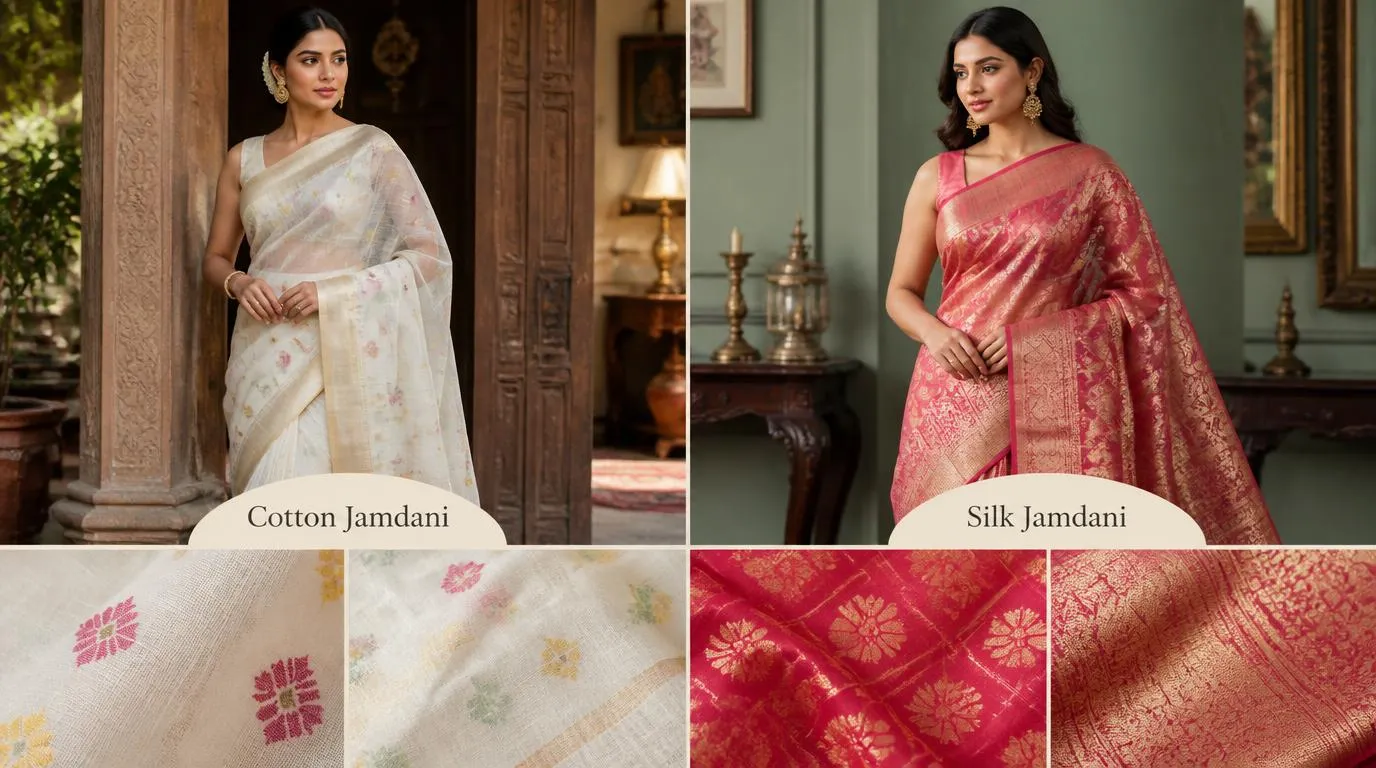
Image Credit: AI Generated
The first decision you’ll face is fabric: cotton or silk? Both are handwoven, but they serve different purposes.
- Cotton Jamdani – Lightweight, breathable, and perfect for daily wear, office, and summer occasions. It has a matte finish and drapes softly. Prices are more affordable, usually starting from ৳1,500. Cotton Jamdani with fine yarn (120+ warp count) feels almost like muslin – it’s incredibly airy.
- Silk Jamdani – Has a natural sheen, feels more luxurious, and is ideal for weddings, receptions, and festive events. The silk base gives the fabric a richer drape and enhances the zari work. Prices are higher – from ৳5,000 upwards, with fine silk reaching ৳15,000–20,000.
My advice: Buy cotton Jamdani for everyday elegance and silk Jamdani for your special occasion wardrobe. If you’re on a budget but want a festive look, opt for a high-count cotton Jamdani with a wide zari border – it can pass for silk from a distance.
Quality Indicators – What to Look For
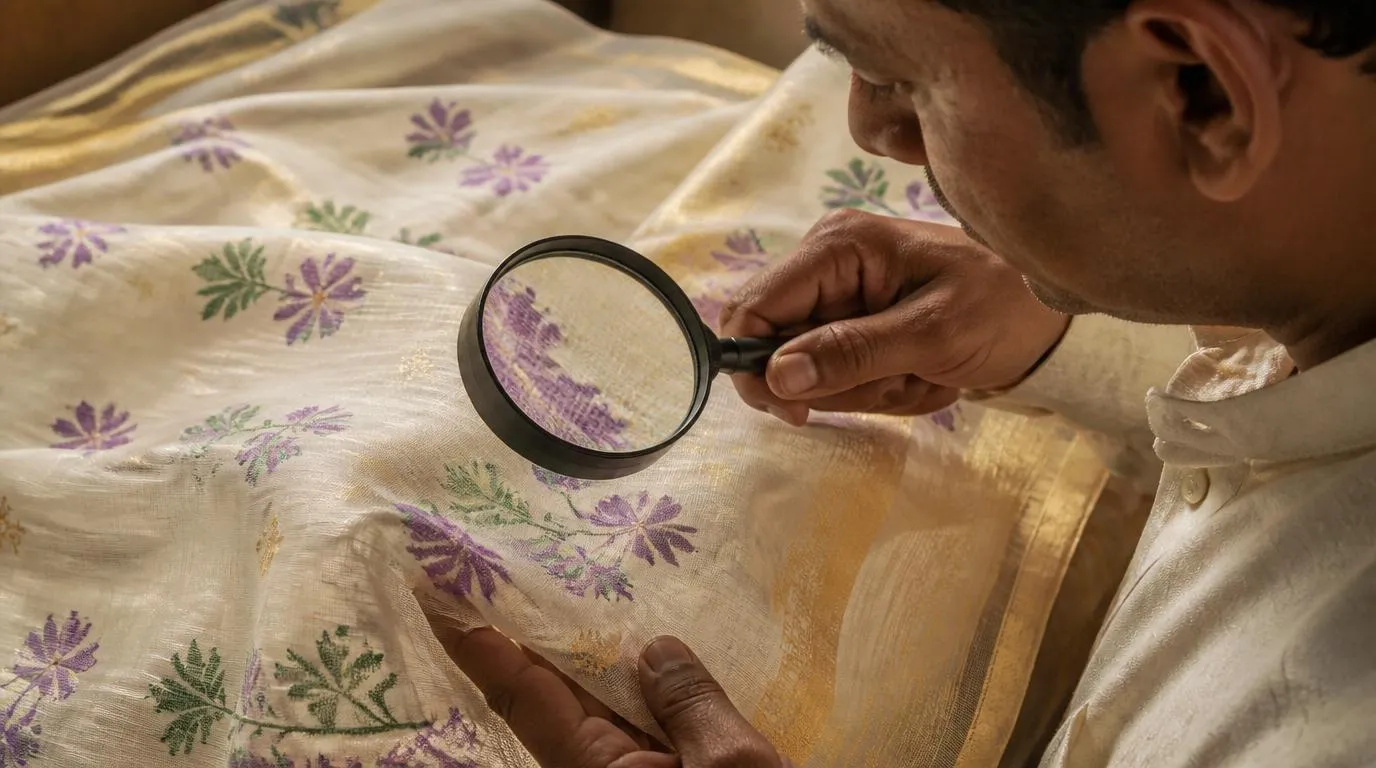
Image Credit: AI Generated
Not all Jamdani sarees are created equal. Here’s how to spot a high-quality piece:
- Warp count: This is the number of threads per inch in the vertical direction. A warp count of 60–80 is decent, 100–120 is good, and 140+ is excellent. Higher warp count means finer, lighter fabric. Hold the saree against light – you should see a very dense, even grid.
- Thread quality: Good Jamdani uses long-staple cotton or fine mulberry silk. The threads should be smooth and lustrous, not fuzzy or brittle.
- Selvedge (edges): The side edges of the saree should be neatly woven, tight, and compact. Loose or frayed selvedges are a sign of poor quality or powerloom imitation.
- Zari (gold/silver thread): Genuine zari is made of silver or gold-plated copper wire wrapped around a silk or polyester core. It should be smooth, flexible, and not flake off. Cheap zari is stiff and leaves residue.
- Motif integration: In genuine Jamdani, the motifs are woven into the fabric using extra weft threads – they are part of the fabric itself, not embroidery. If you turn the saree over, the motif should look similar on the reverse side (embroidery would look messy on the back).
🔍 Quick test: Rub the saree gently between your fingers. High-quality Jamdani feels smooth and slightly cool to the touch. Poor quality feels rough or papery.
Motifs & Designs – Understand the Patterns
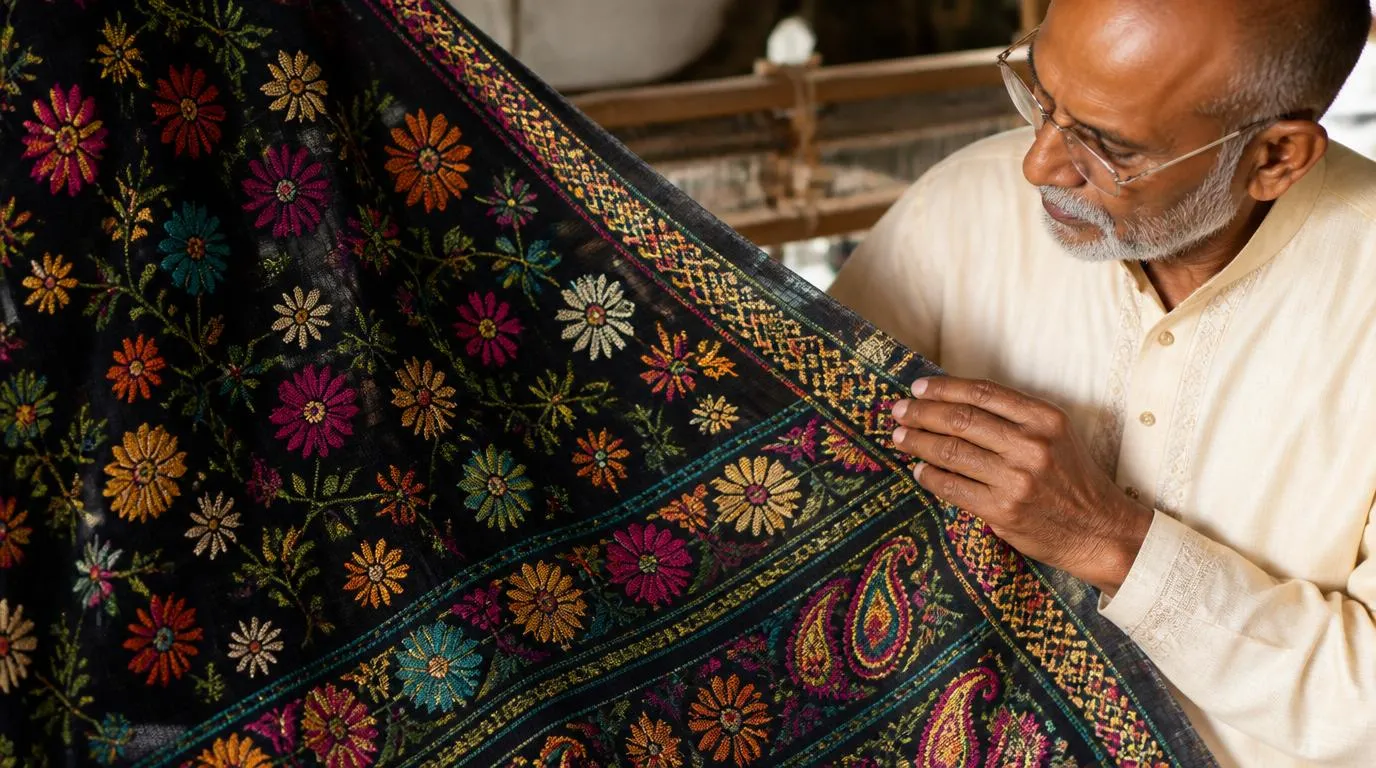
Image Credit: AI Generated
Jamdani is known for its rich motifs. Here are the most common ones and what they mean for quality:
- Traditional floral: Paisley (kalka), jasmine, lotus, and vine patterns. These are the classic Jamdani motifs – more intricate motifs take longer to weave and cost more.
- Butidar (small flower buds): Scattered small motifs all over the body. A high density of buti motifs indicates a finer weave and more time-consuming craftsmanship.
- Geometric: Chevrons, diamonds, and stripes. These are simpler and often found in more affordable Jamdani.
- Contemporary: Abstract designs, architectural elements, and even modern art-inspired patterns. These are recent innovations and can be very striking.
What to choose: If you want a classic, timeless piece, go for floral or butidar motifs. For a modern, younger look, contemporary designs are great. Remember – the intricacy of the motif affects the price, so balance your design preference with your budget.
Pricing Guide – What Should You Pay?
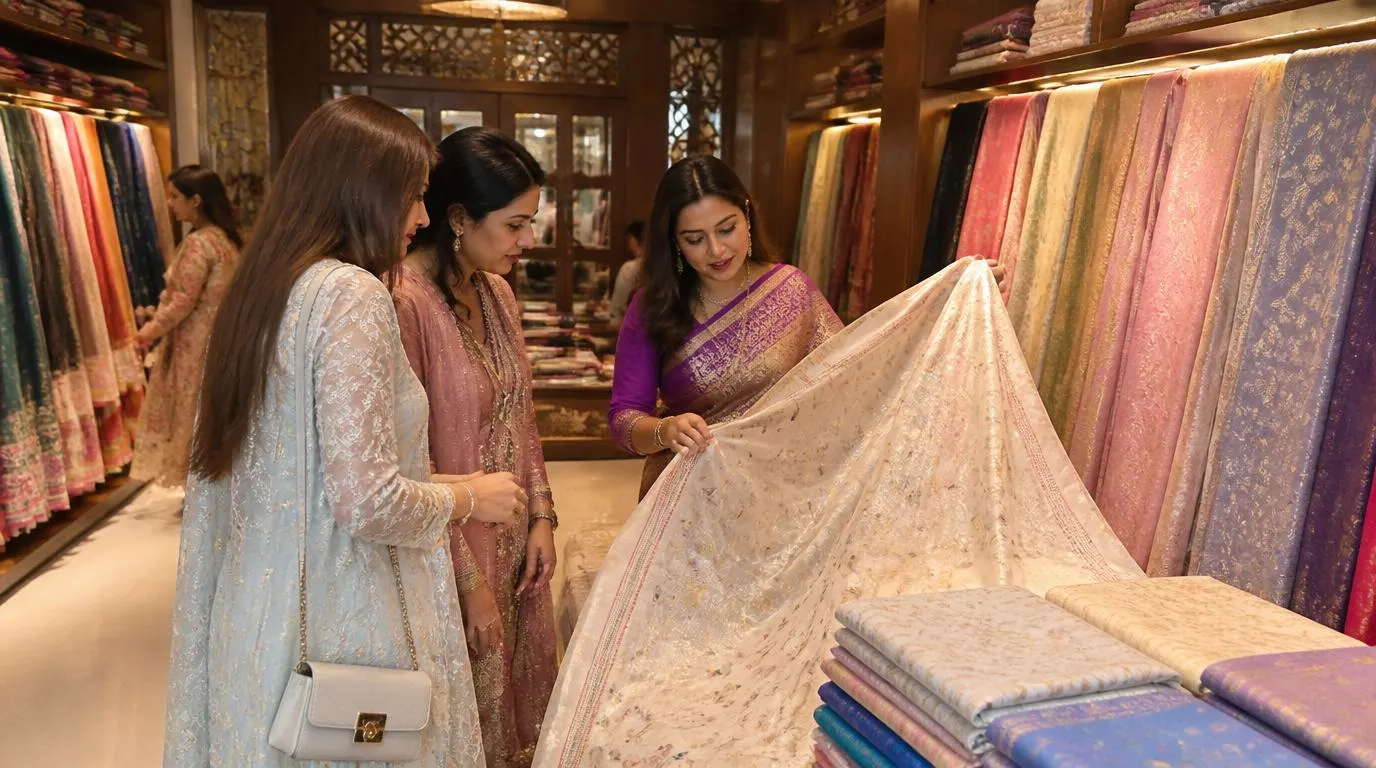
Image Credit: AI Generated
Jamdani prices vary wildly. Here’s a realistic breakdown to help you budget:
- Basic cotton Jamdani (no zari, simple motifs): ৳1,500 – ৳2,500. Good for everyday wear.
- Cotton Jamdani with zari border (moderate motifs): ৳2,500 – ৳4,500. Suitable for casual events and office.
- High-count cotton Jamdani with heavy zari (intricate motifs): ৳4,500 – ৳7,000. Wedding-guest quality.
- Silk Jamdani (lightweight, moderate zari): ৳5,000 – ৳9,000. Good for receptions.
- Fine silk Jamdani with dense motifs and zari: ৳9,000 – ৳15,000+. Heirloom quality, often worn by close family at weddings.
- Premium designer Jamdani (high-end boutiques): ৳20,000+. These are luxury pieces with exceptional craftsmanship.
⚠️ Red flag: If a Jamdani saree is priced below ৳1,000 and claims to be handloom, it’s almost certainly a powerloom imitation. Genuine handloom involves significant labor, so the price should reflect that.
How to Spot Authentic Handloom Jamdani
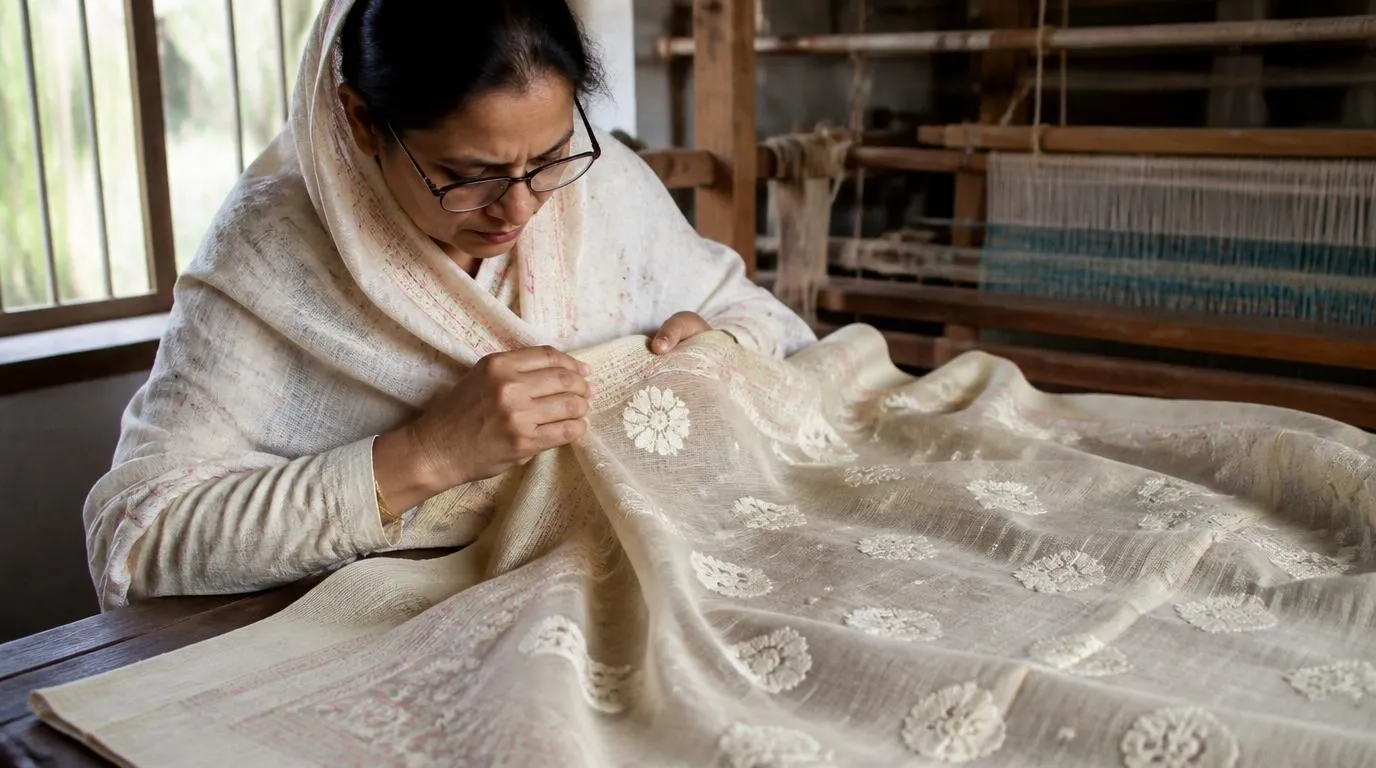
Image Credit: AI Generated
With so many powerloom copies flooding the market, authenticity is a major concern. Here’s how to ensure you’re buying the real deal:
- Check the reverse side: In handloom Jamdani, the back of the fabric shows the motifs as clearly as the front (though slightly less defined). In powerloom copies, the back is often messy or has floating threads.
- Examine the selvedge: Handloom selvedges are tightly woven and have a distinct texture. Powerloom selvedges are often loose, uneven, or have a separate edge stitched on.
- Look for irregularities: Handloom has slight variations in thickness and weave – these are marks of human craftsmanship. Powerloom is perfectly uniform.
- Test the zari: Burn a tiny thread of zari (if possible). Genuine zari (silver/gold plated) will leave a metal residue. Fake zari (plastic) will melt and smell like burnt plastic.
- Ask for a certificate: Some weavers’ cooperatives and authentic brands provide a certificate of handloom authenticity. While not foolproof, it’s a good sign.
✅ Trusted mark: Look for the “Handloom” label from the Bangladesh Handloom Board or similar certifications. These are often attached to authentic products.
Where to Buy – Online vs Offline
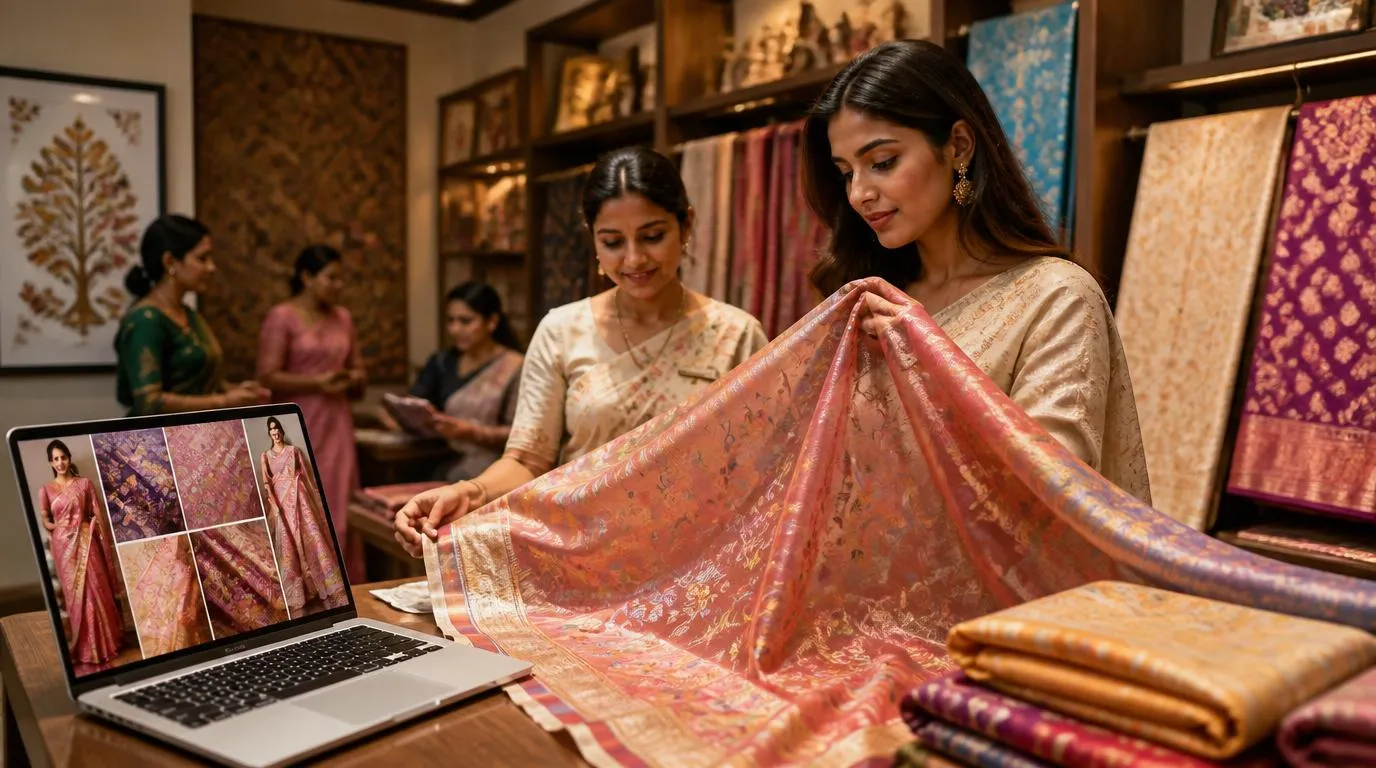
Image Credit: AI Generated
You have two main options:
- Offline (in-store) – This is ideal for first-time buyers because you can touch, feel, and inspect the fabric. Visit traditional markets like Dhaka’s Baitul Mukarram market, New Market, or handloom showrooms of organizations like Aarong, Kumudini, and Anjans. You can also visit weaver villages in Narayanganj, Sonargaon, or Tangail for direct-from-loom purchase.
- Online – Platforms like Amazon offer convenience and a wide range. However, you need to be extra careful. Look for sellers with high ratings (4.8+), clear return policies, and detailed product photos (including close-ups of weave and selvedge). Our recommended Amazon links (below) are from vetted sellers with authentic collections.
💡 My recommendation: If you’re new to Jamdani, buy your first piece offline to develop a sense of quality. For repeat purchases, online can be a great option – especially if you know exactly what you’re looking for.
Quick Care Tips for Jamdani
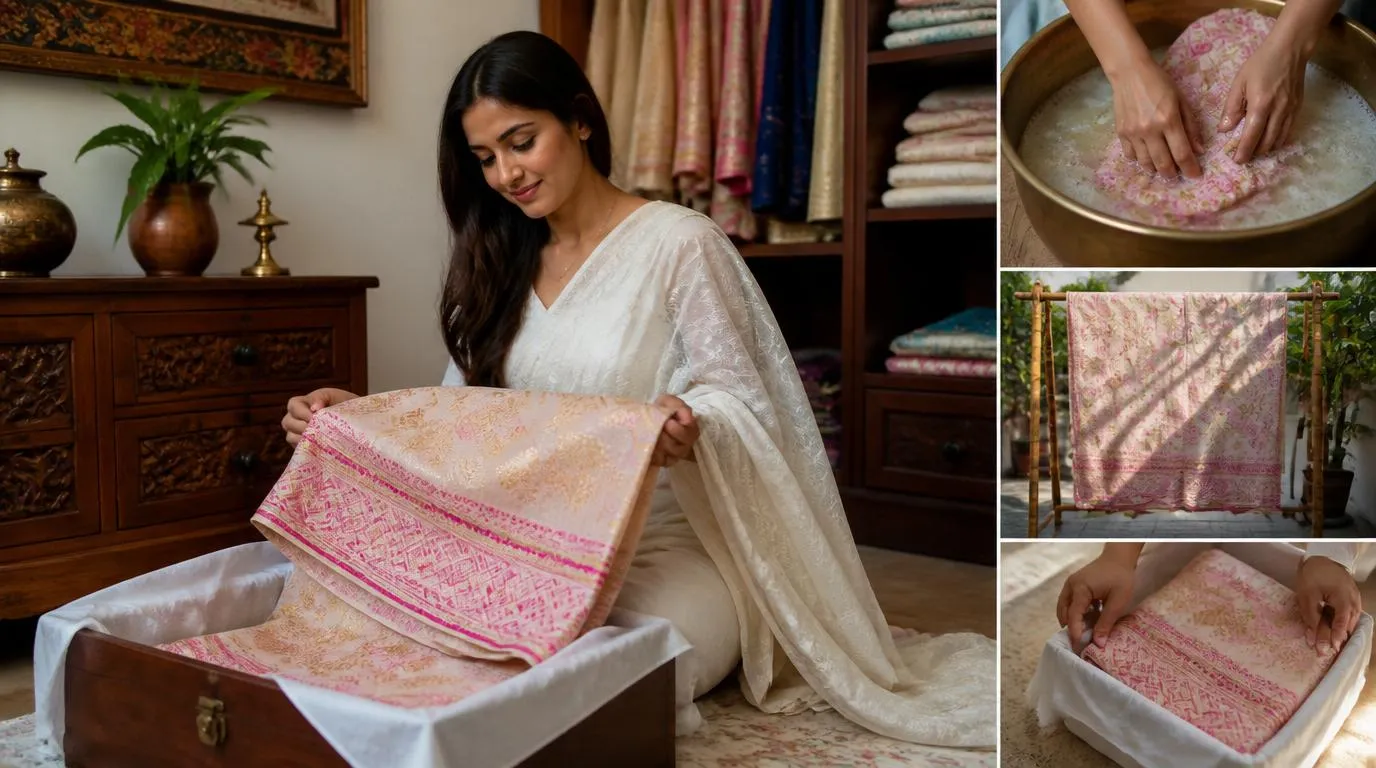
Image Credit: AI Generated
Once you’ve invested in a Jamdani, proper care is essential. Here are the basics:
- Washing: Cotton Jamdani can be hand-washed in cold water with mild detergent. Silk Jamdani should be dry-cleaned or hand-washed with extreme care (using silk-specific detergent). Never wring or twist.
- Drying: Always dry in the shade – direct sunlight fades colors and weakens fibers.
- Storing: Fold with zari facing inward, wrap in muslin cloth, and store in a cool, dry place. Add neem leaves or cedar balls to prevent moths.
- Ironing: Iron on the reverse side (inside out) on low heat. Use a pressing cloth for extra safety.
For detailed care instructions, read our full Care Tips for Silk Sarees guide – many principles apply to Jamdani as well.
Image Credit: AI Generated
The right Jamdani saree will make you feel confident, elegant, and connected to a rich heritage – choose wisely.
🛍️ Ready to buy? Explore our curated selection of authentic handloom Jamdani sarees from trusted sellers. Shop Jamdani · Watch Video Guide
Popular Posts
- History of Jamdani Saree in Bangladesh
- How to Identify Original Jamdani Saree
- Jamdani vs Tangail Saree
- How to Style a Bangladeshi Saree
- Essential Care Tips for Silk Sarees
- Handloom vs Machine Made Sarees
Complete Your Jamdani Outfit
Choosing the Jamdani is the joyful part, but the saree is only half the outfit. What you pair it with decides whether it looks like a treasure or a costume. Start with the budget honestly: our Jamdani price guide shows what the saree itself should cost in the USA. The two pieces below finish the outfit for most women.

$31.99
Madhu Fashion Traditional Banaras Brocade Readymade Saree Blouse with Elbow Length Sleeves
3.9 ★★★★★★★★★★ (902)
View on Amazon

$9.99
100% Cotton Petticoat For Saree, Adjustable Waist Sari Underskirt Half Slip
4.2 ★★★★★★★★★★ (162)
View on Amazon
More options in our readymade blouse roundup, and if you are torn between foundations, our shapewear vs petticoat comparison settles it by fabric.
FAQ About Jamdani buying guide
What is the difference between cotton and silk Jamdani?
Cotton Jamdani is lighter, more breathable, and ideal for everyday wear and summer. Silk Jamdani has a natural sheen, feels more luxurious, and is better suited for weddings and festive occasions. Both are handwoven, but silk Jamdani is usually more expensive.
How can I identify a high-quality Jamdani saree?
Look for high warp count (100+), fine thread count, neat and tightly woven selvedges, and motifs that are woven into the fabric (not embroidered). Hold the saree against light, good Jamdani has a uniform weave with subtle irregularities that indicate handloom. Check the zari, it should be smooth and not flake off.
How much does a good Jamdani saree cost?
Prices vary widely based on quality, fabric, and intricacy. A basic cotton Jamdani starts at around ৳1,500-2,500. Good quality cotton Jamdani with zari borders costs ৳3,000-5,000. Silk Jamdani ranges from ৳5,000 to over ৳15,000. Fine, high-count silk Jamdani with intricate motifs can cost ৳20,000+.
What are the common motifs in Jamdani sarees?
Traditional motifs include floral patterns (paisley, jasmine, lotus), butidar (small flower buds), vines, and geometric shapes. Contemporary Jamdani also features abstract designs, architectural elements, and modern patterns. The motif density and complexity affect the price.
Is it safe to buy Jamdani sarees online?
Yes, but exercise caution. Buy from reputable sellers with good ratings and clear return policies. Ask for detailed photos (close-ups of selvedge, weave, and zari). Check if the seller specifies handloom vs powerloom. Our recommended Amazon links below point to vetted sellers with authentic collections.
What blouse suits a Jamdani saree?
A plain cotton or raw-silk-look blouse in one of the border’s colours. Jamdani’s woven motifs are the artwork, the blouse’s job is to frame them, not compete. Our blouse roundup above has the specific picks.
What does a complete Jamdani outfit cost in the USA?
From this site’s researched listings: a Tamarind Leaf Jamdani at $36.00, the Madhu brocade blouse at $31.99 and a cotton petticoat at $9.99 come to $77.98 in total, the full outfit for less than many single ‘designer’ sarees.
Shapewear or petticoat under a Jamdani?
The petticoat. Cotton Jamdani was woven for two centuries to drape over a petticoat’s gentle volume, and it still falls best that way, our comparison post explains the fabric-by-fabric logic.
How should I store a Jamdani between wears?
Folded in a breathable cotton or muslin bag, refolded along fresh lines every three months, the full system is in our silk saree storage guide.
Shop Jamdani