
As an Amazon Associate, SareeBD may earn from qualifying purchases. This means we may receive a small commission when you purchase through links on our website, at no additional cost to you.
 Image credit: Amazon
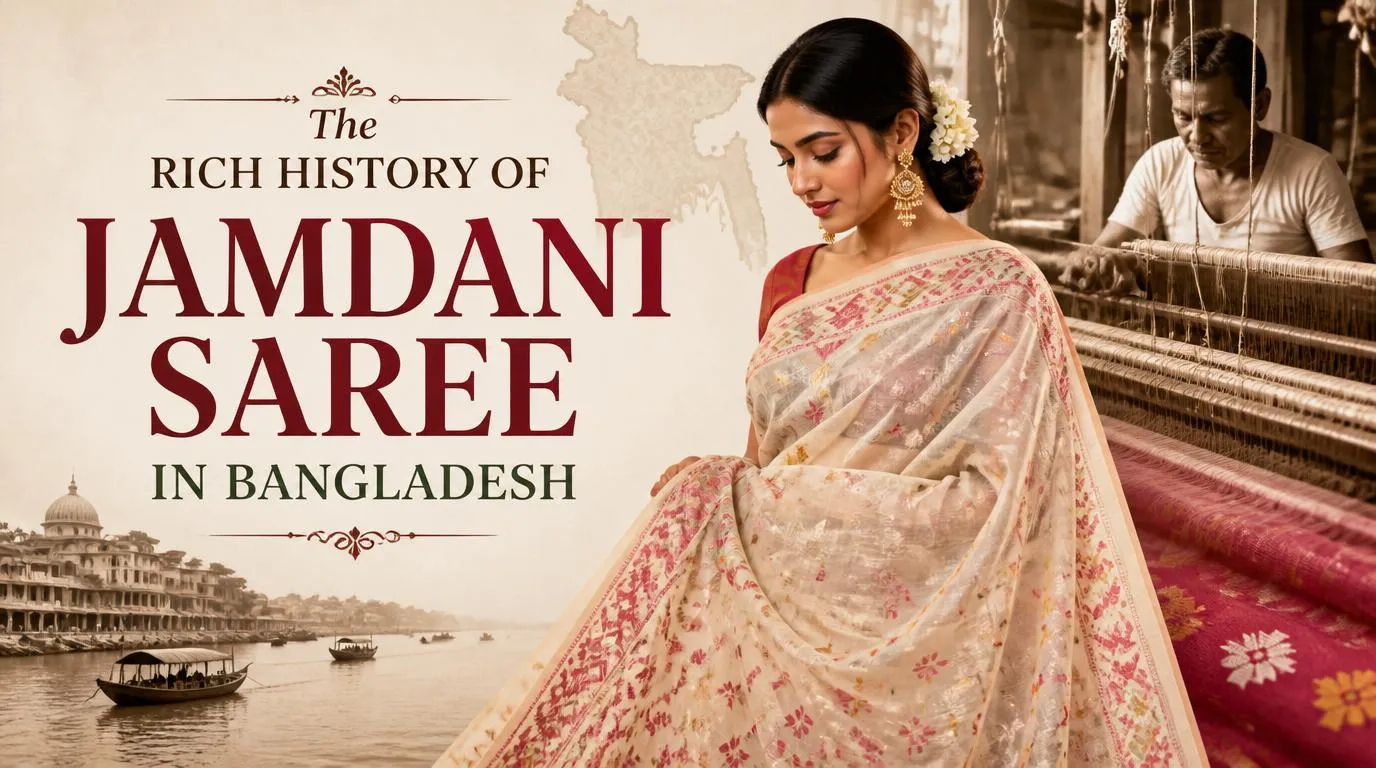
Image Credit: AI Generated
- Introduction
- Ancient Origins – The First Threads
- The Mughal Era – Golden Age of Jamdani
- British Colonial Period – Decline & Survival
- Post-Independence – Revival of a Heritage
- UNESCO Recognition – A Global Honor
- Jamdani Today – Tradition Meets Modernity
- Jamdani History at a Glance – Timeline
- Jamdani history, your questions answered
- Popular Posts
Introduction
Jamdani. The word itself carries the weight of centuries. It conjures images of Mughal empresses draped in gossamer-fine fabric, of Dhaka’s bustling riverbanks where master weavers created magic with their hands, of a craft so exquisite that it captured the attention of emperors, traders, and now, the entire world.
But Jamdani is more than just a saree. It is the soul of Bengal’s textile heritage. It has survived invasions, colonialism, industrialization, and near-extinction. Today, it stands as a symbol of Bangladeshi identity – recognized by UNESCO as an Intangible Cultural Heritage of Humanity. This is the story of how a humble handloom fabric became a national treasure.
Ancient Origins – The First Threads
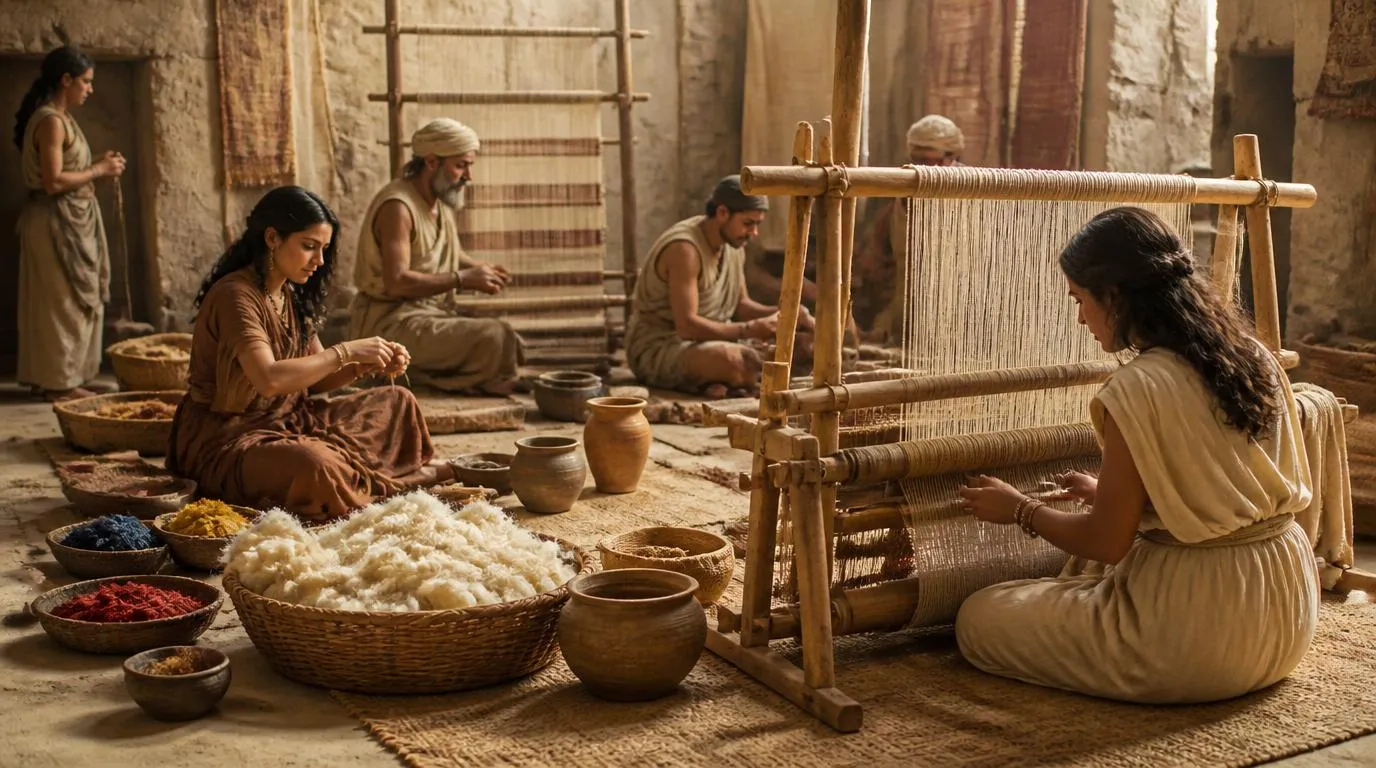
Image Credit: AI Generated
The origins of Jamdani weaving can be traced back over 2,000 years. The earliest references to fine cotton muslin from Bengal appear in ancient texts and Roman writings. The Greek historian Pliny the Elder (1st century CE) mentioned the fine cotton fabrics of Bengal, praising their quality and lightness.
The term “Jamdani” itself is believed to be derived from the Persian words “Jam” (flower) and “Dani” (vase or container), meaning “flower vase” – a reference to the intricate floral motifs that characterize the weave. However, the technique of figured weaving – where motifs are woven into the fabric using extra weft threads – was already practiced in Bengal long before the Persian influence.
Archaeological evidence from the Maurya and Gupta periods (c. 300 BCE – 600 CE) shows that Bengal was a major center of textile production. The region’s warm, humid climate was perfect for cultivating the fine cotton needed for delicate muslin. The weavers of Bengal developed a unique technique: weaving the design directly into the fabric during the weaving process, rather than embroidering it afterward. This is the foundation of what we now call Jamdani.
The Mughal Era – Golden Age of Jamdani
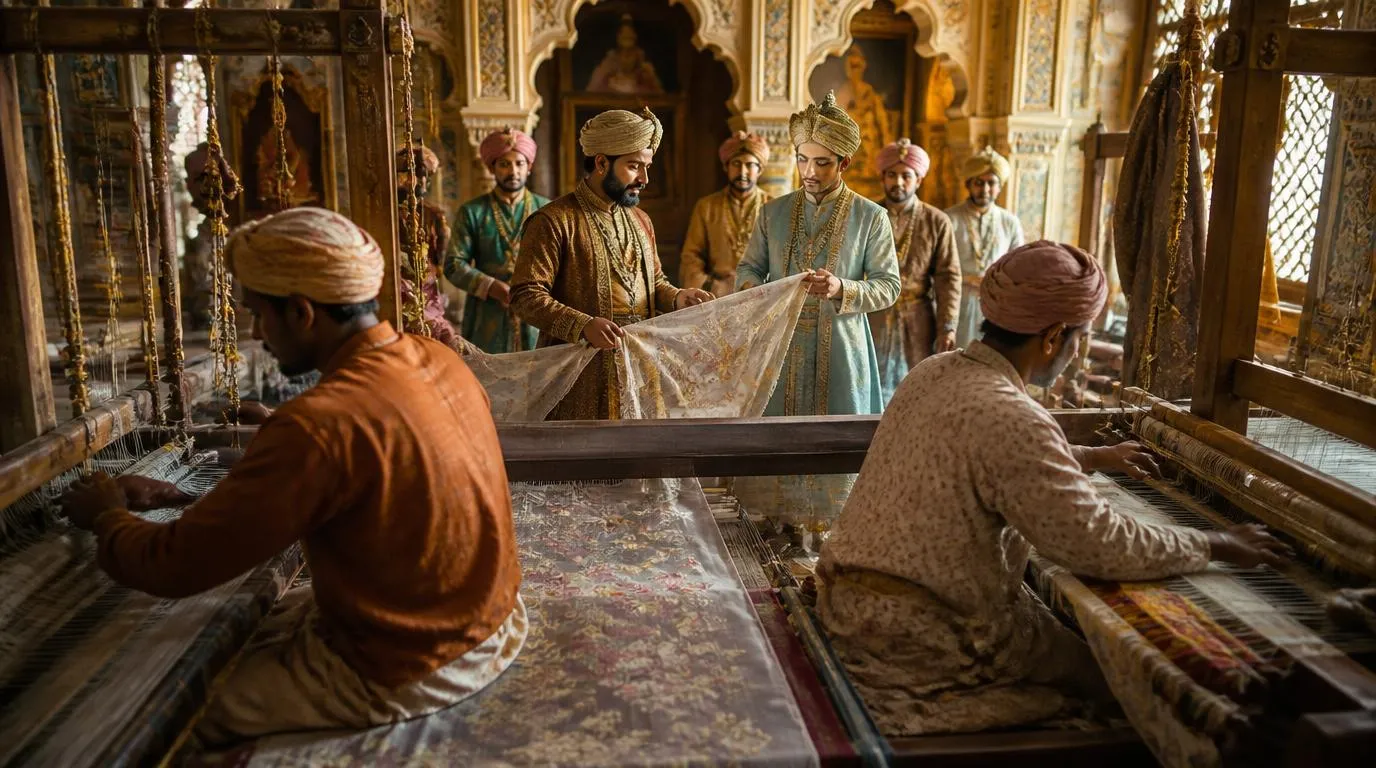
Image Credit: AI Generated
The Mughal period (16th to 18th centuries) was the true golden age of Jamdani. Under Mughal patronage, Dhaka became the center of fine muslin production. The Mughal emperors and their courts were the greatest patrons of Jamdani, commissioning exquisite pieces for royal use and as gifts for foreign dignitaries.
It was during this period that Jamdani evolved from simple geometric patterns to the intricate floral and butidar (flower-bud) motifs that we still see today. The weavers drew inspiration from Mughal gardens, Persian art, and the natural beauty of Bengal. Every motif told a story – of flowers, of birds, of the rivers that flowed through the land.
The French traveler Jean-Baptiste Tavernier (17th century) described the muslin of Dhaka as “the finest in the world.” The fabric was so delicate and light that it was given poetic names: “Ab-i-Rawan” – flowing water, and “Baft-Hawa” – woven air. The fabric was so delicate that a six-yard saree could pass through a ring. This level of fineness has never been matched by machine-made fabric.
Mughal legend: It is said that Empress Nur Jahan commissioned a Jamdani saree so fine that it could be folded and stored inside a matchbox. While this may be legend, it speaks to the extraordinary fineness that Jamdani weavers achieved.
British Colonial Period – Decline & Survival
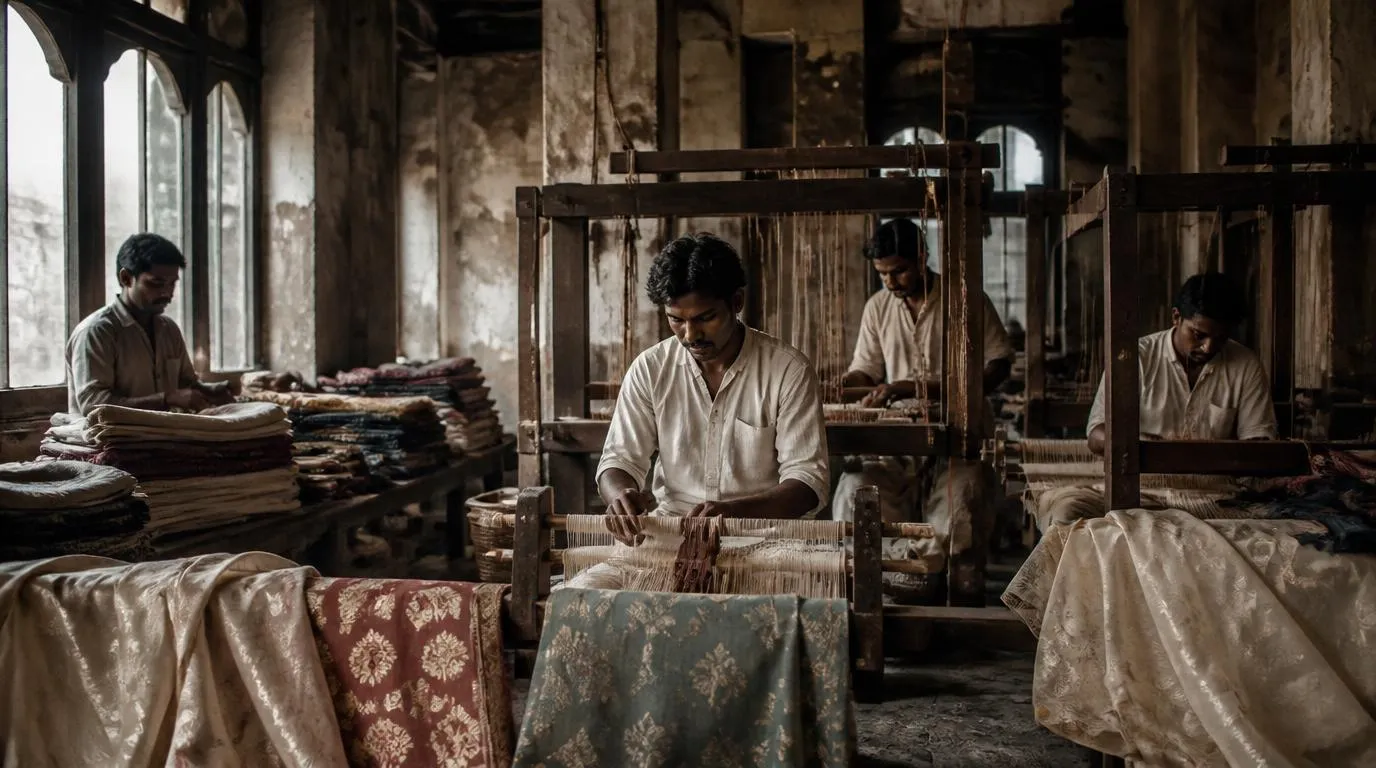
Image Credit: AI Generated
The arrival of the British East India Company in the 18th century marked the beginning of a difficult period for Jamdani. British policies favored the import of cheap machine-made textiles from England, while imposing heavy taxes on Indian handloom products. The once-thriving Jamdani industry began to decline rapidly.
By the mid-19th century, the once-thriving Jamdani industry was on the brink of extinction. Many weavers were forced to abandon their craft and take up other professions. The secret of making the finest muslin – the thread count, the weaving techniques – was nearly lost. Some historians believe that the British deliberately suppressed the industry to protect their own textile mills in Manchester.
However, even in these dark times, Jamdani found unexpected champions. Some British and European textile collectors recognized the value of Jamdani and preserved pieces in museums. These museum collections later became crucial references for the revival of the craft in the 20th century.
Post-Independence – Revival of a Heritage
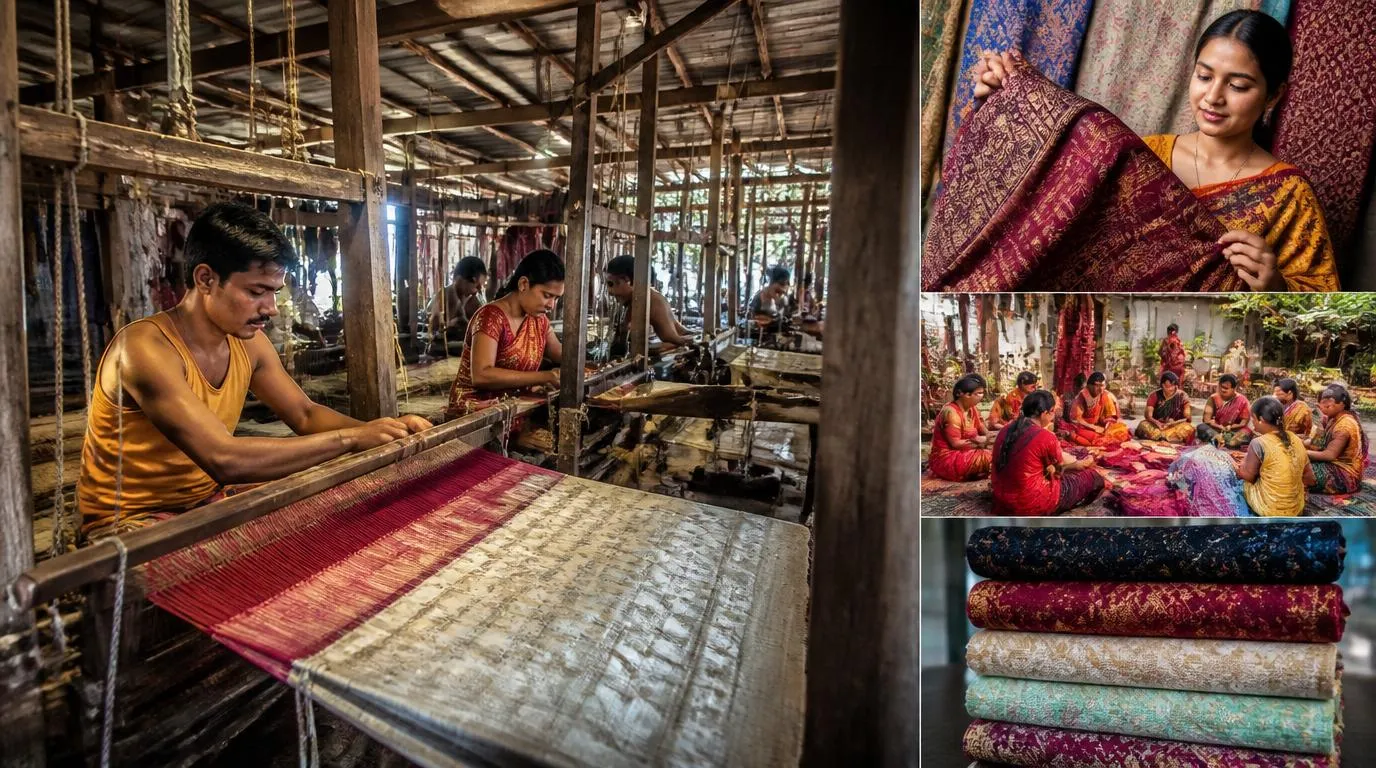
Image Credit: AI Generated
After the partition of India in 1947, and especially after Bangladesh’s independence in 1971, there was renewed interest in preserving Jamdani as a national heritage. The new nation needed symbols of its identity, and Jamdani – with its deep roots in the soil of Bengal – was a natural choice.
In the 1970s and 1980s, the government and various NGOs began programs to support and revive Jamdani weaving. The Bangladesh Handloom Board was established to provide training, raw materials, and marketing support to weavers. Weaving centers were set up in Rupganj, Sonargaon, and Narayanganj – the traditional heartland of Jamdani.
The 1990s and 2000s saw Jamdani become a fashion statement – not just in Bangladesh but also among the Bangladeshi diaspora around the world. Designers began incorporating Jamdani into modern fashion, creating fusion wear that appealed to younger generations.
UNESCO Recognition – A Global Honor
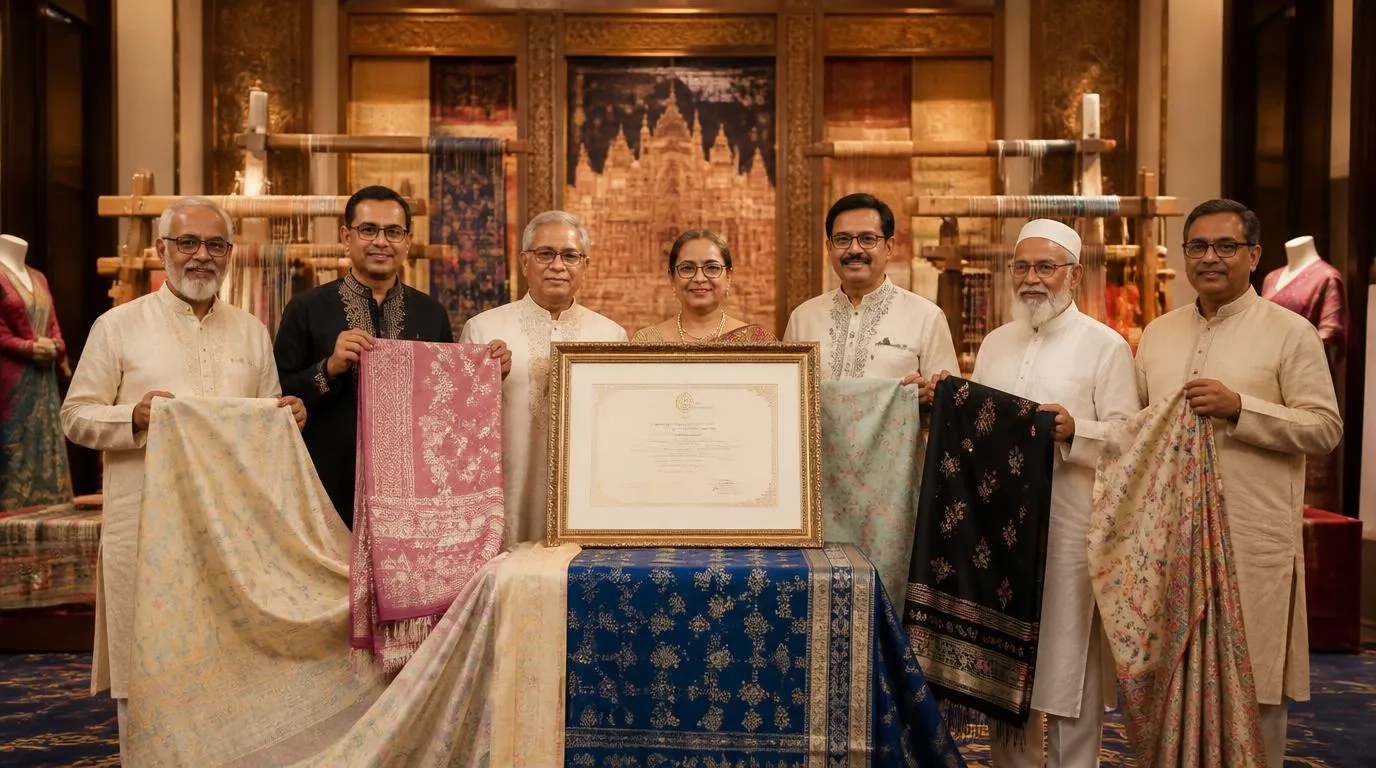
Image Credit: AI Generated
In 2013, Jamdani weaving achieved global recognition when UNESCO inscribed it on the Representative List of the Intangible Cultural Heritage of Humanity. This was not just an honor for Bangladesh, but a recognition of the skill and artistry of generations of weavers who have kept this tradition alive.
The UNESCO citation highlighted the intricacy of the craft – the fact that Jamdani is woven on pit looms using a method that has remained unchanged for centuries. The recognition also acknowledged the community of weavers in Dhaka, particularly in Rupganj and Sonargaon, who continue this tradition.
This recognition brought renewed attention to the craft. It led to increased funding for preservation, helped weavers gain better recognition and prices for their work, and brought Jamdani to a global audience.
Jamdani Today – Tradition Meets Modernity
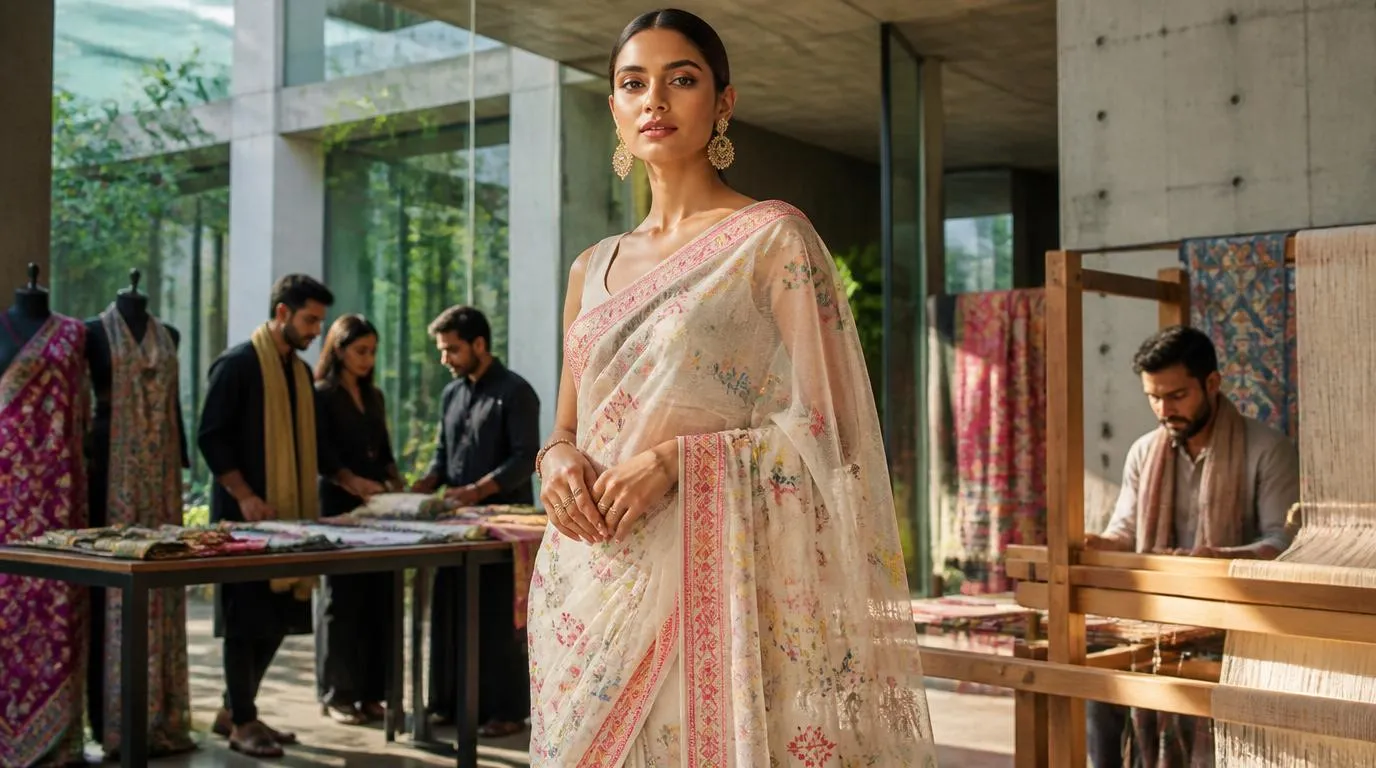
Image Credit: AI Generated
Today, Jamdani is more vibrant than ever. The craft has adapted to the 21st century while staying true to its roots. Weavers are using social media to sell directly to customers, designers are creating contemporary Jamdani pieces, and the government has taken steps to protect the craft through Geographical Indication (GI) status.
- Innovative designs: While traditional floral and butidar motifs remain popular, contemporary weavers are experimenting with geometric patterns, abstract designs, and even calligraphy-inspired motifs.
- Fusion fashion: Jamdani fabric is now used not only for sarees but also for kurtas, dupattas, lehengas, and even Western-style dresses and jackets.
- Online marketplaces: Platforms like Amazon and specialized handloom websites have made Jamdani accessible to buyers worldwide. Customers can now order authentic Jamdani sarees online and have them delivered to their doorstep.
- Weaver empowerment: Organizations like BRAC, the Bangladesh Handloom Board, and various NGOs are working to improve the lives of weavers, ensuring they get fair prices for their work and access to healthcare and education.
- Export growth: Bangladeshi Jamdani is now exported to countries around the world – from India and Sri Lanka to the United States and Europe – and has become a significant contributor to Bangladesh’s textile exports.
However, challenges remain. The number of skilled weavers is declining – younger generations are often hesitant to take up the craft due to low wages and long hours. Machine-made imitations flood the market, confusing consumers and undercutting authentic weavers. There’s also the risk of the craft becoming too commercialized, losing its soul in the rush to meet market demand.
The future of Jamdani: It depends on all of us. By choosing authentic handloom Jamdani, paying a fair price, and appreciating the skill of our weavers, we can ensure that this beautiful tradition continues for generations to come.
Jamdani History at a Glance – Timeline
Image Credit: AI Generated
- 3rd century BCE – Jamdani weaving originates in ancient Bengal, with references to fine cotton muslin in Roman and Greek texts.
- Mughal era, 16th–18th centuries – Jamdani flourishes under imperial patronage.
- 17th–18th centuries – Dhaka becomes the world center of muslin production, frequently referred to as “Baft-Hawa” (woven air).
- 18th–19th centuries – British colonial policies lead to a sharp decline in the craft.
- 1947 – Partition of India disrupts traditional weaving centers and their supply chains.
- 1971 – Independence of Bangladesh revives interest in Jamdani as a symbol of national heritage and cultural pride.
- 2013 – UNESCO inscribes Jamdani weaving onto the Representative List of the Intangible Cultural Heritage of Humanity.
- Today – Jamdani blends tradition and modern design, supported by weavers, designers, and global buyers.
From ancient muslin to modern fashion – Jamdani’s journey is a testament to the enduring spirit of Bangladeshi craftsmanship and culture.
Explore authentic Jamdani – shop handwoven pieces, compare motifs and colours, and find a saree that fits your style.
Shop Jamdani UNESCO Page
New to Jamdani, or buying your next one? Our Jamdani saree buyer’s guide covers the weave, the thread counts and real US prices in one place.
Jamdani history, your questions answered
What is the origin of Jamdani saree?
Jamdani weaving originated in the Bengal region, with early references dating back to the 3rd century BCE. The art form flourished under Mughal rule (16th–18th centuries), particularly in Dhaka, Sonargaon, and Tangail. The name “Jamdani” is derived from the Persian words “Jam” (flower) and “Dani” (vase), meaning “flower vase”.
What is special about Jamdani?
Jamdani is famous for its extremely fine, lightweight fabric and intricate handwoven motifs. It was once the preferred fabric of Mughal royalty and is prized for its ability to create intricate designs without compromising the fabric’s lightness. Today, it is celebrated for its UNESCO recognition and as a symbol of Bangladeshi cultural heritage.
When was Jamdani added to UNESCO list?
In 2013, UNESCO inscribed “Traditional art of Jamdani weaving” on the Representative List of the Intangible Cultural Heritage of Humanity. This recognition brings global attention to the craft and helps preserve this traditional art form for future generations.
How did Jamdani evolve over time?
Jamdani evolved from simple geometric patterns to intricate floral and figurative motifs under Mughal patronage. During the British period, the craft declined significantly. After Bangladesh’s independence, Jamdani experienced a revival, with modern weavers combining traditional techniques with contemporary designs.
What makes Jamdani weaving unique?
Jamdani is a “figured” weave – the motifs are woven into the fabric using extra weft threads, creating a seamless integration of design and base fabric. Unlike embroidered sarees, the motifs are part of the fabric itself. The weaving is done entirely by hand on pit looms, making each piece a unique work of art.