
 Image credit: Pexels
The history of Bengali sarees is, in large part, the history of Bengal itself. For well over two thousand years, the river delta that is now Bangladesh and the Indian state of West Bengal has grown, spun and woven some of the finest cotton cloth on earth, from the plain handloom sarees of village life to the legendary Dhaka muslin that dressed Mughal emperors and European royalty.
It is a story of brilliance, loss and recovery: ancient cotton traditions, a golden age of royal patronage, beloved regional weaves such as Tangail and Rajshahi silk, a steep decline under colonial rule, and a revival that is still unfolding today. Here is the full arc.
- Ancient Roots: Cotton in the Bengal Delta
- Dhaka Muslin: The Cloth the World Wanted
- The Mughal Golden Age
- Tangail: The People’s Saree Takes Shape
- Rajshahi Silk and the North
- Jamdani: One Famous Chapter
- Decline Under Colonial Rule
- The Drape Itself Changes
- New Threads: Silk, Katan and Changing Tastes
- Revival in the Modern Era
- Frequently Asked Questions
- The Story in Every Drape
Ancient Roots: Cotton in the Bengal Delta
Bengal’s weaving tradition is rooted in its geography. The delta of the Ganges, Brahmaputra and Meghna rivers offered fertile soil, a humid climate ideal for spinning fine yarn, and river routes that carried cloth to distant markets.
Ancient texts already singled the region out. The Arthashastra, the classic Indian treatise on statecraft, names Vanga, Bengal, among the best sources of fine cloth, and accounts by Greek, Arab and Chinese travelers praised the region’s textiles. According to Banglapedia, the national encyclopedia of Bangladesh, draped garments appear in Bengal’s sculpture and literature from very early periods, and the saree gradually evolved from a two-piece dress into the single, unstitched drape known today.
The cotton itself mattered. Around Dhaka grew a native variety called phuti karpas, whose short, fine fibers could be spun into yarn of extraordinary fineness, the raw material behind Bengal’s later fame.
Dhaka Muslin: The Cloth the World Wanted
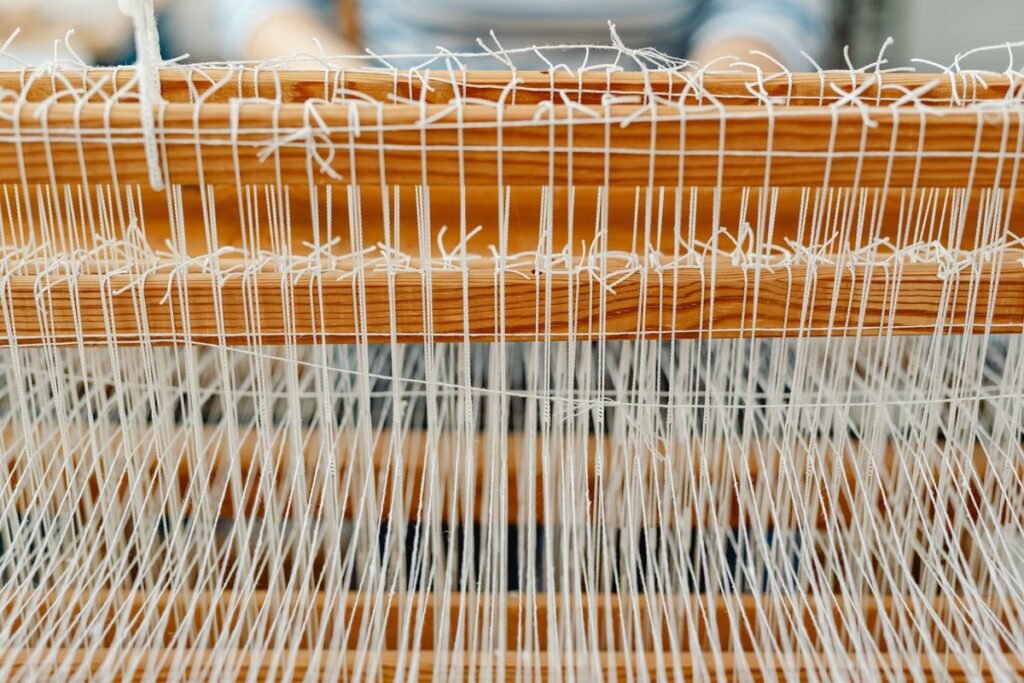
From that cotton came Dhaka muslin, for centuries the most coveted fabric in the world. The finest grades were given poetic names: shabnam, “morning dew”; abrawan, “running water”; and malmal khas, the “king’s muslin” reserved for royalty.
Muslin was so sheer and light that European accounts described whole lengths of it passing through a ring, and it was traded across Asia and into Europe, where it dressed aristocracy and royalty. Dhaka, on the Buriganga River, became the industry’s heart, a wealthy city built substantially on cloth.
Muslin was not a saree fabric alone; it was made into garments, sashes and turbans. But it established the skills, hand-spinning, fine counting of yarn, patient loom work, from which Bengal’s saree traditions grew.
The Mughal Golden Age
Under Mughal rule in the 16th to 18th centuries, Bengal’s weaving reached its peak. Imperial courts prized fine cloth, and emperors and nobles patronized Dhaka’s weavers directly, commissioning figured muslins for court dress.
European trading companies, Dutch, French and English, set up factories in Bengal largely to buy its textiles. Weaving villages flourished around Dhaka and across the delta, and saree weaving settled into the pattern it kept for centuries: family workshops, skills passed from parents to children, and designs carried in memory rather than on paper.
Tangail: The People’s Saree Takes Shape
Not every Bengali saree was a luxury. Tangail, northwest of Dhaka, became home to a tradition of crisp, finely woven cotton sarees with distinctive woven borders, durable, breathable cloth suited to Bengal’s heat and to everyday wear.
Tangail’s weavers, many from the Basak community, refined the local tant (handloom cotton) style: a firm body, a contrasting border and small woven motifs. After the Partition of 1947, many Tangail weaving families moved across the new border to West Bengal, where their craft took root in towns such as Phulia and Shantipur in Nadia district, which is why Tangail-style weaving is now practiced on both sides of the border.
Rajshahi Silk and the North
Bengal’s story is not only cotton. In the northwest, around Rajshahi, sericulture, silkworm rearing and silk reeling, developed into a second great tradition. Rajshahi silk is known for its soft texture and natural sheen, and the region’s mulberry farms and reeling centers supplied silk yarn to weavers for generations.
Elsewhere, Murshidabad became known for silk sarees and the narrative Baluchari weave, whose end panels depict scenes from epics and court life. Together these centers gave Bengal a full spectrum: everyday cotton, festive silk, and ceremonial muslin. You can see how these regional styles compare in our guide to traditional Bangladeshi saree types.
Jamdani: One Famous Chapter
The most celebrated Bengali weave of all grew directly out of the muslin tradition. Jamdani, its name from the Persian jam (flower) and dani (vase), is a figured muslin in which floral and geometric motifs are woven into sheer cloth by hand, using a supplementary weft technique.
Jamdani flourished under the same Mughal patronage as plain muslin and survived long after it. Because it deserves a telling of its own, we cover it separately in our history of Jamdani sarees, from its Dhaka origins to its UNESCO recognition in 2013.
Decline Under Colonial Rule
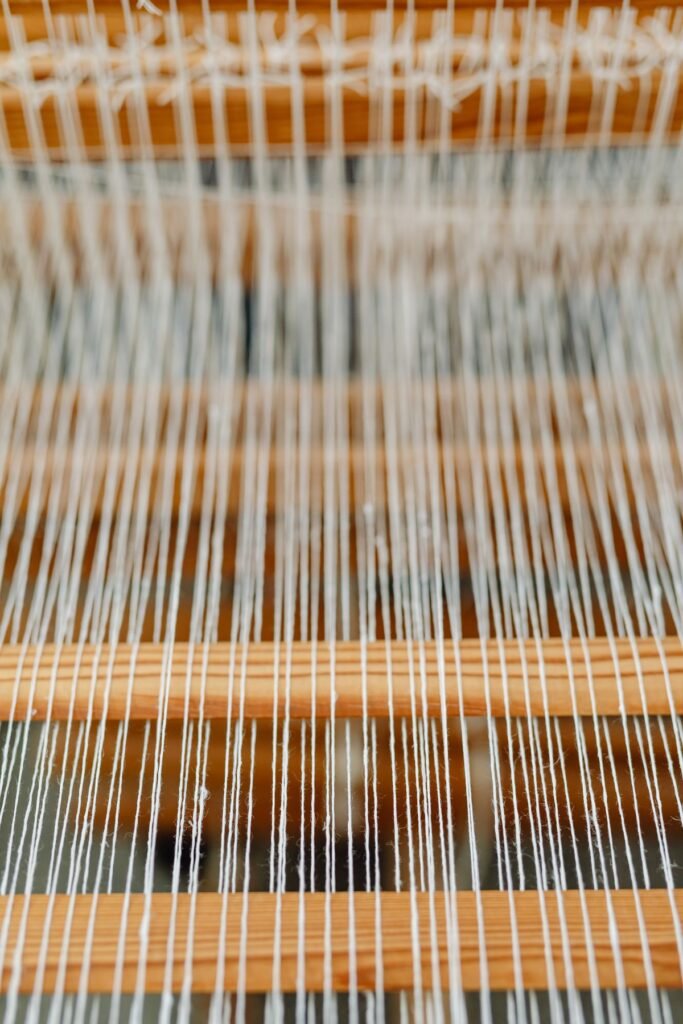
The 18th and 19th centuries brought disaster. As Britain industrialized, machine-made cloth from Manchester mills flooded into India at prices handloom weavers could not match. Colonial trade policy favored those imports, court patronage disappeared with Mughal power, and the East India Company closed its Dhaka factories in 1819.
The human cost was severe. Weaving families who had practiced their craft for generations were impoverished, Dhaka shrank dramatically, and the finest muslin weaving, dependent on phuti karpas cotton that fell out of cultivation, effectively died out by the end of the 19th century. Jamdani and the sturdier tant weaves survived, but in much reduced circumstances.
The Drape Itself Changes
The way Bengali women wore the saree also evolved. The traditional Bengali drape, known as aatpoure, wrapped the cloth without a blouse or petticoat, with the end piece, the anchal, often drawn over the head before elders.
In the 19th century, Jnanadanandini Devi of the Tagore family popularized a modern style: saree worn with a stitched blouse and petticoat, with neat front pleats. At first criticized as foreign, it became the standard drape across Bengal and, in adapted form, across South Asia.
In the early 20th century, the saree took on political meaning too. During the Swadeshi movement, wearing homespun and handloom cloth became an act of resistance to British imports, a point of pride that reconnected Bengali identity with its own looms.
New Threads: Silk, Katan and Changing Tastes
The Bengali wardrobe kept absorbing new influences even as the old industries struggled. In the 1940s, weavers who migrated from Uttar Pradesh in northern India established production of Katan silk and Benarasi-style brocade sarees in Bengal, and these richly patterned silks became part of Bengali women’s festive and evening wear, a place they still hold at weddings today.
Through the 20th century, mill-made printed cottons replaced handloom cloth for much everyday wear, and later, georgette, chiffon and synthetics widened the range further. Yet Bengal also produced new traditions of its own: in the early 1980s, the nakshi kantha saree, decorated with the region’s traditional running-stitch embroidery, first on silk and then on cotton, became a fashionable wear, carrying a folk craft onto the saree’s surface.
The pattern of the century, in other words, was not simple disappearance. Machine cloth took the everyday market, but handloom weaving held the occasions that mattered most, festivals, weddings and ceremonies, and Bengali taste kept finding new ways to renew its own heritage.
Revival in the Modern Era
After 1947, and again after Bangladesh’s independence in 1971, governments and craft organizations worked to rebuild the handloom sector. A dedicated Jamdani village and research center was established near Dhaka to support weavers, and designers began bringing traditional motifs to contemporary tastes.
Recognition followed. UNESCO inscribed the traditional art of Jamdani weaving on its Representative List of the Intangible Cultural Heritage of Humanity in 2013, and Tangail saree weaving received the same honor in 2025. Bangladesh has also protected its signature textiles with Geographical Indication status, Jamdani first, in 2016, followed by Rajshahi silk and Dhakai muslin.
Perhaps most remarkably, a state-backed project begun in the 2010s tracked down phuti karpas cotton, re-established its cultivation and retrained spinners and weavers, so that genuine Dhaka muslin, lost for over a century, is being woven again, in small quantities, today.
Frequently Asked Questions
Q: What is the oldest saree tradition in Bengal?
Fine cotton weaving around Dhaka is Bengal’s oldest documented saree tradition. Ancient texts such as the Arthashastra already praised cloth from Vanga (Bengal), and Dhaka’s muslin industry, the ancestor of both plain and figured Bengali sarees, was famous more than two thousand years ago.
Q: Why was Dhaka muslin so famous?
Dhaka muslin was spun from phuti karpas, a native cotton with exceptionally fine fibers, and woven by hand in the delta’s humid air. The result was cloth of unmatched lightness and transparency, prized by Mughal emperors, traded across Asia and worn by European royalty.
Q: What is the difference between a Tangail and a Jamdani saree?
A Tangail saree is a crisp, everyday handloom cotton with a woven border and small motifs, made for regular wear in a hot climate. A Jamdani is a fine, sheer muslin in which elaborate motifs are woven in by hand with a supplementary weft, a slower, more labor-intensive and more ceremonial textile.
Q: Why did Bengali handloom weaving decline?
It declined in the 18th and 19th centuries as cheap, machine-made British cloth flooded the Indian market under colonial trade policies, Mughal court patronage vanished, and the East India Company withdrew from Dhaka. The finest muslin weaving disappeared entirely; hardier traditions such as tant and Jamdani survived at reduced scale.
Q: Are traditional Bengali sarees still made today?
Yes. Tangail, Jamdani, Rajshahi silk and other handloom sarees are still woven in Bangladesh and West Bengal, supported by craft organizations, designers and international recognition such as UNESCO listings and GI protection. Even Dhaka muslin is being woven again under a government revival project.
The Story in Every Drape
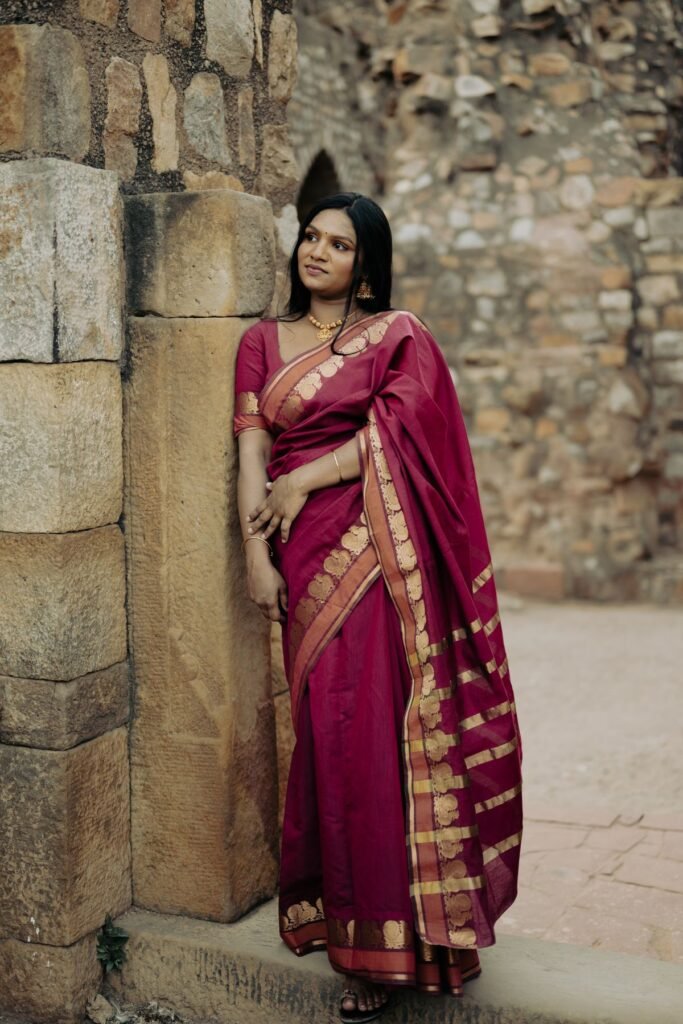
From ancient delta cotton to the looms of Tangail and the silk farms of Rajshahi, the history of Bengali sarees is a record of skill surviving against the odds. When you choose a handwoven Bengali saree today, you are wearing a craft that emperors prized, colonizers nearly destroyed, and generations of weaving families refused to let go.