
 Image credit: Pexels
A Banarasi saree is one of the most imitated textiles in the world. Powerloom copies and synthetic look-alikes are sold under the same name as the handwoven silk originals, often at prices that make the real thing seem overpriced. Learning how to identify an original Banarasi saree is therefore a practical skill. The good news: genuine Banarasi silk leaves evidence everywhere, in its reverse side, its zari, its feel and its certifications. This guide explains what “original” actually means, then walks through seven checks, ordered from the simplest visual inspection to a last-resort test to use only with a seller’s permission.
- What “Original Banarasi” Actually Means
- Check 1: Turn It Over, the Reverse-Side Test
- Check 2: Know the Weave, Kadhua vs. Cutwork
- Check 3: Examine the Zari
- Check 4: Feel the Silk
- Check 5: Look for the Hand of the Weaver
- Check 6: Verify the Marks, GI Tag, Silk Mark and Handloom Mark
- Check 7: The Burn Test, a Last Resort
- Questions to Ask the Seller
- Authentic vs. Imitation at a Glance
- Frequently Asked Questions
- Conclusion
What “Original Banarasi” Actually Means
An original Banarasi saree meets four conditions at once. It is woven in the Banaras (Varanasi) region of Uttar Pradesh. It is woven by hand, on a handloom. Its base is real silk. And its patterns are brocade, motifs woven into the fabric with extra weft threads, traditionally in zari, not printed or embroidered on afterward.
The first condition has legal force. In 2009, weaver associations in Uttar Pradesh secured Geographical Indication (GI) rights for “Banaras Brocades and Sarees.” As Wikipedia’s overview of the Banarasi sari records, no saree or brocade made outside the six identified districts, Varanasi, Mirzapur, Chandauli, Bhadohi, Jaunpur and Azamgarh, can legally be sold under the Banaras name. The classic motifs are part of the identity too: kalga (paisley) and bel (vine) patterns, the upright-leaf jhallar on the border, jal (net-like) patterning and mina (meenakari) work.
Why so many imitations? The handloom industry has spent years losing ground to mechanised units producing Banarasi-style sarees faster and cheaper, and to cheaper synthetic alternatives. A genuine piece takes from 15 days to a month on the loom, and sometimes up to six months. The checks below are designed to detect exactly that gap. (Our comparison of Jamdani vs Banarasi sarees shows how differently Bengal’s great handloom tradition builds its patterns.)
Check 1: Turn It Over, the Reverse-Side Test
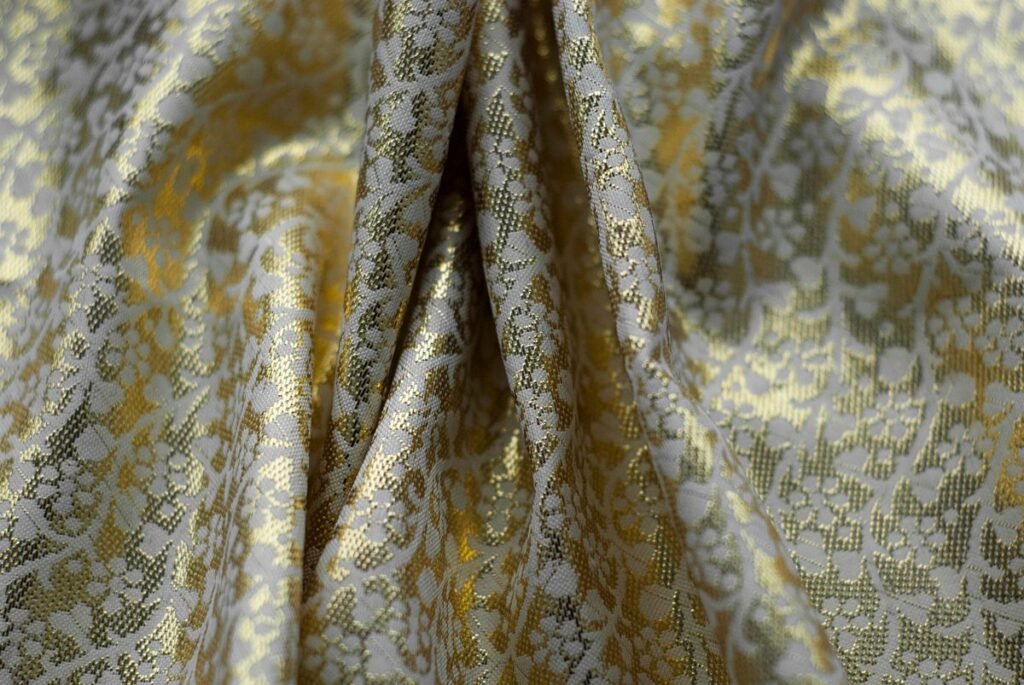
This is the single most reliable quick check, and the one experts reach for first. In a genuine Banarasi, the motif is woven through the fabric, so the reverse side mirrors the front. Turn the saree over and look at the back of a motif:
- Handloom original: the pattern is clearly visible on the reverse. You will see floats, short lengths of the extra weft thread, and the small knots, loose ends and slight unevenness of handwork.
- Printed imitation: the design sits on the surface only. The back looks faded, blurry or almost blank.
- Powerloom copy: the reverse tends to show long, messy floats or continuous thread runs, because the machine cannot mimic the weaver’s manual tucking, or it looks suspiciously perfect and uniform.
Exactly what the reverse should look like depends on the weaving technique, which is the next check.
Check 2: Know the Weave, Kadhua vs. Cutwork
Two genuine handloom techniques produce most Banarasi brocade, and they leave different evidence on the back. Confusing them leads buyers to reject real sarees, or overpay for simpler ones.
| Feature | Kadhua (Kadwa) | Cutwork (Phekwa) |
|---|---|---|
| How motifs are made | Each motif woven separately, by hand, with small bobbins | Pattern weft travels across the fabric width, forming motifs together |
| Reverse side | Very clean; no long floats connecting motifs; nothing needs cutting | Floats on the reverse, neatly hand-trimmed (“cut”) after weaving |
| Motif character | Raised, embossed, sharply defined | Flatter, lighter, more fluid |
| Time and cost | Slowest and most labor-intensive; premium end | Faster to weave; lighter saree; lower cost |
Kadhua is the most demanding technique, each motif is built individually into the cloth, which is why a kadhua reverse is so clean, and why the technique cannot be replicated on a powerloom. Cutwork is a subset of the phekwa style: the supplementary weft runs from selvage to selvage, leaving floats behind the motifs that are clipped away by hand once weaving is done. The essential point for buyers: a cutwork Banarasi is not a fake. It is a genuine, faster handloom technique. Know which technique you are being offered: kadhua justifiably costs more, and a seller describing cutwork as kadhua is a warning sign in itself.
Check 3: Examine the Zari
The metallic thread is where much of a Banarasi’s value, and much of the fakery, lives. Three kinds of zari appear in the market:
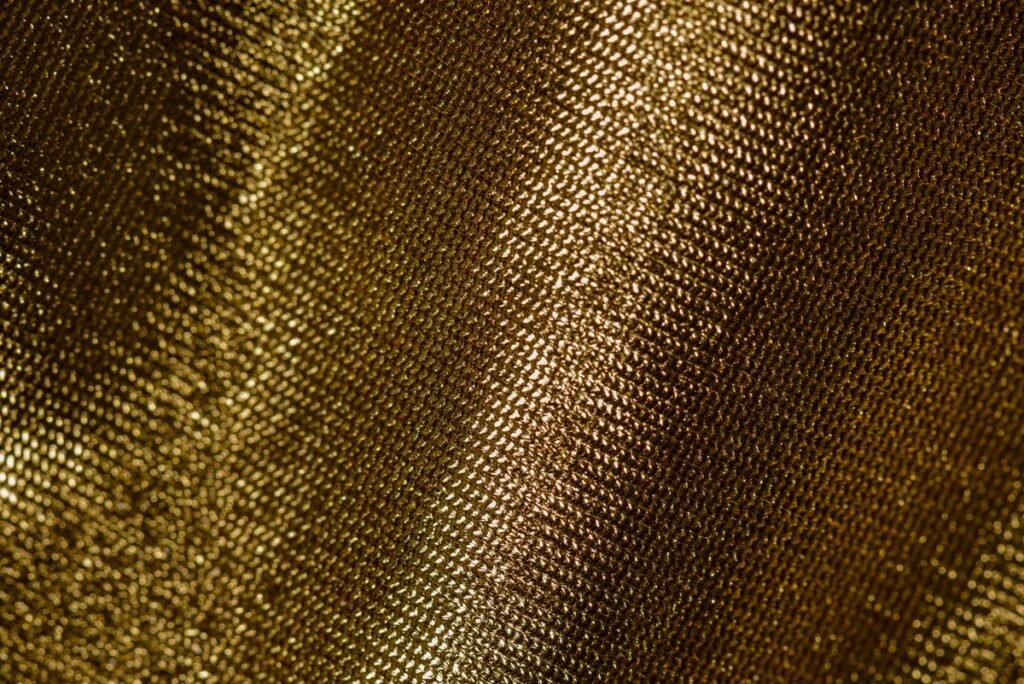
- Real zari: a silk core thread wrapped with silver wire and plated with gold. Heavy, warm-toned and costly.
- Tested zari: a copper core wrapped with silver-plated wire. Slightly stiffer than real zari, durable, and acceptable in genuine Banarasi sarees when disclosed.
- Imitation zari: metallised plastic or lacquered thread. This is what you find in art-silk copies.
What you can check in a shop: genuine zari is woven in and sits slightly raised from the surface, with a warm, deep tone. Rub it gently between thumb and forefinger, real and tested zari do not flake or peel, while imitation coatings may flake, look flat and printed, or tarnish quickly. Ask the seller whether the zari is real or tested; treat a vague answer as information in itself.
Check 4: Feel the Silk
Pure mulberry silk has a feel that synthetics imitate poorly. Run these sense checks:
- Touch and temperature: real silk feels cool at first contact, then warms under your palm as you rub it. Synthetics tend to stay cold or feel slippery and rubbery.
- Surface: genuine silk shows a natural slub, tiny, irregular texture in the yarn, and a soft sheen. A glassy, plasticky shine points to synthetic fiber.
- Drape and weight: a real Banarasi has substantial, even weight from its silk and metal zari and drapes fluidly. Imitations are often oddly light, or stiffly heavy from starch used to fake the body of silk.
No single sense check is conclusive, a good art-silk can pass one of them, but a saree that fails several is telling you something.
Check 5: Look for the Hand of the Weaver
Handloom weaving is human work, and it shows. On an original, motifs may vary almost imperceptibly in size or spacing, the weave may have minute irregularities, and small knots appear where threads were joined. This is evidence for authenticity, not against it. The warning sign is the opposite: absolute, machine-like perfection, with every motif identical, usually indicates powerloom production. Confirm, too, that the motifs are woven, not surface decoration, classic Banarasi designs such as kalga, bel, jhallar and jaal should be part of the fabric’s structure, visible from both sides, never a print.
Check 6: Verify the Marks, GI Tag, Silk Mark and Handloom Mark
India operates three separate certifications that are often blurred into one vague claim of “certified.” They verify different things:
| Mark | What it certifies | What to check |
|---|---|---|
| GI Tag | Geographic origin, woven in the defined Banaras region by traditional methods | A tag with hologram and unique serial number from a registered proprietor body; ask for the seller’s GI registration reference |
| Silk Mark | Fiber purity, the fabric is genuine natural silk, not art silk or a polyester blend | The Silk Mark Organisation of India hologram tag; the unique number can be checked against the issuing body |
| Handloom Mark | Method, woven on a hand-operated loom, not a powerloom | The mark’s unique registration/QR details, verifiable through the handloom authorities |
Use them in combination: the GI tag speaks to origin, the Silk Mark to what the fabric is, and the Handloom Mark to how it was made. A Silk Mark’s presence is genuinely reassuring; its absence is not, by itself, proof of a fake, since not every genuine piece is tagged. But a seller who can explain which marks a saree carries, and show them, is demonstrating the transparency you want.
Check 7: The Burn Test, a Last Resort
You will see the burn test recommended everywhere, so here it is, with the caution it deserves. This test damages the fabric, so treat it strictly as a last resort: only on a single loose thread from the fringe or edge, and only with the seller’s explicit permission.
If it is done, the results are distinctive. Pure silk curls away from the flame, smells like burning hair, and leaves a powdery black ash that crumbles between the fingers. Synthetic fibers behave oppositely: they melt into a hard plastic bead and give off a chemical smell. Zari behaves according to its core, a silk-core real zari leaves the metal residue behind as the core burns to powder, while tested zari’s copper thread remains without forming a plastic bead. If a shopkeeper refuses a fringe-thread test on an expensive “pure silk” claim, that refusal, combined with missing marks, is worth weighing.
Questions to Ask the Seller
The checks above work even better alongside direct questions. A knowledgeable, honest seller answers them without hesitation:
- Is this kadhua or cutwork weave?
- Is the zari real or tested, and is the base pure (katan) silk?
- Does it carry a Silk Mark, GI tag or Handloom Mark I can verify?
- Was it woven in the Banaras region, and on a handloom?
- What is your return policy if the saree is not as described?
Finally, apply a price sanity check. A saree that represents weeks of two-person handloom work in pure silk and metal-wrapped zari cannot be sold for the price of a machine-made synthetic, if the deal implies it can, the saree is almost certainly art silk or powerloom. The same discipline applies when buying any heritage handloom online: our guide on how to choose the perfect Jamdani saree walks through the equivalent questions for Bengal’s handwoven tradition.
Authentic vs. Imitation at a Glance
| Signal | Original Banarasi | Imitation |
|---|---|---|
| Reverse side | Motif mirrors the front; short floats or a clean kadhua back; small knots | Faded/blurry print back, or long messy floats and machine uniformity |
| Zari | Woven in, raised, warm-toned; does not flake | Flat, printed-looking; flakes or tarnishes fast |
| Silk | Cool touch that warms, natural slub, soft sheen | Plasticky shine, slippery or rubbery feel |
| Weave character | Slight human irregularities | Perfectly uniform, mechanically exact |
| Certification | GI tag, Silk Mark and/or Handloom Mark, explainable by the seller | None, or vague “certified” claims and stickers |
Frequently Asked Questions
Q: What is the easiest way to identify an original Banarasi saree?
Turn it over. In a genuine handwoven Banarasi, the brocade motif is woven through the fabric, so the reverse mirrors the front, clean and float-free in kadhua work, or with short, hand-trimmed floats in cutwork. A printed imitation looks faded on the back, and a powerloom copy shows long messy floats or mechanical uniformity. Combine it with the Silk Mark and GI tag checks.
Q: Is a cutwork Banarasi saree genuine?
Yes. Cutwork is a legitimate handloom technique in which the pattern weft travels across the fabric and the loose floats on the reverse are trimmed by hand after weaving. It is faster and lighter than kadhua, in which every motif is woven separately, so it costs less, but it is a real Banarasi technique, not a fake. What matters is honest description by the seller.
Q: Does every original Banarasi saree carry a Silk Mark?
No. The Silk Mark certifies that a fabric is pure natural silk, and its hologram tag is strong reassurance when present. But not every genuine handloom piece passes through the tagging system, so an absent Silk Mark is not proof of fakery. Judge it together with the GI tag, the reverse-side weave, the zari and the seller’s answers.
Q: Can a powerloom saree look like a handloom Banarasi?
At a glance, yes. On inspection, differences appear: powerloom pieces show long, messy or mechanically uniform floats on the reverse, perfectly identical motifs without any human irregularity, and often imitation zari that flakes. Kadhua weaving, in particular, cannot be replicated on a powerloom, so a clean, float-free reverse is strong evidence of handwork.
Q: Is the burn test a safe way to check a Banarasi saree before buying?
Only in a very limited form. The test destroys the thread it uses, so it should be a last resort, performed only on a single loose fringe thread and only with the seller’s permission. Pure silk smells like burning hair and crumbles to powdery ash; synthetics melt into a hard bead with a chemical smell. The reverse-side, zari and silk checks and the certification marks usually give you enough evidence without burning anything.
Conclusion
Identifying an original Banarasi saree is a matter of reading the evidence the saree itself provides. Start with the definition, Banaras region, handloom, pure silk, woven brocade, then work through the checks: a reverse side that mirrors the motifs, a weave technique you can name, zari that is woven in and does not flake, silk with a natural slub and soft sheen, small human irregularities, and verifiable certifications. Reserve the burn test for a permitted fringe thread, ask direct questions, and let the price reflect the weeks of handwork a real Banarasi contains. Do that, and the saree you bring home will be the genuine article.