
As an Amazon Associate, SareeBD may earn from qualifying purchases. This means we may receive a small commission when you purchase through links on our website, at no additional cost to you.
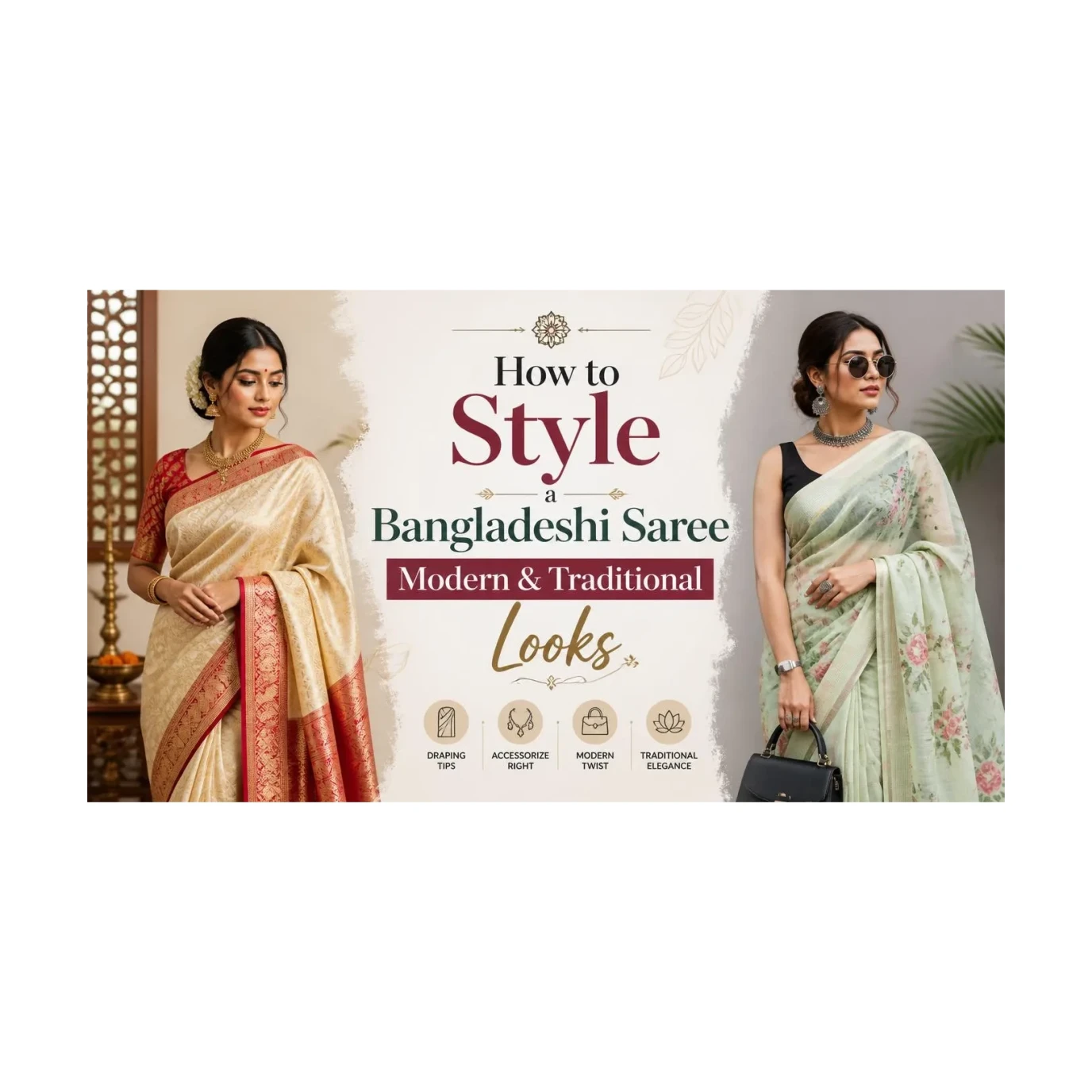 Image credit: Amazon
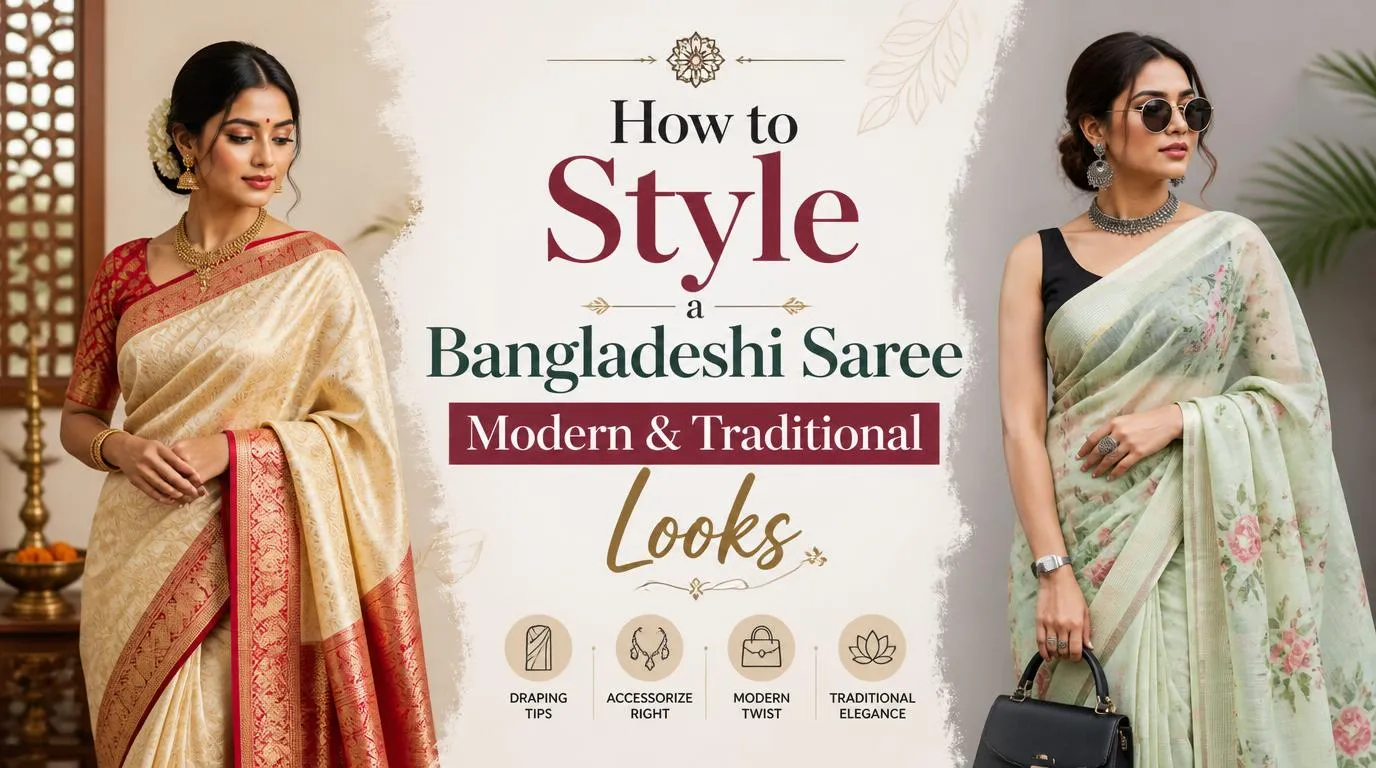 Image Credit: AI Generated
- Introduction
- How to Style Bangladeshi Saree: Draping Styles
- Blouse Pairing – The Perfect Match
- Jewelry – Elevate the Elegance
- Footwear – Comfort Meets Style
- Accessories – The Finishing Touches
- Occasion-Based Styling
- Seasonal Styling Tips
- Complete the Look: The Three Pieces That Finish the Outfit
- Quick Style Checklist
- Popular Posts
- FAQs About Saree styling
Introduction
A Bangladeshi saree is a work of art – but even the most beautiful saree can fall flat if it’s not styled correctly. Learning how to style a Bangladeshi saree starts here: the right drape, the perfect blouse, the right jewelry – each detail matters.
I’ve spent years experimenting with different draping styles, blouse combinations, and accessory pairings. In this guide, I’ll share what I’ve learned – from classic Bengali drapes to modern fusion looks.
How to Style Bangladeshi Saree: Draping Styles
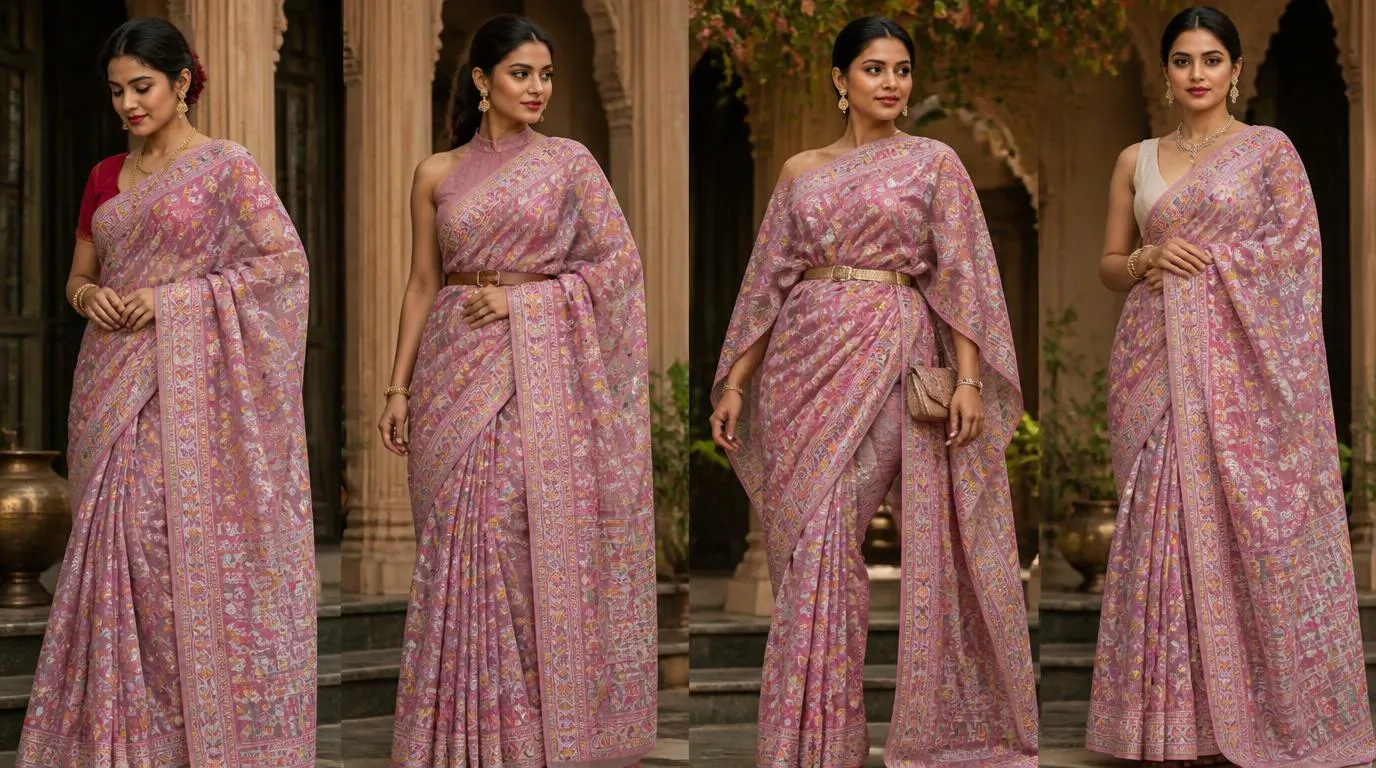
Image Credit: AI Generated
The way you drape your saree completely changes its look and feel. Here are the most popular styles:
- Nivi Style (Classic): This is the most common draping style – tuck the saree at the waist, make neat pleats in the front, and drape the pallu over your left shoulder. It’s elegant, comfortable, and works for almost every occasion.
- Bengali Style (Traditional): The pallu is draped across the chest and then over both shoulders, with the ends hanging loose in the front. This style is perfect for traditional occasions and makes the saree look regal.
- Dhoti Style (Modern Twist): The saree is draped like a dhoti or lungi, with pleats tucked at the back instead of the front. This style is perfect for a modern, edgy look and works well for parties.
- Mermaid Style (Glamorous): The saree is draped tightly around the hips and legs, with the pallu flowing like a train. This style is glamorous and works well for evening events and receptions.
- Seedha Pallu (North Indian): The pallu is draped from the right shoulder, creating a different silhouette. This style is less common in Bangladesh but is popular for a more formal, North Indian look.
Pro tip: Practice draping a day before the event. Use safety pins discreetly to secure pleats and the pallu – they make a world of difference.
2. Blouse Pairing – The Perfect Match
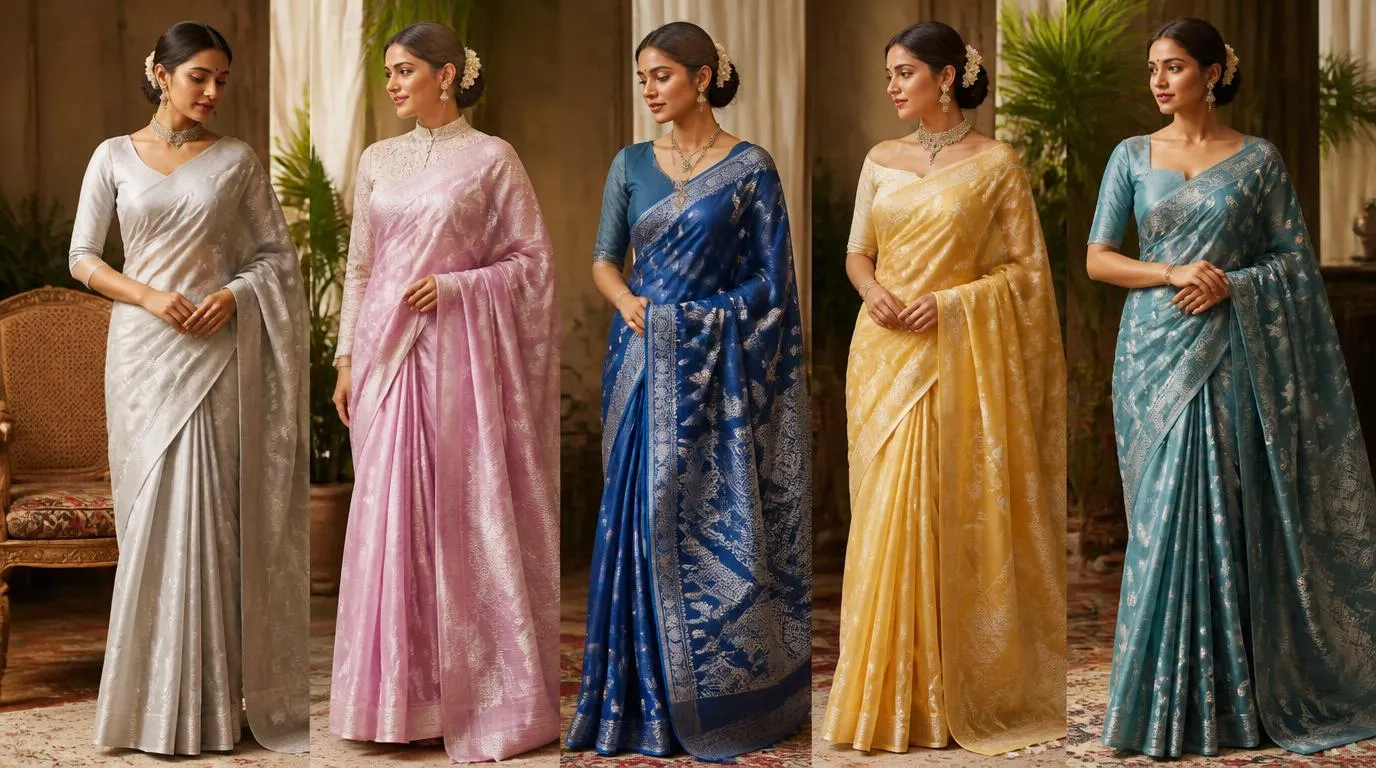
Image Credit: AI Generated
The blouse is the second most visible part of your saree ensemble. Choose wisely:
- Fabric match: Pair silk sarees with silk or brocade blouses. Cotton sarees work well with cotton or cotton-silk blouses. The fabric should complement the saree’s drape.
- Color coordination: A contrasting blouse always creates a striking look – deep red with a green saree, gold with maroon, or black with a bright saree. For a more subtle look, match the blouse to the saree’s border or pallu color.
- Neckline options:
- Boat neck: Elegant and elongates the shoulders – great for silk sarees.
- Deep V: Modern and sexy – works well with light fabrics.
- High neck: Traditional and modest – perfect for conservative events.
- Sweetheart: Romantic and flattering – ideal for weddings.
- Collared: Contemporary and chic – a fusion favorite.
- Sleeve length: Sleeveless and short sleeves are modern and stylish. Three-quarter sleeves are traditional and elegant – perfect for formal events.
3. Jewelry – Elevate the Elegance
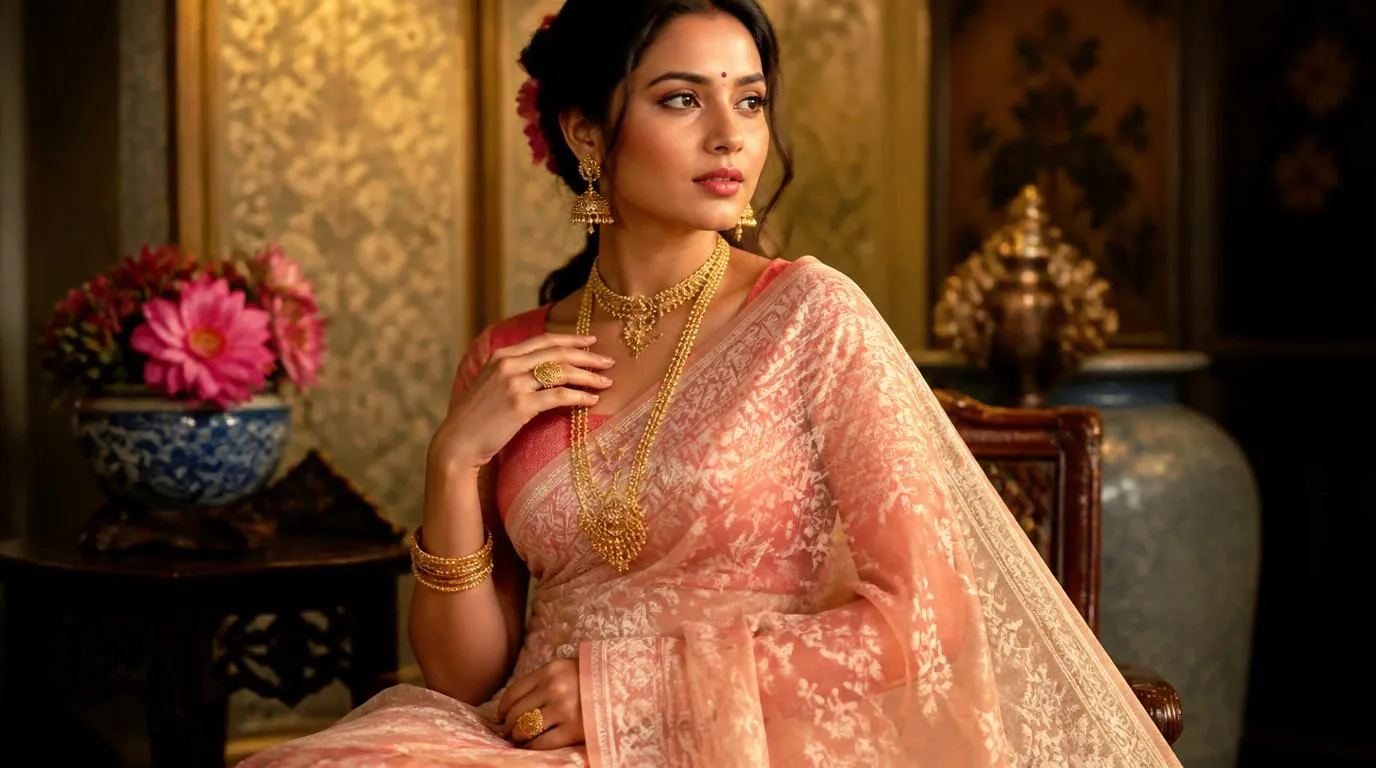
Image Credit: AI Generated
Jewelry can make or break your saree look. Here’s how to choose:
- Gold jewelry: The classic choice. Gold complements the zari in silk sarees and adds a regal touch. For weddings and formal events, go for a full gold set – necklace, earrings, and bangles.
- Polki and Kundan: These are incredibly popular for weddings. They have a vintage, royal feel that pairs beautifully with silk and Benarasi sarees.
- Silver and oxidized jewelry: Perfect for cotton Jamdani, handloom sarees, and casual outings. It gives a bohemian, earthy vibe that works well with lightweight fabrics.
- Pearls: Elegant and understated. Pearl necklaces and earrings work with almost every saree – from light cotton to heavy silk.
- Maang Tikka (forehead ornament): Essential for wedding and festive looks. Choose one that matches your necklace and earrings.
- Bangles and kada: Stack of glass bangles in matching colors is a classic Bengali look. For heavy silk, gold or gold-plated bangles work beautifully.
Golden rule: If your saree is heavy (intricate zari, dense motifs), keep jewelry minimal – let the saree shine. If your saree is simple (plain cotton, light handloom), go bold with your jewelry.
4. Footwear – Comfort Meets Style
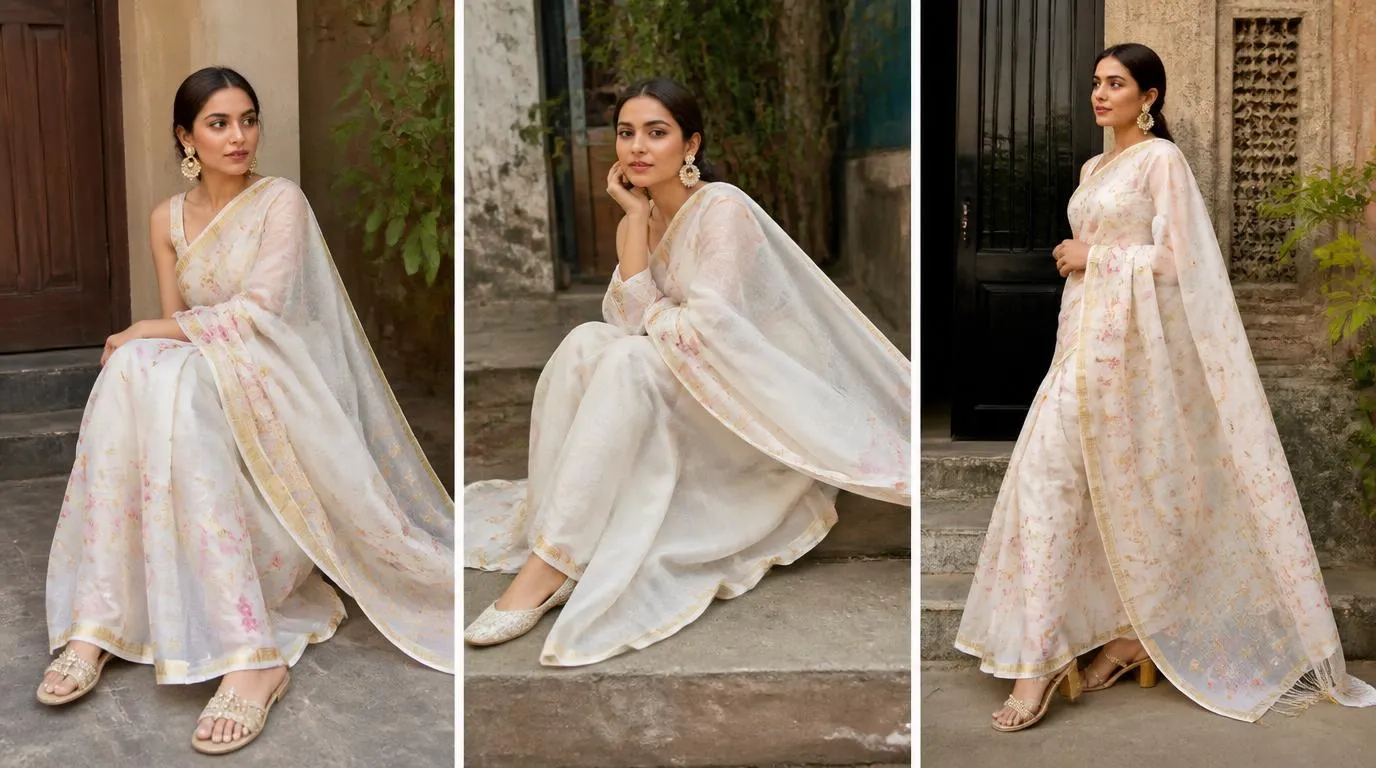
Image Credit: AI Generated
Comfortable feet make styling a saree easy. Choose footwear that complements your look:
- Heels: Block heels and stilettos are perfect for weddings and formal events. They elongate the legs and make the saree drape beautifully.
- Kolhapuri chappals: The classic traditional choice. Kolhapuri chappals pair beautifully with cotton sarees and give an authentic, earthy look.
- Juttis/Mojaris: Perfect for festive occasions. Their intricate embroidery complements silk and Jamdani sarees.
- Flats/Ballerinas: Ideal for office or casual outings. If you are not comfortable in heels, a stylish pair of flats works just as well.
Pro tip: Wear your footwear while draping – the saree’s length depends on your heel height.
5. Accessories – The Finishing Touches
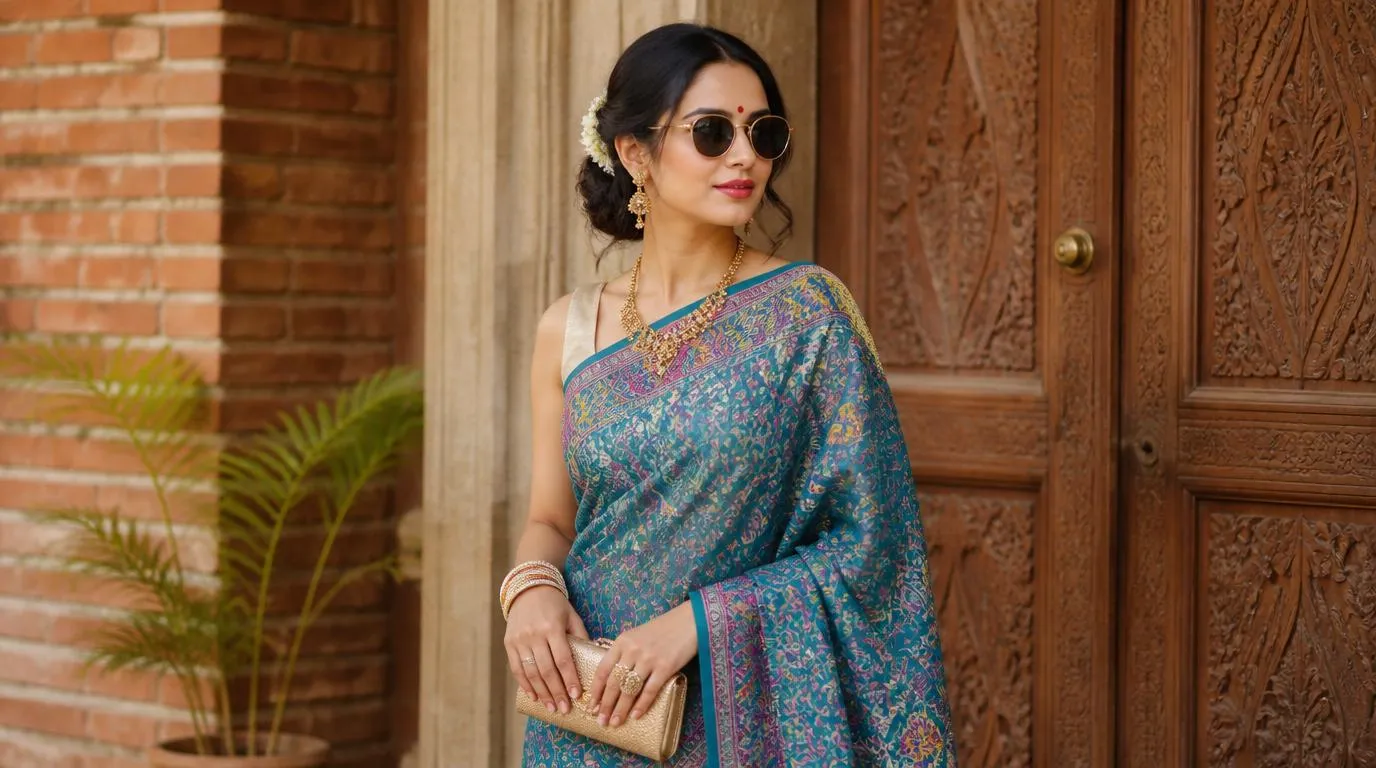
Image Credit: AI Generated
Small details make a big difference:
- Clutch or potli: A clutch or potli bag in matching colour is essential for evening events. For weddings, a potli bag is the traditional choice.
- Waist belt/Kamarbandh: A kamarbandh (waist belt) chains or a simple fabric belt cinches the waist and adds a modern touch.
- Nose ring/Nath: A nath (nose ring) adds a royal, traditional touch. Choose a small stud for casual looks and an ornate nath for weddings.
- Hair accessories: Clips, pins and flowers add a finishing touch. Fresh jasmine flowers (gajra) are the most traditional choice for a saree.
- Dupatta/Pallu pin: Pinning the pallu keeps it in place and prevents slippage. Use discreet safety pins or a decorative brooch.
6. Occasion-Based Styling
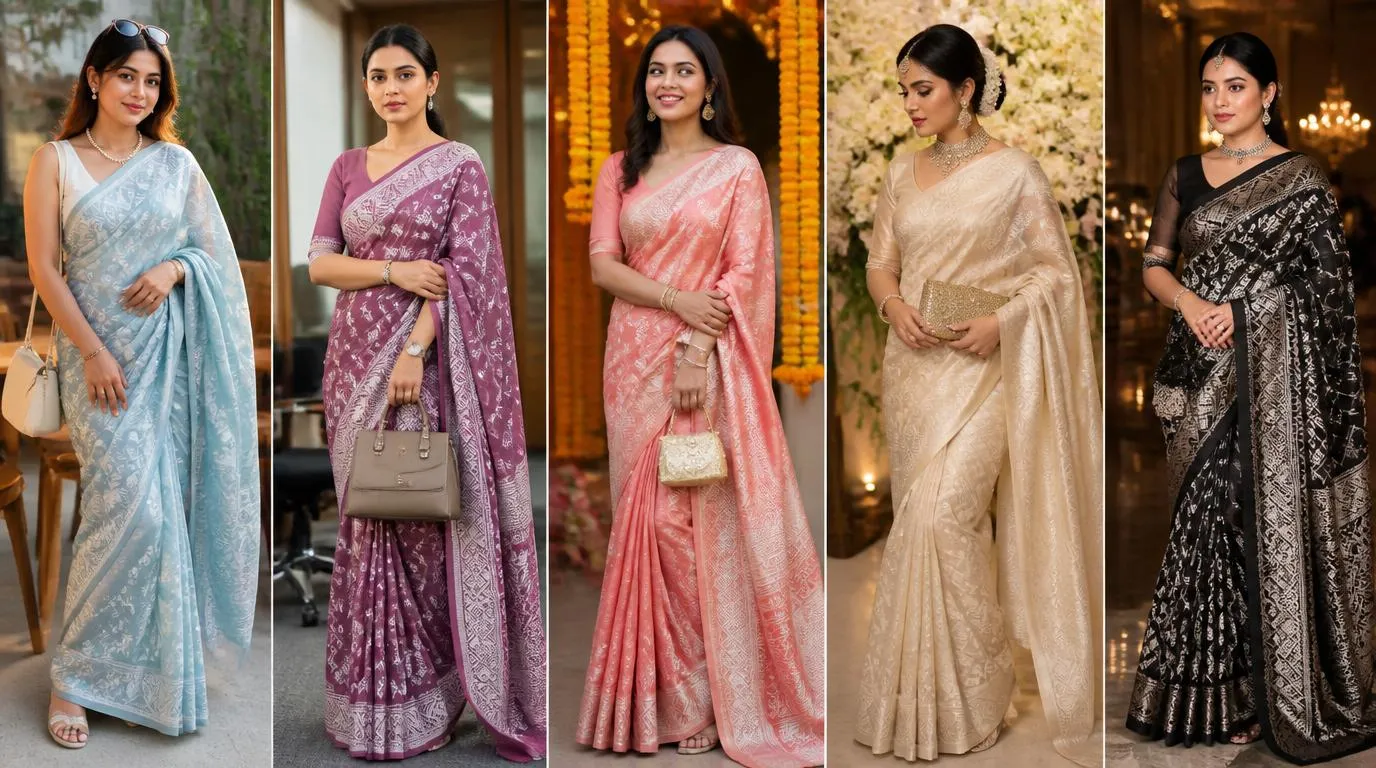
Image Credit: AI Generated
Different occasions call for different styling approaches:
- Wedding Guest: Silk Jamdani or Banarasi saree, heavy gold jewelry, elegant heels, and a clutch. Keep makeup balanced and hair in a bun or elegant braid.
- Reception: A glamorous saree with a modern drape, statement jewelry, and bold makeup. Mermaid style works beautifully for receptions.
- Office/Work: Lightweight cotton or cotton-silk saree, minimal jewelry, flats, and a simple blouse. Keep the drape neat and professional.
- Festive: Bright colours, traditional jewelry, and a festive drape. Bengali style works wonderfully for Durga Puja and Pohela Boishakh.
- Casual/Day Out: Light cotton saree, Kolhapuri chappals, minimal jewelry, and a crossbody bag. Keep it simple and comfortable.
- Mehendi/Sangeet: Bright yellow or green saree, oxidized jewelry, juttis, and a fun, playful drape. Dhoti style works beautifully for sangeet.
7. Seasonal Styling Tips
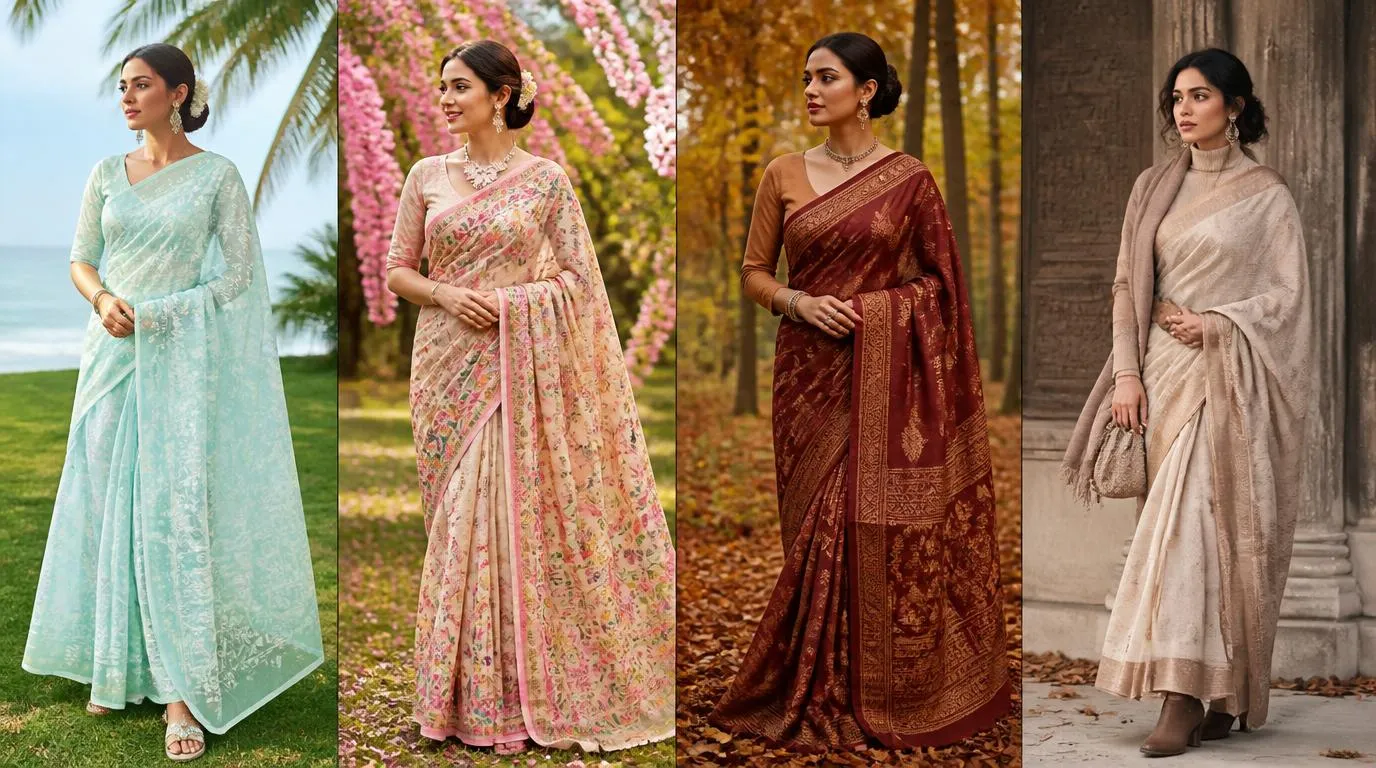
Image Credit: AI Generated
Bangladesh’s climate demands different styling approaches throughout the year:
- Summer: Choose lightweight cotton, silk-cotton or chiffon. Avoid heavy silk in the summer heat. Keep jewelry minimal and opt for flats or Kolhapuri chappals.
- Winter: This is the season for heavy silk, Jamdani and Banarasi sarees. Layer with a shawl or a blouse with full sleeves. Gold jewelry and rich colours work wonderfully.
- Monsoon: Avoid silk and heavy fabrics during monsoon. Choose quick-drying fabrics like cotton or georgette. Avoid white or light colours that get stained easily, and wear flats instead of heels.
Remember: Confidence is your best accessory. No matter how you style your saree, wear it with confidence and grace – that’s what truly makes the look.
Complete the Look: The Three Pieces That Finish the Outfit
A styled saree is only half the outfit. What makes the difference between ‘wearing a saree’ and ‘a look’ is usually underneath and alongside it:
The blouse. A well-fitted blouse changes the posture of the whole drape. If yours is still an unstitched piece waiting for a tailor, our guide to the best readymade saree blouses on Amazon shows the stitched options that arrive ready to wear.
The base layer. A smooth saree shapewear under the saree keeps pleats in place and the waistline clean in photographs, it is the quiet reason some outfits look ‘finished’ and others need adjusting all evening.
The shortcut, when you need it. For days when draping time simply does not exist, a ready-to-wear saree keeps the same silhouette with pre-stitched pleats.

$19.99
ALYNE Saree Shapewear Petticoat for Women, Women’s Blended Saree Shapewear
4.1 ★★★★★★★★★★ (6,546)
View on Amazon

$35.00
Vamas Women’s Silk Padded Self Design Half Sleeve Readymade Saree Blouse
4.5 ★★★★★★★★★★ (64)
View on Amazon
Styling is not about adding more, it is about removing every small discomfort that makes you adjust, tug and check mirrors all evening.
Quick Style Checklist
- ✅ Drape: Nivi for everyday, Bengali for traditional events, Dhoti for parties.
- ✅ Blouse: Contrast or match – choose based on the saree’s fabric and colour.
- ✅ Jewelry: Gold for silk, silver for cotton – don’t overdo it.
- ✅ Footwear: Heels for formal, Kolhapuri for casual, flats for work.
- ✅ Accessories: Clutch, kamarbandh, and fresh flowers (gajra) complete the look.
- ✅ Occasion: Match your styling to the event’s formality.
- ✅ Season: Light fabrics in summer, rich silk in winter, quick-dry in monsoon.
Image Credit: AI Generated
With the right styling, a Bangladeshi saree transforms you into a vision of elegance and confidence.
Shop styling essentials: Shop Blouses | Shop Jewelry
Popular Posts
- How to Choose the Perfect Jamdani Saree
- How to Identify Original Jamdani Saree
- Jamdani Saree vs Tangail Saree
- History of Jamdani Saree in Bangladesh
- Essential Care Tips for Silk Sarees
- Handloom vs Machine-Made Sarees
FAQs About Saree styling
What is the best draping style for a saree?
The Nivi style is the most versatile and works for most occasions. Start by tucking the saree at your waist, making neat pleats in the front, and draping the pallu over your left shoulder. For traditional occasions, the Bengali style (pallu over both shoulders) is a beautiful alternative.
How do I choose the right blouse for my saree?
Match your blouse to your saree’s colour and fabric. A heavy silk saree pairs well with a fitted silk or brocade blouse, while a cotton saree suits a simple cotton or cotton-silk blouse. A contrasting blouse always creates a striking look.
What jewelry should I wear with a saree?
Gold is the classic choice for silk and zari sarees, while gold or polki jewelry is perfect for traditional occasions. For a simple look, keep jewelry minimal with small studs for office or casual wear. Silver or oxidized jewelry pairs beautifully with cotton Jamdani and handloom sarees.
How can I style a saree for the office?
Choose a lightweight cotton or cotton-silk Jamdani saree in a subtle colour, drape it in a simple Nivi style, and keep jewelry minimal. Pair with flats or low heels, natural makeup, and a simple blouse – the key is neatness and comfort.
What footwear goes best with a saree?
Heels are the most popular choice – they make the saree drape fall better and create a taller silhouette. Block heels and wedges are comfortable alternatives for long events. For casual looks, kolhapuri chappals, juttis, or stylish flats work beautifully, especially with cotton sarees.
What blouse colour goes with a Jamdani saree?
A blouse in the colour of the Jamdani’s main motif is the classic choice; gold and deep maroon work with almost every traditional Jamdani palette. When in doubt, match the border, not the body.
How do I keep my saree pleats in place all day?
Start with a firm base, a saree shapewear or a well-tied petticoat, tuck the pleats deeply, and pin the pallu at the shoulder with a small safety pin hidden under the fold. Those three habits survive a full wedding day.
What jewellery suits a Bangladeshi saree?
Oxidised silver pairs beautifully with cotton Jamdani and Tangail weaves; gold suits silk and Banarasi. Let one piece lead, either the necklace or the earrings, not both at full size.
Can I style a saree for office wear?
Yes, a cotton or Tangail saree in a muted colour, a plain fitted blouse and minimal jewellery reads professional and stays comfortable through a workday.