
As an Amazon Associate, SareeBD may earn from qualifying purchases. This means we may receive a small commission when you purchase through links on our website, at no additional cost to you.
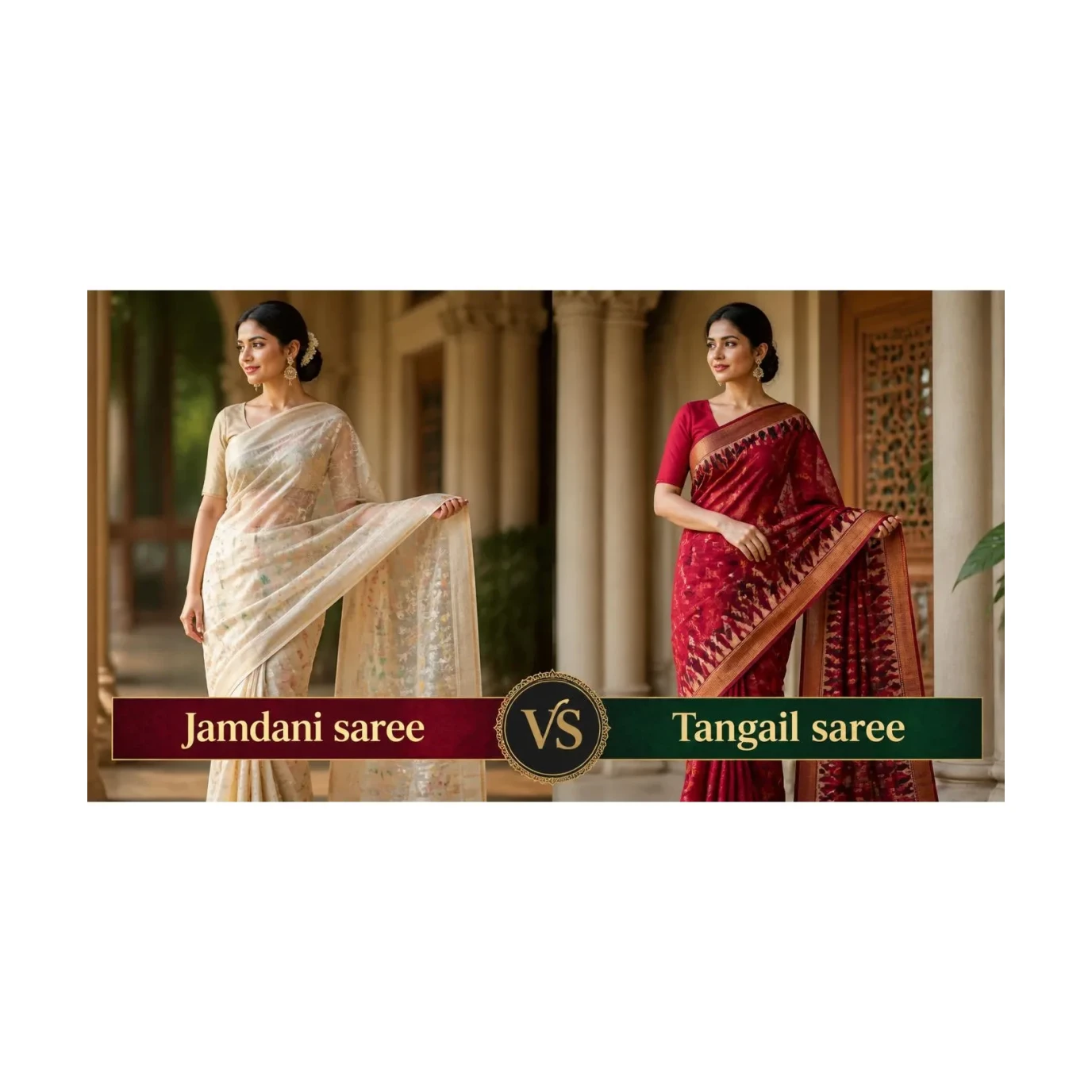 Image credit: Amazon
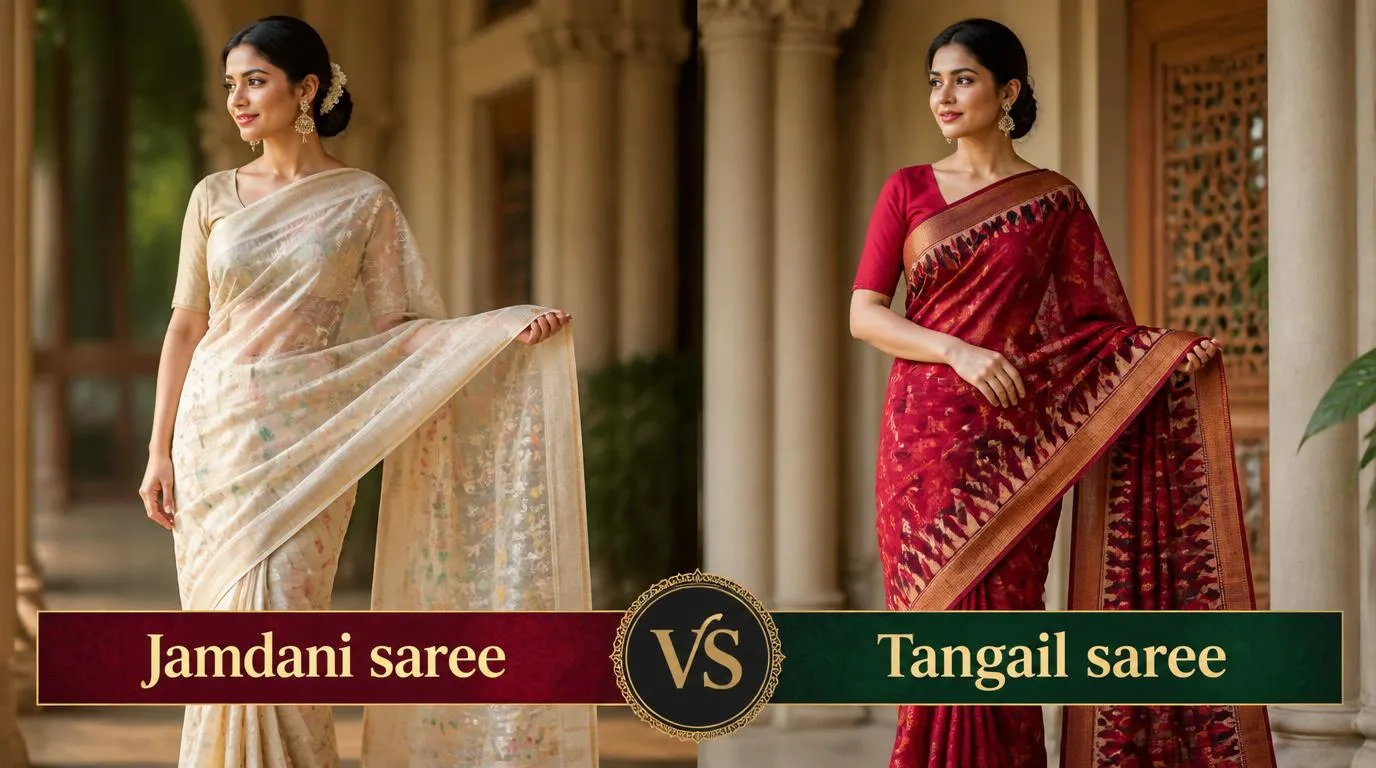
Image Credit: AI Generated
- Introduction
- Overview – What Are They?
- Weaving Technique – The Core Difference
- Fabric & Feel – Comfort Matters
- Motifs & Designs – Aesthetic Appeal
- Pricing – Investment vs Affordability
- Durability & Care – Practicality
- Occasion Suitability – When to Wear What
- Jamdani vs Tangail Saree: Which One Should You Choose? – Decision Guide
- At-a-Glance Comparison Table
- Popular Posts
- FAQs About Jamdani vs Tangail
Introduction
Walk into any saree shop in Bangladesh, and you’ll be faced with a sea of handloom beauties. But two names will dominate the conversation – Jamdani and Tangail. Both are iconic, both are beautiful, but they are very different sarees.
If you’ve ever stood in a shop, confused about which one to pick, you’re not alone. I’ve been there too. In this guide, I’ll compare these two handloom legends side by side in this Jamdani vs Tangail saree guide – so you can choose the right one for your occasion, budget, and personal style.
Overview – What Are They?
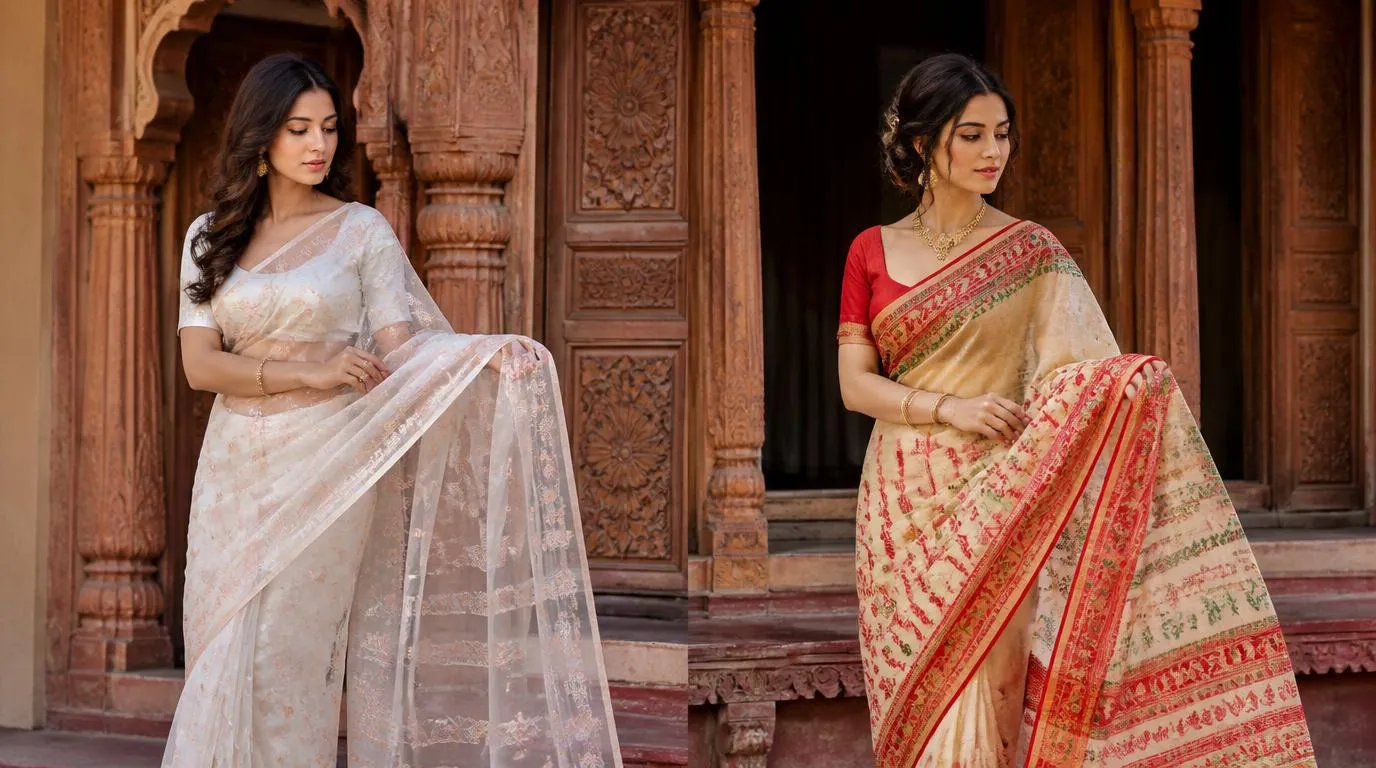
Image Credit: AI Generated
Jamdani Saree: Jamdani is a handwoven fabric that originated in Bengal and flourished under Mughal patronage. It is known for its extremely fine, lightweight cotton or silk base and intricate motifs that are woven directly into the fabric using the “figured” weave technique. Jamdani is often called “woven air” because of its delicate, breathable quality. It is considered one of the finest handloom traditions in the world and is recognized by UNESCO as an Intangible Cultural Heritage.
Tangail Saree: Tangail sarees are named after the district of Tangail in Bangladesh, which is famous for its handloom weaving. These sarees are woven using a different technique – often involving jacquard looms or extra-warp weaving. Tangail sarees are known for their thicker, more textured fabric, vibrant colors, and distinctive borders. They are more affordable than Jamdani and are extremely popular for everyday wear and festive occasions alike.
Key takeaway: Both are handloom, both are beautiful, but they cater to different needs and budgets. Jamdani is the delicate aristocrat; Tangail is the sturdy workhorse with charm.
Weaving Technique – The Core Difference
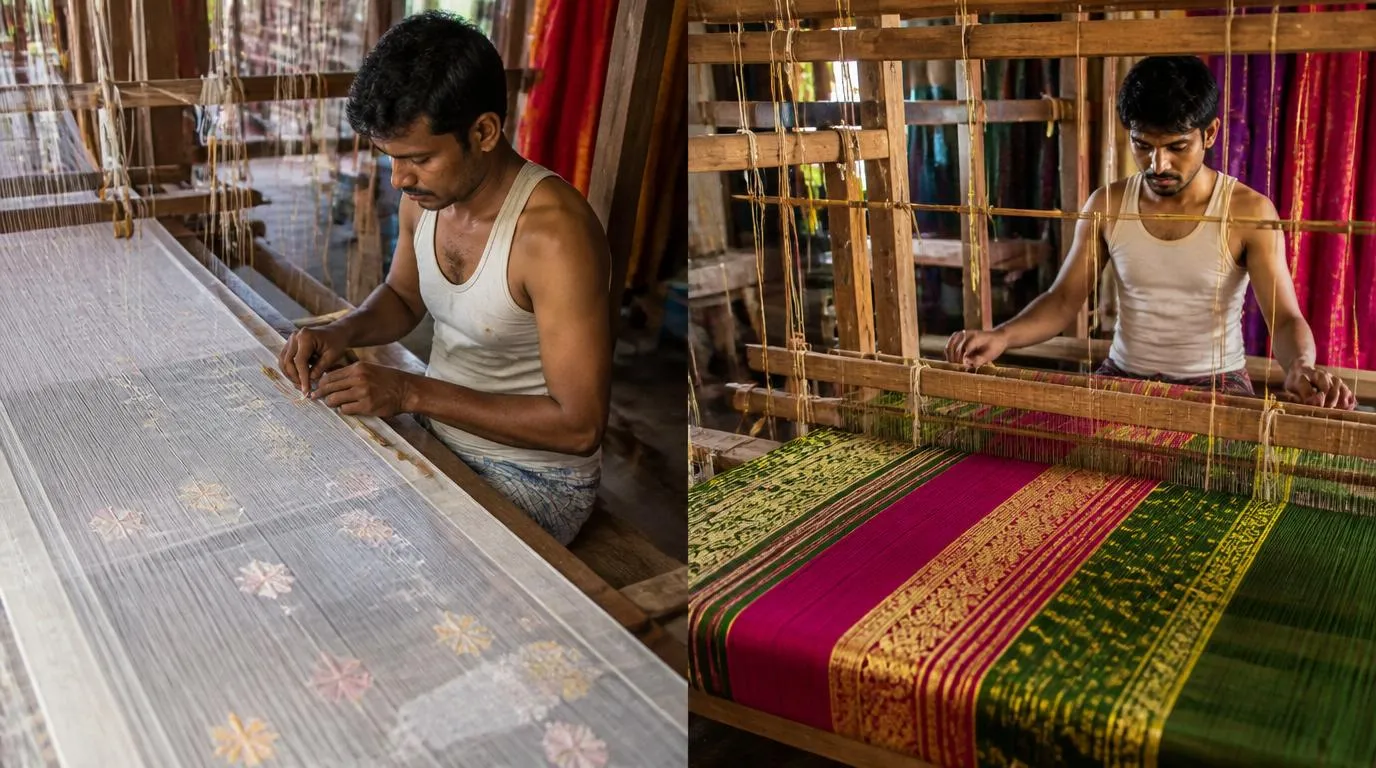
Image Credit: AI Generated
The fundamental difference between Jamdani and Tangail lies in how they are woven.
- Jamdani – Figured Weave (Extra Weft): In Jamdani weaving, the motifs are created by inserting extra weft threads during the weaving process. This means the design is woven into the fabric at the same time as the base fabric. The result is a seamless integration of pattern and fabric – motifs are visible on both sides (though slightly less defined on the back). This is a highly skilled technique that requires immense precision and time. A single Jamdani saree can take weeks to complete.
- Tangail – Extra Warp or Jacquard Weave: Tangail sarees use a different approach. Traditionally, they used extra-warp techniques where designs are created using additional warp threads. More commonly now, Tangail sarees are woven on jacquard looms, where the design is controlled by punch cards. The motifs are woven into the fabric but with less complexity than Jamdani. The fabric is thicker and the motifs are more textured.
Practical implication: Jamdani is lighter and more delicate; Tangail is thicker and more robust. Jamdani’s motifs are finer and more intricate; Tangail’s motifs are bolder and more textured.
Fabric & Feel – Comfort Matters
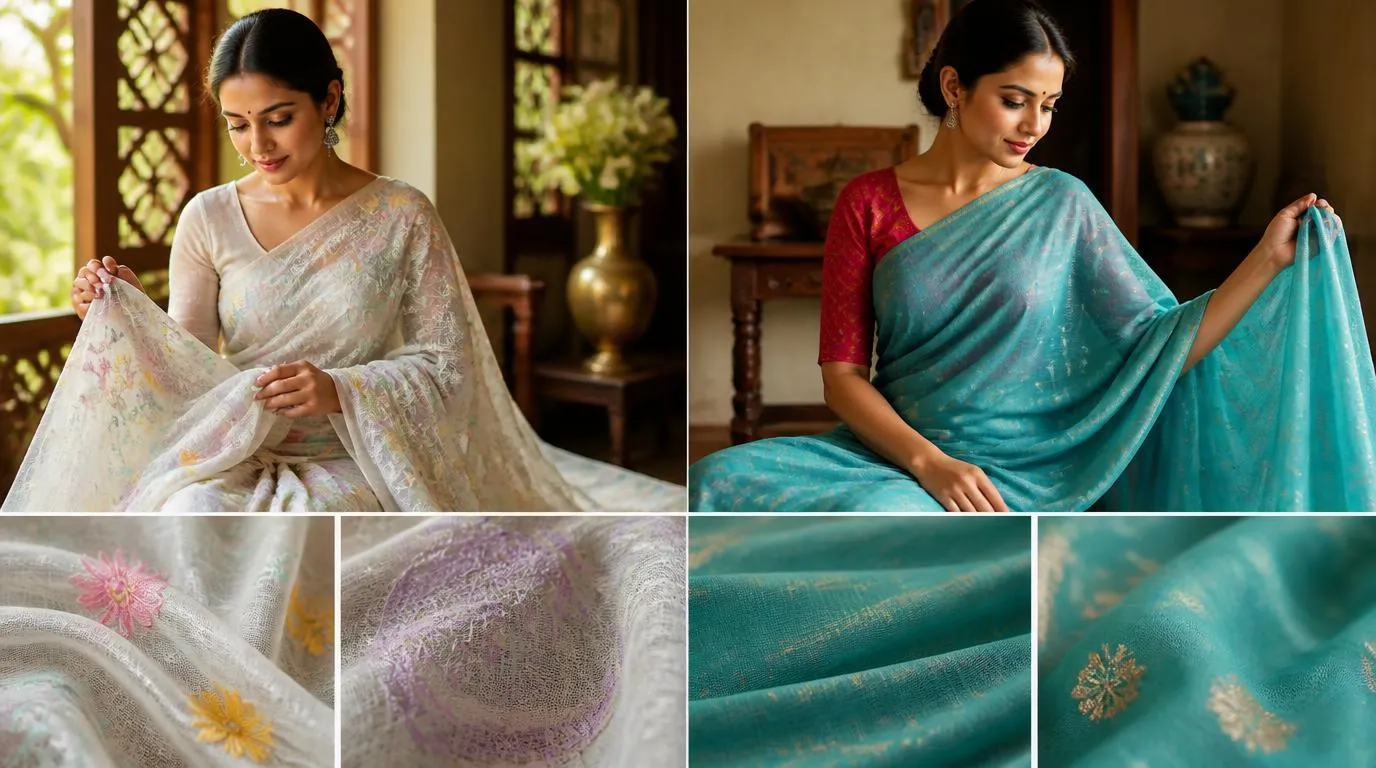
Image Credit: AI Generated
- Jamdani: Extremely lightweight, soft, and airy. Cotton Jamdani feels like a gentle breeze on the skin – it’s breathable and comfortable even in hot weather. Silk Jamdani is slightly heavier but still soft and fluid, draping elegantly.
- Tangail: Thicker, more textured, and slightly heavier. The fabric has a rustic, earthy feel that many people find comforting. It’s not as airy as Jamdani, but it has more body and structure.
Which to choose? If you want a saree that feels like a second skin, choose Jamdani. If you prefer a saree with more body and structure, choose Tangail.
Motifs & Designs – Aesthetic Appeal
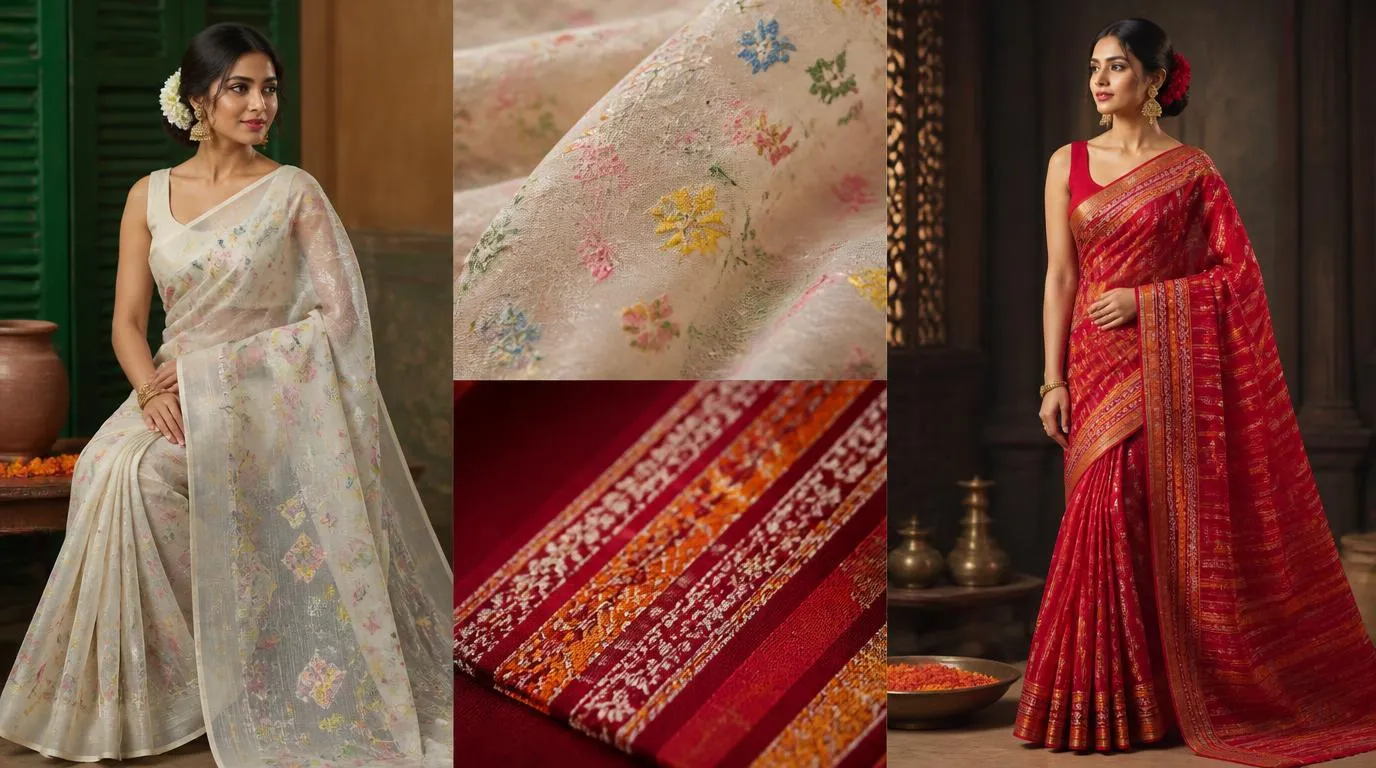
Image Credit: AI Generated
- Jamdani: Known for its intricate, delicate motifs. Traditional designs include floral patterns (paisley, jasmine), butidar (small flower buds scattered across the body), vines, and geometric patterns. The motifs are fine and subtle, with a timeless elegance.
- Tangail: Bold, vibrant, and distinctive. Tangail sarees are famous for their striking borders and anarasi (pineapple), jhumka (bell-shaped), and panna (diamond) motifs. The designs are more prominent and textured than Jamdani. Colors are often bright and saturated.
Which to choose? If you love subtle, intricate elegance, go for Jamdani. If you love bold, vibrant, and eye-catching designs, go for Tangail.
Pricing – Investment vs Affordability
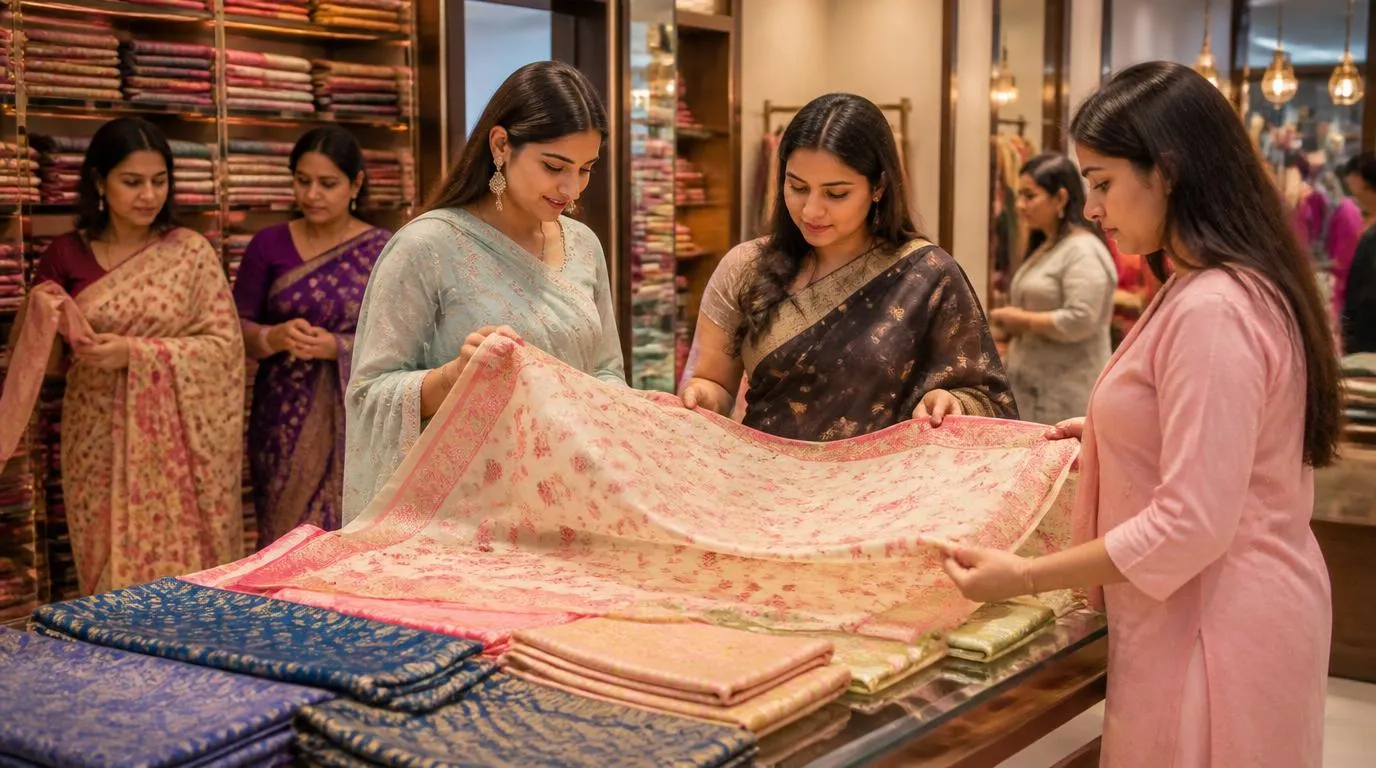
Image Credit: AI Generated
- Jamdani: Jamdani is a premium, luxury handloom. A cotton Jamdani generally starts at ৳3,000–৳6,000, while a silk Jamdani can range from ৳8,000 to ৳50,000 or more for the most intricate pieces. The price reflects the weeks of skilled labour and the fine materials used.
- Tangail: Tangail is significantly more affordable. A cotton Tangail can start at ৳1,200–৳3,000, while high-end silk Tangail sarees range from ৳5,000 to ৳15,000. The exception is pure silk or high-end handloom Tangail, which can be more expensive than a cotton Jamdani.
Which to choose? If you’re on a budget or want a saree for daily wear, Tangail is the clear winner. If you’re investing in a heirloom piece and don’t mind paying more, Jamdani is worth every taka.
Durability & Care – Practicality
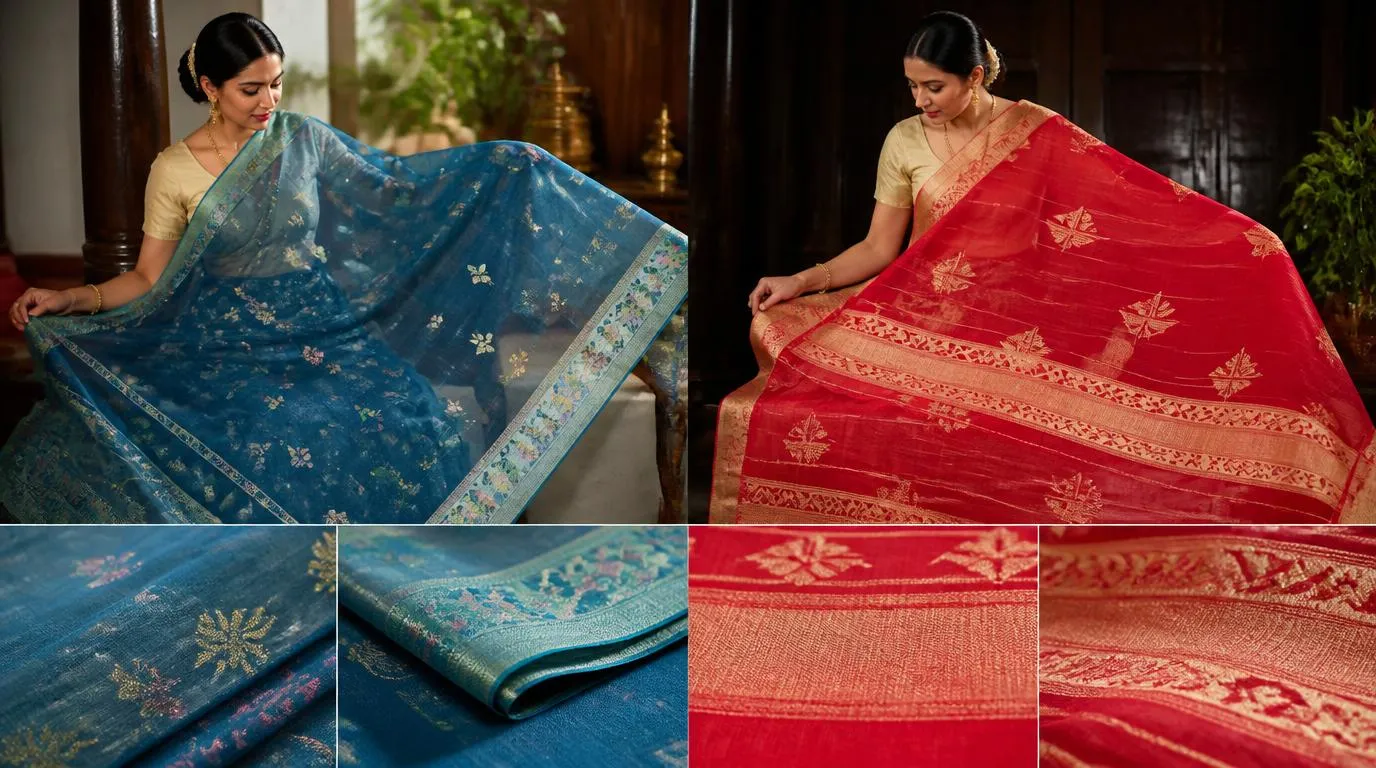
Image Credit: AI Generated
- Jamdani: Delicate and requires careful handling. The fine threads can be prone to snagging and require proper storage. With proper care, Jamdani can last for years, but it’s best reserved for special occasions rather than daily wear.
- Tangail: More durable and forgiving. The thicker fabric is less likely to tear or snag, making it suitable for regular use. Tangail sarees are washing-machine friendly (though hand washing is recommended) and can withstand daily wear.
Which to choose? For everyday wear and long-term durability, choose Tangail. For occasional, special wear where you can take extra care, Jamdani is worth it.
Occasion Suitability – When to Wear What
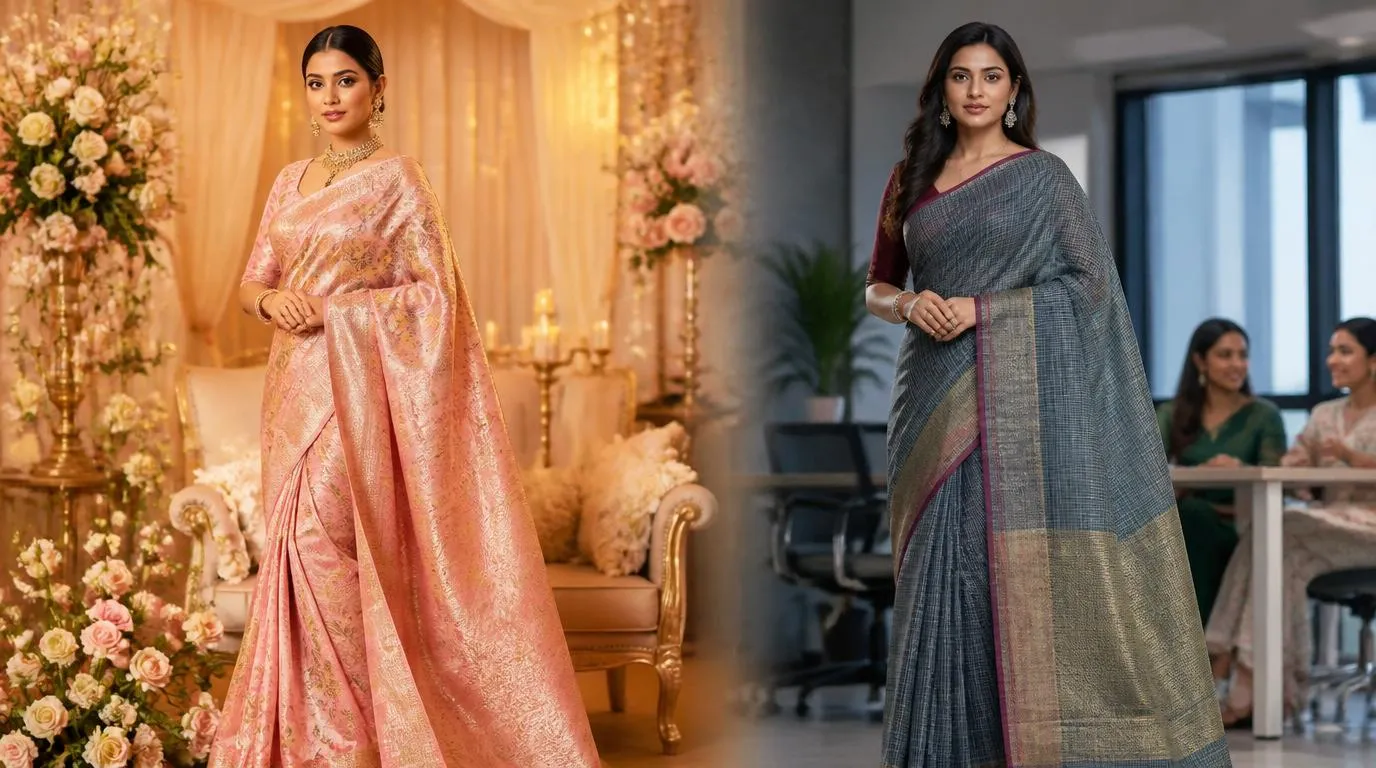
Image Credit: AI Generated
- Jamdani: Weddings, receptions, formal events, and Eid celebrations – Jamdani is the epitome of elegance. Its lightness also makes it ideal for warmer months and for events where you’ll be photographed extensively.
- Tangail: Everyday wear, office wear, college, family events, and festive occasions. Tangail’s vibrant colors and eye-catching design make it perfect for a wide range of occasions. It’s versatile and fun.
Which to choose? If you need a saree for a specific special occasion, Jamdani is a showstopper. If you want a versatile saree that works for any occasion, Tangail is the way to go.
Jamdani vs Tangail Saree: Which One Should You Choose? – Decision Guide
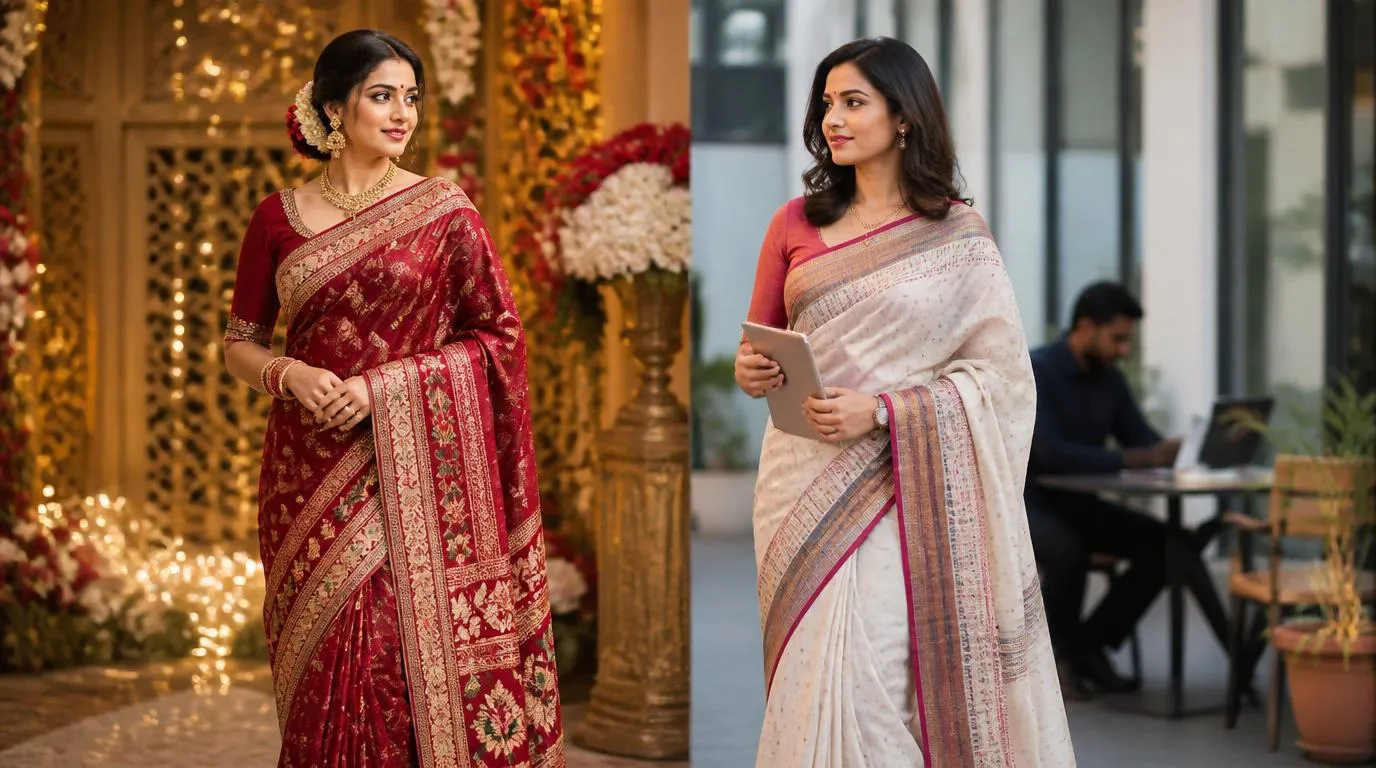
Image Credit: AI Generated
Still not sure? Here’s my quick decision guide:
Choose Jamdani if:
- You’re looking for a luxury, heirloom piece.
- You have a special occasion (wedding, reception, formal event).
- You appreciate intricate, delicate craftsmanship.
- Your budget is higher (৳5,000+).
- You don’t mind taking extra care of your saree.
Choose Tangail if:
- You want a beautiful, affordable saree for daily wear.
- You need a saree that’s durable and easy to care for.
- You love bold, vibrant designs and colors.
- Your budget is more modest (৳1,200–৳5,000).
- You want a versatile saree for multiple occasions.
My personal approach: I own both. I have a few Jamdani sarees for weddings and special occasions – they’re my investment pieces. For daily wear and office, I rely on my Tangail sarees – they’re comfortable, durable, and always look elegant.
The Short Verdict
| If you want… | Choose | Why |
|---|---|---|
| A showpiece for a wedding or festival | Jamdani | Finer weave, richer motifs, heirloom feel |
| An elegant saree you will wear every week | Tangail | Light, breathable, easy to drape and maintain |
| The most saree for under $50 | Tangail | Handloom quality at everyday prices |
| A gift with a story | Jamdani | A UNESCO-recognized craft the receiver can keep for decades |
| Your first Bengali saree | Tangail first, Jamdani later | Learn the drape on an easy fabric, then invest |
Whichever you choose, check the current price bands first in our Jamdani price guide, and compare real listings below, not search pages:
At-a-Glance Comparison Table
| Feature | Jamdani Saree | Tangail Saree |
|---|---|---|
| Weave | Extra weft (figured) | Jacquard or extra warp |
| Feel | Light, airy, delicate | Structured, slightly thicker |
| Motifs | Fine, subtle florals | Bold colours, textured motifs |
| Price | ৳3,000–৳1,00,000+ | ৳800–৳25,000 |
| Best for | Wedding, Eid, luxury occasions | Daily, office, festive wear |
| Care | Delicate, dry-clean only | Durable, hand-wash friendly |
| Heritage | UNESCO, Mughal era, handloom | Tangail, handloom, vibrant colors |
| Weaving time | Days to weeks | Days |
Both Jamdani and Tangail are treasures of Bangladesh’s handloom heritage – the choice depends on your budget, the occasion, and your personal style. Whether you choose the delicate elegance of Jamdani or the vibrant charm of Tangail, you’re supporting a centuries-old craft and the weavers who keep it alive.
Shop both collections – explore authentic Jamdani and Tangail sarees from verified handloom sellers.

$36.00
dB DESH BIDESH Women’s Tamarind Leaf Resham Dhakai Jamdani Bengal Pure Cotton Handloom Saree Whole Body Design
5.0 ★★★★★★★★★★ (2)
View on Amazon

$34.48
Women’s Traditional Bengal Cotton Silk Soft Jamdani Saree – Beautiful design and Quality – Without Blouse Piece
4.4 ★★★★★★★★★★ (27)
View on Amazon

$32.00
Woven Tangail Pure Cotton Saree-12736
, ★★★★★★★★★★
View on Amazon

$32.00
Woven Tangail Pure Cotton Saree-12627
, ★★★★★★★★★★
View on Amazon
Popular Posts
- How to Choose the Perfect Jamdani Saree
- History of Jamdani Saree in Bangladesh
- How to Identify Original Jamdani Saree
- How to Style a Bangladeshi Saree
- Essential Care Tips for Silk Sarees
- Handloom vs Machine-Made Sarees
This guide is one chapter of our complete Jamdani saree buyer’s guide , the hub that connects Jamdani prices, authenticity checks, comparisons and care in one place.
FAQs About Jamdani vs Tangail
What is the main difference between Jamdani and Tangail?
The main difference lies in the weaving technique. Jamdani uses the figured weave – motifs are woven into the fabric using extra weft threads, creating intricate designs on a fine base. Tangail uses extra-warp or jacquard techniques, producing a thicker, more textured fabric with bolder motifs.
Which is more expensive: Jamdani or Tangail?
Jamdani is generally more expensive due to its intricate weaving technique, finer yarns, and longer production time. A cotton Jamdani starts at ৳3,000, while a cotton Tangail can start at ৳1,200.
Which is better for everyday wear?
Tangail sarees are generally better for everyday wear because they are more durable, thicker, and more affordable. Jamdani is more delicate and is better suited for special occasions.
Can I wear both for the same occasion?
Both can be worn for similar occasions, but the choice depends on the formality. Jamdani is more elegant and is ideal for weddings, receptions and formal events, while Tangail is more versatile and works for casual, office and festive wear.
How can I tell Jamdani from Tangail at a glance?
Look at the motifs – Jamdani motifs are woven into the fabric using extra weft threads and are visible on both sides of the fabric, while Tangail motifs are more textured and bold. Also, check the fabric – Jamdani is lightweight and airy, Tangail is thicker and more robust.
2 iconic handlooms • Price guide included • Occasion guide • Easy comparison