
As an Amazon Associate, SareeBD may earn from qualifying purchases. This means we may receive a small commission when you purchase through links on our website, at no additional cost to you.
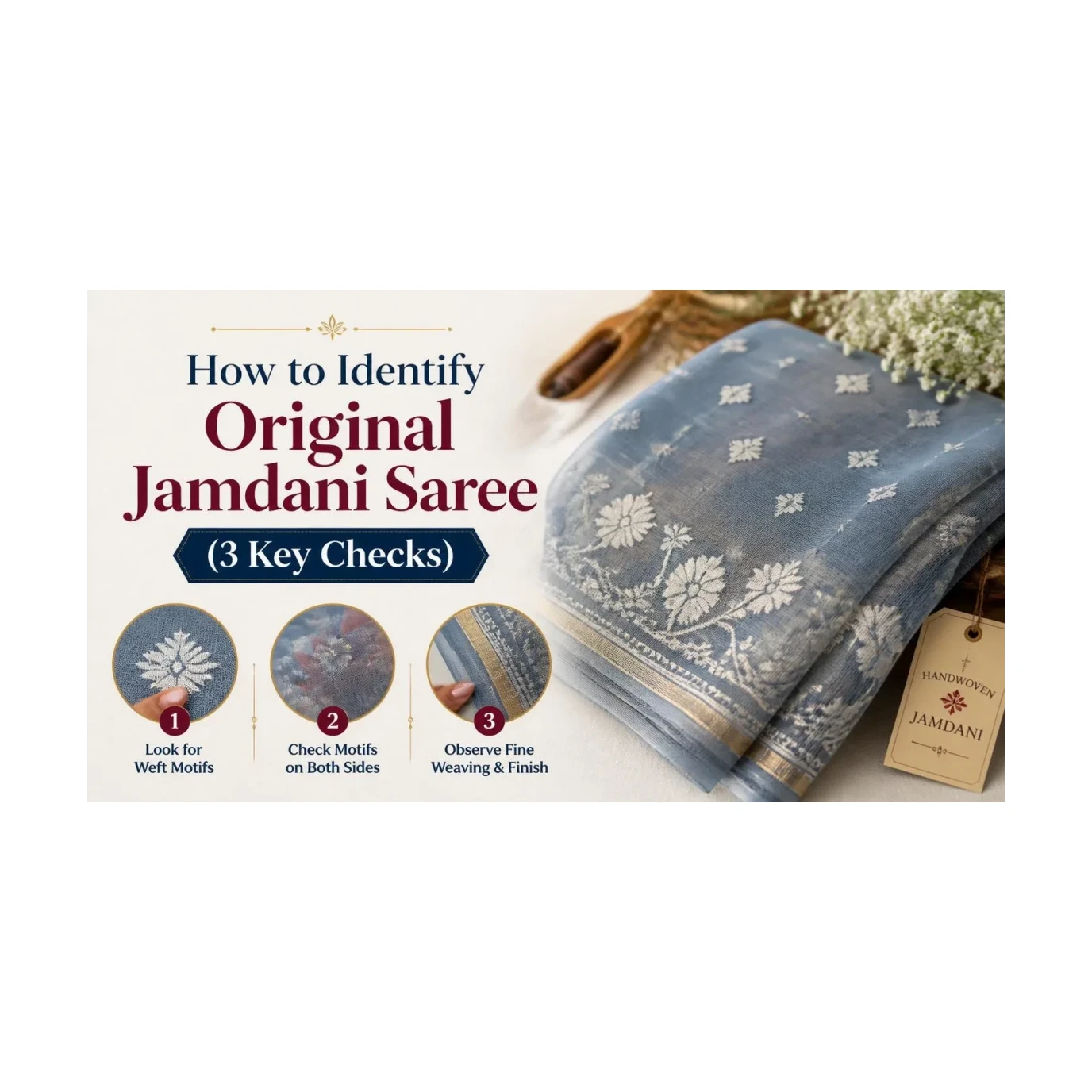 Image credit: Amazon
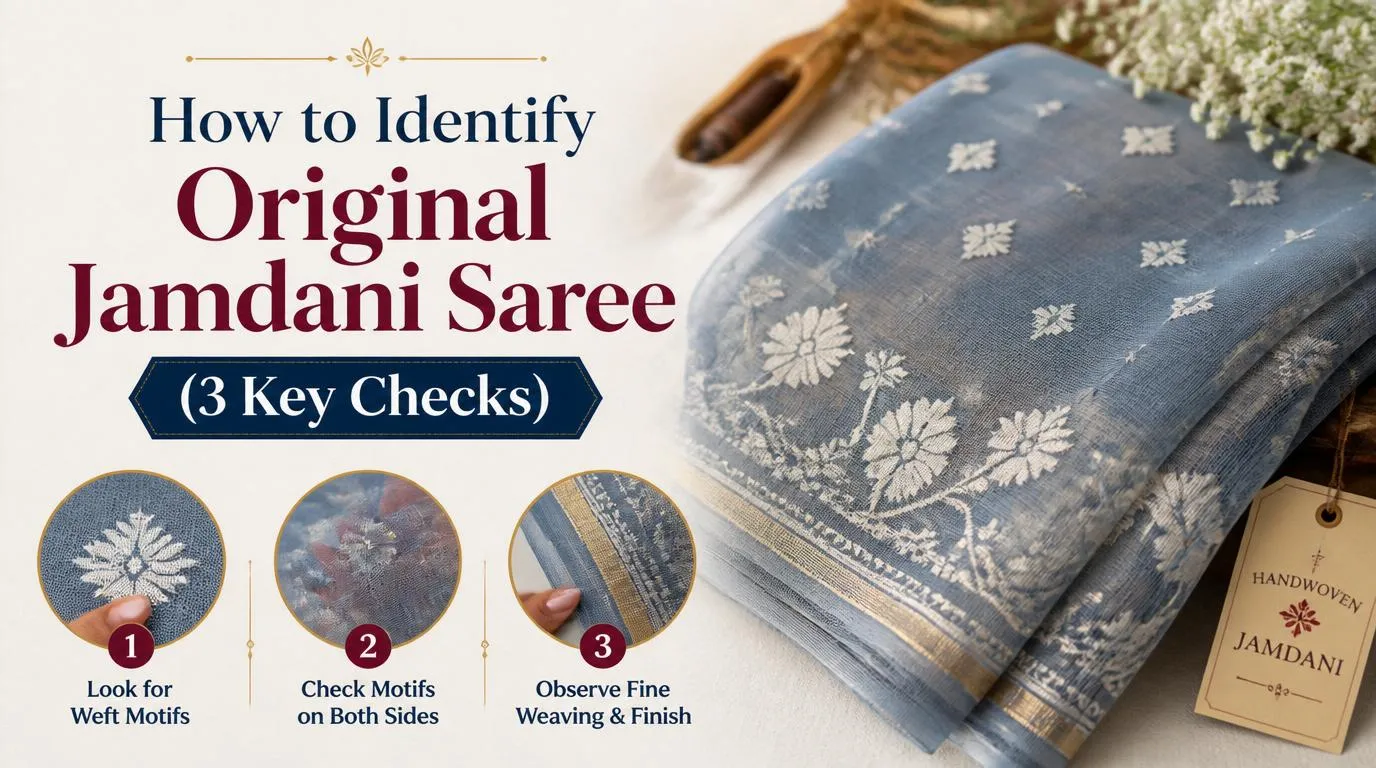
Image Credit: AI Generated
- Introduction
- The Selvedge Test – The First Clue
- The Reverse Side Check – See Through the Fabric
- Look for Weave Irregularities – The Human Touch
- The Zari Burn Test – The Final Proof
- Feel and Weight – The Texture Tells
- Motif Integration – Woven, Not Embroidered
- Certification & Source – Know Your Seller
- The Price Check – What a Real Jamdani Costs in the USA
- Summary – Your Quick Authenticity Checklist
- Popular Posts
- FAQs About Jamdani authenticity
Introduction
You’ve seen them – Jamdani sarees that look stunning in product photos but turn out to be stiff, shiny, and disappointingly fake when they arrive. Or maybe you’ve visited a market and been bombarded with claims of ‘authentic handloom’ while the price seems too good to be true.
The truth is, powerloom copies have become incredibly sophisticated. They mimic the look of Jamdani motifs, use similar colors, and even come with deceptive tags. But the real thing – handwoven Jamdani – has a soul that cannot be replicated by machines. And once you know what to look for, you’ll never be fooled again.
In this guide, I’ve compiled seven foolproof methods to identify authentic handloom Jamdani. These are techniques I’ve learned from weavers, textile experts, and years of personal experience. Let’s dive in.
1. The Selvedge Test – The First Clue
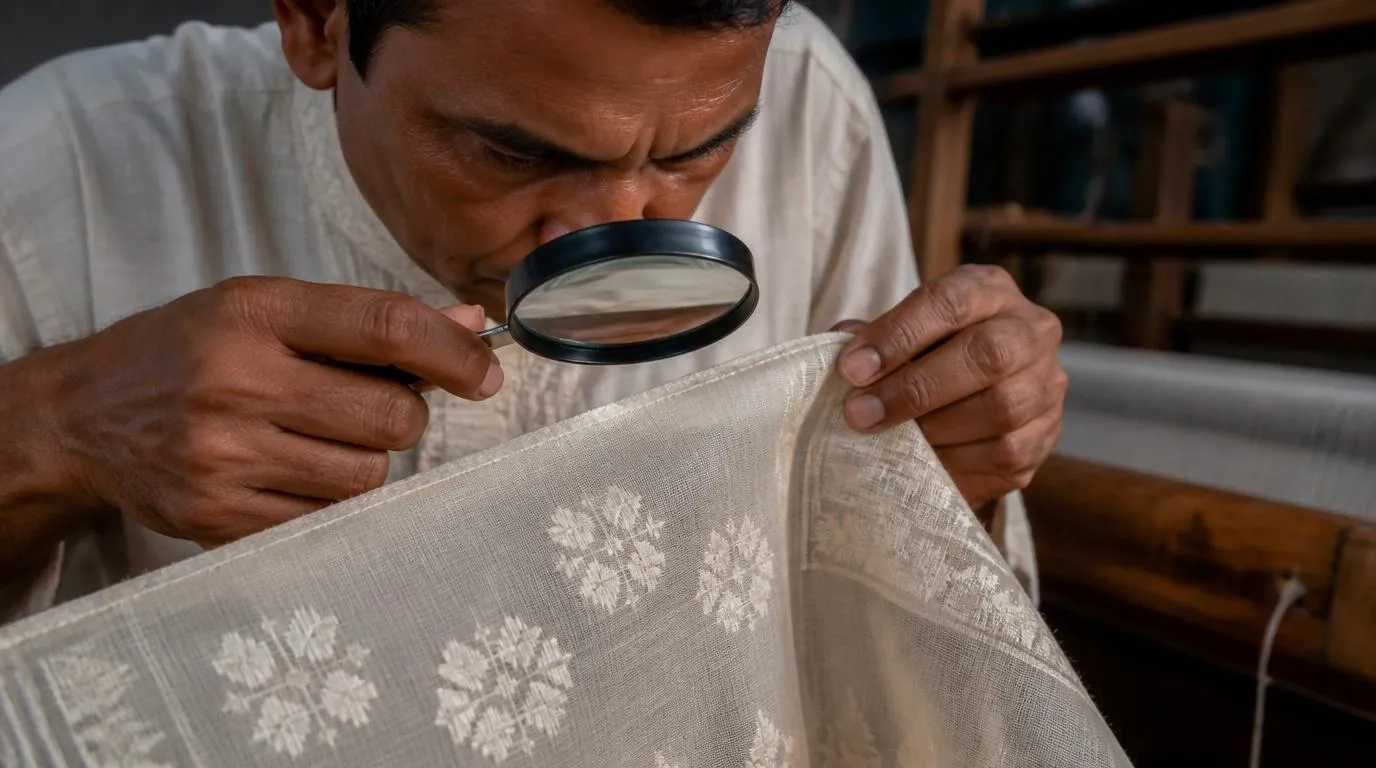
Image Credit: AI Generated
The selvedge is the finished edge of the fabric that runs along the length of the saree. This is one of the most reliable ways to distinguish handloom from powerloom, and it’s often the first thing a weaver will check.
- Authentic handloom: The selvedge is tightly woven, neat, and compact. It is created as part of the weaving process – the weaver uses the same thread to create the edge, making it a seamless part of the fabric.
- Powerloom fake: The selvedge is often loose, frayed, or uneven. In many cases, the powerloom edge is a separate piece of fabric that has been stitched on, or the edge has been overlocked with a machine – a dead giveaway that it’s not a true handloom piece.
How to check: Run your finger along the edge. A handloom selvedge feels firm and even. If it feels flimsy or has visible stitching or frayed threads, it’s likely a powerloom copy.
2. The Reverse Side Check – See Through the Fabric
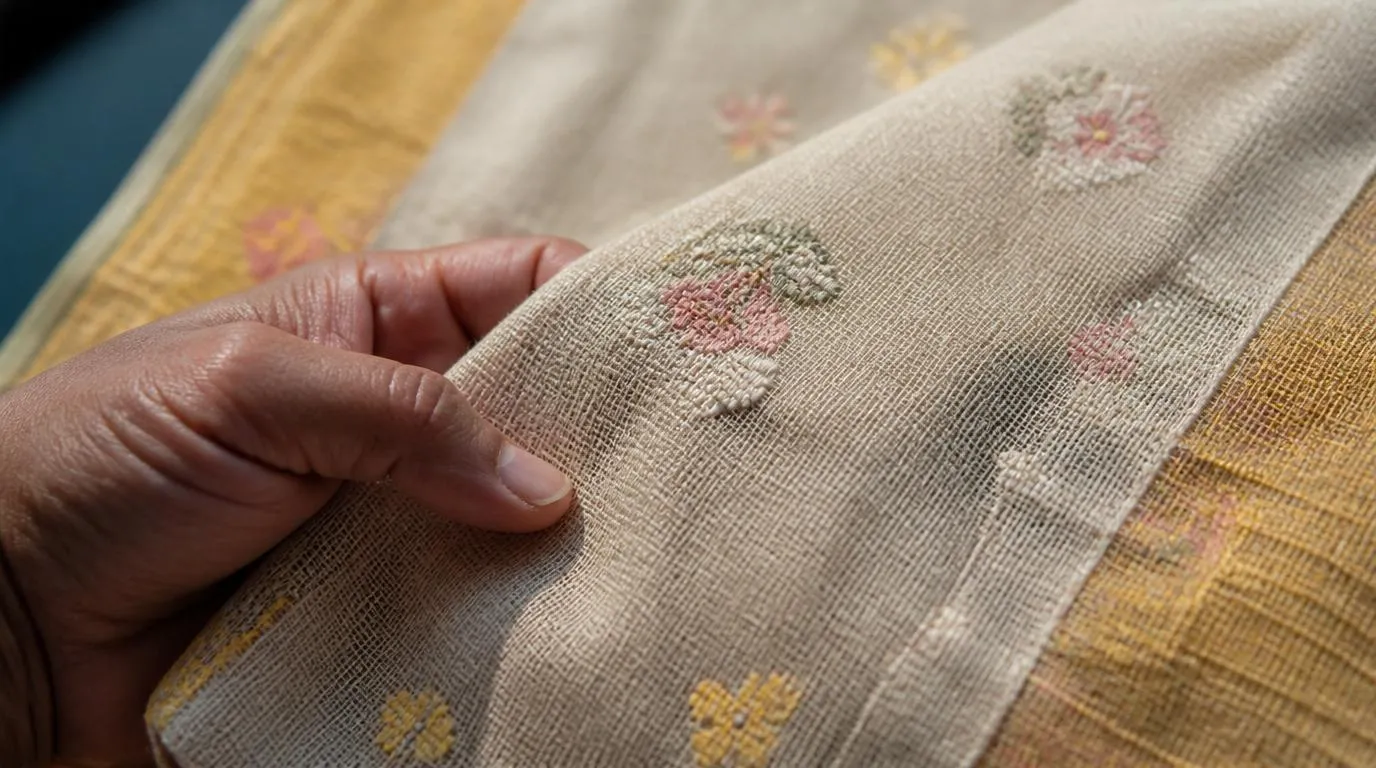
Image Credit: AI Generated
In genuine handloom Jamdani, the motifs are woven into the fabric using extra weft threads. This means the back of the fabric should look just as detailed as the front – a hallmark of authentic handloom work.
- Authentic handloom: Turn the saree over to the reverse side. You will see the motifs clearly visible – though slightly less sharp than on the front. The threads will be neatly integrated, with no loose ends or messy backside.
- Powerloom fake: The back side will be messy – you’ll see floating threads, loose ends, or no visible motifs at all. This is because the motifs were added later, not woven into the fabric.
Pro tip: Hold the saree against a light source. A genuine Jamdani will show the motifs in a subtle, translucent manner, while a fake will either be too opaque or the motifs will be barely visible.
3. Look for Weave Irregularities – The Human Touch
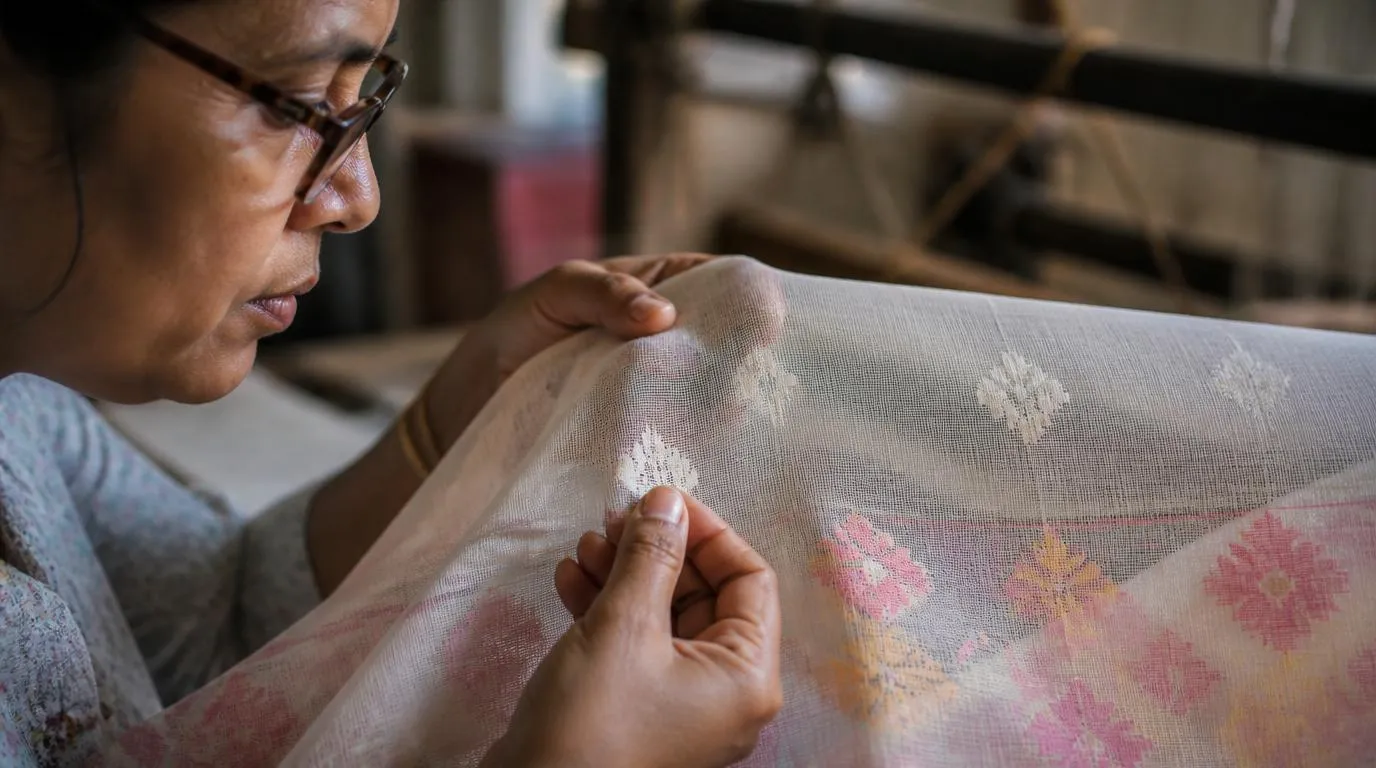
Image Credit: AI Generated
Handloom is made by human hands, not robots. This results in subtle variations that are actually a mark of authenticity, not a defect. These irregularities tell you the saree was made by a person, not a machine.
- Authentic handloom: You’ll notice slight irregularities – a thread that’s a bit thicker here, a slight variation in the tension of the weave, or a small change in the color of the thread. These are the fingerprints of a human weaver.
- Powerloom fake: The weave is perfectly uniform – every thread is identical, the borders are perfectly straight, and the motifs are all perfectly aligned. It looks ‘too perfect’ – because it was made by a machine.
How to check: Run your hand over the fabric. Handloom feels slightly textured and uneven, while powerloom feels flat, smooth, and mechanical. Look closely at the motifs – if they look too uniform, be suspicious.
4. The Zari Burn Test – The Final Proof
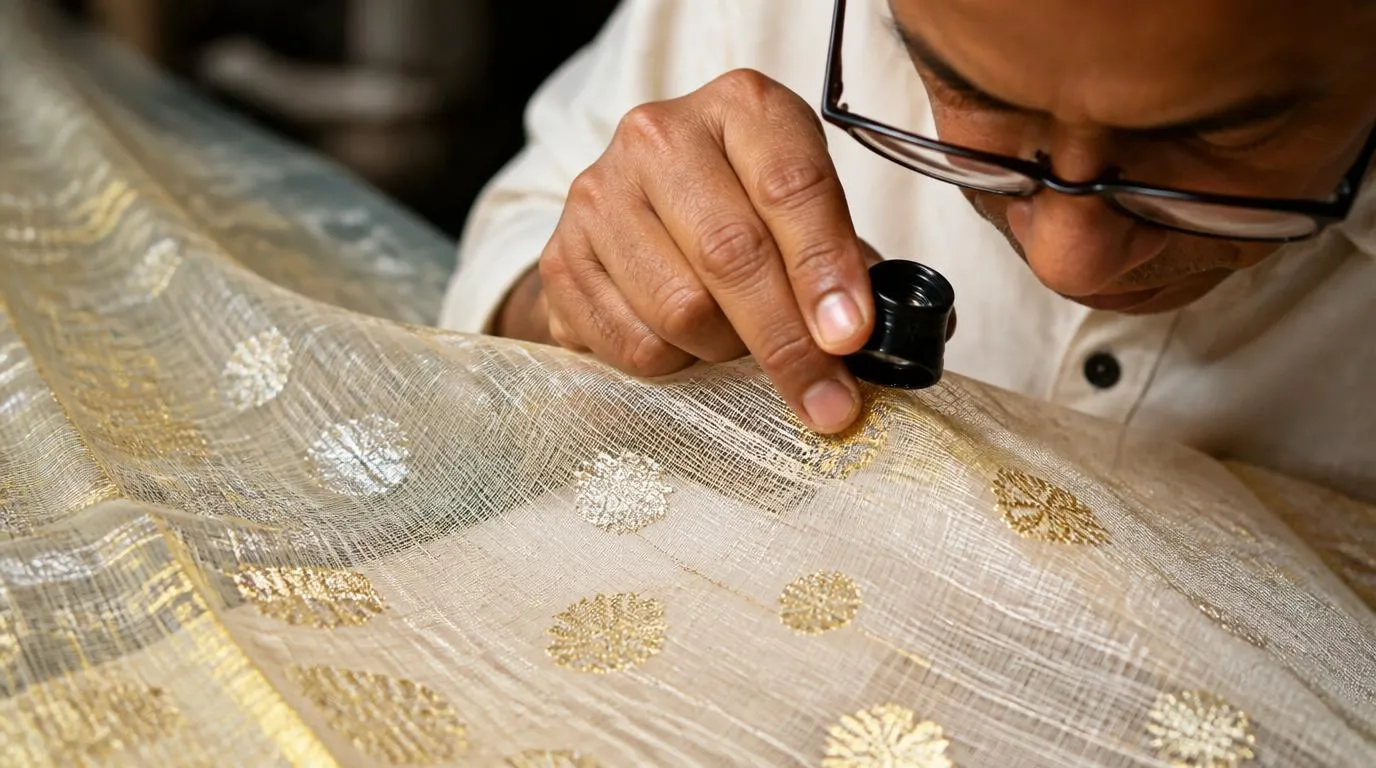
Image Credit: AI Generated
Zari – the gold or silver thread used in Jamdani borders and motifs – is a key indicator of authenticity. Genuine zari is made from real metal, while fake zari is often plastic or synthetic.
- Authentic handloom: Genuine zari is made by wrapping a silver or gold-plated copper wire around a silk or polyester core. When burned, it leaves a small, shiny metal bead and a faint metallic smell. It will not melt into a plastic blob or emit a strong chemical smell.
- Powerloom fake: Fake zari is often plastic or synthetic foil. When burned, it melts, emits a strong plastic smell, and leaves a hard, blackened blob. It is easy to spot once you know the difference.
Caution: Do this test only on an inconspicuous thread (like a loose end) and with care, as fire is involved.
Important: Some powerloom sarees use real zari but still are not handloom. So, the zari test alone is not conclusive – use it alongside the other tests.
5. Feel and Weight – The Texture Tells
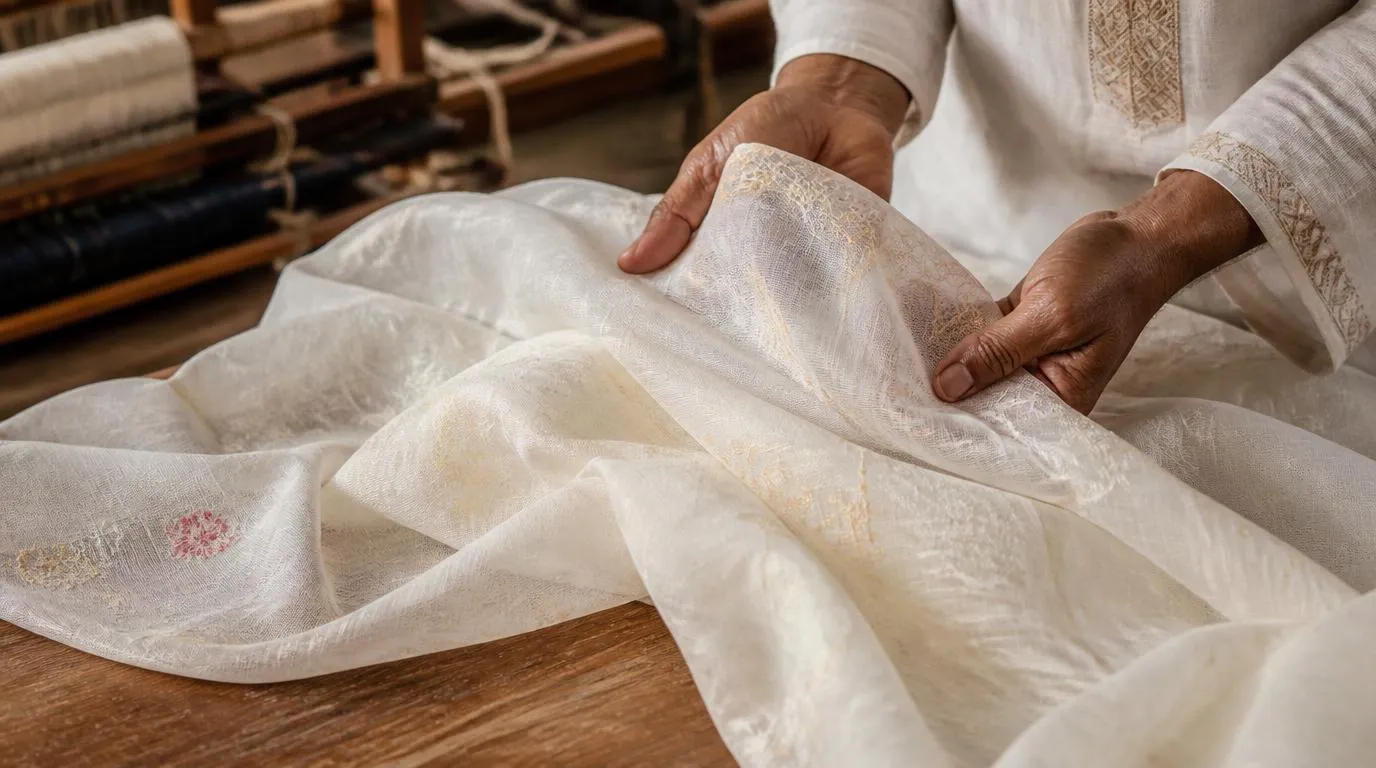
Image Credit: AI Generated
Authentic Jamdani is known for its lightness and airy feel – it’s called “woven air” for a reason.
- Authentic handloom: Cotton Jamdani feels incredibly light and soft, almost like a gentle breeze. Silk Jamdani is slightly heavier but still feels soft and fluid, draping gracefully. It should feel breathable, not stiff or heavy.
- Powerloom fake: Often feels stiff, papery, or has an unnaturally glossy finish due to chemical treatments. It may feel heavier than it looks, or it may feel like a plastic film.
How to check: Crumple a small part of the saree in your hand. Handloom Jamdani will spring back softly and not hold deep creases. Powerloom will either stay creased or feel stiff and resistant.
6. Motif Integration – Woven, Not Embroidered
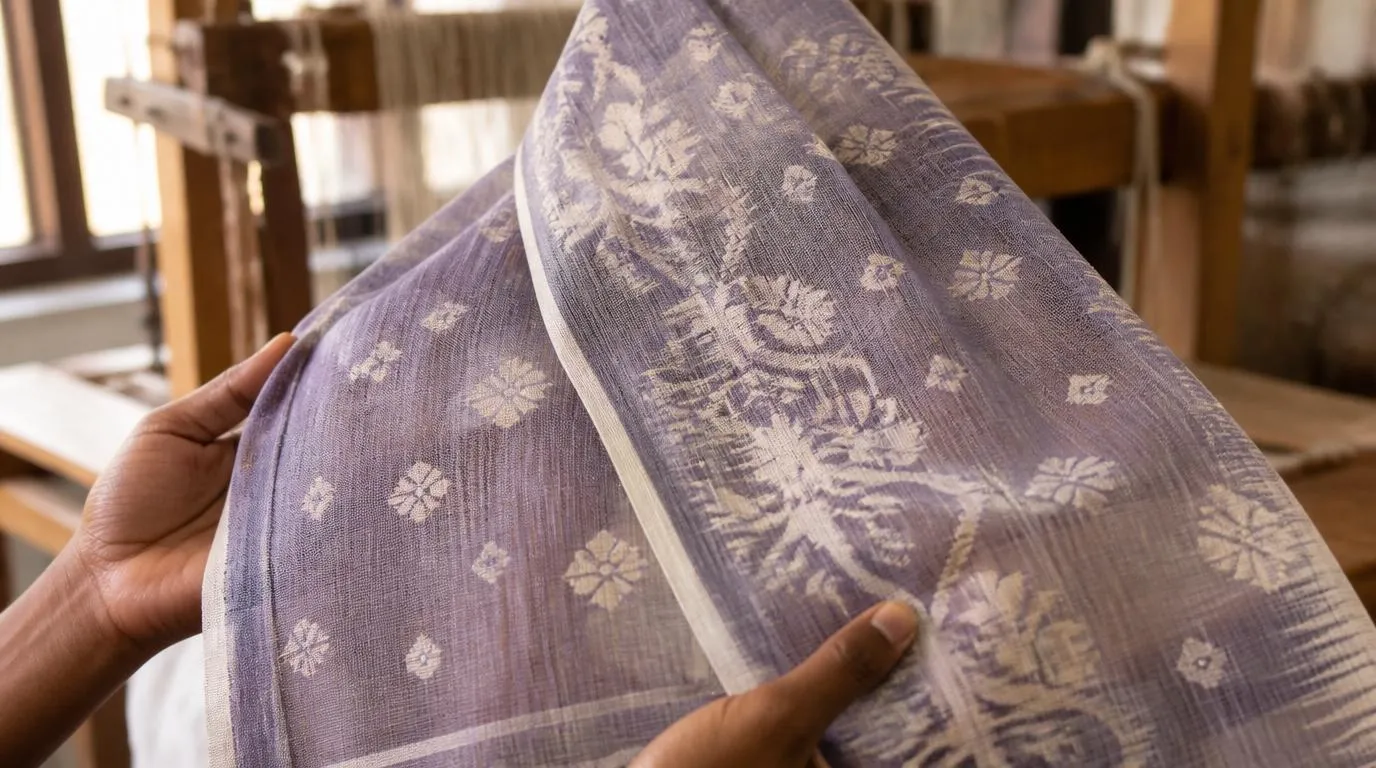
Image Credit: AI Generated
In genuine Jamdani, the motifs are not added after weaving – they are woven simultaneously with the base fabric. This is a key feature of the Jamdani technique and a strong indicator of authenticity.
- Authentic handloom: The motifs are part of the fabric’s weave. There is no visible stitching or embroidery on the surface, and you cannot peel the motif off. The motif and the base fabric are one and the same.
- Powerloom fake: Often, the motifs are embroidered on top or printed. Look closely at the edges of a motif – if you see embroidery stitches, or if the motif sits on top of the fabric, it’s not genuine Jamdani.
Quick check: Gently stretch the fabric around a motif. In handloom, the motif will stretch with the fabric because it’s woven in. In powerloom, the motif may pucker or resist the stretch.
7. Certification & Source – Know Your Seller
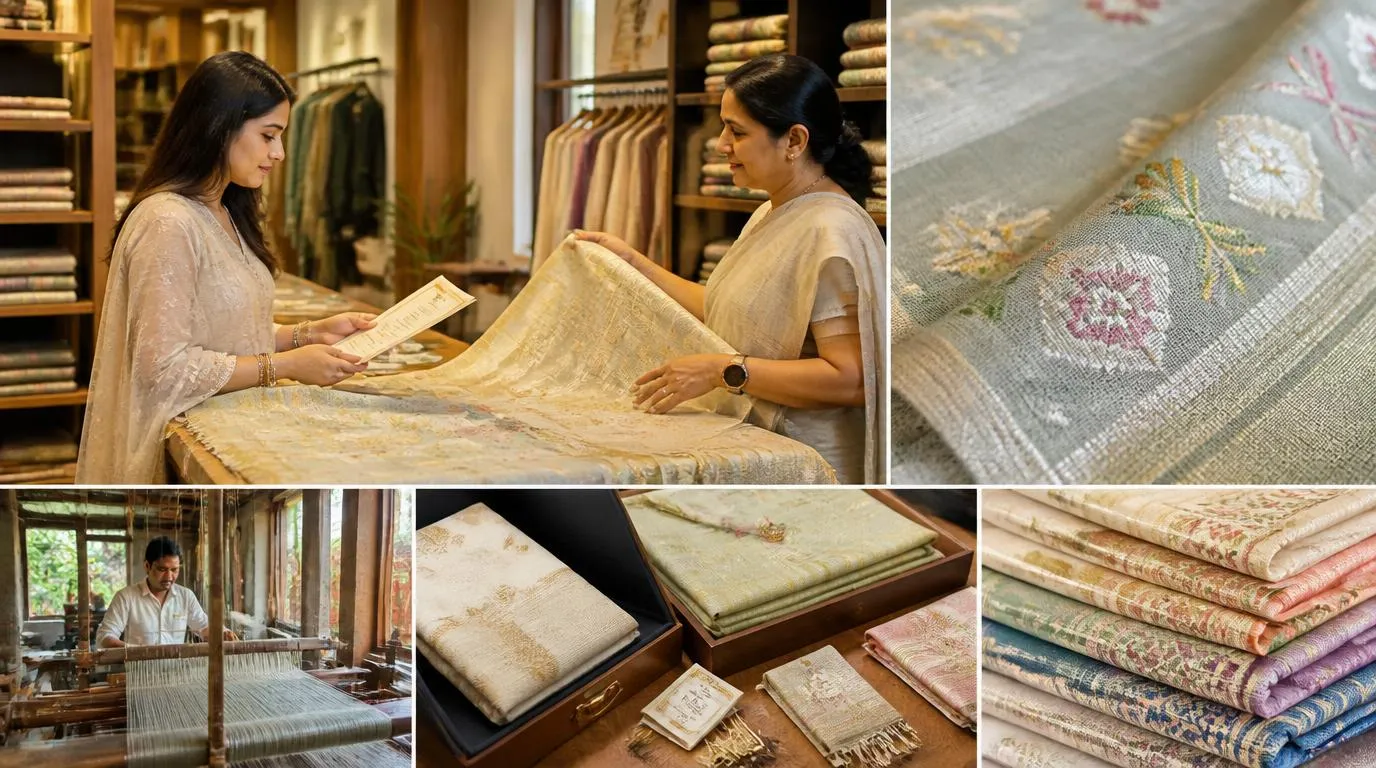
Image Credit: AI Generated
While not always foolproof, certifications and seller reputation are important indicators.
- Authentic handloom: Genuine Jamdani may come with a “Handloom” tag from the Bangladesh Handloom Board, weavers’ cooperatives, or a GI (Geographical Indication) tag. Reputable sellers often provide details about the weaver, the region, and the materials used.
- Powerloom fake: Many powerloom sellers attach fake tags or use generic labels. They may claim “handmade” or “traditional” without any proof. A tag alone is not enough – always combine it with the physical tests.
My advice: Always buy from reputable sources. Look for sellers who provide detailed product descriptions, close-up photos of the selvedge, reverse side, and motifs, and who are willing to answer your questions about the saree’s origin.
8. The Price Check – What a Real Jamdani Costs in the USA
A genuine handloom Jamdani takes a weaver days to weeks to finish, so price is one of the fastest authenticity clues you have. If a listing promises a “pure handloom Dhakai Jamdani” for the price of a pizza, the listing, not the saree, is what is handmade. Here is what Jamdani sarees actually cost in the US market right now (typical ranges, checked November 2026):
| Type | Typical US price | What you are actually getting |
|---|---|---|
| “Jamdani style” (printed or powerloom) | $15–$45 | The Jamdani look without handloom work, motifs are printed or machine-woven |
| Handloom cotton & cotton-silk Jamdani on Amazon US | $30–$90 | Genuine handloom weaving, usually simpler work and lighter motif coverage, sold by Bengal handloom resellers |
| Curated Dhakai Jamdani from US specialist sellers | $120–$250 | Finer counts and denser motifs, checked before shipping, easier returns |
| Fine heirloom Dhakai Jamdani | $300–$1,000+ | High thread counts (100s+), whole-body dense work, weeks of weaving, rarely sold on Amazon |
Four things move the price: the thread count, how much of the body carries motifs, how many days the weaver spent, and the fiber (cotton costs less than half-silk or silk). Our full breakdown is in the Jamdani saree price guide for the USA.
How to Check an Amazon Listing Before You Buy
You cannot run the seven tests above on a photo, but you can interrogate the listing itself:
- Read the fiber claim carefully. “Cotton silk” and “art silk” are not silk; “Jamdani style” means imitation.
- Check whether a blouse piece is included, many Jamdani listings do not include one.
- Look at the reverse-side photos, if any. A real Jamdani’s motifs show on the back; a print looks flat and identical.
- Weigh the reviews, not just the stars: buyers of genuine handloom pieces mention the weave and texture; fake listings collect complaints about prints.
- Check who ships it and the return terms. A handloom saree shipped from India can take weeks; buy from a listing whose returns you trust.
These are the checks we applied to the Jamdani sarees below, each one is a real listing, linked directly so you land on the exact product:

$36.00
dB DESH BIDESH Women’s Tamarind Leaf Resham Dhakai Jamdani Bengal Pure Cotton Handloom Saree Whole Body Design
5.0 ★★★★★★★★★★ (2)
View on Amazon

$34.48
Women’s Traditional Bengal Cotton Silk Soft Jamdani Saree – Beautiful design and Quality – Without Blouse Piece
4.4 ★★★★★★★★★★ (27)
View on Amazon

$36.00
dB DESH BIDESH Women’s Resham Dhakai Jamdani Cotton Handloom Saree Aam Kolka Design Jamdani Saree 5.5 Mtr
4.0 ★★★★★★★★★★ (22)
View on Amazon
Summary – Your Quick Authenticity Checklist
Before you buy, check these:
- ✅ Selvedge – tight, woven, no stitching
- ✅ Reverse side – motifs clearly visible
- ✅ Irregularities – slight variations, natural feel
- ✅ Zari – burn test leaves metal residue
- ✅ Feel – light, soft, breathable (not stiff/glossy)
- ✅ Motifs – woven in, not embroidered
- ✅ Seller – reputable, with certification or verifiable history
Image Credit: AI Generated
With these techniques, you’ll never mistake a powerloom copy for a genuine handwoven Jamdani again.
Shop authentic Jamdani – explore our curated collection from verified handloom sources. Every piece is inspected for authenticity.
Shop Verified Watch Video Guide
Popular Posts
- How to Choose the Perfect Jamdani Saree
- History of Jamdani Saree in Bangladesh
- Jamdani vs Tangail Saree
- How to Style a Bangladeshi Saree
- Essential Care Tips for Silk Sarees
- Handloom vs Machine-Made Sarees
This guide is one chapter of our complete Jamdani saree buyer’s guide , the hub that connects Jamdani prices, authenticity checks, comparisons and care in one place.
FAQs About Jamdani authenticity
How can I tell if a Jamdani saree is real or fake?
Check the selvedge – real handloom has tight, woven edges while powerloom has loose or stitched edges. Also check the reverse side – handloom shows clear motifs, while powerloom shows messy threads or no motifs. When in doubt, do the zari burn test on a loose thread, and always buy from a reputable seller.
What is the difference between handloom and powerloom Jamdani?
Handloom Jamdani is woven manually on pit looms, resulting in slight irregularities, soft texture, and visible motifs on the reverse side. Powerloom Jamdani is made on machines – it is perfectly uniform, often stiff or glossy, and the motifs are usually embroidered or printed rather than woven in.
Does original Jamdani have a tag or certification?
Some authentic Jamdani sarees come with a “Handloom” tag from the Bangladesh Handloom Board or weavers’ cooperatives. However, tags alone are not proof – fake tags are common – so always combine them with the physical tests in this guide.
Why is original Jamdani more expensive?
Original handloom Jamdani takes days or weeks to weave by skilled artisans using fine yarns and real zari. The labour, skill and time involved are reflected in the price, while powerloom copies can be produced quickly and cheaply.
Can I identify fake Jamdani by its weight?
Yes – genuine handloom Jamdani is lightweight and airy, especially cotton Jamdani. Powerloom copies often use heavier, stiffer yarns or chemical finishes to mimic the look, making them feel heavier or papery. However, weight alone is not conclusive – use it alongside other tests.
7 proven tests • Save money • Avoid fakes • Expert techniques